Posted on

The Link Between Heart Rate and Overall Health

My friend Ryan over at RJB Health Coaching shared this fascinating article about the link between heart rate and overall health on his blog. Turns out, our resting heart rate can tell us a lot about our mortality risk and even provide clues about chronic stress. His article also dives into some helpful tips and tricks for managing stress and improving heart health. I highly recommend giving it a read!


Welcome to the Weekly Round-Up, where we explore the intersection between ancient practices and modern science as part of a more natural way of living. We aim to help you experience your best physical and mental health by incorporating these practices into your life. In this series, we explore exciting topics that are sure to get you thinking about your fitness and wellness routine in a whole new way.


Resting Heart Rate: The Best Indicator of Your Health?

Resting heart rate is a simple metric that could be the best indicator of your health. Just like an athlete’s heart rate can predict their performance in a competition, your resting heart rate can predict your risk of death from virtually any cause. Studies have shown that as your resting heart rate increases, so does your risk of dying.[1] However, even if you’re physically active and have a healthy lifestyle, an elevated resting heart rate still increases your risk of death.

An elevated resting heart rate can indicate that something may be wrong with your body. It reflects the amount of stress your body is under, and chronic stress can cause your heart rate to be higher. Therefore, anything you can do to lower chronic stress can help lower your resting heart rate. Good sleep, proper body composition, and cardiovascular exercise are all interventions that can help lower your resting heart rate.

Here are the top five takeaways from the article:

  1. Resting heart rate is a simple metric that can predict your risk of death from virtually any cause.
  2. An elevated resting heart rate indicates that something may be wrong with your body.
  3. Chronic stress can cause your resting heart rate to be higher.
  4. Good sleep, proper body composition, and cardiovascular exercise are all interventions that can help lower your resting heart rate.
  5. Lifestyle changes such as minimizing long-term chronic stress, eating healthy, and developing conscious oversight for the amount of food you consume are all key to improving your overall health and lowering your resting heart rate.

Track Your Resting Heart Rate

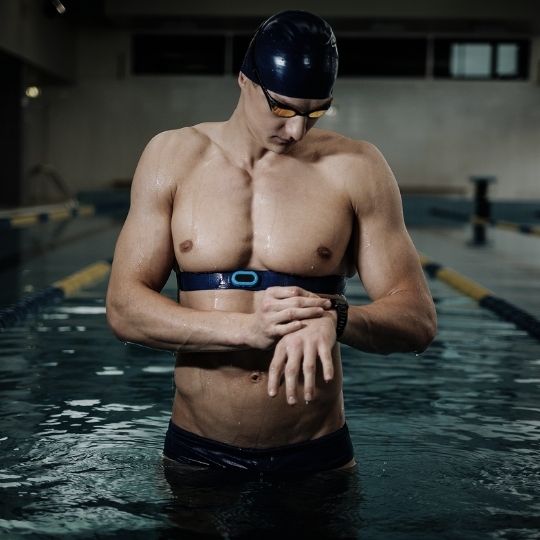
As this article discusses, fitness wearables like the Apple Watch and Garmin offer an easy way to track resting heart rate. With built-in sensors that measure your heart rate continuously throughout the day, these devices provide a fairly accurate and convenient way to monitor your heart rate and assess your overall health. Many wearables even provide insights and analytics on your heart rate data, making it easy to spot trends and identify any changes over time. By tracking your resting heart rate regularly, you can gain a better understanding of your overall health and fitness level, and make any necessary adjustments to your lifestyle or exercise routine. Plus, with the added convenience of these wearable devices, it’s easier than ever to keep tabs on your heart rate and take control of your health.

Ancient Practices for Modern Stress Management

Slow breathing exercises can be a great tool to lower heart rate, improve HRV and manage stress.[2] They have been used for centuries and are a practice handed down by the Old Masters, who figured out centuries ago that the breath was the secret to both power and longevity. When we breathe slowly and deeply, we activate the parasympathetic nervous system, which helps calm our body’s response to stress. The Old Masters understood the power of breathing techniques to promote better health, balance, and inner calm. Practicing these exercises regularly can help you feel more relaxed and reduce anxiety, allowing you to better manage stress in your daily life.

Slow breathing is a simple yet effective technique that involves reducing the frequency of your breaths to six breaths per minute. This is typically achieved by inhaling for four seconds and exhaling for six seconds. The reason for the longer exhale is to activate our parasympathetic nervous system (PNS), which helps to promote relaxation and reduce stress. By consciously slowing down our breathing and focusing on our breath, we can improve our overall mental and physical well-being. It’s a technique that can be practiced anywhere, at any time, and has been shown to be beneficial for a variety of conditions such as anxiety, high blood pressure, and insomnia.

Summary

In this Weekly Round-Up, we explore the link between heart rate and overall health. Studies have shown that resting heart rate is a simple metric that can predict your risk of death from virtually any cause. Even if you lead a physically active and healthy lifestyle, an elevated resting heart rate still increases your risk of death. An elevated resting heart rate may indicate that something is wrong with your body, and chronic stress can cause your resting heart rate to be higher. Good sleep, proper body composition, and cardiovascular exercise are all interventions that can help lower your resting heart rate.

In addition to lifestyle changes, slow breathing exercises can also be a useful tool for managing stress and lowering your heart rate. These exercises have been used for centuries and were practiced by the Old Masters to promote better health, balance, and inner calm. Practicing these exercises regularly can help you feel more relaxed and reduce anxiety, allowing you to better manage stress in your daily life.

Show Some Love

If you found this article useful, you can support my blog by making a purchase from our Amazon Storefront and help me continue to provide valuable content.

If you’re ready to embark on your own journey of personal growth through martial arts, here are three ways I can help:

  1. Consider our small group or online martial arts classes to start your practice.
  2. Explore our other articles to deepen your understanding.
  3. Book a free discovery call to find out if one of our programs is right for you.
Join us and unlock the secrets of the Old Masters!

Read More!

About Our Instructor

I Liq Chuan Instructor Ashe Higgs

Get to know our instructor Ashe Higgs! Ashe has been teaching martial arts in Tempe, Arizona, since 2005 and is one of the world’s highest-ranking I Liq Chuan students. You can find out more about who he is and how he got started with martial arts by clicking here.

Disclaimers & Conflicts of Interest

I am not a doctor or a lawyer, and the information provided should not be considered medical or legal advice.

The information provided is for educational and informational purposes only and should not be used as a substitute for professional legal or medical advice, diagnosis, or treatment. Consult your doctor or a qualified healthcare professional before making any changes to your diet, exercise routine, or lifestyle.

Please note that some of the links provided in this content may be affiliate links, meaning that I may receive a small commission if you purchase through them. However, please rest assured that any products or services recommended are based on my personal experience and belief in their value. I only recommend products or services that I have personally used and believe in.

References

  1. Zhang, Dongfeng, Xiaoli Shen, and Xin Qi. “Resting heart rate and all-cause and cardiovascular mortality in the general population: a meta-analysis.” Cmaj 188.3 (2016): E53-E63.
  2. Bernardi, Luciano, et al. “Oxygen-induced impairment in arterial function is corrected by slow breathing in patients with type 1 diabetes.” Scientific reports 7.1 (2017): 6001.
Posted on

Are Fitness Trackers Accurate?

In the modern world, fitness wearables have become increasingly popular for tracking our health and exercise routines. It’s unsurprising that many people wonder, “are fitness trackers accurate?” Regardless of their accuracy, it’s essential to strike a balance between relying on technology and tapping into our innate ability to understand our body’s needs.


Welcome to another edition of the Weekly Round-Up, where we explore the intersection between ancient practices and modern science as part of a more natural way of living. By aligning our diet and lifestyle in harmony with our nature as human beings, we can experience our best physical and mental health. In this article, we’ll explore a recent study that questions the accuracy of some popular fitness wearables. Then we’ll delve into deeper, more profound reasons to be cautious about relying too much on technology for our well-being.


A recent study comparing popular wrist-worn fitness devices, such as the Apple Watch 6, Polar Vantage V, and Fitbit Sense, highlights the importance of not becoming overly dependent on these devices. The study found that while the Apple Watch 6 outperformed its competitors in heart rate tracking, all three devices struggled to provide accurate energy expenditure readings. In light of these findings, this article will explore the concept of interoception, or the ability to sense and understand our internal states, and how it can help us achieve a more balanced approach to our health and fitness. By combining the data from fitness wearables with our own intuition and self-awareness, we can ensure these devices serve as useful aids in our pursuit of optimal health and well-being without letting them dictate our entire fitness journey.

Battle of the Fitness Trackers: Apple Watch 6 Takes the Lead in Heart Rate Accuracy

Are fitness trackers accurate for calories burned?

In a recent study comparing three popular wrist-worn fitness trackers, the Apple Watch 6 emerged as the most accurate device for measuring heart rate across various activities.[1] The study evaluated the Apple Watch 6, Polar Vantage V, and Fitbit Sense, testing their ability to track heart rate and energy expenditure during five different activities.

Researchers enlisted 60 healthy young individuals to participate in the study. Heart rate and energy expenditure were measured using reference devices, the Polar H10 and Metamax 3B, in addition to the wrist-worn devices. The activities tested included sitting, walking, running, resistance exercises, and cycling.

Key Findings:

  • The Apple Watch 6 consistently displayed the highest accuracy for heart rate measurement, with a coefficient of variation (CV) of less than 5% for all activities.
  • The Polar Vantage V and Fitbit Sense demonstrated variable accuracy levels for heart rate measurement, depending on the activity (CVs between 2.44-8.80% and 4.14-10.76%, respectively).
  • All three devices showed poor accuracy in measuring energy expenditure across all activities (CVs between 14.68-24.85% for Apple Watch 6, 16.54-25.78% for Polar Vantage V, and 13.44-29.66% for Fitbit Sense).

The coefficient of variation (CV) is a statistic that measures how spread out the data is relative to the average, providing a simple way to compare consistency and accuracy across different devices or measurements

The study highlights that the Apple Watch 6 outperforms its competitors in heart rate tracking. Unfortunately, this particular study didn’t compare my favorite wearable, the Garmin (I wear a Garmin Solar Instinct 2). All three of the devices studied struggled to provide accurate energy expenditure readings. Healthcare professionals, athletes, coaches, and the general population should take these findings into account when considering the use of these devices for exercise training or nutritional programs.

Smart Watches & Sleep Tracking

The Four Stages of Sleep

The four stages of sleep include three non-REM stages and one REM stage. Stage 1 features light sleep with slow theta waves, while stage 2 has sleep spindles and K-complexes. Sleep spindles and K-complexes are distinctive brain activity patterns. Both play roles in memory consolidation and sleep maintenance. Stage 3, or deep sleep, showcases slow delta waves. Lastly, REM sleep involves rapid eye movement and fast, irregular brain waves similar to wakefulness.

Smartwatches track sleep using an onboard accelerometer, which is a sensor that measures movement and acceleration (the same technology they use to track “steps”). Onboard accelerometers in sleep trackers use movement data to estimate sleep stages. By analyzing periods of stillness and motion, they make educated guesses about transitions between light sleep, deep sleep, and REM sleep. Theoretically, this method provides a rough approximation of sleep patterns.

Unfortunately, the accuracy of smartwatches and sleep tracking doesn’t seem to be any better than for calories burned. Sleep trackers are often marketed as a way to improve sleep quality and overall health. This study reviewed six popular devices: BodyMedia FIT, Fitbit Flex, Jawbone UP, Basis Band, SleepTracker, and Zeo Sleep Manager Pro.[2] Researchers looked at metrics, theories, evaluations, and FDA clearance. Surprisingly, they found that most devices lacked crucial information about sensor and output accuracy. Only three devices had related peer-reviewed articles, but even their wake detection accuracy varied significantly. Ultimately, there was no solid evidence that these trackers can truly help with sleep issues in real life.

My own experience with the accuracy of sleep tracking and smart watches supports the results of the study by Lee et al. I have reviewed the data gathered by my beloved Garmin and compared it to my own objective and subjective experience. Sleep data indicated I was in deep sleep when I know for a fact that I was laying in bed reading, so my opinion is that the data for individual “phases” of sleep is completely useless. However, the accelerometers seem to be accurate in terms of movement. For example, if I get up in the middle of the night to use the bathroom, that movement is accurately recorded.

Unplugged and In Tune: Reconnecting with Your Inner Tracker

As we’ve seen, the data from wearables isn’t always accurate, and depending too much on these devices may lead to frustration. While data from wearables may be hit or miss, nature has already equipped us with an incredibly precise tool – self-awareness. By reconnecting with our innate ability to look within and understand how external behaviors affect our state, we can make adjustments that lead to a healthier lifestyle. This inner guide can help us find balance and harmony without solely relying on technology. Instead of fixating on data, let’s explore how tapping into our natural instincts can guide us toward a healthier lifestyle.

Unplugged: Evolve from Technology to Upgrade Your Fitness, Performance, & Consciousness” is a book by Brian MacKenzie, Dr. Andy Galpin, and Phil White that focuses on balancing the use of technology with a more intuitive approach to health, fitness, and overall well-being. The authors argue that our overreliance on technology can hamper our ability to truly understand our bodies and can create a disconnect between our physical and mental states.

In the book”Unplugged,” the authors emphasize the importance of interoception rather than relying on technology. Interoception is the ability to sense and understand our internal states and needs from moment to moment., like feeling hungry, thirsty or noticing our heart rate increase. It’s like having an inner GPS that helps us navigate our physical and emotional needs by tuning in to our body’s signals.

The most important lesson of the Old Masters was this: look within. The Old Masters focused on the harmonious connection between mind, body, and spirit. They taught that understanding one’s internal states and mastering self-awareness were key to unlocking both power and longevity. Through practices such as meditation, deep breathing, and mindful movement, they have passed on to us the methods to cultivate the ability to be in tune with our body’s internal state and to adjust it at will.

Similarly, MacKenzie’s “Unplugged” encourages readers to balance technology and intuition, using devices to gather data while not losing touch with their innate ability to understand their body’s needs. By advocating for a more mindful and self-aware approach, MacKenzie connects with the timeless teachings of the Old Masters of Kung Fu, emphasizing the crucial role of interoception in achieving true physical, mental, and emotional well-being.

Over-optimizing our health and fitness routines with unreliable data can lead to unnecessary stress and anxiety. Constantly monitoring every detail can make us fixate on minor fluctuations rather than focusing on overall well-being. Relying too much on inaccurate data from wearables can cause frustration and confusion, potentially derailing our progress and causing more harm than good. It’s essential to find balance, trust our intuition, and not let imperfect technology dictate our entire fitness journey.

Beyond Smart Watches: The Best Fitness Tracker for a Holistic Approach to Health

There are two very important data points that we can use technology to track on our own, but not available (yet) as smartwatches.

The first is a CGM, or Continuous Glucose Monitor, which is technically a wearable. Monitoring blood sugar can provide valuable insights into how our food choices affect energy levels and mood throughout the day. This study found that adherence to a healthy diet that keeps our insulin levels low is associated with a lower risk of major chronic diseases.[3] CGMs can help us better understand how our food choices influence blood sugar levels, which in turn can impact our risk of developing conditions like cardiovascular disease, type 2 diabetes, and cancer.

model displaying Nutrisense CGM - one of the best fitness trackers you can use.
Nutrisense is one company offering CGMs via subscription direct to consumers.

By monitoring blood sugar levels with a CGM, we can identify which food choices keep our blood sugar (and thus insulin) levels and inflammatory markers low, as well as reduce diabetes risk.[4] This information allows us to make more informed decisions about our diet, ultimately contributing to the kind of robust health we’re all after.

The study by Wang et al. highlights the importance of considering dietary patterns that minimize high insulin levels and inflammation for chronic disease prevention. By using a CGM to track our blood sugar levels and adjust our food choices accordingly, we can follow a diet that aligns with these guidelines, reducing our risk for major chronic diseases.

Monitoring blood pressure is also essential. High blood pressure is frequently called “the silent killer” as it has no symptoms for decades until enough damage has been done. Monitoring our blood pressure regularly helps identify potential cardiovascular risks, like hypertension or heart disease. Tracking our blood pressure can give us useful, actionable insight into how our lifestyle choices, like diet, exercise, or breathwork, impact our overall heart health. To track our blood pressure, there are plenty of blood pressure monitors for home use available on Amazon or at your local pharmacy. Most fitness wearables integrate with a smartphone app that allows you to record your blood pressure manually to track it over time. Many new blood pressure monitors even use Bluetooth to connect to an app, ensuring accuracy and preventing you from ever forgetting to record a measurement.

Conclusion

As we have seen throughout this article, fitness trackers can provide a few valuable insights into our daily activity and heart rate. However, it’s important to remember that these devices are not infallible and often struggle with providing accurate data in certain areas, such as energy expenditure and sleep stage detection. Therefore, it’s crucial to balance our reliance on technology with a more intuitive, self-aware approach to health and fitness.

By combining the data from wearables with our own innate ability to sense and understand our internal states, we can ensure that these devices serve as helpful aids in our pursuit of optimal health and well-being without becoming overly dependent on them. Furthermore, exploring additional monitoring options, like continuous glucose monitors and blood pressure trackers, can provide a more comprehensive understanding of our health, allowing us to make more informed decisions about our lifestyle choices.

Ultimately, the key to a healthier lifestyle is finding balance and harmony between the judicious use of appropriate technology and tapping into our natural ability to sense inward. By doing so, we can not only optimize our fitness routines but also develop a deeper connection with our bodies and a more mindful approach to overall well-being.

If you found this article useful and want to support my work, please consider making a purchase using one of the affiliate links above or by visiting our Amazon storefront. Your support helps me continue to provide valuable content and insights on martial arts, health, and fitness.

Are you ready to unlock the secrets of the Old Masters for yourself? Consider joining one of our programs, where you’ll learn the timeless techniques that help balance technology and intuition in the pursuit of health and well-being. Embark on a journey to a more mindful and self-aware approach to your fitness journey today.

Join us and unlock the secrets of the Old Masters!

Read More!

Disclaimers & Conflicts of Interest

I am not a doctor or a lawyer, and the information provided should not be considered medical or legal advice.

The information provided is for educational and informational purposes only and should not be used as a substitute for professional legal or medical advice, diagnosis, or treatment. Consult your doctor or a qualified healthcare professional before making any changes to your diet, exercise routine, or lifestyle.

Please note that some of the links provided in this content may be affiliate links, meaning that I may receive a small commission if you purchase through them. However, please rest assured that any products or services recommended are based on my personal experience and belief in their value. I only recommend products or services that I have personally used and believe in.

References

  1. Hajj-Boutros, Guy et al. “Wrist-worn devices for the measurement of heart rate and energy expenditure: A validation study for the Apple Watch 6, Polar Vantage V and Fitbit Sense.” European journal of sport science vol. 23,2 (2023): 165-177. doi:10.1080/17461391.2021.2023656
  2. Lee, Jeon, and Joseph Finkelstein. “Consumer sleep tracking devices: a critical review.” Studies in health technology and informatics vol. 210 (2015): 458-60.
  3. Wang, Peilu, et al. “Optimal dietary patterns for prevention of chronic disease.” Nature Medicine (2023): 1-10.
  4. Dimova, Rumyana et al. “The relationship between dietary patterns and glycemic variability in people with impaired glucose tolerance.” The Journal of nutrition, S0022-3166(23)35424-5. 9 Mar. 2023, doi:10.1016/j.tjnut.2023.03.007
Posted on

The Benefits of Cold Water Immersion and Heat Exposure for Health: A Study by Dr. Susannah Soeberg

Welcome to another edition of the Weekly Round-Up, where we explore the intersection between ancient practices and modern science as part of a more natural way of living so that we can experience our best physical and mental health. In this installment, we’ll explore three exciting topics that are sure to get you thinking about your fitness and wellness routine in a whole new way.

Winter Swimming

I’ve been exploring and writing about heat and cold exposure as part of my Natural Way of Living approach since 2015. I recently learned of the work of Dr. Susannah Soeberg of Denmark in this area.

Dr. Soeberg, a renowned expert in the field of health and wellness, recently conducted a study on the effects of cold water immersion and heat exposure on the human body. The study, which was published in Cell Reports Medicine in 2021, discovered the minimum threshold for experiencing significant health benefits from these practices.

According to Dr. Soeberg’s study, only 11 minutes of cold water immersion and 57 minutes of sauna per week can increase focus, energy, and mood. It’s important to note that this time should be divided into two to three days, ideally alternating between the two practices. During cold water immersion, noradrenaline and dopamine levels increase 2.5x within minutes and can last for hours. This hormone increase has been shown to activate brown fat, leading to improved metabolism and overall health.

Brown fat activation is a key factor in the health benefits of cold water immersion and heat exposure, as Dr. Soeberg’s study found. Brown fat activation increases during cold water immersion and people who regularly practice this technique are better able to tolerate the cold. The study also found that brown fat activation leads to lower insulin production and faster glucose metabolism. Additionally, the study found that brown fat activation has a circadian rhythm in humans, with higher activation levels early in the morning before waking up. This means that people who regularly practice cold water immersion and heat exposure may have a higher metabolic rate and feel warmer throughout the day.

  • Dr. Susannah Soeberg studied the effects of cold water immersion and heat exposure on the human body.
  • The study was published in Cell Reports Medicine in 2021.
  • The study found that only 11 minutes of cold water immersion and 57 minutes of sauna per week can lead to significant health benefits.
  • Brown fat activation is a key factor in the health benefits of cold water immersion and heat exposure.
  • People who regularly practice cold water immersion and heat exposure may have a higher metabolic rate and feel warmer throughout the day.
  • End on the cold to force the body to activate more brown fat.

Dr. Soeberg recommends starting slow and gradually building up your tolerance over time when incorporating cold water immersion and heat exposure into your daily routine. When practicing both techniques, it’s important to end on the cold to force the body to activate more brown fat and reheat naturally. This is known as the “Soeberg principle,” and it has been endorsed by Professor Andrew Huberman from Stanford University.

Dr. Soeberg’s study has shown that cold water immersion and heat exposure can have significant health benefits, including increased focus, energy, and mood, improved brown fat activation, and faster metabolism. By incorporating these practices into your daily routine, you can improve your overall health and well-being. Learn more about Dr. Soebergs work at The Soeberg Institute.

Explore how cold exposure can improve your health and energy levels today! Buy ‘Winter Swimming’ by Dr. Susannah Solberg on Amazon now.


Additional Articles From This Week

The Hidden Meaning of Crouching Tiger Hidden Dragon

Discover the fascinating origins of the title “Crouching Tiger, Hidden Dragon.” This iconic film draws from Chinese culture and features stunning martial arts scenes. Explore the hidden meanings behind the title, the connections to the characters, and the allusions to the film’s storyline. Don’t miss out on this must-read article for martial arts and Chinese culture fans. Read the full article to learn more!


5 Martial Arts Like Tai Chi

Join us on a journey through the fascinating world of five martial arts like Tai Chi, including I Liq Chuan, and more.

We’ll delve deeper into the history and philosophy of these practices, examine their unique training methods, and highlight their many benefits for modern-day living. Unlock the secrets of these ancient martial arts. Read the full article and discover the magic for yourself.

Join us and unlock the secrets of the Old Masters!

Read More!

Disclaimers & Conflicts of Interest

I am not a doctor or a lawyer, and the information provided should not be considered medical or legal advice.

The information provided is for educational and informational purposes only and should not be used as a substitute for professional legal or medical advice, diagnosis, or treatment. Consult your doctor or a qualified healthcare professional before making any changes to your diet, exercise routine, or lifestyle.

Please note that some of the links provided in this content may be affiliate links, meaning that I may receive a small commission if you purchase through them. However, please rest assured that any products or services recommended are based on my personal experience and belief in their value. I only recommend products or services that I have personally used and believe in.

References

  1. Søberg, Susanna, et al. “Altered brown fat thermoregulation and enhanced cold-induced thermogenesis in young, healthy, winter-swimming men.” Cell Reports Medicine 2.10 (2021): 100408.
Posted on

Clear Your Mind, Improve Your Life: The Connection Between Breathing and Brain Function

According to research, many neurodegenerative disorders are associated with the build-up of toxins in the brain, which can lead to cognitive issues such as brain fog. To maintain good brain health, it’s important to understand how your body clears toxins and waste products, and one key system involved in this process is the glymphatic system. This system relies on movement and breathing to function effectively.


Welcome to the Weekly Round-Up, where we explore the intersection between ancient practices and modern science as part of a more natural way of living. We aim to help you experience your best physical and mental health by incorporating these practices into your life. In this series, we explore exciting topics that are sure to get you thinking about your fitness and wellness routine in a whole new way.


Breathing Exercises: How to Help Your Body Clear Brain Toxins and Improve Brain Function

slow breathing at night can help detoxify the brain

New research has identified the sub-arachnoid lymphatic membrane (SLYM) as a crucial component of the glymphatic system. This thin, delicate membrane acts as a barrier, allowing only small molecules to pass through and separate “clean” and “dirty” cerebrospinal fluid (CSF). It also helps to maintain the brain’s defenses by preventing outside immune cells from entering.

To help your glymphatic system function at its best, Dr. Steven Lin recommends engaging in the following practices:

  • Nasal breathing at night: Breathing through your nose helps to keep the flow of CSF to the brain tightly managed. Mouth breathing or snoring can interfere with this process.
  • Movement: Regular physical activity can help to keep your glymphatic system functioning well. Engage in moderate exercise for at least 30 minutes a day.
  • Correct tongue posture and swallowing: Proper posture and swallowing techniques can help to clear the vessel systems in your head and neck, allowing for effective glymphatic system function.

By engaging in these practices, you can help to clear toxins and waste products from your brain, improving brain function and reducing brain fog. If you suffer from cognitive issues or neuro-degenerative disorders, it’s important to talk to your healthcare provider about incorporating these practices into your routine.

I have written about the glymphatic system and a possible relationship to the ancient neigong 內功 practices of xisuijing 洗髓經 or Marrow Washing previously here and here.

Uncover the Secrets to Achieving Your Fitness and Martial Arts Goals: The Key Metrics You Need to Know  

At the heart of any martial arts or fitness journey is the desire to improve performance, prevent injuries, and achieve your goals. But how do you measure progress and make sure you are on the right track? The answer lies in tracking the right metrics, which can help you identify areas of weakness and focus on continuous improvement. In this article, we will reveal the key metrics that every martial artist and fitness enthusiast should track to maximize their performance and reach their full potential.

Discover the ancient roots of martial arts and fitness and how they are intimately connected to help you become stronger, more explosive, and more resilient. Learn the proven strategies to develop power, grip strength, leg strength, and core strength to take your training to the next level. Don’t fall for common myths and bro-science; read on to learn the truth and achieve your fitness and martial arts goals efficiently and effectively!

Read: Martial Arts And Fitness

In this week’s edition of “The Weekly Round-Up,” we explored how breathing exercises can help to clear your brain of toxins. To take your fitness and wellness routine to the next level, check out our in-person and online martial arts instruction and our “fit-to-fight” online health coaching program. Learn how to become stronger, more explosive, and more resilient and achieve your fitness and martial arts goals efficiently and effectively!

Join us and unlock the secrets of the Old Masters!

Read More!

About the Author

Ashe Higgs, I Liq Chuan Master Instructor & L2 Nutrition Coach

Ashe is a highly skilled martial arts instructor and certified nutrition coach with over two decades of experience in the field. He holds a Master Instructor certification in I Liq Chuan under Sam FS Chin, making him one of only several individuals worldwide to hold the title. He has taught classes and workshops worldwide and is passionate about helping others achieve their fitness and wellness goals.

With a background in full-contact fighting and a Level 2 certification from Precision Nutrition in nutrition coaching, Ashe is a well-rounded expert in the fields of martial arts. In addition to his expertise, he has a wealth of experience in teaching and mentoring others. He has a natural ability to connect with his students and inspire them to reach their full potential.

Read more about Ashe here…

Disclaimers & Conflicts of Interest

I am not a doctor or a lawyer, and the information provided should not be considered medical or legal advice.

The information provided is for educational and informational purposes only and should not be used as a substitute for professional legal or medical advice, diagnosis, or treatment. Consult your doctor or a qualified healthcare professional before making any changes to your diet, exercise routine, or lifestyle.

Please note that some of the links provided in this content may be affiliate links, meaning that I may receive a small commission if you purchase through them. However, please rest assured that any products or services recommended are based on my personal experience and belief in their value. I only recommend products or services that I have personally used and believe in.

References

  1. Møllgård, Kjeld, et al. “A mesothelium divides the subarachnoid space into functional compartments.” Science 379.6627 (2023): 84-88.