We were fortunate enough to have my senior kung fu brother, Alex Skalozub here in Arizona for a weekend workshop in Mesa last weekend. I’ve posted some of the photos from the weekend to my Facebook page. Hope you enjoy!
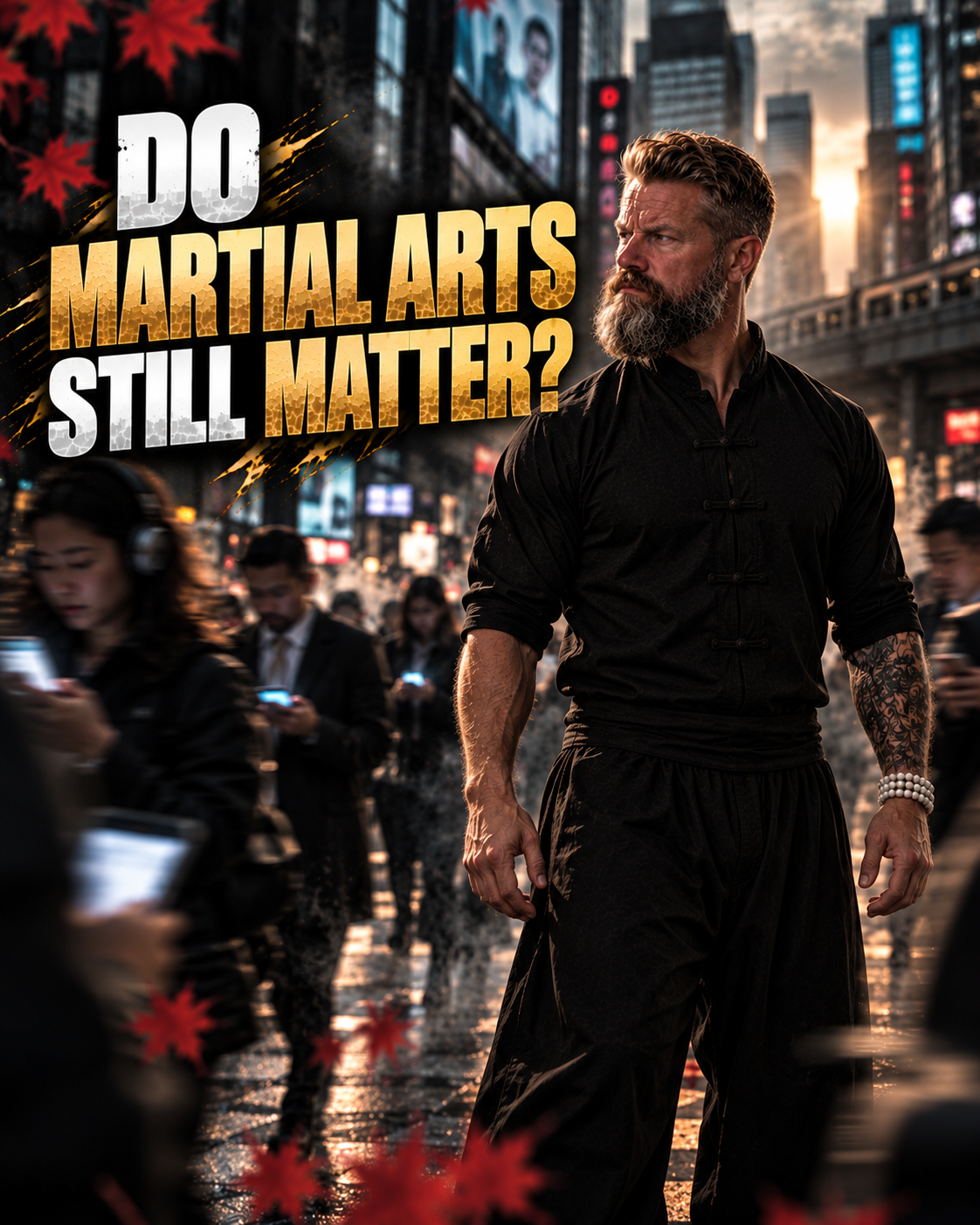
You can upgrade your phone. You still have to train your mind.
Technology keeps giving us faster, easier ways to do things. We can communicate across the world, find information in seconds, and automate tasks that once took hours.
But what happens to the person using all those tools?
Are we becoming more disciplined? More attentive? More capable of maintaining our balance when circumstances change?
Those questions came to mind when I read Peter Thiel’s Zero to One. My takeaway was that the most useful technology helps people become more capable. That got me thinking about an apparently unrelated subject: why we still practice martial arts.
If modern technology has changed the way we fight, work, and live, what does an old martial art still have to offer?
Quite a lot, provided we understand what we’re training.
The question of technology making martial arts obsolete is hardly new.
Firearms changed the role of hand-to-hand fighting long before smartphones arrived. That doesn’t mean physical self-defense stopped mattering. It does mean we should be honest about what martial arts can accomplish and the conditions under which those skills apply.
But judging martial arts entirely by whether a punch can compete with a firearm leaves a much larger question unanswered.
What does the training develop in the person?
A tool can extend your capabilities. It cannot automatically give you the judgment to use those capabilities well.
Having more information doesn’t guarantee clarity. More options don’t guarantee a good decision. And having a device that can reach someone on the other side of the planet doesn’t mean you can keep your attention on the person standing in front of you.
We still have to develop those abilities ourselves.
Our technology changes much faster than our basic human needs.
We still have bodies that need movement. We still experience fear, frustration, uncertainty, and distraction. We still need to learn how to direct our attention and follow through when something becomes difficult.
None of these qualities becomes irrelevant because your phone gets faster.
In I Liq Chuan, the Martial Art of Awareness, physical practice gives us a concrete way to study ourselves. Our body becomes something we can observe directly, and partner training gives us feedback we cannot get from thinking alone.
Can you recognize when you’re losing your balance? Can you notice unnecessary tension? Can you stay attentive as the conditions change, or does your attention get stuck on what you expected to happen?
These questions have practical consequences in martial arts. Your partner doesn’t have to agree with your explanation of why something should work.
You have to recognize what is actually happening and respond to it.
That makes training a useful place to examine the gap between what we believe about ourselves and what we can demonstrate.
Grandmaster Sam Chin makes a point about confidence that I think deserves more attention: martial arts can give you confidence through knowing.
There is a difference between hoping you understand something and recognizing it clearly through direct experience.
When you can feel your balance, recognize how it changes, and reproduce the conditions that help you maintain it, you have something concrete to trust. You can also begin to recognize your limits more honestly.
That kind of confidence doesn’t require pretending you’re invincible.
It develops as uncertainty gives way to familiarity. You practice, observe, make corrections, and gradually become better at recognizing what the situation requires.
The martial art gives you a way to train your mind through your body.
And that remains useful regardless of how many devices you own.
Of course, these qualities don’t appear automatically because you put on a uniform or repeat a movement.
You have to practice with attention.
If you spend the entire session distracted, impatient, or simply going through the motions, you may be reinforcing the same habits you brought through the door.
The opportunity is to notice those habits as they happen. To recognize when you’ve lost the present moment and return to the task. To become more familiar with how your mind and body respond under pressure.
Then you have to carry that practice into daily life.
The setting changes, but the work of paying attention remains.
That is why I believe martial arts still have a place in the 21st century, and will for a long time to come.
Technology can keep improving the tools available to us. We still need a practice that develops the person using them.
Want to explore that practice? Get in touch with Falling Leaves Kung Fu to learn about I Liq Chuan training in Tempe or online.
Ashe is a highly skilled martial arts instructor and certified nutrition coach with over two decades of experience in the field. He holds a Master Instructor certification in I Liq Chuan under Sam FS Chin, making him one of only several individuals worldwide to hold the title. He has taught classes and workshops worldwide and is passionate about helping others achieve their fitness and wellness goals.
With a background in full-contact fighting and a Level 2 certification from Precision Nutrition in nutrition coaching, Ashe is a well-rounded expert in the fields of martial arts. In addition to his expertise, he has a wealth of experience in teaching and mentoring others. He has a natural ability to connect with his students and inspire them to reach their full potential.
I am not a doctor or a lawyer, and the information provided should not be considered medical or legal advice.
The information provided is for educational and informational purposes only and should not be used as a substitute for professional legal or medical advice, diagnosis, or treatment. Consult your doctor or a qualified healthcare professional before making any changes to your diet, exercise routine, or lifestyle.
Please note that some of the links provided in this content may be affiliate links, meaning that I may receive a small commission if you purchase through them. However, please rest assured that any products or services recommended are based on my personal experience and belief in their value. I only recommend products or services that I have personally used and believe in.