Posted on

What “Reality-Based” Martial Arts Actually Means

In this post, I want to talk about something that gets thrown around a lot but rarely defined clearly: “reality-based martial arts.”

Before we go any further, let’s establish who this is for—and who it isn’t.

I’m not speaking to competitive combat sports athletes. If you’re already deep in boxing, wrestling, MMA, or jiu-jitsu, your training environment already solves many of the problems we’re about to discuss.

I’m also not speaking to those pursuing martial arts purely as a form of physical or mental culture—people primarily interested in philosophy, mindset, or internal development. There is absolutely nothing wrong with training purely because you enjoy the history, ceremony, philosophy, aesthetics, social environment, or the sheer pleasure of learning difficult movements. Those are all legitimate reasons to practice.

But they are not the subject here. (And we should also be intellectually honest about what we’re actually doing.)

The audience for this article is the regular Joe who works a nine-to-five, has a family, has bills to pay, and has a limited amount of time and energy left at the end of the day. He is not trying to become a professional fighter. He wants to be able to handle himself well enough that, if he finds himself on the receiving end of some junkie or hood rat’s attention in a parking lot outside the gas station, grocery store, or on public transit, he has a better chance of going home instead of going to the morgue.

That said, the hierarchy I’m about to lay out is still useful for just about anyone in martial arts—especially those in traditional systems who are still trying to develop real fighting skill.

If you’re not sure where you fall, refer to my article Which Martial Art Is Right For Me?

Defining “Reality-Based”

Everybody has their own criteria for what counts as “real.” In true Socratic fashion, the only way forward is to define our terms.

My current thinking is that, regardless of style, lineage, culture, or intended application, four factors must be present for a martial art to be meaningfully called ” reality-based”:

  • All martial arts involve the use of force
  • Physical capacity is the single biggest factor in applying force
  • Training must follow a ladder of progressive intensity
  • Contact is required

If even one of these is dismissed as unnecessary—or worse, labeled as “low-level” or “external”—you will almost certainly end up with what traditional Chinese martial arts call huā quán xiù tuǐ 花拳绣腿 —“Flowery fists and embroidered legs”: flashy, decorative martial arts with little practical fighting value.

Force: The Core of All Martial Arts

Before moving further, I would like to acknowledge here the influence of Mark Rippetoe, founder of Starting Strength, on how I approach the subject of force and physical capacity in martial arts: start with first principles and build upward.

Strip everything else away—tradition, aesthetics, philosophy—and all martial arts, whether combat sports or self-defense systems, reduce to one thing: the use of force.

The objective is straightforward. End the fight as quickly as possible.

The use of force has three components:

  • Attack: How do I use force effectively on another person?
  • Defense: How do I manage or neutralize force being used on me?
  • Power: How do I generate enough force for either of the above to matter?

Attack and defense are equally important, but offense is first among equals. Offense is what ends fights.

Think of it like a sports game: if every time you score, the other team scores too, you end in a tie. You need defense to avoid losing. But if nobody scores at all, you still end in a tie—and nobody wins. To win, you have to put points on the board.

Many analyses have been done of fights caught on camera, and the overwhelming conclusion is that the more aggressive (i.e., offensive) fighter, the one who takes and keeps the initiative, usually wins.

That said, both offense and defense collapse without sufficient power. Technique without force may be technically sound, but functionally useless.

Physical Capacity: The Limiting Factor

When it comes to use of force, physical capacity is the single biggest determining factor.

The same person can generate more force when they are stronger, better conditioned, and carrying more usable muscle mass. This isn’t theory—it’s observable reality.

Many facets of physical capacity affect performance. Some can be trained. Some cannot.

Here’s where it’s useful to briefly zoom out philosophically.

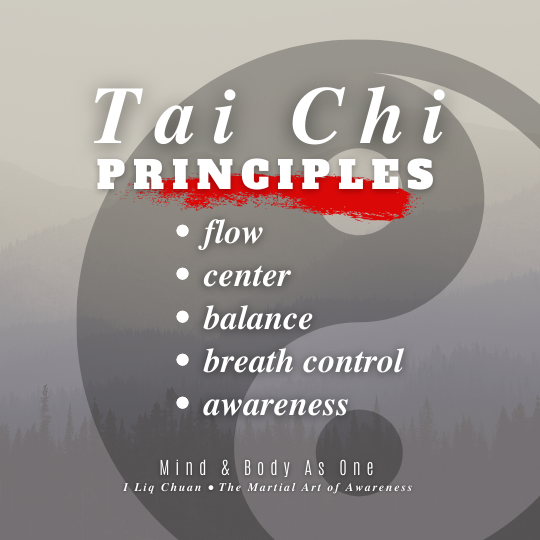
Tai Chi principles (太极) are, at their core, a study of the Dao (道)—the natural order of things. I hate to be the one to break it to you, but Nature has rules, whether you like it or not. Everything material, including you, is a formation. If you had no form, you would be immaterial. After the physical rules imposed by Newtonian physics on everything with mass, we are animals first, humans second, sex third, and individuals last, in that definitive order, and many of the qualities inherent in those categories are immutible. #SorryNotSorry

Returning to the idea of formation, every formation is defined by its limits.

So Tai Chi is not just the study of what something is—but what it is not; its boundaries and limitations.

Applied to martial arts, this leads to two critical questions:

  • What is the biggest limiting factor in my ability to generate force?
  • What are the limits of my ability to improve that factor?

Some constraints are non-negotiable:

These are real constraints. Ignoring them doesn’t make them disappear.

But within those limits, everyone can get stronger.

More muscle mass improves your ability to generate force and absorb impact. Strength increases your margin for error.

Yes, leverage and skill matter. At 155, Conor McGregor can probably sleep your average 220 shlub, but I am not Conor McGregor, and neither are you (or else you wouldn’t be reading this article). The Chinese have a saying, “If you want to make a sharp sword, start with good steel.” Elite fighters are born, not made; they are the exception, not the rule.

The ability for skill to bridge the gap in baseline physical capacity between two fighters of different sizes has finite limits.

If your arms are too short to sink the choke, or you lack the strength to finish it, technique alone won’t save you. If your strikes don’t carry enough force to cause damage—or at least command respect—your opponent has no reason to break contact.

If your goal is to develop functional self-defense skills, then you would be wise to train as if you are the rule, rather than the exception (elite fighters often succeed in spite of, not because of, their training, because they are elite. Another reason not to emulate the training programs of elite anybody in any endeavor.)

For the purposes of self-defense, increasing your physical capacity also has value as a deterrent; criminals are usually averse to choosing hard targets.

Strength training offers the highest return on investment for time spent. It directly improves force production while simultaneously providing a baseline level of conditioning. Additional conditioning can be built through skill training—if that training is structured correctly.

Which brings us to the next piece.

The Ladder of Progressive Intensity

What I call the Ladder of Progressive Intensity is adapted from sports training principles and adapted to martial arts training.

All human movement is bound by the geometry of the skeleton, its interaction with connective tissue, and gravity. Because of that, movement is inherently cyclical and patterned (i.e., circular).

You can’t extend your arm forever. Every motion has a return.

These patterns can be refined toward an ideal—improving both accuracy and precision.

Drills exist to train these patterns, either in isolation (a single strike) or in combination (throws, submissions, combinations).

Repetition Is The Mother Of Skill

Drills build skills, but a skill must first be established and made technically proficient, and then durable under increasing intensity.

That durability is developed through progressively increasing speed, load, uncertainty, impact, fatigue, and resistance. The mistake many martial artists make is confusing the first stage of learning with the completed skill.

Recognizing and executing the movement pattern of a technique is not the same as being able to perform it under pressure. Knowing what to do is not the same as being able to do it when things “go live”.

That’s where what I call the “4 Rs” come in:

Remedial

This is the foundation. Simple, low-intensity work—often solo training (基本功, jibengong in Chinese martial arts).

“Remedial” isn’t a pejorative. It just means basic, or fundamental. It simply refers to the most basic and least complex movement patterns trained under the lowest levels of intensity, both in speed and force.

This is where you refine mechanics/technique. Fixed drills or freestyle work like shadowboxing both apply. Low speed and low pressure give your brain time to make corrections.

I work with a lot of ex-military guys. You can’t take a combat vet with PTSD, drop him into a high-intensity training scenario, and expect him to learn anything. His amygdala dials up to 11; he’s immediately in survival mode, and that’s not the time to pick up new skills.

Relaxation—not just physically, but mentally—is critical for learning. If you can’t regulate your arousal, you can’t retain information. You can’t adapt. That’s why slow, low-pressure work isn’t optional. It’s where new skill is built. (Breath work is a handy tool to add to the toolbox here.)

Rehearsed

Now we increase complexity and load.

This includes forms, pad work, and cooperative partner drills. You’re executing real techniques with real contact—but within a script. Forms can fall into this category because they combine multiple movements into longer sequences.

Shadowboxing builds coordination and some conditioning, but it doesn’t build physical capacity the same way impact does.

This is where the body begins to adapt to forces that solo training cannot provide. Bones, connective tissue, and joint receptors need stress—pads, bags, bodies, mats—to adapt. Your nervous system also needs to learn it’s safe to produce higher levels of force.

Rehearsed training can scale in speed and intensity, but it remains cooperative. A beginner cannot learn a throw if his partner immediately does everything possible to stop him. A new striker cannot refine a combination if the pad holder is constantly changing the target, countering, and disrupting his rhythm.

Cooperation allows the student to learn the shape of the skill under more realistic physical conditions.

Reactive

Now the script starts to disappear.

Reactive drills reduce the degree of cooperation between one or both partners.

This might look like hitting pads, then having the holder counter randomly, forcing you to respond in real time. A simple example would be executing a combination on the pads, followed by an unchoreographed counterattack from the pad holder. Maybe he throws a left. Maybe a right. Maybe a right-left. You do not know which one is coming. Now you must block, parry, evade, move, or cover spontaneously. The drill still has rules and limits, but the response is no longer completely prearranged. At this stage, you begin to see reality creeping in. Gaps in timing, positioning, and decision-making become obvious.

Intensity is still controlled:

  • Speed around 50–70%
  • Power kept low/minimal (contact without impact)
  • Emphasis on exploration, not winning

Think of this as intelligent play fighting.

Resisted

This is where things get real.

This includes intermittent hard sparring, full rolling, competitive rounds, and other training in which both people are actively trying to impose their own game while preventing the other person from doing the same.

Some systems, like the Dutch approach, go hard early. That works in competitive environments—it acts as a filter. But it’s less effective for the average person who needs a sustainable path from zero to hero.

I prefer the Thai model: build gradually, keep most training light, and use hard rounds sparingly.

Resisted training is absolutely necessary—but it carries risk. Injuries increase. Recovery demands increase.

So it should occupy the smallest portion of your training time while delivering the most specific adaptation.

Contact: The Non-Negotiable

Mike Tyson said it best: everyone has a plan until they get punched in the mouth.

Both the body and mind need exposure to contact.

Your brain cannot process what it has never experienced.

There’s a Zen parable about a fish asking a turtle what land is like. The turtle tries to explain—but the fish has no frame of reference. Eventually, the explanation collapses.

That’s what fighting is like without contact training.

Physically, your tissues need to adapt. Repeated exposure conditions bone, connective tissue, and pain tolerance.

Psychologically, you need to become familiar with the shock.

The first time you take a clean shot—or get slammed hard—you realize how disorienting it is. It’s not just pain. It’s confusion. It’s disruption.

I remember the first time I fired a weapon inside a vehicle. The concussive force in that confined space was like a slap in the face. You don’t fully understand it until you experience it.

Waiting until you’re getting your ass beat in a parking lot is not the ideal time for your first experience of the demoralizing and disorienting effects of taking a hard shot.

Conclusion

“Reality-based martial arts” isn’t about style. It’s about structure; following an effective, predictable path of progressive overload.

If your training:

  • Recognizes that all fighting is the use of force
  • Prioritizes physical capacity as the foundation of that force
  • Builds durable skill through a progressive ladder of intensity
  • Includes some degree of regular, meaningful contact

No matter what style you’re training, ask yourself how many of those four boxes are getting checked off regularly (and be honest about your answers).

If the answer to any of them is a “no”, you may still be practicing something valuable—but if functional, “reality-based” martial arts and self-defense is an outcome you’re looking for, it may be time to reconsider the return on investment you’re getting from your time training with that particular group of people.

Start your journey to mastery today!

Read More!

About the Author

Ashe Higgs, I Liq Chuan Master Instructor & L2 Nutrition Coach

Ashe is a highly skilled martial arts instructor and certified nutrition coach with over two decades of experience in the field. He holds a Master Instructor certification in I Liq Chuan under Sam FS Chin, making him one of only several individuals worldwide to hold the title. He has taught classes and workshops worldwide and is passionate about helping others achieve their fitness and wellness goals.

With a background in full-contact fighting and a Level 2 certification from Precision Nutrition in nutrition coaching, Ashe is a well-rounded expert in the fields of martial arts. In addition to his expertise, he has a wealth of experience in teaching and mentoring others. He has a natural ability to connect with his students and inspire them to reach their full potential.

Read more about Ashe here…

Disclaimers & Conflicts of Interest

I am not a doctor or a lawyer, and the information provided should not be considered medical or legal advice.

The information provided is for educational and informational purposes only and should not be used as a substitute for professional legal or medical advice, diagnosis, or treatment. Consult your doctor or a qualified healthcare professional before making any changes to your diet, exercise routine, or lifestyle.

Please note that some of the links provided in this content may be affiliate links, meaning that I may receive a small commission if you purchase through them. However, please rest assured that any products or services recommended are based on my personal experience and belief in their value. I only recommend products or services that I have personally used and believe in.

Posted on

The Case For Training Low-Percentage Martial Arts Techniques

There is a time and a place for training low-percentage techniques. Yes, you read that right. Low-percentage techniques.

This is where the “80/20 rule”—aka the law of diminishing returns—comes into play. Early on, the basic stuff accounts for most of your progress with relatively little effort, but the closer you get to your individual limit, the more time, energy, and complexity it takes to squeeze out ever smaller improvements.

Before we go any deeper, make sure you’ve read my article on the difference between learning a technique and developing technical proficiency here:

  • By high-percentage techniques, I mean the basic, bog-standard stuff that works reliably under pressure: jabs, crosses, hooks, overhands, arm drags, hip tosses, simple foot sweeps, and so on.
  • Low-percentage techniques are more conditional and complex—things like unarmed knife defenses or elaborate joint-locking flow drills that require several variables to line up just right. That does not mean they never work; it means they offer a poor return on training time until your fundamentals are already solid.

The fight data bears this out. A comprehensive analysis of UFC submission finishes from UFC 1 through UFC 294 found that the rear-naked choke—the most basic choke in the book—was the single most common submission, accounting for 32.7 percent of submission finishes.

The Limits of Progress

An asymptote is a line that a mathematical curve approaches infinitely closely but never actually touches.

Progress in nearly every human endeavor is asymptotic, and time and effort are inversely correlated with results. That means you improve toward a limit, but the closer you get to that limit, the harder each additional bit of progress becomes.

Everyone’s limit is different. Age, sex, body type, natural athleticism, training history, injuries, temperament, and God knows what else all influence where that ceiling might be.

As the graph shows, the blue line represents theoretical progress, while the wavy red line represents real-world progress. The red line rises unevenly because life is never perfect: we get sick, get divorced, get laid off, get transferred, get injured, or get blindsided by circumstances outside our control. Setbacks are inevitable, and sometimes they knock people off course long enough that they quit altogether.

Regardless, the general progression is the same.

A novice can make rapid progress with a relatively simple program. Almost anything works because everything is new. The beginner does not need more complexity. He needs more practice.

An intermediate trainee has already harvested the easy gains. Progress slows, and training has to become somewhat more deliberate. Weaknesses begin to matter. Timing, context, and variation become more important.

The advanced practitioner is approaching his individual limit. At that point, continued progress will always be found at the margins. Training becomes more complex because the low-hanging fruit has already been squeezed dry.


Unlock your full potential with our personalized in-person and remote coaching programs—join me and take the first step on your journey to mastery!


“Training is the process of looking into your weakness.”

~GRANDMASTER SAM FS CHIN

No Shortcuts on The Journey To Mastery

This is where low-percentage techniques and subtle methods begin to earn their place.

But not before you’ve squeezed all the juice you can get from the basic, high-percentage stuff.

This is also why the so-called “internal” martial arts were never really meant for beginners—at least not unless the system has a curriculum, like I Liq Chuan (depending on who you’re training with), capable of establishing solid fighting fundamentals concurrently with, or preferably before, pursuing the deeper and more esoteric uses of the body and mind.

The legends surrounding the origins of Taijiquan, Xingyiquan, and Baguazhang are full of missing years, secret teachers, wandering sages, and immortals handing out secret fighting methods in dreams.

That ambiguity is part of the culture. The British didn’t refer to the Chinese as “inscrutable Celestials” for nothing.

But the strongest historical evidence points in the same direction: the founders and earliest students of the “big three” internal styles already possessed solid, practical fighting skills. They had mastered other methods first, then developed—or learned from someone who had developed—the subtler training we now call internal.

They were not helpless beginners learning to move slowly in the park. They were experienced fighters refining the margins.

Even Shaolin training traditionally follows a progression from hard, external physical development toward increasingly subtle, internal work. First you build the machine. Then you learn to operate it more efficiently.

Trying to reverse that order is like teaching advanced race-car driving to someone who still struggles to work a manual transmission in a 1980 Ford Fiat. They don’t have either the physical capacity or basic skills to make the advanced stuff effective with an uncooperative opponent.


Unlock your full potential with our personalized in-person and remote coaching programs—join me and take the first step on your journey to mastery!


Fundamentals First

The magic you're looking for is found in the hard work you're avoiding.

If you stick with it long enough, there will definitely come a time when training all the cool-guy shit will become not just optional but mandatory; however, beginners—and most intermediate students—have no business spending the majority of their time on “high-level,” low-percentage techniques and methods.

They do not yet possess the structure, timing, distance, pressure tolerance, or technical proficiency necessary for those methods to work.

At best, it is a waste of training time.

At worst, it actively interferes with the development of the fundamentals they should have been practicing instead.

Advanced methods are advanced because they sit near the edge of what is possible. They are supplements to, not substitutes for, the basics.

Similar to creatine or protein powders, they can help us eke out the last few percent (or fractions of a percent) of our performance, as we trend upward towards an inevitable limit hidden in plain sight, just behind a glass ceiling; within sight, but forever out of reach.

Start your journey to mastery today!

Read More!

About the Author

Ashe Higgs, I Liq Chuan Master Instructor & L2 Nutrition Coach

Ashe is a highly skilled martial arts instructor and certified nutrition coach with over two decades of experience in the field. He holds a Master Instructor certification in I Liq Chuan under Sam FS Chin, making him one of only several individuals worldwide to hold the title. He has taught classes and workshops worldwide and is passionate about helping others achieve their fitness and wellness goals.

With a background in full-contact fighting and a Level 2 certification from Precision Nutrition in nutrition coaching, Ashe is a well-rounded expert in the fields of martial arts. In addition to his expertise, he has a wealth of experience in teaching and mentoring others. He has a natural ability to connect with his students and inspire them to reach their full potential.

Read more about Ashe here…

Disclaimers & Conflicts of Interest

I am not a doctor or a lawyer, and the information provided should not be considered medical or legal advice.

The information provided is for educational and informational purposes only and should not be used as a substitute for professional legal or medical advice, diagnosis, or treatment. Consult your doctor or a qualified healthcare professional before making any changes to your diet, exercise routine, or lifestyle.

Please note that some of the links provided in this content may be affiliate links, meaning that I may receive a small commission if you purchase through them. However, please rest assured that any products or services recommended are based on my personal experience and belief in their value. I only recommend products or services that I have personally used and believe in.
Posted on

Five Concepts To Help Build Real Fighting Skill (No Matter What Martial Art You Train)


Most people train martial arts like they’re collecting trading cards.

More techniques.
More combos.
More “styles.”

But real fighting skill isn’t built that way.

Skill is built by upgrading the operating system underneath the techniques: your base, your breath, your awareness, your timing, and your attention. These aren’t “style specific.” They’re human-specific. They show up in boxing, wrestling, BJJ, Muay Thai, karate, kung fu, and yes—internal arts like I Liq Chuan.


GM Sam Chin quote

I Liq Chuan is often called “The Martial Art of Awareness,” and Grandmaster Sam Chin has spent decades refining a training method that makes these fundamentals measurable, repeatable, and pressure-testable. What I like about his approach is that it doesn’t rely on mythology. It relies on what you can actually do—under contact, under stress, against a resisting person.

Here are five concepts that will sharpen your fighting skills no matter what martial art you train in.


1. Balance: An Unstable Base Ruins Everything Upstream

All power comes from the ground.

That sounds cliché, but clichés often hide fundamental truths in plain sight.

If your base is unstable, you have to “borrow” stability from somewhere else—usually by holding our breath (more on this below), and muscling with our limbs. Fine if you’re 6′ 4″ and 250lbs, but you have to be born that way. That’s not something you can train.

When it comes to generating power in the martial arts, the goal is to learn to use our entire body in such a way that the “sum of the whole is greater than the sum of the parts.”

To an extent, this is the meaning of the so-called “internal power” so often discussed in the “internal” arts like Tai Chi, Xingyi, and Bagua. It comes from the coordination of mind, body, and breath that yields an “unusual power” that doesn’t seem like it should be possible for the person in question.

Balance isn’t standing still like a statue. Fighting balance is the ability to keep your structure functional while you move—while you change levels, and while you apply force. More importantly, it’s the ability to transition from one action to another smoothly, without gaps in your defense and without creating momentum that your opponent can exploit.

In I Liq Chuan training, we constantly test balance through contact: push, pull, strike, and kick. The goal isn’t “don’t move.” The goal is: can you stay organized and integrated while you move? Can you maintain a usable connection to the ground?

Real balance is being able to change—push to pull, pull to push, strike to kick, kick to strike, using your footwork to change angle and direction—without telegraphing, without wobbling, and without giving your opponent a handle on your momentum.

In other words, “balance” in martial arts isn’t a snapshot in time and space. It’s continuity.

If you want a simple takeaway: stop thinking of balance as “not falling.” Start thinking of balance as “the platform that lets you change direction and/or  apply and redirect force on demand.” Fix your base, and suddenly your strikes feel heavier, your touch feels stickier, and your defense stops being pure panic.


2. Breathing: Don’t Let Your Movement Interfere With Your Breathing

GM Sam Chin often says, “Don’t let your movement interfere with your breathing.”

That one line is a diagnostic tool.

Most people think they breathe just fine… until they start moving hard. Then they hold their breath. Or they breathe high and fast in the chest. Their breath gets hijacked by tension.

And when your breath gets hijacked, everything gets worse:

  • Endurance drops.
  • Timing gets sloppy.
  • Vision narrows.
  • Technique degrades.
  • Decision-making gets stupid.

Calm breathing isn’t just “spiritual.” It’s functional. It’s the difference between whole body power that comes from the big engines of the legs, hips, and core, or just the small muscles of the upper body. It’s the difference between staying present and going into survival mode.

Here’s a practical test: pick a simple movement—shadowboxing, footwork, pummeling, light sparring. Keep your breath smooth and flowing (i.e., coordinated with your movement). If your movement forces you to hold your breath, you’re exceeding your limits. Fix the movement until the breath stays smooth, uninterrupted, and coordinated with your action.

Pro Tip: “When in doubt, breathe out!

I have written about many ways to use your breathing deliberately, which you can find here.


Unlock your full potential with our personalized in-person and remote coaching programs—join me and take the first step on your journey to mastery!


3. Awareness: You Can’t Correct What You Don’t Notice

Awareness is the foundation of improvement. GM Sam Chin says, “It is the ultimate technique.”

If you can’t feel what you’re doing, you can’t correct it.

If you can’t notice what your opponent is doing, you can’t adapt.

If you can’t detect pressure changes, you can’t adjust your structure.

If you can’t track your own tension, you can’t stop giving your opponent a handle.

This is why I Liq Chuan calls itself an art of awareness. Not just because “awareness is spiritual.” Because awareness is practical, it’s how your nervous system collects information and updates behavior in real time.

GM Sam Chin also says, “If you want to win the war, you must fight in the right battlefield.”

Meaning: if you’re fighting the wrong problem, you can train forever and still not improve.

Look For The Practical Before You Look For The Mystical

“One of the problems with the internal martial arts is that people are looking for an out-of-body experience before they’ve had an in-body experience. The real magic is found in refining the basics until my movement becomes a mystery to you.”

Awareness puts you on the right battlefield. It tells you what’s actually happening as it’s happening.

That’s not only philosophy. That’s actionable data.


4. Don’t Rush: Add Speed Only After Your Movement Is Right

I often tell students: Don’t train faster than your attention can keep up with.

Speed is seductive because it hides our movement errors and gaps. But speed without correctness is just rehearsing mistakes at a higher frame rate. You’re building a stronger version of your bad habits.

This is one of the biggest traps in martial arts: people equate intensity with progress. But intensity just amplifies whatever you already do. If your movement is bad, intensity makes it worse. If your posture collapses under mild pressure, intensity makes you fold faster.

In I Liq Chuan we use a progression that looks “slow” to outsiders—but it’s not slow for the sake of being slow. It’s slow so you can actually see and feel what’s happening. You’re training precision, alignment, timing, and sensitivity. Then you add pressure. Then you add speed.

The Four R Progression

In  my classes, I like to use the four Rs:

  1. Remedial
  2. Rehearsed
  3. Reactive
  4. Resistance

That progression keeps you from rushing to the next step before you’ve built a stable foundation of smooth, efficient, effective action: first you fix the movement, then you sharpen timing, then you pressure-test it until it holds up. Which leads directly to the next piece—focus—because without trained attention, you can’t actually maintain the qualities you’ve developed.


Unlock your full potential with our personalized in-person and remote coaching programs—join me and take the first step on your journey to mastery!


5. Focus: The Mind Can Only Do One Thing At A Time

GM Sam Chin teaches, “The mind can only do one thing at a time.”

That’s not a motivational quote. That’s a training constraint.

Most people “train” while their mind is everywhere:

  • Thinking about the next move.
  • Thinking about what they should have done.
  • Thinking about winning the round.

To put this into even sharper relief, GM Sam Chin says,

“You cannot do the two.  The mind will be jumping back and forth (like multitasking). You must do the one to do the two. You pay attention to the right hand, you forget the left.  You pay attention to the left hand, you forget the right.  You pay attention to both hands, and you forget the feet.  You must hold on to one point; only from one can you do two.”

You can only place attention on one thing at a time—and whatever falls outside of attention moves blindly. GM Sam Chin clarifies why this is not a coordination problem, but an awareness problem.

When attention jumps between hands (for ex.), one side drops out of monitoring and cannot adjust to the opponent’s actions, collapsing your defensive shield. Learn how referencing movement from a single point keeps both sides within awareness and preserves “fullness energy” under pressure.

(BTW, if you want to know the “secret” of what “the one” is, you’ll have to come train with me in Arizona, online, or invite me for a workshop in your area).

That scattered attention turns training into noise.

Awareness turns drills from “just reps” into high-level skills.

Let’s say you’re hitting the pads; most people focus on hitting the pads and getting their hand back into a defensive position as fast as possible.

These are important, no doubt, but what about all the space in between?

Were you there? Did you know? Was the point complete?

As GM Sam Chin says, “A circle is made up of one line, but the line is made up of all the dots. Each point itself is complete.”

The next time you’re hitting the pads, watch yourself closely. Is your attention cast outside yourself, on your target?

Can you see your attention jumping back and forth between hitting the pads (offense) and covering up (defense)?

Try keeping your attention inward on yourself only.

Anyone can learn to throw a decent punch or land a good kick, but only the masters can do it with qualities like fullness or the balance of six directions.

Only the best can merge offense and defense as one.

Awareness, or attention, is the key that unlocks this potential.

It’s worth reiterating here that you can’t fix what you don’t notice.

Coach Craig Glassman, of CrossFit fame, coined the phrase “virtuosity,” or doing the common uncommonly well.

Only when mind and body are one can you hope to achieve a level of mastery that turns your movement into a mystery to your opponent, that leaves them reeling and thinking to themselves:

“I don’t know where that power came from.
I don’t know why I feel so off balance.
I don’t know why I can’t find my rhythm, and why they seem to know my every move before I make it.”

As GM Chin says eloquently, “You can’t be faster than me if I’m already there.”

When your attention is strong enough, you can hold it in the moment. Then you will already be there.

What Is The Difference Between Attention & Focus?

Roughly speaking, we can say that attention, or awareness, is keeping your mind in the present moment, attending to what is happening now. In a martial arts context, we can talk about three faults that make it clearer:

  1. Hesitation
  2. Anticipation
  3. Resisting

Anticipation

Jumping ahead into the future—responding to what you think they’ll do.

You preload the counter.
You chase the setup that isn’t there yet.
You stop seeing what’s real.

Resistance

Trying to stay in the past, where you felt strong or safe.
You brace.
You lock.
You cling to a structure that used to work.
But the opponent already changed, so you’re fighting yesterday’s problem.

Hesitation

Also staying in the past—replaying what just happened instead of acting now.
You feel the opening… then double-check it.
You wait for confirmation.
The moment passes, and “late” becomes “never.”

When we don’t anticipate, resist, or hesitate, we call this “flowing.”

Focus, or concentration, is narrowing down our attention to a single point. We focus on one thing, and one thing only.

You could say that focus is narrowing down, attention is opening up. The key is focusing on the right “one thing” that allows us to expand our network of information and develop a wider “radar,” as GM Chin puts it. “Your future is in my present,” as he says.

In his book, I Liq Chuan – The Martial Art of Awareness (aka “The Yellow Book), GM Chin uses the analogy of a cleaver: focus is the thick back of the blade that gives weight to the sharp edge of awareness to allow it to cut to the depth that you see things as they are, as it is happening now.


Unlock your full potential with our personalized in-person and remote coaching programs—join me and take the first step on your journey to mastery!


Putting It Together: Fundamentals Beat Style Wars

“I don’t fear the man who has trained 10,000 kicks. I fear the man who has trained one kick 10,000 times.”
~Bruce Lee

No matter what art you train, these five concepts will improve your power, balance, and timing.

None of this is glamorous. None of it sells belts (it often doesn’t even look like martial arts). But it works.

And if you want a weekly training challenge, make it simple:

Pick one concept for one week and make it the theme of your training. Track it. Slowly test it under pressure.

Don’t chase novelty for its own sake. Chase clarity.

Real fighting skill isn’t built simply by knowing more techniques or more styles.

Start your journey to mastery today!

Read More!

About the Author

Ashe Higgs, I Liq Chuan Master Instructor & L2 Nutrition Coach

Ashe is a highly skilled martial arts instructor and certified nutrition coach with over two decades of experience in the field. He holds a Master Instructor certification in I Liq Chuan under Sam FS Chin, making him one of only several individuals worldwide to hold the title. He has taught classes and workshops worldwide and is passionate about helping others achieve their fitness and wellness goals.

With a background in full-contact fighting and a Level 2 certification from Precision Nutrition in nutrition coaching, Ashe is a well-rounded expert in the fields of martial arts. In addition to his expertise, he has a wealth of experience in teaching and mentoring others. He has a natural ability to connect with his students and inspire them to reach their full potential.

Read more about Ashe here…

Disclaimers & Conflicts of Interest

I am not a doctor or a lawyer, and the information provided should not be considered medical or legal advice.

The information provided is for educational and informational purposes only and should not be used as a substitute for professional legal or medical advice, diagnosis, or treatment. Consult your doctor or a qualified healthcare professional before making any changes to your diet, exercise routine, or lifestyle.

Please note that some of the links provided in this content may be affiliate links, meaning that I may receive a small commission if you purchase through them. However, please rest assured that any products or services recommended are based on my personal experience and belief in their value. I only recommend products or services that I have personally used and believe in.

Posted on

The Ultimate Guide To Focus Mitts & Thai Pads For Martial Arts

Looking to elevate your martial arts training? Focus mitts and pads are the key to enhancing your skills and improving your performance.

Or are they?

Training with mitts and pads is a widely accepted practice in martial arts, but is it truly the most effective way to hone your striking skills? 

red and black focus mitts

Critics argue that it can lead to bad habits, incorrect distancing, and wasted training time. Yet, despite these criticisms, many high-level coaches still incorporate mitt work into their routines. Could it be that there’s more to this training method than meets the eye?

What if the very criticisms of mitt work are also the keys to understanding its true value?

In this article, we will delve into the pros and cons of mitt work, addressing common concerns while highlighting how this training tool can complement other methods to create a well-rounded striking regimen. How can we reconcile these apparent contradictions, and what role should mitt work play in your martial arts training?

Looking for alternatives? We also explore other training methods like shadow boxing, heavy bag training, partner drills, and sparring.

Whether you’re a beginner or a seasoned martial artist, this article has something for everyone looking to improve their skills and elevate their training.

Key Takeaways:

Pros & Cons of Mitt Work:

  1. Incorrect Distancing:
    • Con: Can lead to incorrect distancing as practitioners aim in front of the pad instead of at a real opponent.
    • Counterpoint: Provides real-time feedback and tactile contact, which helps joints and mechanoreceptors adapt, allowing for better adjustment of combinations, distances, and angles against a moving target.
  2. Timing Issues:
    • Con: The timing can be off due to the need for the pad-holder to be in position before strikes are thrown, leading to artificial pauses in combos.
    • Counterpoint: Helps rough out distance and timing, which can then be refined in positional and technical sparring, providing a progression towards more realistic scenarios.
  3. Inconsistent Training:
    • Con: Different pad-holders may provide inconsistent force and movement, leading to varying training quality.
    • Counterpoint: Offers a safer, controlled environment for beginners to practice striking without the stress of getting hit, which can help build confidence and provide a consistent starting point.
  4. Limited Realism:
    • Con: Does not fully replicate the dynamics of a real fight, making it less effective for training real-life striking scenarios compared to partner drilling or sparring.
    • Counterpoint: Allows the practice of various combinations, distances, and angles in a structured manner, helping to build foundational skills that can be further developed through sparring and partner drills.
  5. Wasted Training Time:
    • Con: Requires a partner to hold pads, which can be seen as a waste of training time for both parties compared to other training methods like bag work or partner drilling.
    • Counterpoint: Provides a good cardiovascular workout, with the pad-holder able to set the pace to ensure a challenging session, benefiting overall fitness and endurance.
  6. Potential Bad Habits:
    • Con: Can develop bad habits like punching short of the actual target if the pad-holder moves the pad towards the striker.
    • Counterpoint: Reinforces basic striking mechanics, helping to maintain proper technique while working on endurance and coordination, which can counteract the development of bad habits when combined with other training methods.

Conclusion:

Mitt work, while not a substitute for partner drilling, is a complementary tool in a comprehensive training regimen. Addressing the cons with their respective counterpoints highlights the importance of incorporating mitt work alongside other training methods like solo technical work, bag work, positional sparring, and technical sparring.

Each method has its uses and limitations, and the goal is to employ the right tool at the right time in the right dose to create a well-rounded training program.

What Are Focus Mitts/Pads?

Focus mitts, also known as focus pads, are essential training tools used in various combat sports like Western boxing and MMA to help practitioners improve their punching techniques and overall skills.

These mitts are designed to be held by a training partner, allowing the practitioner to practice striking with precision and accuracy. Typically made of thick padding to absorb impact, they are shaped to provide realistic targets for punches and are held in a specific position to mimic opponent movements.

Focus mitts play a crucial role in training sessions as they not only help improve striking techniques but also enhance hand-eye coordination and timing. Various martial arts disciplines like Muay Thai, kickboxing, and mixed martial arts also incorporate focus mitts into their training regimens for developing speed and accuracy.

What Are the Benefits (& Drawbacks) of Using Focus Mitts/Pads for Martial Arts Training?

Bruce Lee, known for his philosophy of ‘be like water’, emphasized the importance of adapting to different situations in martial arts. By using focus mitts/pads, practitioners can hone their reflexes, timing, and accuracy, which are essential skills in combat scenarios. These training tools allow fighters to work on precision strikes, combinations, and defensive techniques in a controlled yet dynamic environment.

Distancing: The Challenge and the Counterpoint

Con: Incorrect Distancing One of the primary criticisms of mitt work is that it can lead to incorrect distancing. When striking pads, practitioners often aim in front of their partner rather than at an actual opponent. This practice can result in an inaccurate sense of range, as fighters become accustomed to throwing punches from a distance that wouldn’t be effective in a real fight. Additionally, pad-holders tend to move the pads towards the striker, which can train practitioners to punch just short of their actual target. This discrepancy can be particularly problematic, as it systematically develops habits that may not translate well to a live opponent.

Counterpoint: Real-Time Feedback and Adaptation Despite the potential for developing incorrect distancing, mitt work offers significant benefits in terms of real-time feedback and tactile contact.

This feedback is crucial for the adaptation of joints and mechanoreceptors, which play a vital role in striking accuracy and effectiveness. By practicing with pads, fighters can adjust their combinations, distances, and angles against a moving target, thereby enhancing their ability to react and adapt in dynamic situations. While mitt work might not perfectly replicate the exact distancing of a real fight, it provides a valuable tool for refining these skills in a controlled environment. Furthermore, the structured nature of mitt work allows practitioners to focus on specific aspects of their technique, such as footwork, timing, and coordination, which can subsequently be applied and adjusted in partner drills and sparring sessions. When used in conjunction with other training methods, mitt work can help fighters build a solid foundation in striking, which can then be fine-tuned in more realistic training scenarios.

Timing: The Drawback and the Solution

Con: Timing Issues

A significant drawback of mitt work is the potential for developing poor timing habits. During pad sessions, the striker often has to wait for the pad-holder to be in position before throwing the next strike in their combination. This results in artificial pauses that do not reflect the fluidity required in a real fight. Such interruptions can teach fighters to wait for their opponent to be ready, which is the opposite of how striking should function in a combat scenario.

Counterpoint: Roughing Out Timing for Refinement

While mitt work can lead to timing issues, it also serves as an essential step in the progression of developing accurate timing. By working on pads, practitioners can start to rough out their sense of timing in a structured and controlled environment. This preliminary stage is crucial for understanding the basic rhythm and pace of combinations. Once a basic sense of timing is established, it can then be refined in more advanced training methods, such as positional and technical sparring.

Additionally, mitt work helps fighters understand the coordination between strikes and movements, providing a framework for smoother transitions and faster combinations. The pad-holder’s role in setting the pace ensures that the striker maintains a consistent tempo, which can be gradually increased to improve speed and reaction times. This controlled pace allows fighters to build the foundational timing skills necessary for more spontaneous and reactive fighting scenarios.

In summary, while mitt work alone may not perfect a fighter’s timing, it lays the groundwork for more precise and effective striking. When combined with positional and technical sparring, where the fluidity and unpredictability of an actual fight are simulated, mitt work becomes an invaluable component of a comprehensive training regimen.

Inconsistent Training: The Challenge and the Context

Con: Inconsistent Training

One common criticism of mitt work is the inconsistency that arises from different pad-holders. Each pad-holder may apply varying amounts of force and movement, leading to a lack of uniformity in training.

This can result in mixed results for practitioners, as they may not receive the same quality of training each time they practice with a new partner. Such variability can hinder the development of consistent striking skills and create confusion about the proper execution of techniques.

female kickboxer kicks thai pads

Counterpoint: A Universal Challenge in Group Settings

Inconsistent training is not unique to mitt work; it is a reality in any partner-based training within a group setting. Whether it’s partner drilling, positional sparring, or technical sparring, variations in partners’ skill levels, physicality, and techniques are inevitable. This variability, while presenting challenges, also offers opportunities for adaptation and improvement. Training with different partners can expose fighters to a range of styles and responses, which is crucial for developing well-rounded skills.

Structured Environment and Skill Building

Despite the potential for inconsistency, mitt work provides a structured environment that is especially beneficial for beginners. It allows practitioners to practice striking without the stress of receiving hits, building confidence and foundational skills in a controlled setting. The pad-holder can adjust the intensity and pace to suit the striker’s level, ensuring a safer and more focused training session.

Moreover, mitt work can help bridge the gap between solo technical work and more interactive drills. It provides an intermediate step where fighters can focus on perfecting their techniques before applying them in more variable and dynamic partner drills. The consistency offered by a skilled pad-holder can help beginners develop a solid foundation, which can then be tested and refined through varied partner interactions in other training methods.

Using focus mitts in my Tempe martial arts classes

Adaptation and Real-World Application

Training with different partners in mitt work sessions can also simulate real-world scenarios where opponents vary widely. This exposure helps fighters learn to adapt their techniques and strategies, enhancing their ability to respond to different fighting styles and conditions. While inconsistency presents challenges, it also enriches the learning experience by preparing fighters for the unpredictability of actual combat.

In conclusion, while inconsistent training is a valid concern in mitt work, it is a common challenge across all partner-based training methods. The structured environment of mitt work, combined with the variability of different partners, offers a balanced approach to developing versatile and adaptable striking skills.

Limited Realism: The Drawback and the Balance

Con: Limited Realism

A notable criticism of mitt work is its limited realism. Pads do not fully replicate the dynamics of a real fight, as the strikes are aimed at artificial targets rather than a live opponent. The interaction with pads lacks the spontaneous movement and resistance of an actual adversary, which can limit the effectiveness of this training method in preparing fighters for real combat scenarios. As a result, practitioners might not develop the reactive and adaptive skills necessary for facing unpredictable opponents in a fight.

Counterpoint: An Intermediate Training Method

While mitt work may not entirely simulate the realism of a live opponent, it serves as a valuable intermediate step between solo bag work and sparring. Bag work, although useful for practicing power strikes, lacks the interactive and responsive elements of a human opponent. Heavy bags do not look like, move like, or react like humans, making them less realistic despite the ability to strike with full power without needing a partner.

Mitt work, on the other hand, provides a more interactive experience. It allows fighters to practice combinations, distance adjustments, and angles against a moving target, albeit not a fully realistic one. The pad-holder can simulate certain movements and offer dynamic feedback that a bag cannot, bridging the gap between the isolation of bag work and the complexities of sparring. This interactivity helps fighters develop better coordination, timing, and precision in their strikes.

Building Realistic Skills Gradually

Using mitt work as an intermediate step helps fighters build foundational skills in a controlled environment before transitioning to the more unpredictable nature of sparring. The structured nature of mitt work allows for focused practice on specific techniques and combinations, which can then be tested and refined in sparring sessions. This gradual progression is essential for developing effective striking skills without overwhelming beginners with the full intensity of live sparring too soon.

Balancing Training Methods

Mitt work also allows for a more balanced approach to training. While it may not offer the full realism of sparring, it compensates by providing a safer and more manageable environment for practicing complex techniques. The variability and feedback from a pad-holder help fighters adjust their strategies and improve their accuracy, preparing them for the next level of training.

In summary, while mitt work may have limitations in terms of realism, it plays a crucial role in the overall training hierarchy. It serves as a necessary bridge between solo bag work, which focuses on power and endurance, and sparring, which introduces the unpredictability and dynamics of a real fight. By incorporating mitt work into a well-rounded training regimen, fighters can develop their skills progressively, ensuring a solid foundation before moving on to more advanced and realistic training methods.

Can Be Expensive

High-quality focus mitts/pads, such as those from Fairtex, can be quite expensive, which might be a deterrent for some gym-goers.

When considering the investment in quality focus mitts/pads, one must also take into account the durability and performance benefits that come with reputable brands like Fairtex. While the initial cost may seem steep, the long-term value they provide can outweigh the price tag. Choosing to purchase from well-known brands ensure the product’s quality and build, reducing the likelihood of needing frequent replacements, ultimately saving money in the long run.

Requires a Partner

Using focus mitts/pads requires a partner, which can be a limitation for those who prefer solo training or lack a training partner to practice their skills.

Having a partner for focus mitt training is crucial as it simulates real combat scenarios, improves timing, accuracy, and hand-eye coordination. Partner work allows for dynamic drills that enhance reflexes and responsiveness. The reliance on a partner can pose challenges for individuals who have scheduling conflicts or limited access to training companions. While some may thrive on the energy and motivation derived from partner drills, others may find their progress hindered due to partner availability constraints.

How to Properly Use Focus Mitts/Pads for Martial Arts Training?

To properly use focus mitts/pads for martial arts training, it is essential to follow certain guidelines and ensure the use of appropriate boxing gloves to develop correct technique.

Choose the Right Size and Type of Mitts/Pads

Choosing the right size and type of mitts/pads, such as Muay Thai pads, is crucial for effective training and injury prevention.

In terms of engaging in combat sports like boxing or Muay Thai, having the proper equipment can make all the difference in your performance. Selecting the appropriate size and type of mitts or pads can directly impact the intensity of your training sessions and the longevity of your joints and muscles. With Muay Thai pads specifically, their design allows for a more versatile training experience, enabling practitioners to work on their striking techniques with enhanced precision and power.

Communicate with Your Partner

Effective communication with your training partner is essential when using focus mitts/pads to ensure safety and maximize the benefits of your training session.

Clear communication between you and your partner helps in coordinating movements, adjusting the intensity of strikes, and providing real-time feedback. Remember to establish signals or cues to indicate changes in speed or power levels, ensuring a smooth and effective workout. Communication also builds trust and strengthens the bond between partners, creating a supportive environment for growth and skill development.

Focus on Technique and Accuracy

Focusing on technique and accuracy while using focus mitts/pads helps in the development of precise skills required for martial arts.

Proper technique ensures that strikes are executed efficiently, reducing the risk of injury and maximizing power. It also enhances muscle memory, making movements sharper and more effective.

Accuracy, on the other hand, is crucial for honing timing and precision. By hitting the mitts/pads with precision, practitioners learn to control their movements and hit specific targets consistently.

Mastering these skills through focused training sessions not only improves performance but also builds confidence and discipline in martial artists.

Use Proper Striking Techniques

Using proper striking techniques when training with focus mitts/pads is essential to prevent injury and enhance the effectiveness of your workouts.

One fundamental aspect to keep in mind during your striking techniques is maintaining a strong, stable stance to generate power and control. This involves distributing your weight evenly, keeping your knees slightly bent, and pivoting your hips with each strike.

Focusing on proper hand positioning is crucial for protecting your joints and maximizing impact. Ensure your fists are clenched tightly without straining your wrists, and aim to make contact with the center of the mitt or pad to optimize the transfer of force.

What Are Some Alternatives to Using Focus Mitts/Pads for Martial Arts Training?

There are several alternatives to using focus mitts/pads for martial arts training, each offering unique exercises and benefits to complement your training regime.

Shadow Boxing

Shadow boxing is a great alternative to focus mitts/pads, allowing martial artists to practice their skills and techniques without any equipment.

One of the key benefits of incorporating shadow boxing into training routines is the freedom it offers in movement and technique execution. Unlike focus mitts/pads, which require a partner and specific equipment, shadow boxing can be done solo and anywhere, making it a versatile and accessible training method.

Shadow boxing helps in developing muscle memory, improving footwork, enhancing speed and accuracy, and honing overall fighting skills. It allows fighters to visualize opponents, practice combinations, and work on defensive maneuvers, thereby contributing to skill refinement and technique mastery.

Heavy Bag Training

Heavy bag training is an effective alternative to focus mitts/pads, providing a solid target to build power and endurance in a gym environment.

One of the key benefits of incorporating heavy bag training into your workout routine is the enhanced power development it offers. The constant resistance provided by the weight of the bag helps to increase strength and explosiveness in punches and kicks. This type of training also improves overall endurance, stamina, and cardiovascular health.

In addition, heavy bag training is highly versatile and suitable for individuals of all fitness levels. Whether you are a beginner looking to improve technique or a seasoned athlete aiming to enhance power, the heavy bag can adapt to your training needs. Plus, hitting a heavy bag can be a great way to release stress and boost mental clarity during your gym sessions.

Partner Drills

Partner drills offer a dynamic alternative to focus mitts/pads, enhancing training by allowing practitioners to develop their skills through interactive exercises.

One type of partner drill commonly used in martial arts is the ‘mirror drill,’ where two partners mirror each other’s movements to improve technique and coordination. Similarly, ‘reaction drills’ focus on quick reflexes and timing, with one partner initiating a movement to which the other must react swiftly. Another effective partner drill is the ‘obstacle course,’ which challenges agility and footwork as partners navigate around obstacles set up in their training space.

For advanced practitioners, ‘altered target drills’ can be incredibly beneficial, where partners switch up targets spontaneously, requiring adaptability and precision. ‘Controlled sparring drills’ provide a simulated combat experience, allowing practitioners to apply their techniques in a more dynamic and unpredictable setting.

Sparring

Sparring is an essential component of training in disciplines like MMA and Muay Thai, providing a realistic and immersive alternative to focus mitts/pads.

Engaging in sparring sessions allows practitioners to apply their techniques in a dynamic and unpredictable setting, simulating real combat scenarios. This form of training not only enhances physical conditioning and technique but also fosters mental fortitude and adaptability. It teaches students to think on their feet, strategize, and react swiftly to their opponent’s moves. By experiencing varying styles and intensities during sparring, martial artists develop a deeper understanding of timing, distance, and defense mechanisms, which are crucial in actual competitive bouts.

Summary and Conclusion

Training with mitts and pads has its share of criticisms, often seen as an inefficient use of training time that could be better spent on partner drills or sparring. However, it’s important to acknowledge that a tool is only as good as the craftsman who uses it. When used effectively, mitt work can significantly enhance a fighter’s skills.

All Training Methods Are Approximations

All training methods, including sparring, are merely approximations of actual fighting. Each serves to model different aspects of combat, helping fighters develop a comprehensive set of skills. Mitt work provides a controlled environment for focusing on specific techniques, speed, accuracy, and coordination—elements that are harder to isolate in the unpredictable nature of sparring.

Mitt Work as a Supplement

Mitt work should be viewed as a supplement rather than a substitute for sparring. It bridges the gap between solo bag work, which focuses on power and endurance, and sparring, which introduces the dynamics and unpredictability of a real fight. Mitt sessions offer the opportunity for repetitive practice and immediate feedback, crucial for refining techniques that can then be tested and adjusted in more realistic settings.

Finding the Right Balance

The key to effective training lies in integrating mitt work into a comprehensive regimen that includes solo technical work, bag work, partner drills, and sparring. Each method has its place and unique benefits, and the right balance ensures that all aspects of a fighter’s skills are developed.

In conclusion, while mitt work has its limitations, it remains a valuable component of martial arts training. By understanding its role and incorporating it appropriately, fighters can build a solid foundation, refine their techniques, and become more versatile and effective in the ring. It’s all about using the right tool at the right time, in the right dose, to achieve the best possible results in martial arts training.

Frequently Asked Questions

Where To Buy Boxing Focus Mitts?

What are the benefits of using focus mitts/pads for martial arts training?

Using focus mitts/pads can enhance hand-eye coordination, speed, and accuracy. It also allows for full range of motion and power in strikes, providing a more realistic training experience.

Are there any downsides to incorporating focus mitts/pads into martial arts training?

One potential downside is the cost of purchasing focus mitts/pads. They can also be bulky and difficult to transport, making it challenging to train outside of a designated gym or studio.

How can using focus mitts/pads improve my martial arts technique?

Focus mitts/pads provide a moving target and require the practitioner to adapt and adjust their strikes accordingly. This can improve footwork, timing, and overall technique.

What should I look for when purchasing focus mitts/pads?

When purchasing focus mitts/pads, consider the material, size, and durability. It’s important to choose mitts/pads that can withstand the impact of strikes and provide adequate protection for the holder.

Can focus mitts/pads be used for all types of martial arts training?

Yes, focus mitts/pads can be used for a variety of martial arts styles, including striking arts like Muay Thai and Karate, as well as grappling arts like Brazilian Jiu-Jitsu and Judo.

Is using focus mitts/pads a suitable alternative to sparring for practicing martial arts techniques?

While focus mitts/pads can be a useful training tool, it should not be used as a replacement for sparring. Sparring allows for more realistic and dynamic training, while focus mitts/pads can provide a controlled and repetitive experience

Start your journey to mastery today!

Read More!

Disclaimers & Conflicts of Interest

I am not a doctor or a lawyer, and the information provided should not be considered medical or legal advice.

The information provided is for educational and informational purposes only and should not be used as a substitute for professional legal or medical advice, diagnosis, or treatment. Consult your doctor or a qualified healthcare professional before making any changes to your diet, exercise routine, or lifestyle.

Please note that some of the links provided in this content may be affiliate links, meaning that I may receive a small commission if you purchase through them. However, please rest assured that any products or services recommended are based on my personal experience and belief in their value. I only recommend products or services that I have personally used and believe in.

Posted on

Techniques vs. Technical Proficiency in Martial Arts

Training Cause vs. Effect

Dad-joke incoming…

How many martial artists does it take to change a lightbulb?

100.

1 to get it done, and 99 to say, “That’s not how we do it in our style.”

This (bad) joke highlights a common source of debate in the martial arts community, rooted in a misunderstanding.

“I’m not going to teach you techniques.

If you want techniques, pay me just $1 each; I’ll teach you a million, but you won’t dare use a single one.”
~Chin, Lik Keong

When viewed superficially from the standpoint of “techniques,” different martial arts styles can seem vastly different. However, when viewed from the perspective of “technique,” focusing on the underlying principles, they’re really all the same.

That said, the distinction between “technique” and “techniques” plays a pivotal role in shaping training methodologies, philosophies, and, ultimately, long-term progress. This distinction is particularly relevant in the context of I Liq Chuan, The Martial Art of Awareness.

GM Sam Chin’s father, Sijo Chin, Lik-Keong, The Founder of I Liq Chuan, used to tell his students, “I’m not going to teach you techniques. If you want techniques, pay me just $1 each; I’ll teach you a million, but you won’t dare use a single one.” Why, you might ask? Because no technique works (with a high success rate) without the underlying technique.

Confused? Let me explain:

Socrates, regarded as the father of Western philosophy and critical thinking, emphasized the importance of questioning and dialogue in seeking truth and understanding.

A key aspect of the Socratic method is to start by clearly defining terms. This helps ensure that everyone in a discussion shares a common understanding and can engage in meaningful, productive dialogue. This foundational step is crucial for dissecting complex ideas and arriving at well-reasoned conclusions.

With that in mind, before we delve deeper, let’s first define our terms:

  • Technique: This refers to how little a trainee deviates from the optimum movement pattern dictated by first principles, often associated in Chinese martial arts with the Dao (道). The Dao signifies the universe’s natural way or path, emphasizing harmony with natural laws.
  • Techniques: These are pre-choreographed responses to specific cues or actions by the opponent. They are practical applications taught to address specific scenarios.

Grammatically:

  • “Technique” is used as a singular, uncountable noun, indicating a general concept or quality that can’t be divided into separate items.
  • “Techniques” is used as a plural, countable noun, referring to multiple specific items or instances of actions that can be enumerated and described individually.

In summary, while “techniques” refers to individual movements or actions that can be taught and executed, “technique” refers to the overarching principles and quality of movement that guide how those actions are performed.


The Case for Training Techniques

In martial arts, a technique is essentially an algorithm: your opponent provides a specific input, and you respond with a prescribed output. If he grabs here, you turn this way; if he punches from that angle, you block, enter, and counter—an “if this, then that” solution to a known problem.

When considering the approach of training techniques, we see a method designed for efficiency and practical application, especially useful in scenarios where time and resources are limited. This approach is particularly advantageous in environments such as military training, where recruits must quickly learn the fundamentals of hand-to-hand combat.

Advantages of Techniques-Oriented Training:

  • Scalability: With a limited number of instructors and a large group of trainees, teaching specific techniques allows for a standardized training program that can simultaneously be administered to many individuals.
  • Time Efficiency: In settings where time is of the essence, such as military boot camps, techniques provide a quick and effective way to impart essential skills. Trainees learn specific responses to common scenarios, allowing them to be as battle-ready as possible quickly.

Case Example: Law Enforcement Training

I want to relay an anecdote here from my own experience. When I went through training for auxiliary law enforcement, empty hand restraint techniques were only one part of overall defensive tactics, which also included using the baton and proper handcuffing techniques.

Defensive tactics in turn were only one subject taught in the compressed, intensive academy which also included subjects like civil rights and legal requirements for the use of force, and so on.

Within the full scope of martial arts, the few basic “come along” techniques  (basically joint locks, or chin na (擒拿)  being taught only represent a tiny fraction of the potential grappling repertoire.

When GM Sam Chin was here in 2022, we taught an eight-hour workshop on the fundamentals of Chin Na within I Liq Chuan, and we still barely scratched the surface.

Grappling, in turn, is only one category of possible techniques used in hand-to-hand combat (which also includes kicking, striking, and wrestling).

image of a wrist and elbow joint locking technique
RIP “Sweets”

Considering the setting’s limitations, it would make no sense, nor would it have been feasible, to get lost in the intricacies and nuance of proper technique. In this scenario, just giving the recruits a handful of three—and four-step reliable techniques was not only the most sensible approach, but it was also the only viable option.


Unlock your full potential with our personalized in-person and remote coaching programs—join me and take the first step on your journey to mastery!


Limitations of Training Coreographed Techniques

While training techniques offer significant advantages, particularly in terms of scalability and efficiency, they also come with notable limitations. The most significant drawback is the vulnerability of conditioned responses.

Techniques For Self-Defense Scenarios

When trainees rely heavily on pre-choreographed techniques, they may struggle to adapt to unexpected or novel situations. Combat is inherently unpredictable, and opponents often do not follow the script. This can leave trainees conditioned to respond in specific ways at a disadvantage when their expected scenarios do not play out.

Combat Sports

Most use of force in self-defense scenarios involves a time frame of 3-60 seconds. Hardly enough time to gather accurate data on how an opponent responds reflexively to any given attack; however, combat sports are an entirely different animal.

A keen opponent can exploit reflexive responses developed through techniques-oriented training. An observant adversary can anticipate these predictable reactions and use them to set traps or manipulate the defender into vulnerable positions.

For instance, if a fighter consistently counters a particular attack in a certain way, a savvy opponent can feign that attack to provoke a predictable response and then capitalize on the opening created. This predictability can be a significant liability in a dynamic and fluid combat situation.


Unlock your full potential with our personalized in-person and remote coaching programs—join me and take the first step on your journey to mastery!


The Technique-Oriented Approach: First Principles

In contrast to techniques-oriented training, the technique-oriented approach focuses on mastering the principles of human movement for attack and defense, often referred to as “shen fa” (身法), or lik hok (力学) in I Liq Chuan, and can be translated as “body method, or “mechanics” or “study of force.”

In martial arts, these terms refer to the understanding and application of physical principles, such as leverage, balance, and motion, and the method of body movement and posture that aligns with natural principles of human physiology and efficiency.

It’s useful here to borrow two terms from Starting Strength founder Mark Rippetoe: accuracy and precision. Accuracy is how closely a movement matches the optimal pattern dictated by first principles, while precision is how consistently you can reproduce it. Technical proficiency—and eventually mastery—is simply the ability to perform that movement with less and less deviation from the optimum.

photo of GM Sam Chin at Chuang Yen monastery
“The higher you go, the discipline of simplicity must be there.”

This approach, rooted in the first principles of human movement, emphasizes understanding and internalizing the optimal mechanics dictated by our morphology and the Newtonian physics of the known universe.

Understanding The Dao: Morphology & Physics in Martial Arts:

  • Morphology: the structure and form of the human body. Understanding how our bodies move and operate is crucial to mastering martial arts techniques. It involves studying biomechanics, joint alignments, and the natural range of motion.
  • Physics: The laws of physics, such as inertia, momentum, leverage, and gravity, play a fundamental role in martial arts. By aligning movements with these principles, martial artists can achieve maximum efficiency and effectiveness, often referred to as “economy of motion”.

Advantages of Technique-Oriented Training:

  • Adaptability: By focusing on first principles, trainees develop a deep understanding of the mechanics of movement. This allows them to adapt to a wide range of situations and opponents, as they are not confined to pre-programmed responses.
  • Efficiency: Mastering the optimal movement patterns ensures that every action is performed with maximum efficiency, reducing wasted effort and energy.
  • Higher Skill Ceiling: The technique-oriented approach allows for continuous improvement and refinement. As trainees gain a deeper understanding of the principles, their skills can evolve and reach higher levels of mastery.

Unlock your full potential with our personalized in-person and remote coaching programs—join me and take the first step on your journey to mastery!


Training the Cause, Not the Effect:

In I Liq Chuan, the focus is on training the “cause” rather than the “effect.” This means that instead of learning specific techniques (effects), trainees work on developing the underlying principles (causes, i.e., lik hok 力学) that make those techniques effective. Grandmaster Sam Chin often uses the analogy of eating (the cause) to be full (the effect) to illustrate this concept. Eating is the fundamental action that leads to the desired result of fullness, just as mastering movement principles leads to effective martial arts techniques.

This approach is both the superpower and the kryptonite of training in I Liq Chuan. The superpower lies in the depth and adaptability it provides. By understanding and internalizing the fundamental principles of movement and pressure (i.e., application of force), practitioners can respond effectively to a wide range of situations. They are not limited to pre-set techniques and can adapt fluidly to the dynamics of a real combat scenario.

However, the kryptonite of this approach is that training the cause doesn’t look like training the effect. This can be confusing and counterintuitive for beginners accustomed to seeing immediate, tangible results from learning specific techniques.

As GM Sam Chin says, “Eating doesn’t look like fullness, but you have to eat to be full.” In other words, the process of mastering the principles (eating) may not resemble the final, polished techniques (fullness) that students aspire to perform. This can make the training process seem obscure or frustrating for those who are accustomed to the immediate gratification of learning and practicing distinct techniques.

For instance, when training in I Liq Chuan, students might spend considerable time working on seemingly simple exercises to refine their understanding of balance, alignment, and sensitivity. These exercises might not look like traditional martial arts techniques, but they are essential for developing the core skills that will later manifest in effective techniques. This foundational work ensures that when a practitioner applies a technique, it is executed with precision, efficiency, and adaptability that would not be possible without this deep, principle-based training.

It’s important to not just imitate the outcome; you want to copy the inputs: the things that you have to do beforehand in order to produce this outcome.

Sometimes, you find these concepts brilliantly and eloquently summarized in unexpected places, like this video on dog training, where Miles Hamilton puts it so concisely:

“Most people skip straight to this level, right? They skip straight to trying to do this advanced stuff, but they don’t have the skills that you should have developed in the beginner and intermediate levels.

When you go through that [process of refining the basics], there are so many skills that you’re acquiring.

There are so many skills that you develop, but most people don’t develop the skills because they skip straight to this advanced stuff. Then it falls apart…

If this is the outcome [advanced skills] that you want to achieve, it’s important to not just imitate the outcome; you want to copy the inputs: the things that you have to do beforehand in order to produce this outcome. 

Most people don’t see the inputs… Those are the types of things that you do before you can work your way up to something like this.”


Unlock your full potential with our personalized in-person and remote coaching programs—join me and take the first step on your journey to mastery!


Ultimately, this approach cultivates a deeper, more intuitive understanding of martial arts. It enables practitioners to move beyond rote memorization of techniques and towards mastery of the principles that underlie all effective martial arts movements. While the path may seem longer and less direct, the end result is a more profound and versatile skill set that allows martial artists to adapt to any situation with confidence and efficacy. (In truth, this approach is the most direct path to mastery; it only seems less direct. You have to reach the inflection point in your training when “the penny drops.”)


Limitations of Technique-Oriented Training:

Despite its many benefits, the technique-oriented approach also has its challenges.

  • Individual Attention: This method requires much more personal attention from instructors. Each trainee’s progress must be monitored and guided to ensure they internalize the principles correctly. (In I Liq Chuan, we say, “The art must be fed through touch.)
  • Obscurity of Training Methods: The training methods can seem obscure and difficult to grasp for beginners. Without the immediate gratification of learning specific techniques, some trainees may find it challenging to stay motivated.
  • No Shortcuts on the Path to Mastery: Techniques are quick and easy to learn because the algorithm is simple: if this, then that. Technical proficiency is slow and hard because it requires thousands of repetitions—perhaps the proverbial 10,000 hours—steadily reducing your deviation from the optimum until the movement becomes accurate, precise, and repeatable under pressure.

Unlock your full potential with our personalized in-person and remote coaching programs—join me and take the first step on your journey to mastery!


Techniques Are Just Keys; Technique Is the Master Key:

Techniques can be likened to individual keys, each designed to open a specific lock. In contrast, technique is the master key that can be applied universally and adapts to any situation.

Over time, martial artists come to realize that quality trumps quantity. As Bruce Lee famously said, “Fear not the man who has practiced 10,000 kicks once, but the man who has practiced one kick 10,000 times.”

A certain panda unlocks the secrets of the Old Masters

From Techniques To Technique: The Evolution of Martial Arts Practice

In practice, the journey from learning “techniques” to mastering “technique” is a natural progression for most long-term martial arts practitioners. Beginners often focus on accumulating techniques, driven by the desire to know “what’s next?” This approach helps them build a repertoire of responses and gain an immediate sense of practical skills. However, as they advance, most practitioners gradually focus on understanding the “why” and “how” behind their movements. Understanding from the outset that focusing on the principles is the ultimate goal can save beginners a lot of wasted time constantly chasing after “what’s next” and instead shift focus to “what’s happening right now.”

What Is The Best Approach To Training Martial Arts?

The suitability of focusing on techniques versus technique depends on the context. On a short timeline, especially for beginners or situations demanding quick readiness, focusing on techniques is generally most appropriate. Teaching a beginner a handful of techniques provides a simple matrix to establish context and build a foundation. Even without a specific deadline, this initial focus can help new practitioners gain confidence and competence.

Ultimately, a technique-oriented approach is the final destination of all masters. Masters continuously refine their understanding and execution of principles, striving for perfection in every movement. This deep, intuitive grasp of technique enables them to adapt fluidly and effectively to any challenge.

Advanced Techniques are Just the Basics Done Better:


In his book on Aikido, Roy Suenaka wrote, “Advanced techniques are just the basics done better.” This sentiment underscores the philosophy of continuous refinement that characterizes a technique-oriented approach to training. In Chinese martial arts, this focus on the continuous refinement of basics is referred to as jibengong (基本功).

Grandmaster Sam Chin often compares the training process of I Liq Chuan to peeling an onion. The goal is not to accumulate more and more techniques or forms, but to peel away the excess until we reach the very core, or essence, of the principles. He emphasizes, “You must keep on looking at it until the nature (Dao 道) itself speaks to you.” This process of refinement and deepening understanding is what ultimately transforms a practitioner from a beginner focused on quantity to a master dedicated to quality.


Unlock your full potential with our personalized in-person and remote coaching programs—join me and take the first step on your journey to mastery!


Conclusion

In summary, both the techniques-oriented and technique-oriented approaches have their merits and limitations.

Techniques-oriented training is highly efficient and scalable, making it ideal for large groups and time-constrained scenarios, such as military training. However, it is limited by the rigidity of conditioned responses and by the risk that predictability will be exploited by observant opponents.

On the other hand, the technique-oriented approach, grounded in first principles, offers adaptability and a higher skill ceiling but requires more individual attention and can be challenging for beginners to understand.

For practitioners of I Liq Chuan, the important takeaway is that whenever I refer to “technique,” I mean “technical proficiency”, or mastering how little one deviates from optimal movement patterns rather than preset responses.

By focusing on the principles of effective movement, we can develop a deeper, more adaptable skill set that transcends specific techniques and enables continuous growth and improvement in martial arts.

Start your journey to mastery today!

Read More!

About the Author

Ashe Higgs, I Liq Chuan Master Instructor & L2 Nutrition Coach

Ashe is a highly skilled martial arts instructor and certified nutrition coach with over two decades of experience in the field. He holds a Master Instructor certification in I Liq Chuan under Sam FS Chin, making him one of only several individuals worldwide to hold the title. He has taught classes and workshops worldwide and is passionate about helping others achieve their fitness and wellness goals.

With a background in full-contact fighting and a Level 2 certification from Precision Nutrition in nutrition coaching, Ashe is a well-rounded expert in the fields of martial arts. In addition to his expertise, he has a wealth of experience in teaching and mentoring others. He has a natural ability to connect with his students and inspire them to reach their full potential.

Read more about Ashe here…

Disclaimers & Conflicts of Interest

I am not a doctor or a lawyer, and the information provided should not be considered medical or legal advice.

The information provided is for educational and informational purposes only and should not be used as a substitute for professional legal or medical advice, diagnosis, or treatment. Consult your doctor or a qualified healthcare professional before making any changes to your diet, exercise routine, or lifestyle.

Please note that some of the links provided in this content may be affiliate links, meaning that I may receive a small commission if you purchase through them. However, please rest assured that any products or services recommended are based on my personal experience and belief in their value. I only recommend products or services that I have personally used and believe in.
Posted on

How Do I Punch Harder?

A Kung Fu master punching through a black wall.

How to Punch Harder: A Comprehensive Guide

Punching harder is a coveted skill in martial arts, boxing, and even in self-defense scenarios. The ability to deliver a powerful punch involves more than just raw strength; it’s the culmination of technique, conditioning, mass, force production capacity, and neuromuscular efficiency. While some factors are genetically determined and less susceptible to change, many aspects of punching power can be significantly improved through dedicated training and practice. This article explores the multifaceted approach to increasing your punching power, offering insights and strategies to help you unlock your full potential.

A Kung Fu master punching through a black wall.

Understanding the Foundations of Punching Power

Before diving into the methods to enhance your punching power, it’s crucial to understand the underlying factors that contribute to or limit this ability. These include:

  1. Technique: The cornerstone of effective punching, technique encompasses timing, coordination, and the optimal use of the kinetic chain to transfer force efficiently from the ground to your fist.
  2. Conditioning: A well-conditioned body can sustain higher levels of performance and is less prone to injury. Conditioning for punching power involves both general physical preparedness and specific adaptations to the stresses of punching.
  3. Mass: In the realm of physics, force equals mass times acceleration. Thus, a heavier mass moving at the same speed will deliver more force.
  4. Force Production Capacity (Strength): The ability to generate force quickly is essential for powerful punches. This capacity can be increased through strength training.
  5. Neuromuscular Efficiency: This refers to how effectively your nervous system can recruit muscle fibers during a punch. While largely genetic, there are ways to optimize this efficiency.
  6. Anthropometry: Your body’s physical dimensions, such as limb length and tendon insertion points, can influence leverage and force production. While you can’t change your anthropometry, understanding its impact can help optimize your training.

Genetic Limitations: A Reality Check

It’s important to acknowledge the genetic ceiling that exists for certain aspects of punching power. Neuromuscular efficiency and anthropometry are largely determined by your genetic makeup. For instance, individuals with longer tendons may naturally have a leverage advantage, allowing them to generate more force. Similarly, neuromuscular efficiency, which can be somewhat improved through plyometrics, is primarily innate. Recognizing these limitations is not a call to defeat but a reminder to focus your efforts on the areas where training can make a significant difference.

Maximizing Punching Power Through Technique

Technique is the most significant limiting factor on your punching power and is also the factor that has the most room for continuous improvement over time. Technique is mastered over a lifetime, though the 80/20 rule should apply. You should be able to get to about 80% of your lifetime max in 3–6 months of good coaching and then spend a decade refining your technique to get 80% of the remaining 20%, and then spend the rest of your life chasing the last few percent before Father Time catches up to you.

There are too many elements within the technique to discuss all of them here, but technique basically boils down to the following:

  1. Timing/coordination so that the entire kinetic chain works together in the most efficient way possible to transfer force off the ground and to the striking limb. Your breathing plays a significant role here, for example, as the diaphragm helps to link the lower and upper kinetic chains into a single, long unit to transfer force off the ground to your target. You need to be able to both get tense and relax at just the right moment.
  2. Distance: all human movement takes place on a curve or an arc. At some point on the arc, maximum value will be achieved. The better you are at matching up the point of maximum value on the arc with where your target is, the more force will be applied to the target, and conversely, less force can be transferred when the point of impact and the point of maximum value do not align.
  3. Alignment: alignment has two sub-categories.
    • Angle: you need to be able to keep a neutral joint angle to strike with maximum power. The most obvious example is to punch with a straight wrist. If the wrist is either flexed or extended when the punch lands, not only will you likely hurt yourself, but the bend in the wrist creates a leak in the kinetic chain through which power will be lost. Another example is a neutral spine: the CNS knows when the position of the spine is compromised and will reflexively reduce the amount of power you can generate in order to protect you from injuring yourself during the movement. Think of a self-aware 8-cylinder motor that recognizes something is wrong, and so it reduces the movement to 6, or even just 4-cylinders.
    • Rotation: if the rotation of the bones of the striking limb does not match the vector of the strike, the bones and/or ligaments and tendons will create some resistance in the movement that will reduce your power output. It’s like driving with one foot on the brakes and likewise makes you more prone to injuring yourself when the strike lands.

The Essential Role of The Heavy Bag, Mitt Work, & Expert Coaching

There are no shortcuts to mastery, especially when it comes to mastering the art of punching with power and precision in martial arts or boxing. The journey to developing a formidable punch is one that requires dedication, practice, and the right guidance. Central to this journey is the undeniable need to hit the bag and the mitts, activities that are not just about building strength but also about refining technique, timing, and the ability to deliver force effectively.

Hitting the bag allows you to practice your punches with full force, providing a sense of generating power from your legs, through your body, and out through your fists. It’s an invaluable tool for developing the kinetic chain required for a powerful punch. Similarly, working with mitts, which requires a partner or a coach, helps in honing your accuracy, timing, and ability to read and react to targets. These practices are not merely physical but deeply technical, requiring you to engage your mind as much as your body.

The importance of a good coach in this process cannot be overstated. A knowledgeable coach can significantly minimize the learning curve, providing insights into the nuances of technique that might take years to discover on your own. They can offer immediate feedback on your form, suggest adjustments, and guide you through drills that target specific areas for improvement. A coach also brings an external perspective, identifying bad habits or inefficiencies in your technique that you might not notice yourself.

The Role of Conditioning in Punching Power

Once again, the body is a very intelligent, self-aware machine. Your CNS will reduce power output anytime it senses that you cannot execute any given movement at 100% of your ability without hurting yourself, and the default level of sensitivity on this protective reflex is set to “high.”

Although it’s not a perfect example, cooks and dishwashers who are able to tolerate very hot or even boiling water without burning themselves can help us understand how this works. Even without adaptation to higher temperatures, most people’s pain threshold is set very conservatively to help us avoid injury, even though our tissues can already withstand much hotter temperatures before we burn ourselves. Over time and exposure, our CNS resets, and we can withstand much hotter temperatures without discomfort or reflexively pulling our hands back. Basically, we become desensitized. The same thing applies to punching and kicking.

There are also structural adaptations that take place over time, including increasing bone density and adaptations in the soft tissue, allowing us to strike harder without hurting ourselves. The joints need the feedback of that comes with impact to adapt over time. This is why martial artists who only practice forms or kata but seldom hit the pads or heavy bags will never reach their full potential.

Improvements in technique are largely “software” upgrades, but you need to upgrade the hardware and the software together. Working the heavy bag, focus mitts, or traditional tools from Chinese martial arts like the wall bag or striking post are all methods to achieve a harder fist and harder punches and kicks.

The Impact of Mass on Punching Power

Size matters. Full stop. If it didn’t, we wouldn’t have weight classes in combat sports. Force = mass x acceleration. More mass moving at the same speed delivers more force. It’s just math. This is one of the easiest variables to manipulate if you want to hit harder. Just eat more and gain weight. If you’re a competitive athlete, you may not want to move up a weight class, but for general purposes (like self-defense), a little extra weight is helpful for both offense (power) and defense. Many studies have shown that carrying some extra body weight helps prevent injury up to and including being shot and stabbed. Although ancient Roman gladiators are often depicted as being very lean, historical evidence shows that they were, in fact, fed high-carbohydrate diets designed to make them gain weight for exactly these reasons.

In a modern context, I would recommend focusing on gaining high-quality body weight over low-quality body weight, which brings us to our next point.

Enhancing Force Production Capacity

Power = force/time. The same amount of work done in less time equals more power. As we mentioned above, the time (speed) component is limited by the genetic endowment of how neuromuscularly efficient we are and can’t be improved much. Therefore, the most effective way most of us can increase power is by focusing on force production, i.e., getting stronger.

Barbell training represents the most efficient method for getting bigger and stronger.

Starting Strength
$25.40

Starting Strength by Mark Rippetoe is the simplest, most straightforward program for getting stronger for athletes and regular folks alike.

We earn a commission if you make a purchase, at no additional cost to you.
07/09/2024 11:43 pm GMT

Even combat sports athletes who don’t need or want to gain weight can and still should get as strong as possible, but for those of us just looking to hit harder for general purposes, we can get as strong as possible within the limits of the time and effort we’re able to devote to time under the bar, as well as the added costs of eating more and recovering. That’s going to vary from person to person, but the fact remains that within the limits of the equation p=f/t, and the more severely genetically limited factor of “t,” “f” is the factor that has the most room for improvement through training. Most people can see their deadlift increase for two to three decades after consistent training.

Neuromuscular Efficiency: Optimizing What You Can

While neuromuscular efficiency has a genetic component, certain training methods can optimize your body’s ability to recruit muscle fibers. Plyometric exercises, for example, can improve the speed and efficiency of muscle fiber recruitment, leading to more explosive movements. Although improvements may be limited to about 15-20%, optimizing neuromuscular efficiency can still contribute to a noticeable increase in punching power.

Training Strategies for Increased Punching Power

Given the multifaceted nature of punching power, a comprehensive training approach is essential. This approach should include:

  • Technical Training: Focus on refining your punching technique with the guidance of a knowledgeable coach. This includes working on timing, coordination, and the mechanics of effective punching.
  • Strength and Conditioning: Incorporate a balanced regimen of strength training and conditioning exercises tailored to improve the specific attributes needed for powerful punches. This includes both general physical preparedness and exercises targeting the kinetic chain involved in punching.
  • Impact Training: Regularly practice on heavy bags, pads, and in sparring sessions to condition your body to the impact and refine your technique under more realistic conditions.
  • Plyometrics and Explosive Training: Engage in plyometric exercises to enhance neuromuscular efficiency and explosive power, focusing on movements that mimic the dynamics of punching.
Blazepod

Boost Your Performance

The smart reaction training platform you need

Save 15% and take your martial arts training to the next level with Blazepods!

We earn a commission if you make a purchase, at no additional cost to you.

Conclusion: The Path to Punching Harder

Improving your punching power is a journey that requires dedication, smart training, and an understanding of the underlying principles that govern force production. By focusing on technique, conditioning, mass, and force production capacity, and optimizing your neuromuscular efficiency within genetic limits, you can significantly enhance your ability to deliver powerful punches. Remember, the key to unlocking your full potential lies in a holistic and disciplined approach to training, coupled with a relentless pursuit of mastery and improvement. Whether for competition, self-defense, or personal development, the power to punch harder is within your grasp, ready to be unleashed through focused effort and strategic training.

Start your journey to mastery today!

Read More!

About the Author

Ashe Higgs, I Liq Chuan Master Instructor & L2 Nutrition Coach

Ashe is a highly skilled martial arts instructor and certified nutrition coach with over two decades of experience in the field. He holds a Master Instructor certification in I Liq Chuan under Sam FS Chin, making him one of only several individuals worldwide to hold the title. He has taught classes and workshops worldwide and is passionate about helping others achieve their fitness and wellness goals.

With a background in full-contact fighting and a Level 2 certification from Precision Nutrition in nutrition coaching, Ashe is a well-rounded expert in the fields of martial arts. In addition to his expertise, he has a wealth of experience in teaching and mentoring others. He has a natural ability to connect with his students and inspire them to reach their full potential.

Read more about Ashe here…

Disclaimers & Conflicts of Interest

I am not a doctor or a lawyer, and the information provided should not be considered medical or legal advice.

The information provided is for educational and informational purposes only and should not be used as a substitute for professional legal or medical advice, diagnosis, or treatment. Consult your doctor or a qualified healthcare professional before making any changes to your diet, exercise routine, or lifestyle.

Please note that some of the links provided in this content may be affiliate links, meaning that I may receive a small commission if you purchase through them. However, please rest assured that any products or services recommended are based on my personal experience and belief in their value. I only recommend products or services that I have personally used and believe in.

Posted on

Kung Fu vs. Karate

“Kung Fu vs. Karate: which is better?” It’s one of the hottest topics on the Internet and a source of fierce debate among martial arts enthusiasts. Recently, I had the pleasure of watching Prince Bell’s latest video on this subject, a piece that captivated my attention and inspired me to share some thoughts of my own on these ancient disciplines. Prince, a good friend and the creator of the best Bruce Lee channel on YouTube has outdone himself with this video, arguably his best to date.

A dynamic scene featuring a Chinese Kung Fu master, dressed in an all-black traditional outfit, sparring with a Japanese Karate master wearing a white

In his insightful exploration, Prince delves into the heart of Kung Fu and Karate, unraveling their philosophies and techniques. Much like flowing water, Kung Fu is characterized by its fluidity and adaptability. The Kung Fu master moves with a grace and ease that belies their underlying strength, reminiscent of a river that carves its path through mountains and valleys, constantly adapting to the terrain yet persistently moving forward. Kung Fu embodies the flowing, more flexible aspects of nature. Yet, like water, it carries within it the potential for tremendous impact.

Karate, in contrast, stands as a solid mountain in the martial arts landscape. It is defined by its firmness, discipline, and powerful attacks. Like a towering peak that rises steadfastly above the winding rivers and valleys, Karate exudes a sense of unyielding strength and resilience.

Kung Fu and Karate embody the essence of Yin and Yang, two halves of a whole that mirror each other. This ancient concept, deeply rooted in Eastern philosophy, teaches us that seemingly opposing forces are interconnected and interdependent in the natural world. As we delve deeper into these martial arts, we begin to appreciate not just their differences but also how they might just be more alike than what initially meets the eye.

Karate vs. Kung Fu – History & Backgrounds


Kung Fu vs. Karate By Prince Bell (YouTube)

Watch Kung Fu vs Karate by Prince Bell

Kung Fu: A Reflection of Nature’s Harmony and Fluidity

In Kung Fu, we find a discipline as ancient and mysterious as the Shunan bamboo forest of China. Its roots delve deep into the fertile soil of Chinese history, intertwining with the philosophical branches of Taoism and Buddhism.

Kung Fu, or ‘gongfu,’ transcends the mere concept of martial arts; it embodies mastery achieved through dedicated effort and time. Kung Fu mirrors the natural world in its emphasis on harmony and the fluidity of movement, reminiscent of a river carving its path through the landscape.

I have already written extensively about the history and philosophy of Kung Fu, exploring its intricate dance with Chinese culture and its profound impact on the practitioners’ journey toward self-discovery and mastery.

Karate: The Rhythmic Pulse of Discipline and Strength

As we delve into the history of Karate, we uncover intriguing connections that hint at a deeper kinship with Kung Fu. Karate’s roots can be traced back to Okinawa, a land under Japanese occupation, where local fishermen ingeniously blended White Crane Kung Fu elements with native empty-hand fighting techniques. This fusion birthed a unique martial art.

Karate moved to mainland Japan and continued to evolve, absorbing influences from the Japanese way of the warrior, Budō. This integration further shaped Karate, leading to the emergence of various branches, each reflecting a blend of original Okinawan techniques and the disciplined approach of Budō.

Kung Fu Vs. Karate – Unstoppable Force Meets Immovable Object

While Kung Fu is oft likened to flowing water, adaptable and graceful, Karate stands as the firm mountain – solid, unyielding, and powerful. This comparison is not just about physical techniques; it reflects their underlying philosophies. Karate, emphasizing discipline, strength, and directness, embodies the heart of Japanese Budō, the steadfastness and resilience of a mountain, unwavering in the face of challenges.

Our exploration into the origins and evolution of Karate reveals a martial art that, while distinct in its approach and techniques, shares a common thread with Kung Fu. In their unique ways, both arts teach balance, strength, and adaptability. They remind us that in the diverse world of martial arts, different paths can lead to similar destinations – the pursuit of mastery, harmony, and understanding.

In both Kung Fu and Karate, we observe a reflection of nature’s principles – adaptation, perseverance, and balance. These martial arts, like the diverse species in the natural world, have evolved uniquely yet share a common thread in their pursuit of excellence and harmony.

Kung Fu vs Karate In The Movies

In the vibrant world of cinema, much like the kaleidoscopic display of a coral reef, Kung Fu and Karate have been portrayed with a flair that often blurs the lines between reality and fantasy. This portrayal serves to captivate, inspire, and entertain more than accurately represent these disciplines’ true nature.

In the realm of film, we observe a spectacle where the agility and improvisational flair of Kung Fu clashes with the sharp, calculated techniques of Karate. These cinematic depictions, much like the dramatic displays in the animal kingdom, often exaggerate the styles for the audience’s thrill, overshadowing the subtler aspects of discipline and philosophy inherent in both arts.

In my previous article ‘Hollywood vs. Reality,’ I delve into how films like ‘Crouching Tiger, Hidden Dragon‘ and ‘The Karate Kid’ paint a picture of martial arts that, while thrilling and visually stunning, deviate significantly from these arts’ real-life practice and philosophy. In these cinematic portrayals, the martial arts are often idealized and exaggerated, focusing on spectacular moves and dramatic confrontations that bear little resemblance to the stark realities of hand-to-hand combat and self-defense.

However, these portrayals, though not accurate, have played a significant role in popularizing Kung Fu and Karate worldwide. They have inspired generations to explore these arts, igniting a spark of interest in the rich cultural heritage and discipline these fighting arts embody. 

As we reflect on the cinematic portrayals of Kung Fu and Karate, we are reminded of the importance of discerning the spectacle from the substance. The real journey of a martial artist involves more sweat, discipline, and dedication than a two-hour movie or a brief glimpse into their world can depict.

Kung Fu vs. Karate – Donnie Yen vs 10 Karate Black Belts in Yipman

No Shortcuts To Mastery

In his book ‘How To Shoot Like A Navy SEAL,’ retired SEAL Chris Sajnog wrote, “Becoming a virtuoso of firearms requires hours upon hours of dedication and perseverance. There are no shortcuts to becoming a master, but there is a tendency among new shooters to ignore the basic fundamentals.

DryFireMag

Regardless of what martial art style you train, advanced techniques are just the basics done to near perfection, or as CrossFit founder Greg Glassman said when he introduced the concept of ‘virtuosity,’ “performing the common uncommonly well.”

In stark contrast to the exhilarating training montages of martial arts movies like “Rocky” and “Bloodsport,” the real essence of martial arts training lies in the quiet, persistent practice of basics. These moments, often devoid of cinematic glamour, are where true skill is forged. GM Sam Chin’s profound insight, “I Liq Chuan trains the cause, not the effect, but the cause doesn’t look like effect,” captures this essence perfectly. 

The path to mastery in martial arts, much like the Chinese concept of 吃苦 (chī kǔ), or “eating bitterness,” involves long hours of practicing simple, seemingly mundane movements. Though these exercises may test one’s mental and physical limits, they are the bedrock upon which genuine skills are built. They may not captivate an audience like a movie, but in the stillness of diligent practice, the true spirit of martial arts comes alive.

Clash of The Titans – Bruce Lee vs Chuck Norris

The showdown between Bruce Lee and Chuck Norris in “Enter The Dragon” is the quintessential Kung Fu vs. Karate moment, much like the rare and awe-inspiring convergence of two mighty rivers. Prince’s analysis of this iconic battle delves into the essence of Kung Fu and Karate, revealing these martial arts’ profound intricacies and beauty.

In this cinematic duel, Bruce Lee embodies the fluidity, adaptability, and explosive power of Kung Fu. Lee’s movements, a blend of speed, agility, and precision, embody the essence of Kung Fu’s adaptability to any situation. Bruce Lee’s style in the film is a poetic expression of martial arts, where each movement flows into the next with grace and purpose, much like a river seamlessly navigating through the landscape.

On the other side of this epic encounter stands Chuck Norris, a Karate virtuoso who showcases strength, discipline, and powerful strikes. His methodical and grounded approach, much like the unwavering stance of an immovable boulder, illustrates the core principles of Karate. Norris’s style is a testament to the formidable force of this martial art, where each strike and stance is delivered with the precision and ferocity of an eagle swooping down on its prey.

Kung Fu vs. Karate – Bruce Lee’s Analysis

The comparison between Karate and Kung Fu was eloquently described by Bruce Lee in a 1965 screen test. Lee offers a profound insight into the philosophies and techniques of these disciplines. This comparison, like observing the distinct yet harmonious movements of different animals in the wild, reveals each style’s unique essence and beauty.

Bruce Lee likened the Karate punch to an iron bar – solid, forceful, and unwavering. This imagery evokes the strength of a towering oak, its roots deep in the earth, standing firm against the howling winds. The Karate punch embodies this unyielding power, a testament to the discipline’s emphasis on direct and powerful strikes. It speaks to a philosophy of resilience and strength, much like the steadfastness of a mountain that endures the test of time.

In contrast, Lee described the Kung Fu punch as an iron chain with an iron ball attached to the end, symbolizing the hard within the soft. This analogy paints a picture of bamboo swaying gracefully in the breeze, moving with fluidity yet capable of withstanding great forces. The Kung Fu punch, with its flowing movement, mirrors this dance of nature, combining the elegance of a river’s current with the impactful force of a crashing wave. It reflects the philosophical emphasis on adaptability and the harmonious balance between softness and power.

As we delve deeper into these martial arts, we sense an underlying similarity in their core principles. Both Karate and Kung Fu, in their unique ways, teach us about hardness and softness, the importance of balance, and the pursuit of mastery. This realization gently guides us to conclude that, despite their differences, these arts share more commonalities than one might initially perceive. They are not just methods of combat but pathways to understanding the deeper rhythms of life, each offering valuable lessons that resonate both on and off the mats.

Conclusion – The Harmonious Symphony of Martial Arts

In the timeless debate of Kung Fu vs. Karate, the quest to crown one as superior over the other misses the true essence of these enduring arts. Both Kung Fu and Karate have withstood the test of time, not just as combat methods but as profound pathways to self-discovery and personal growth. Rather than asking which art is better, a more productive approach beckons us.

Through the disciplined practice of either Kung Fu or Karate, we can address our shortcomings and harness our full potential, allowing these arts to bring out the best in us. This journey is less about the art we choose and more about how we let it shape and refine us, transforming our weakness into strength and our potential into reality.

The dedication to mastery in these martial arts is a long journey and a relentless pursuit of excellence. It is a testament to the human spirit’s capacity for growth and transformation. This dedication, akin to the slow-growing mighty oak with its deep roots, serves as a reminder of the rewards that can come only with patience, perseverance, and respect for history and traditions.

I extend an invitation to explore and respect these disciplines to the reader. Venture into the world of Kung Fu and Karate not just as martial arts but as pathways to understanding life’s intricate dance. Let these arts be a guide to discovering your inner strength, balance, and potential. Embrace the journey with an open heart and mind, like an explorer setting sail into unknown waters, eager to discover new horizons.

Additional Resources – Prince’s YouTube Channel

For those eager to continue their exploration of martial arts, I highly recommend delving into Prince’s YouTube channel. As the premier Bruce Lee channel and a personal friend of mine, Prince offers an unparalleled journey into the world of this martial arts legend. His channel is a rich source of insights, delving into Bruce Lee’s philosophy, techniques, and cinematic legacy.

Discuss On Telegram!

Discuss this article in our Telegram group!

Start your journey to mastery today!

Read More!

About the Author

Ashe Higgs, I Liq Chuan Master Instructor & L2 Nutrition Coach

Ashe is a highly skilled martial arts instructor and certified nutrition coach with over two decades of experience in the field. He holds a Master Instructor certification in I Liq Chuan under Sam FS Chin, making him one of only several individuals worldwide to hold the title. He has taught classes and workshops worldwide and is passionate about helping others achieve their fitness and wellness goals.

With a background in full-contact fighting and a Level 2 certification from Precision Nutrition in nutrition coaching, Ashe is a well-rounded expert in the fields of martial arts. In addition to his expertise, he has a wealth of experience in teaching and mentoring others. He has a natural ability to connect with his students and inspire them to reach their full potential.

Read more about Ashe here…

Disclaimers & Conflicts of Interest

I am not a doctor or a lawyer, and the information provided should not be considered medical or legal advice.

The information provided is for educational and informational purposes only and should not be used as a substitute for professional legal or medical advice, diagnosis, or treatment. Consult your doctor or a qualified healthcare professional before making any changes to your diet, exercise routine, or lifestyle.

Please note that some of the links provided in this content may be affiliate links, meaning that I may receive a small commission if you purchase through them. However, please rest assured that any products or services recommended are based on my personal experience and belief in their value. I only recommend products or services that I have personally used and believe in.

Posted on

Howard Popkin & Daito-ryū

Howard Popkin

The Crouching Tiger of Daito-ryū

Daito-ryū, like a tsunami, marries the fluid elegance of water’s movement with devastating potential. Just as the ocean’s waves can transform from serene beauty to overwhelming might, the techniques in Daito-ryū can gracefully shift from subtle redirections to crashing takedowns. In both, there’s an inherent understanding of the power that lies beneath the surface, waiting for the precise moment to be unleashed. 

The Great Wave off Kanagawa by Hokusai. The power of water is a common metaphor in martial arts.

Just as a tsunami embodies the raw force of the sea, Daito-ryū represents the culmination of budō, where fluidity and devastation walk hand in hand. Within the swirling currents of Daito-ryū’s waters, a master moves silently, like a hidden dragon concealed beneath the depths. While his name may not resonate loudly in mainstream circles, he emerges with a formidable yet unassuming presence for those fortunate enough to cross his path.

Enter Howard Popkin, a martial arts instructor whose skill unfolds as a captivating dance of precision and grace, rivaled only by his unparalleled humility. While the world of martial arts often glorifies flamboyant showmen, hidden gems like Howard represent the deep-rooted spirit and essence of the way. In a landscape brimming with spectacle, known simply as “Howie” among friends, his quiet dedication and profound understanding of Daito-ryū highlight the core values of budō.

Howard Popkin and the Art of Daito-ryū

“You’re chubby, and you’re Jewish; you should learn to defend yourself,” Popkin quoted his Brooklyn-born father, whom he describes as a “realist,” explaining his initial plunge into the martial arts world. The sentiment, although humorously frank, was the spark that ignited his lifelong journey through the intricate corridors of jujitsu. Howard’s first teacher was Jeff Lovering, a local instructor who introduced him to Haku-ryū Jujitsu, an American offshoot related to Daito-ryū. “His style was very good, solid martial arts,” Popkin noted.

Howard’s journey saw him delve into judo and karate while in college before a chance encounter with Roy Goldberg. “What he was teaching at that time was… brutally effective,” Popkin said, describing a combination of jujitsu, Aikido, and other styles Goldberg was practicing. It was an eclectic blend that Popkin seemed to respect but treaded carefully around, emphasizing the importance of preserving the boundaries of each art.

These days, Howard is pretty slim.

And then there was Daito-ryū. “The system’s mechanics were very different,” Popkin admitted, explaining his draw to this particular style. Under the guidance of Okamoto Seigo in Japan, his connection to Daito-ryū deepened.

Delving Deeper: Daito-ryū and the Essence of Mastery

Okamoto Seigo, the founder of Daito-ryū Aiki-jujutsu Roppokai, hailed from Yubari City, Hokkaido, born in 1925. In 1963, he began his training under Kodo Horikawa, the founder of Daito-ryū Aiki-jujutsu Kodokai and a prominent disciple of Sokaku Takeda.

The electric hum of curiosity charged our conversation as Howard recalled his pivotal first meeting with Okamoto, the Daito-ryū master who would reshape his journey to mastery. Howard describes his teacher as “a wonderful human being, not a religious man but spiritual” with a deep love of sake. “I read about him on the internet,” Popkin begins, painting a picture of the days when the internet was still an unusual resource for such connections.

His story with Okamoto began with a simple letter translated into Japanese by a friend. Okamoto responded casually; Howard could train if he came to Japan. Without hesitation and driven by a thirst for authentic knowledge, Howard took the plunge, traveling to The Land of The Rising Sun to immerse himself in the heart of the discipline. 

Okamoto Seigo in Popkin's garage gym.
The founder of Daito-ryū Aiki-jujutsu Roppokai, Okamoto Seigo.

A Whole New World

His first steps in the dojo, however, were disorienting, to say the least. “I sat down [after class] on the side and… My father said, ‘What’s with the distressed look on your face?’” Popkin confides. His reflection on that first lesson in Japan was a mix of humility and wonder: “I just did an hour and a half of techniques… And I didn’t understand one thing the guy did tonight.”

This was the beginning of Popkin’s deep dive into the sophisticated world of Daito-ryū, an art that some compare to the “internal” arts of Chinese fighting traditions, known for their development of “unusual” power. But rather than presenting these principles directly, Okamoto’s teaching kept the secrets of the Old Masters hidden in plain sight. “Little by little,” Popkin reminisces, “once you got a handle on external motions, he would start to address ‘well, maybe try to rotate this, maybe try to lift that.'” It wasn’t a straightforward lecture on “internal” versus “external,” but an immersive lesson in feeling and understanding.

Unraveling the Mystery of Aiki

Our conversation shifted into the mysterious and often contentious realm of aiki (合気). 

  • 合 (ai) typically means “joining” or “harmony.”
  • 気 (ki) often refers to “spirit,” “energy,” or “breath.”

In the context of martial arts, “aiki” is often translated as “harmonizing,” “joining,” or “combining energy.”

To those entrenched in the martial arts world, the term aiki can spark heated debates. Some view it as a nearly mythical force, while others see it as nothing more than highly refined technique. Its definition often remains as elusive as grasping smoke in one’s hand, and indeed, many masters and practitioners hold varied interpretations.

I probed into Howard’s experiences with this concept, especially as taught by Okamoto. Howard reminisced, “There were lots of discussions around it. Every student who showed up would ask him. And he always gave the same answer; it was his ‘for public consumption’ definition.

He described it as circular motions, timing your breathing correctly, and using coordinated body movements. But it was never a definition you could really use.” 

Howard warmly remembered a signature demonstration by Okamoto. The old master would first gauge a student’s stability, ensuring their stance was firm and grounded. Once convinced, he would playfully employ the principle of rotation. Students would find themselves flying effortlessly, a profound contrast to the raw use of brute force. This wasn’t merely a display of technique; it showcased the principle of the soft overcoming the hard and the circular defeating the straight.

Okamoto demonstrates with Howard Popkin

He continued, describing the fragmented journey to mastering aiki. Okamoto used to say that any solid technique in martial arts has numerous components. Just when a student feels they’ve acquired a handful, believing they’re on the path to mastery, Okamoto would gently remind them of the vast expanse still left to learn. It was a humbling analogy: “Even if you’ve mastered 10 components, you might still be missing the other 90.”

As our dialogue continued, Howard shed light on the practical aspect of their training. Despite the language barrier – with Howard’s limited Japanese and Okamoto’s basic English – the essence of their lessons transcended words. Okamoto would challenge Howard with a barrage of techniques in a single session. Instead of drowning in the complexity, Howard focused on individual elements like footwork, expansion, contraction, or rotation. This focus helped him understand the underlying thread connecting each technique, an approach he and his long-time training partner Joe Brogna found invaluable.

Enter Dan Harden – The Ronin of Daito-ryū

Describing himself as “always one to give credit where it’s due,” Howard felt the need to pay tribute to a man named Dan Harden.

“I learned a lot of [aiki] exercises and stability training from Dan Harden,” he revealed, his voice hinting at gratitude mixed with deep respect. “I think I picked them up from him a little faster…because of my experience with Okamoto.”

“[Harden] was looking for body skills,” Howard remarked. Dan was on a quest to unlock the secrets of the Old Masters. This enigma, often articulated in Chinese as shenfa (身法) or lik hok (力学) in I Liq Chuan, went beyond mere technique or style, delving deep into the very essence and mechanism of so-called “internal “strength/aiki. Learning from Okamoto and Harden and bridging their teachings was like capturing lightning in a bottle for Howard

The dynamics between Harden’s and Okamoto’s teachings were starkly different. While Okamoto, revered in the martial arts community, often taught the unification technique from a gentle grab or push, Harden had a much more intense approach. “With Dan, there was always a ton of pressure,” Howard explained. “If you couldn’t make it work under the pressure, it was kind of useless.”.

Stand Up Guys

Interestingly, in an age of combat sports, where “jujitsu” immediately conjures images of ground fighting, Popkin clarifies that 99% of his training with Okamoto was standing up, rooted in Japan’s sword-based culture. Equally compelling was Okamoto’s gentle approach. Unlike some trainers who prove techniques through pain, Okamoto displayed his mastery with gentleness, never needing to hurt to prove a point. 

“There was never a time when he would do a joint locking technique on me where he actually would put me in pain. He would show us where it was, but he never needed to get to the point where you were tapping, or you knew your arm was gonna snap,” Popkin reflects, his voice echoing with reverence. “He was very comfortable with his abilities and knew it worked.”

Howard’s recollections of the old master remind me of my own teacher, GM Sam Chin.  Approaching 70, the old tiger remains tremendously formidable. Like a lion playing with its cub, he can unleash a display of terrifying power, turning even big guys and long-time students like me into ragdolls at will without ever causing us harm.

Delving into Daito-ryū’s Dynamics

“When most people think about soft martial arts, they think non-impact,” Howard explains. “I want to be able to use my body to develop devastating power, or devastating throwing or locking… softly.”

The term “three beers loose” floats back into my mind. A cue Howard had used during his time in Arizona, reinforcing the notion of “relaxed readiness,” highlighting the counterintuitive strength that exists in relaxation, a commonality between Daito-ryū and I Liq Chuan.

As the conversation delved deeper into the principles, Howard articulated, “Don’t meet force with force. Okamoto would move around it when met with resistance, never clashing head-on. This isn’t about avoiding contact but preventing a direct power struggle at the point of contact. A straight push, force against force, contrasted with maneuvering around or under an opponent.”

Drawing connections between Daito-ryū and I Liq Chuan, he observed, “I’ve seen similarities in your art, especially in the spinning hands videos. How you respond without directly opposing force reminds me of our principles, even if I’m just a novice in understanding your system.”

Okamoto sends Popkin flying effortlessly.

Although this last observation by Howard is debatable, I didn’t challenge him on it at the time, instead preferring to let him speak freely.  I Liq Chuan, in fact, does initially train to meet force head-on to “catch the tip of the spear,” only after which can it be redirected.  Having experienced Howard’s skill firsthand, it’s likely that, ultimately, we’re in basic agreement but using slightly different means to the same end.  It would have been a much longer conversation that would have detracted from the spotlight I wanted to shine on Howard, so I let his remark stand unchallenged.

At this point, Howard presented a nuanced observation regarding the many branches on the tree of Daito-ryū that exist today: as opposed to “one way for all,” Takeda’s teachings were tailored. Takeda, a monumental figure in the martial art’s legacy, emphasized an individualized approach to combat based on body type. Whether you were tall, stout, agile, or sturdy, he had a specific approach for you. Yet, as Howard observes, these personalized teachings often became an orthodoxy when passed down, obscuring the vicissitude of Daito-ryū’s adaptability. “People say ‘this is it.’ Well, that’s what your teacher was taught. But my teacher got taught this,” he points out, emphasizing the breadth of the art form. “So which one is it? [It’s all of them.]”

Wisdom for the Uninitiated

Having wasted many hours on dead-ends in the early part of my martial arts career, I’m always interested to hear about what unique insights others with a lifetime of experience have that can help the next generation avoid wasting their precious time. “What do you think are some of the most common mistakes that beginners make?”

With a pause that suggested years of reflection, Howard began, “I think it’s very difficult when you start taking martial arts to have any clue what you’re actually looking for.” He recalled his own fortunate beginnings,  noting, “I got lucky when I started.”  

I couldn’t agree more with Howard on this point, having myself started with I Liq Chuan belaboring under many false assumptions and delusions about the secrets of the Old Masters, and like Howard, it was only through sheer luck, or perhaps providence, that I committed myself to I Liq Chuan. 

“One of the biggest mistakes is not researching a little bit… not seeing what’s out there.” A reminder that while martial arts begins with the physical, its depth and impact on a practitioner’s life are largely influenced by the teacher’s character and the discipline’s ethos.

The Enduring Value of Martial Arts

I think, understanding that the subject would have taken us on a detour we didn’t have the time to explore, Howard switched gears to another common misstep: a shallow perception of martial arts. “Most people think martial arts is [just] punching and kicking. But there’s so much more to it than that.” His voice hinted at the vast spectrum of martial arts, stretching far beyond the visible.

I asked, “So when you say that martial arts is so much more than just punching and kicking, what do you mean by that?”

With decades of experience coloring his response, Howard shared, “The physical and mental confidence that one gets from knowing they can control a situation is tremendous.” But it wasn’t just about control. The martial arts, according to Howard, conferred a transformative calm. Laughing, Howard said, “I think you’re one of the few guys that can ‘out-calm’ me. And I attribute that entirely to our study of martial arts.”

The Virtue of Discipline, Courage & Integrity

Howard’s gaze deepened, building on our discussion about the depth and essence of martial arts beyond mere technique. “Traditional martial arts have tremendous value. First, in their ethics,” he began, “the student-teacher relationship is tremendous.” His respect for the discipline was evident. “The values imparted in traditional martial arts are also really wonderful, especially for children.”

Fascinated, I asked, “What are you doing to ensure those values are passed on to your students now?” His reply revealed a blend of modern teaching methodologies infused with the wisdom of the Old Masters. Howard spoke about a teacher from Rhode Island, Greg Horton, who had a unique method of teaching children. “His system allows you to impart the traditional life skills, so to speak, while doing martial arts,” Howard explained.

Desperate for a tangible understanding, I pleaded, “Can you give me just a small example?” He illustrated a scenario where, after initially teaching a child a stance or punch, the child is then invited to teach the same to the rest of the class. The method intrigued me. It resonated with my own approach to adult classes, giving students ownership and ensuring the art lives beyond the teacher.

Looking Back

Talking with Howard, I was struck by the depth of his journey in martial arts. Looking for additional pearls of wisdom to pass on to the next generation is asked, “If you could go back in time and talk to your younger self, what advice would you give?” I pondered aloud.

Howard quipped, “Keep your hands up without missing a beat.” A ripple of laughter passed between us, yet a more profound sentiment lay beneath that. Howard continued, “I would have met Okamoto 10 years earlier.” The note of wistfulness was unmistakable.

His deep respect for Okamoto illuminated his words. “He was such an amazing person. I would have loved to spend more time with him.”

“The price of anything is the amount of life you exchange for it.”

Henry David Thoreau

Wedding At Tokyo Station

In the glow of reminiscing about his precious time with Okamoto, Howard segued into another heartwarming tale that showcased the deep love between teacher and student. With a twinkle in his eye, he began, “I don’t know if you know the story with me and my wife…”

At a pivotal point in his martial arts journey, Howard was approaching a significant rank. In Daito-ryū, one eventually arrives at the fourth-degree black belt. Then, the master decides whether to bestow an assistant teaching license upon the student. To Howard’s astonishment, Okamoto, in a room filled with peers, announced that while Howard was ready for this elevation, he wouldn’t receive it. The reason? 

Okamoto displayed caring for his students’ happiness and well-being beyond martial arts and expressed a playful concern that Howard wasn’t married. In Japan, turning 40 and being single was frowned upon – the translator amusingly called such a man a “scoundrel,” though that might’ve been a polite substitution for Okamoto’s actual words.

Laughing, Howard recalled his rebuttal, pointing out their shared fishing and drinking adventures, activities that, he jokingly claimed, married men might find challenging. In a light-hearted dare, Howard challenged Okamoto: if he wrote a proposal in kanji saying, “Will you marry me,” he’d parade it through Tokyo Station on a T-shirt.

Joe Brogna (left) and Howard on one of their many fishing trips with Okamoto when he visited their dojo in NY.

Okamoto’s playful acceptance took Howard by surprise, but the twist in the tale is that he met the love of his life just six weeks later. While he didn’t meet her at Tokyo Station, in a gesture that spoke volumes of their bond, Okamoto’s calligraphy was almost like a talisman, catapulting his student forward into the next phase of his life as a happily married family man.

Chuckling, I responded, “That’s a great story,” a testament to the depth of respect, camaraderie, and affection between master and student.

Sacred Steps Forward: The Unforeseen Path of a Legacy

Transitioning to more recent events, I asked, “Howard, how did you begin your journey in the seminar circuit?” What unfolded was the story of an unexpected series of events, a display of the unpredictability of life, and the magnetic pull of genuine skill.

In ancient Japan, it was not uncommon for martial artists to journey through the land, driven by the quest for mastery and the lure of legendary dojos. Those were days when tales of skill became the stuff of lore, shared beneath cherry blossoms and amidst misty mountains. 

Echoing that timeless narrative, a curious Aikido-ka found his way to Howard’s dojo. The insights he gleaned there had a deep-rooted significance. At a subsequent seminar, equipped with this quiet wisdom from Howard, he caught an experienced instructor off-guard and floored him, reminding everyone of the profound power of Daito-ryū. 

That move, that singular moment of skill, became a spark of intrigue. “Where did you learn that?” the floored instructor had demanded, astonishment evident. 

“From Howard Popkin,” was the Aikido-ka’s simple yet impactful reply.

Intrigued and impressed, the seminar instructor wasted no time. He sought Howard out, eager to understand the depth of his techniques and artistry for himself. From this serendipitous chain of events, Howard’s journey took a new turn, leading him to US and UK seminars, expanding his impact far beyond his humble dojo’s walls.

Conclusion

The Depth of Discipline and the Bonds We Forge

The new Popkin-Brogna Jujitsu Center in West Hempstead, NY.

As our conversation concluded, I was struck by how intricately the martial arts journey is woven with the ties that bind us. My discussion with Howard was not just an exploration of techniques or traditions; it was a deeper dive into the profound relationships we cultivate and the meaning they infuse into our practice.

Howard’s tales, from his charming proposal story to the intricate lessons of Daito-ryū, echo a world where discipline intertwines with kinship. His journey of over 40 years on the mats is a monument to the unwavering spirit of commitment – a beacon for someone like me.

There’s genuine humility in learning from someone who has spent twice as long in the arts, witnessing the ebb and flow of tradition and evolution. I’m honored to call Howard both a friend and a mentor. It’s not just for the stories or insights but for exemplifying how relationships – with our mentors, our peers, and ourselves – deepen the significance of our lives.

His dedication inspires and reminds us of the rich tapestry of martial arts, woven with threads of knowledge, understanding, and the relationships we cherish.

Afterward – Connect With Howard

Interested in diving deeper into the teachings of Howard Popkin? Head over to his official websites, http://www.ginjukai.com/ or https://popkinbrognaselfdefense.com/, or follow the Ginjukai Facebook page.

With his long-time training partner, Joe Brogna, Howard manages the Popkin-Brogna Jujitsu Center in West Hempstead on Long Island. Though he’s taken a step back from an exhaustive seminar circuit to dedicate time to raising his son, his teachings continue to resonate.

For those eager to explore the depths of Daito-ryū, the recommended read is “Daito-ryū Aiki Jujutsu” authored by Okamoto. While it’s currently out of print, the book remains accessible on Amazon for enthusiasts and scholars alike.

Start your journey to mastery today!

Read More!

About the Author

Ashe Higgs, I Liq Chuan Master Instructor & L2 Nutrition Coach

Ashe is a highly skilled martial arts instructor and certified nutrition coach with over two decades of experience in the field. He holds a Master Instructor certification in I Liq Chuan under Sam FS Chin, making him one of only several individuals worldwide to hold the title. He has taught classes and workshops worldwide and is passionate about helping others achieve their fitness and wellness goals.

With a background in full-contact fighting and a Level 2 certification from Precision Nutrition in nutrition coaching, Ashe is a well-rounded expert in the fields of martial arts. In addition to his expertise, he has a wealth of experience in teaching and mentoring others. He has a natural ability to connect with his students and inspire them to reach their full potential.

Read more about Ashe here…

Disclaimers & Conflicts of Interest

I am not a doctor or a lawyer, and the information provided should not be considered medical or legal advice.

The information provided is for educational and informational purposes only and should not be used as a substitute for professional legal or medical advice, diagnosis, or treatment. Consult your doctor or a qualified healthcare professional before making any changes to your diet, exercise routine, or lifestyle.

Please note that some of the links provided in this content may be affiliate links, meaning that I may receive a small commission if you purchase through them. However, please rest assured that any products or services recommended are based on my personal experience and belief in their value. I only recommend products or services that I have personally used and believe in.

Posted on 2 Comments

Exploring Koryū With Ellis Amdur

Introduction

Join me on a remarkable journey through the enchanting martial arts career of Ellis Amdur. From his humble beginnings with backyard karate to mastering multiple styles of Koryū, Amdur’s personal and professional life has been shaped by his deep fascination with martial arts. 

His experiences across multiple disciplines offer unique insights into both the esoteric and practical realms of martial arts. Dive into the world of Koryū and discover its relevance to real-world scenarios through Ellis Amdur’s captivating narrative.

Ellis Amdur

Ellis’s journey began like many others, born out of defeat. As he puts it, he was “like a lot of people [who] lost a fight and started with backyard karate.” This initial brush with martial arts sparked a fascination that would shape the future course of his life.

His first brush with Kung Fu was when he found himself training with an offshoot of Alan Lee, a pioneering instructor of Chinese martial arts on the east coast who opened the discipline to non-Chinese individuals.

photo of Ellis Amdur
Author and Koryū master instructor Ellis Amdur

However, his journey was just beginning. Ellis was drawn to an Aikido dojo, stating that he “really got interested in Japanese martial arts.” He appreciated their “clean lines” and became “really fascinated with Aikido.” At one point, Ellis found himself living in the famous Bond Street dojo in New York after college and eventually relocated to Japan to continue his training. Ellis found Aikido “fascinating” due to its “intersection of modernity and tradition” and the culture of a “hodgepodge of sort of Neo-Shinto spiritual mania.”

In 1976, his path led him to Araki-ryū 荒木流, a Koryū. The term “koryū” (古流) describes traditional Japanese martial arts established before the Meiji Restoration in 1867. 

– 古 (Ko), which means “old” or “ancient.”
– 流 (Ryu), which means “school” or “style.” 

Thus, “Koryū” is translated to “ancient school” or “old style,” referring to the classical martial arts of Japan.

Araki-ryū was intriguing for its no-nonsense, close-quarter fighting: a blend of weapons and hand-to-hand combat. Ellis remarked, “To put it one way… it kind of taps into a feral mindset. It’s very violent. It’s violent in its mindset and very practical with its techniques.”

Amdur described his Araki-ryū teacher as an enigmatic and difficult man who, as a result, only had a few students. However, he immediately recognized Ellis’s unique character; his teacher once told him: “When we met, I looked in your eyes, and I saw you are a strange American. And I’m a strange Japanese, so I thought having you around might be interesting.” 

Two years later, he started learning Tenshin-Bukō-ryū 天真武甲流兵法 with his (then) wife, under a 60-year-old Japanese woman named Nitta Suzuyo. He found transitioning from the violent Araki-ryū to the more formal Tenshin-ryū challenging but rewarding.

His thirst for knowledge didn’t stop there. He expanded his horizons, cross-training in Judo, Chinese martial arts like Xingyiquan and Tongbeiquan, and even Muay Thai. Upon returning to the States, his main interests became internal strength training and Arrestling, a mixed martial art designed specifically for police interactions by Don Gulla. 

Grappling For Law Enforcement

In my conversation with Ellis, I was deeply intrigued by his perspective on law enforcement training. He shed light on a critical aspect – the necessity of specific martial arts techniques tailored for real-world scenarios encountered by police officers. As he elaborated, it’s not about merely fending off someone trying to grab your firearm or dealing with a close-range knife threat. It’s about abiding by “certain rules of engagement,” depending on the immediacy of the threat as well. 

Ellis drove home a crucial point, one that runs contrary to some common perceptions. The idea that every police officer should master Brazilian Jiu-Jitsu (BJJ), he cautioned, doesn’t hold water. It’s not that BJJ isn’t a valuable discipline – Ellis himself is “grateful for the little bit” he’s learned. However, he emphasized that it isn’t the cure-all solution for law enforcement. Instead, the training should be specific to the “professional role of the law enforcement officer.”

This insight resonated with my awareness of the perspectives shared by individuals like John Lovell from the Warrior Poet Society. John, a former Special Forces operator, echoes the same sentiment. While he loves BJJ, he recognizes that it’s not a one-size-fits-all solution, especially for street interactions or riots. Instead, different skill sets are essential for various scenarios.

Koryū

Ellis’s journey into martial arts is deeply entwined with two aforementioned styles, Araki-ryū and Bukō-ryū. His words evoked the fascinating dichotomy between these two arts, each carrying a unique mindset and philosophy.

Araki-ryū

As we continued our discussion, whenever we returned to the subject of Araki-ryū, a single word sprung to mind: brutal.

Ellis traced the origins of Araki-ryū back to the father of Miyamoto Musashi, lending a unique layer of historical significance to the martial art. Describing the stance as “low to the ground, almost anthropoid,” he explained that everything about Araki-ryū is designed for practical combat, ready for grappling and close-quarter encounters. The grip on a weapon, relaxed and flexible, echoes that of a grappler. “You don’t have these elegant poses,” he affirmed. 

In Araki-ryū, the mindset is deeply rooted in survival. Ellis poignantly described this with a principle conveyed through the ‘Sankyoku – 三曲, or three themes’ set of techniques.

two students show Araki-ryu grappling with weapons
Araki-ryu weapons grappling: Leonidas  Gouliotis and Thanassis Bantios

He illustrated: “The first three techniques you learn… Traditionally it was said, “sankyoku san nen 三曲三年,” which means “three years of this” (more metaphor than fact); [in Japanese martial arts] they will have what is called Kuden 口伝 (oral teaching).

[But] sometimes the techniques are written beside the name on the scroll. For example, the scrolls state, “This is how you defeat a superior swordsman.” So right here, you understand this is not a dueling system. 

You approach the teacher with a tray in your hand with a cup on top. And as they reach forward to take the cup, you either grab them and do some terrible to them or pull out a concealed knife and stab and kill them.” 

He elaborated on the inherent harshness and relentless pursuit of survival in Araki-ryū, stressing that the practitioner must sincerely welcome their opponent while harboring the intent of killing them. 

However, there’s also a balance in Araki-ryū’s philosophy. Ellis explained that while one must be fully committed to an attack, one must always have an element of reserve. If the initial attack fails, they must flow seamlessly into the next move without hesitation. “I want to be 100% committed. And yet I’ve got this other side in reserve,” Ellis elucidated.

This readiness to change is echoed in my training with I Liq Chuan, in which we stress the “balance of six directions” and cultivating relaxation yet remaining alert and ready.

Bukō-ryū

On the other hand, Bukō-ryū carries a contrasting aura – aggressive yet elegant. Its primary weapon, the Kagitsuki naginata, a long pole with a curved blade, echoes this philosophy. Ellis emphasized the fluid and decisive movements of Bukō-ryū develop an impeccable management of timing and distance: “The philosophy of Bukō-ryū is you move in such a way that you’re never going to get body fluids on you when you cut the person. So you don’t want to close with them; you’re always sidestepping.”

He confessed to having a “schizophrenic task” in maintaining these two martial arts disciplines simultaneously. Due to their divergence in physical organization and mindset, Ellis had to ensure they stayed separate during training out of respect for his teachers. “I had to keep them absolutely separate. And that was very difficult for me to do,” Ellis admitted.

“Now, if I’m doing freestyle, sparring, or whatever, things naturally merge, but when I’m training, I keep them absolutely apart.”

Ellis Amdur demonstrate ko-ryu techniques with a student
Ellis demonstrates with a student.

Jibengong

When Ellis and I dug deeper into the subject of martial arts, I asked about ‘jibengong 基本功,’ which refers to foundational training in Kung Fu. 

He mentioned, “Most Japanese classical arts abandoned it.” Ellis feels these basic training elements once existed but were largely forgotten over time. Instead, individuals were expected to learn just by practicing ‘kata’ or pattern drills and “gradually absorbing” the correct mechanics.

Ellis shared an intriguing perspective on learning, suggesting that using our ‘mirror neurons’ is one way we might understand and develop complex movements. But in his eyes, this wasn’t sufficient. He said, “But the fact is, there was basic training, most of which got abandoned. And I honestly had to devise those myself, and I adopted stuff [from kung fu].”

In his quest to understand and master martial arts, Ellis began integrating training methods he encountered in other disciplines. For example, he mentioned using “pole shaking” from Xingyi and something similar to chán sī jìn 纏絲勁, or “silk reeling” when nothing was provided to him in his training other than “just cut with the weapon.”

He had also written a book, ‘Hidden In Plain Sight, Esoteric Power Training And Japanese Martial Arts,’ where he sought to trace the influence of Chinese martial arts on Japanese martial arts while highlighting the forgotten importance of jibengong. 

He made a point that resonated with me, stating, “The reality is the basics are the secret, right? You know, the essence of how to develop internal power; it’s in the basics that you learn that you can’t learn that in the heat of pattern drills.”

Another essential point Ellis discussed was the role lifestyle plays in training. First, he said, “One has to recognize how different our lifestyle is, 100 or 200 years ago.” The physicality of daily life in the past naturally prepared people for martial arts training. In contrast, modern living does not provide the same type of physical conditioning. Therefore, we now have to supplement our training to replicate these conditions.

Koryū & Kata

Further into our discussion, Ellis revealed an intriguing aspect of koryū: the emphasis on two-person forms or ‘kata.’ Ellis explained, “Almost all kata are two-person forms.” The only notable exception he mentioned was the ‘Iai,’ or what’s known as ‘fast swords,’ a unique practice involving drawing the sword swiftly from its sheath.” Change to: The only notable exception he mentioned is ‘Iai,’ or what’s known as bakken 抜剣 ‘fast sword’ a unique practice involving drawing the sword swiftly from its sheath. Ellis remarked that this kind of practice was virtually non-existent in other cultures. He asked some experts in European Martial Arts about it. He was told, “There isn’t anything in any literature of fast drawing a weapon to cut people down…because in any duel in European culture, that would be considered a murder, drawing first.” 

This led us to the question – why was such a technique common in Japan? Ellis’s first explanation was quite practical – it was about weapon handling. He compared it to his initial experiences with firearms, saying, “When I first started learning to use a firearm, I was more afraid of mishandling… don’t point the weapon at anybody, all those kinds of things that you have to have, right, where you’ll end up shooting somebody by accident, in this case, cutting yourself by accident.”

The second reason is even more intriguing. Ellis posited that the ‘Iai’ was akin to “silk reeling” and helped train the body’s natural rhythm of “rise-and-fall, open-and-close.” He added, “So, embedded in these fast sword forms, you’ve actually got a way to solo-train basic principles of rise-and-fall, open-and-close. It’s one of those things I call ‘hidden in plain sight.'”

Ellis explained that two-person forms are often misunderstood as merely choreographed combat scenarios. Instead, he proposed they are “platforms where two or three techniques, maybe more, are chained together.” The flow of the kata can be altered and adapted based on the situation. He stressed the importance of training to respond to unexpected moves during the kata practice and avoid ‘training scars’ – instances where a technique leads to a dead end.

Ellis also discussed grappling techniques in ‘Araki-ryū,’ a form of Japanese martial arts. He said, “They basically become platforms where you do the basic form, but then at any moment of the form, the person having the technique applied, they’re going to counter that.” This would lead to a freestyle-like situation where the combatants must respond instinctively to unexpected attacks.

Ninjutsu?

Continuing our conversation, I proposed that Araki-ryū might be characterized more like ninjutsu, or an assassin’s art, rather than a battlefield art. However, Ellis quickly clarified that this would be a mischaracterization. 

He explained, “If there were a ninja, they don’t exist now. They haven’t existed for a long time. And the truth is that what little is known historically about Ninja is that they weren’t combatants, period.” 

Drawing on historical facts, Ellis noted that spies traditionally didn’t engage in physical fights; their central role was to blend in and gather intelligence.

two students show Araki-ryu spear techniques
Araki-ryu Spear:  George Chronopoulos and Thanassis Bantios 

He cited his father’s experience during World War II as an example. Ellis’ father served in the Special Intelligence Service, an illegal branch of the FBI stationed in South America, where he worked undercover and never engaged in physical combat.

Shifting back to Araki-ryū, Ellis clarified that this martial art was indeed a battlefield art. However, it was primarily practiced by foot soldiers, those in the thick of battle, rather than aristocratic fighters. “It’s not elegant. So that would be the proper characterization. The guys who really were doing the work would be doing things like Araki-ryū,” Ellis said. He added, “Guys, like the guys who did Yagyu Shinkage-ryū, for example, those were the guys who told the Araki-ryū guys ‘go there and fight.'”

In short, Ellis clarified that Araki-ryū was practiced by foot soldiers on the battlefield, emphasizing its practical and gritty nature. It was not a martial art practiced by the upper echelons of the military hierarchy. Instead, it was an art for the front-line fighters, the grunts directly engaged in combat.

Traditional Japanese Jujutsu vs. BJJ

Our conversation compared different forms of Jujutsu and their evolution over time. Ellis outlined how traditional Japanese Jujutsu, as we understand it today, is “a shadow of what was there 100 years ago.” He highlighted the role of Kano Jigoro, the founder of judo, who didn’t so much revolutionize the field as he did “rationalize the rules to make a safe freestyle training that everybody could participate in.” Before Kano’s influence, the Jujutsu world was far more brutal and unforgiving. Ellis illustrated this with a hypothetical scenario where a student might challenge a school, an invitation that could result in serious injury.

“I would visit your school and say, you know, “Tanomōu, tanomōu 頼もう, 頼もう, “which means “Please give me a lesson.” That really means you’re challenging the school. Right? You’d invite me in, but you wouldn’t point out that there’s a nail sticking out four boards over; if I fall on that nail, that’s my problem, right?”

From Ellis’s perspective, the techniques of old Japanese Jujutsu were built upon the assumption that everybody already knew how to wrestle “because everybody did Sumo.” But Jujutsu added elements of weaponry and trained for situations where an opponent might pull out a knife. He said, “Japan was an armed society. So, for the most part, you assume people had knives.”

two students demonstrate Tenshin Buko-ryu naginata
Tenshin Buko-ryu naginata: Joaquin Jimenez and Blanca Perez Aguilar

Ellis painted a vivid picture by drawing a contrast with modern Brazilian Jiu-Jitsu (BJJ). If you and I were in a BJJ match and I pulled guard, with you having a concealed knife, I’d be “a dead man.” The same would be true if I took full mount and you pulled out a knife. In Ellis’s opinion, in a world where a weapon could always be involved, some positions and strategies commonly used in BJJ would lead to disastrous results.

He shared how his Araki-ryū students, mainly based in Greece, visit BJJ gyms on open mat nights but only use techniques that help them develop skills against armed opponents, even if that means losing a BJJ match. He also mentioned Chris LeBlanc, a law enforcement officer and a black belt in both judo and BJJ, who constantly trains to minimize exposure to any weapons on his belt.

This part of the conversation revealed the stark differences between various forms of Jujutsu and the considerations that come into play when potential weapons are involved. Ellis reiterated the importance of considering the possibility of an adversary being armed. “You’re gonna [have to] eliminate a lot of things that would be real, comfortable, even fun to do in an unarmed grappling match because they would get you stabbed.” This mindset truly encapsulated Ellis’s experience and a self-defense approach to martial arts.

The Search For Internal Strength Methods

As Ellis and I continued our conversation, he recalled his early encounters with Aikido, which drew him deeply into Japanese martial arts. “I got started with internal strength initially because I thought it was in Aikido, though I didn’t find it,” Ellis confessed. 

The founder of Aikido, according to Ellis, had some aspects of internal power, which he had learned from his practice of Daito-ryu 大東流 under Takeda Sokaku. However, Ellis found the majority of training exercises in modern Aikido too limiting, stating, “Aikido has the problem that most of their training exercises are ‘grab my wrist.'”

In his early years, Ellis had the chance to train under the renowned martial artist Wang Shujin (王樹金). 

Wang was a notable Chinese martial artist known for his mastery of three main styles of Chinese internal martial arts: Baguazhang (Eight Trigram Palm) 八卦掌, Taijiquan (Tai Chi Chuan) 太極拳, and Xingyiquan (Form-Intent Fist) 形意拳.

His teachings emphasized integrating body, mind, and spirit in martial arts practice.

Wang was elderly at this point and obese, which Ellis emphasized was not a flaw. He recalled an instance when Wang, hugged a Kyokushinkai karate champion, and hit him with his belly so forcefully he collapsed at his feet.” (NOTE: strictly speaking, he did xingyi’s bengquan with his belly). This demonstration piqued Ellis’s curiosity and indicated that there was indeed a unique source of unusual power in these ancient martial arts. Yet, Ellis found Wang’s public teachings lacked this element of power training.

However, observing Wang’s personal practice at nearby temples, Ellis noticed that Wang would spend hours performing repetitive movements. Initially, he dismissed these actions as health-building exercises, but he later realized that “that was the jibengong. That was how he built his power.” This revelation made Ellis realize the importance of foundational training, a principle he continues to incorporate into his practice.

Ellis also had a long but sporadic training relationship with Su Dong Chen 蘇東成. 

Like a real-life Rooster Cogburn in John Wayne’s True Grit, Su has gained notoriety throughout the martial arts world as a hard fighter and a hard drinker. Born in Taipei, Taiwan, in 1953 to a Taiwanese father and a Japanese mother, Su was a student of renowned Tangshou Dao instructor Hung I-Hsiang 洪懿祥.

Despite the ups and downs of their relationship, Ellis couldn’t deny Su Dong Chen’s skills. He said, “I would get pissed off at him, and I’d leave for a year or two and come back because he’s brilliant. He’s the only Chinese martial artist I’ve ever known whose free-sparring looks exactly like the forms.”

Neigong

Ellis began exploring techniques to build his internal strength throughout his martial arts journey. He adopted the idea of jin 勁, or “intent-driven, coordinated movement,” and the concept of qi 氣, which involves using the breath to develop connective tissue that can be moved at will. Dāntián 丹田 is another principle he embraced, where the dāntián acts like a “differential gear,” directing the limbs’ coordinated movement.

“Dāntián” is a concept in Chinese philosophy and traditional medicine that refers to the “energy center” of the body. There are generally considered to be three dāntián in the body (upper, middle, and lower).

– 丹 (dān) means “cinnabar” or “red,” often symbolizing vitality or life force.

– 田 (tián) means “field,” symbolizing a place where something is cultivated. 

So, together, “Dāntián” could be thought of as “the field where the life force is cultivated.” Neijia, or “internal” martial arts, such as Tai Chi, Baguazhang, and Xingyiquan, heavily emphasize the cultivation and use of the dāntián. In these practices, the dāntián is seen as the main focal point for internal energy (qi), and movement is often coordinated from this area, leading to increased power and stability.

Intriguingly, Ellis also compared “internal power” to a phenomenon called ‘berserker strength.’ He explained, “I think of it as tapping into Berzerker strength, and berserkers have been misunderstood.” Ellis contended that this type of strength, usually associated with extreme, uncontrollable rage, is a form of a “pure flow state, based on predator mind with nothing getting in the way.” According to Ellis, training your body to handle extreme stress and tapping into the berserker mind could potentially unleash an entirely new level of strength and power.

Ellis’s training now includes a range of exercises to help him cultivate these principles, such as spear shaking and movements using weighted bags. He also uses a CanDo bar, a rubber bar that fights resistance, helping him maintain relaxation and tensile strength simultaneously. Through this methodology, Ellis feels he can incorporate more power and grace into his Japanese martial arts practice without altering the techniques.

Despite his success, Ellis is not out to convince anyone. He stated, “I am not a missionary,” adding that he doesn’t care if others agree with his approach. At 71, Ellis acknowledges that some physical limitations have arisen from long-term injuries. Still, he believes he moves better now than he did 30-40 years ago, which he attributes to his chosen training method.

This part of the conversation underscored Ellis’s long and deeply thoughtful journey through martial arts. It also revealed his personal philosophy – while he respects multiple ways of training, he believes in committing to one path and mastering it. He said, “One has to commit to one, or the other is how I see it.” 

Ellis admits he’s friends with many martial artists who disagree with each other and sometimes engage in heated internet debates. However, he chooses to see the merit in various ways of training, acknowledging that different methodologies can sometimes contradict each other. “I just had to choose one,” he shared, and it’s clear that his chosen approach has served him well.

Regarding his training regimen, Ellis described several techniques he incorporates, all designed to develop internal power and strength. “So I do a lot of spear shaking,” he said, “I do practices where I take a pretty heavy weighted bag, like 40 pounds. And I’m moving it back and forth in different patterns on a tabletop.” 

Despite Ellis’s deep passion and dedication to his chosen martial arts discipline, he reiterated his open-minded approach. He stressed that his path was not the only one, and he was not interested in proselytizing his method to others. “I found that I’ve been able to input this methodology directly into the Japanese martial arts that I train, without any alteration of technique, just a lot more power, a lot more grace.” 

Accomplished Author

Ellis’s diverse background paints the picture of a multifaceted individual – a martial artist, psychologist, consultant, and author. Upon returning to America in 1988, he sought to separate his professional life from his martial arts training. Pursuing a graduate degree in psychology, Ellis found his niche in crisis intervention. He worked with individuals on the edge of society, dealing with severe mental health crises, and used his martial arts training to navigate these situations safely. 

“It was there that I started to apply the psychological principles I learned in martial arts,” Ellis said. “By reversing the principles used to throw somebody off-balance, I could use to read somebody’s character, to get them to a more solid place.”

His crisis intervention work caught the attention of local law enforcement, leading him to develop a training program on communicating with mentally disturbed individuals. This was Ellis’s first step into a broader world of tactical communication training that would serve as a springboard, catapulting him to the national and international levels. He developed training for various professions, including law enforcement, foster families, therapists, probation officers, and business professionals.

This expertise led to a series of books on tactical communication, like “The Thin Blue Lifeline.” Each is tailored to a specific profession. Ellis collaborated with subject matter experts to ensure the books’ relevance and authenticity in their respective fields. 

Additionally, he worked as a consultant with hostage negotiation teams and co-authored two books on scenario training for negotiators. Ellis’s work in this field even caught the attention of the Pentagon, leading to his involvement in the “Good Stranger Project” by DARPA.

However, Ellis’s writing extended beyond professional tactical communication into his passion for martial arts. His three books on the subject delve into various aspects of the discipline, including morality, classical Japanese martial arts traditions, and esoteric training. Ellis was notably one of the first to publish writings on the issue of abuse within martial arts.

But it’s his venture into fiction writing that Ellis describes as what’s “nearest to his heart.” His first novel, “The Girl With The Face of The Moon,” is set in Japan during a transition toward modernity. His subsequent novels continued to explore various themes and settings, drawing from Ellis’s personal experiences and the rich tapestry of human cultures and experiences. 

Ellis also co-wrote a graphic novel, “Cimarronin,” Based on historical events, the story begins in 17th-century Manila, exiled samurai Kitazume, on the verge of suicide, is roped into smuggling a Manchu princess to Mexico by his friend Luis, a rogue Jesuit. Entangled in New Spain’s deadly politics and a secret fight over silver mines, Kitazume seeks redemption by protecting his friends.

Support Ellis’s Work

If you’re interested in diving deeper into Ellis’s work, there are several platforms you can explore: 

Experience Ellis’s Tactical Communication course – The Art and Science of De-Escalation, designed for executive protection professionals. This comprehensive training covers recognizing aggression patterns, developing intuition, and mastering de-escalation tactics. Learn to navigate high-intensity situations and prevent potential attacks. Purchase on Ellis’s website to enhance your conflict resolution skills today.

For his self-published books, the most straightforward way to find them is on Amazon. There, you’ll find a range of his works detailing his extensive knowledge and experience in martial arts.

Ellis also hosts a website for his books, https://edgeworkbooks.com/, where you can browse his published materials and perhaps gain more insights into his writing process and themes.

His other platform, https://kogenbudo.org/, offers a trove of short writings on martial arts penned by Ellis and other martial arts enthusiasts. This site serves as a diverse collection of experiences and perspectives on martial arts.

Among the fascinating articles on kogenbudo.org, one standout piece comes from an enthusiast who’s been on a mission to revive the nearly lost martial arts tradition of the Khevsur, a sword-fighting tribe in the Caucasian mountains. Ellis invites readers to delve into these unique stories and insights to enrich their understanding of the depth and diversity of martial arts worldwide.

Conclusion

In exploring the riveting journey of Ellis Amdur through the spectrum of martial arts, we gain unique insights into the ethos, philosophies, and varied styles of these ancient disciplines. Amdur’s passionate pursuit and dedication have led him through extensive martial arts practices, which have sculpted his life and illuminated the path for many others. 

I’m deeply appreciative of Ellis’s generosity in sharing his experiences and perspectives with me. As I continue this Masters interviews series, I continue to develop new insights into my own path and the broader world of martial arts in general. 

From his deep dive into koryū and cross-training in diverse disciplines to his emphasis on mental strength and practical techniques, Amdur’s experiences underline martial arts’ dynamic and multifaceted world. As we draw this exploration to a close, it becomes clear that the martial arts journey is one of physical prowess and profound wisdom. May Amdur’s journey inspire you to appreciate the rich tapestry of martial arts and its incredible applicability both on and off the mats.

Start your journey to mastery today!

Read More!

About the Author

Ashe Higgs, I Liq Chuan Master Instructor & L2 Nutrition Coach

Ashe is a highly skilled martial arts instructor and certified nutrition coach with over two decades of experience in the field. He holds a Master Instructor certification in I Liq Chuan under Sam FS Chin, making him one of only several individuals worldwide to hold the title. He has taught classes and workshops worldwide and is passionate about helping others achieve their fitness and wellness goals.

With a background in full-contact fighting and a Level 2 certification from Precision Nutrition in nutrition coaching, Ashe is a well-rounded expert in the fields of martial arts. In addition to his expertise, he has a wealth of experience in teaching and mentoring others. He has a natural ability to connect with his students and inspire them to reach their full potential.

Read more about Ashe here…

Disclaimers & Conflicts of Interest

I am not a doctor or a lawyer, and the information provided should not be considered medical or legal advice.

The information provided is for educational and informational purposes only and should not be used as a substitute for professional legal or medical advice, diagnosis, or treatment. Consult your doctor or a qualified healthcare professional before making any changes to your diet, exercise routine, or lifestyle.

Please note that some of the links provided in this content may be affiliate links, meaning that I may receive a small commission if you purchase through them. However, please rest assured that any products or services recommended are based on my personal experience and belief in their value. I only recommend products or services that I have personally used and believe in.

Posted on

Preserving the Art of Hop Gar Kung Fu

An Interview with Chris Heintzman

In a world where modern combat sports like MMA and boxing dominate the martial arts scene, there is still a deep appreciation for traditional forms. Enter Chris Heintzman, a practitioner, and teacher of Tibetan Hop Gar Kung Fu, a combat-oriented Chinese martial art. With an extensive background in full-contact competition and a passion for preserving old-school kung fu, Chris offers a unique perspective on the value of traditional martial arts in developing bodily control, confidence, and awareness. In this interview, we delve into the philosophy behind Tibetan Hop Gar, the importance of pressure testing techniques, and the relevance of traditional martial arts in self-defense and modern combat sports.

Tibetan White Crane 西藏白鶴拳, also known as Bak Hok Pai 白鶴派, is a Chinese martial art rooted in 15th-century Tibetan culture and deeply embedded in southern China. It gained widespread acceptance as a local martial art in Guangdong, Hong Kong, and Macau, eventually spreading worldwide.

Lama Pai 喇嘛派 and Hop Gar Kuen 俠家拳 are closely related branches of the same lineage, originating from the founder’s Lion’s Roar 獅子吼 style. It is important to note that Tibetan White Crane is distinct from Fujian White Crane, which evolved independently within the Southern Shaolin Five Animals tradition.

Tibetan Lama Kung Fu master
Ah Dat To was a Tibetan Lama, the Old Master credited with founding Tibetan White Crane, or Lama Pai.

Chris’s Personal Background & History

Ashe: Chris, can you introduce us to your background and history?

Chris: I started with Grandmaster David Chin of the Tibetan Hop Gar system in Fayetteville in 1994. Previously I had practiced several different martial arts and was looking for a place to train to push my edges. I met Master Chin at his restaurant, the Golden Dragon, and we started training. I took a hiatus for about a year in 1996 to go to massage therapy school and digest the information he taught me. When I came back, we had a very different conversation. We traveled, competed, and learned together, meeting masters like yourself and your teacher. I’m trying to pass on those teachings as best as possible.

Ashe: Sifu Chris is the real deal, with an extensive background in full-contact competition.

Chris: I’ve done several Iron Tiger challenges and San Da competitions. San Da is much bigger in Europe, and I want to help it grow in the States. It’s a good blend for the MMA world and has a great competition set of rules. I was fortunate enough to train hard, have good matches, and learn a lot along the way.

Ashe: I haven’t met many people who I immediately know can fight, but you’re one of them.

Tibetan Hop Gar Grandmaster David Chin & Chris Heintzman
Chris pictured with the late Grandmaster David Chin

Grandmaster David Chin

Ashe: Can you talk more about your late Sifu Grandmaster David Chin? He’s a significant part of Kung Fu history in the United States, like being there for the Wong Jack Man vs. Bruce Lee fight.

Chris: Yeah, Sifu Chin delivered the challenge letter to Bruce Lee and was going to fight. Mar Sik wanted to fight, but Grandmaster Chin decided to do it instead. Wong Jack Man was opening a school, so the community thought it would be good press for him to fight. Sifu Chin was the referee for the fight in a clothing store or something. Don’t believe the movies; They’re lies! 

Ashe: yeah, the story of the fight has grown over time, but it’s still a significant moment in the history of Chinese martial arts in the United States. It’s worth talking about, and it’s fascinating to have a direct connection to the history of Chinese martial arts in the US through you and Grandmaster Chin.

The Philosophy of Tibetan Hop Gar Kung Fu

Ashe: Can you tell me about the overall philosophy, concepts, and principles behind Tibetan Hop Gar?

Chris: Tibetan White Crane, or Hop Gar, started in Tibet and became popular in Southern China. It was passed down through the 10 Tigers of Canton, which included famous martial artists like Wong Kei-Ying 黄麒英 and Wong Fei Hung 黃飛鴻.

My Sigong, Ng Yim Ming, learned directly from Wong Yan-lam 王隱林 and eventually came to San Francisco in the 1970s. My Sifu, David Chin, had learned some Hop Gar from his father and studied other martial arts before returning to Hop Gar when Sifu Ng arrived.

Sifu Chin always had a question about why his favorite techniques didn’t necessarily end fights. When he started practicing with Sifu Ng again, he learned a very different emphasis on power and striking. He said Hop Gar was like a back pocket knife, always available regardless of your other skills.

Tibetan Hop Gar Kung Fu

Ashe: Give us an overview of the training approach and the curriculum of Hop Gar.

Chris: Everybody starts with the primary six patterns. First, you learn basic stances like horse, bow-and-arrow, and hang stance. After understanding stance and basic structure, you move into striking. The six patterns are meant to teach people how to box quickly. They’re short, direct, and designed to be applied rapidly. We also work with patterns extensively, walking the length of a field back and forth to grind them into our muscle memory.

In addition to the patterns, students can go into Iron Body, Iron Palm, or train with Mook Yei Pai 木耳牌(wooden ear plates). The dedication and time put into training determine how far a student progresses. Many people quit early because of the hard work and time required to truly understand the training tools.

Hop Gar Kung Fu Forms

Ashe: How many forms exist in the Tibetan Hop Gar system?

Chris: Our Tibetan Hop Gar has five primary forms and six basic patterns. We focus on finding these movements’ essence rather than learning many forms. We believe practicing a few forms deeply is more effective, like how boxers focus on jabs, crosses, hooks, and uppercuts. There are other forms like mook jong forms, wooden ear plate forms, and some weapon forms, but they serve more for conditioning rather than the main focus of our training. So we prioritize presenting only a few forms; instead, we aim to extract the essence from the ones we practice.

Ashe: Can you give us some idea of what the partner training looks like?

Chris: In partner training, we start with empty hand conditioning, focusing on flow and avoiding getting stuck on the opponent. We practice Iron Bridge techniques, hitting through arms and, eventually, the body. We also use pads and mitts for drills and conditioning, then progress to sparring. During sparring, one person emulates a different fighting style, like kickboxing or Muay Thai, so our students get used to what most people throw, which differs from our techniques.

Ashe: I was discussing Wing Chun with Sifu Alex Richter. One of his criticisms was that modern Wing Chun has become too focused on Wing Chun versus Wing Chun, especially in sticky hand training. He believes the original approach was meant to be effective against other styles, not just Wing Chun. So there’s some overlap between what you’re saying and his thoughts on that.

Mook Yei Pai – The Most Unusual Training Tool of Hop Gar Kung Fu

Ashe: What are some of the most common training tools within the Hop Gar system and the most unconventional? Can you tell us about the Mook Yei Pai 木耳牌 or wooden ear plates?

Chris: The easiest way to describe the wooden ear plates is that they are similar to kettlebells but used differently. They help you through the same punches we throw in Hop Gar with an extended weight. The basic pair weighs around 12 pounds each, and their shape creates resistance, helping to stretch everything out. We don’t emphasize snapping in Hop Gar, so the blocks help teach smooth, wave-like power. The wooden ear plates are also difficult to make because of their unique shape, and while there are substitutes, nothing moves the same. It’s unclear who first created these blocks, but they’ve been around for quite some time.

Strength Training – East vs West

Ashe: I was thinking about the differences between the strength and conditioning methods in places like China, India, and Tibet compared to the West. In the West, we usually focus on sagittal plane movements, but in the East, they work more on the frontal and horizontal planes, which help stabilize your center of mass against momentum.

Some examples include Persian Yoga’s sang and meel, Hop Gar’s mook yei pai, and the Gada mace from Indian wrestling. These Eastern methods were designed to prepare fighters for combat when using weapons like swords, shields, and polearms.

In martial arts, we often discuss the role of ego and how practicing martial arts can develop a sense of humility. When we were at the Legends of Kung Fu tournament in Texas, you were leading a workshop on wooden ear plates. You mentioned how important it was to keep our egos in check. It’s common for people to try going too heavy too quickly, which can lead to injuries. That lesson really stuck with me from our time in Texas together.

What Makes Tibetan Hop Gar Unique?

Ashe: What’s one of the unique aspects of the Tibetan Hop Gar system compared to other martial arts?

Chris: The Tibetan origin is unique, as it came from the monks called “dub dub” who protected temples. They trained in martial arts to safeguard the temple and the Buddhist Goddess Shri Devi, considered the goddess of war. The Tibetan Buddhism aspect is still present in Hop Gar, and it’s essential to understand the influence of Buddhism, Confucianism, and Taoism in Chinese Kung Fu systems.

Tibetan White Crane/Hop Gar, has it’s roots in the 15th-century. It traces its origins to a Tibetan lama named Adatuo (阿達陀), also known as Ah Dat To or the Dai Dat Lama. Adatuo resided in Qinghai province, where he initially learned Tibetan wrestling and joint-locking techniques.

Legend has it that during a meditation session in the wilderness, he witnessed a battle between an ape and a white crane. Inspired by the crane’s evasive movements and the ape’s powerful swinging and grabbing, Adatuo developed a new martial art that combined these elements.

Adatuo named his martial art Lion’s Roar (獅子吼), a term commonly used in Tibetan practices.

The main principles of Tibetan Hop Gar Kung Fu include:

  • Practical combat orientation.
  • Understanding of both mind and body through the practice of meditation.
  • Structured footwork that makes other techniques feasible.

The style is primarily composed of 12 short hands (six offensive and six defensive), 12 long hands (six offensive and six defensive), and eight sets of forms. Kicks are used but are considered second-line techniques, with the hands being the first. The basic philosophy of the art is expressed in four words:

  • Chan (殘, cán): Ruthlessness – Approach combat with unwavering determination. Weed out opponents completely. Don’t underestimate them.
  • Sim (閃, shǎn): To Evade – Maintain balance and fluidity. Move like a wheel to avoid confrontation. Lateral movements and body angling are key.
  • Chuen (穿, chuān): To Pierce – Exploit transitional moments. Seize opportunities when the opponent extends or withdraws.
  • Jeet (截, jié): To Intercept – Anticipate and stop the enemy’s actions. Softness conquers hardness; strength exploits weaknesses. Judge motives to intercept effectively.

 “Chan” means cruelty or destruction, which many people misunderstand. It’s about ripping up the roots of a problem and the Buddhist concept of destroying the ego. This allows a warrior to execute Kung Fu without hesitation or holding back, as they’ve already accepted their potential death. We’re not trying to make bullies but rather teach practitioners to keep their egos in check and be prepared for any situation.

Ashe: In the Hagakure, the book of the Samurai, they mention that samurai should meditate every day as if they’re already dead, so they can fully commit to the fight.

Going back to the concept of cruelty and uprooting your ego, in traditional Chinese martial arts, they say that being kind to your opponent is cruel to yourself.

There’s a lot to unpack here, and we could discuss it further if you join us again. 

Misconceptions About Hop Gar

Ashe: So, what is the most common misconception about Hop Gar, or some of the most common misconceptions about kung fu in general?

Hop Gar vs. Hung Gar

Chris: I’ll give you one on Hop Gar. The most common misconception about Hop Gar is that it’s Hung Gar! Hung Gar is better known, and the two often get confused. 

Is Hop Gar Effective?

As for kung fu, the most common misconception is that it’s not a valid form of self-protection or boxing. This is due to historical oppression in China and the use of martial arts as a means of making money rather than for actual self-defense. As people got more comfortable and experienced less strife, the need for martial arts diminished, and their effectiveness suffered. This has happened in many other arts as well. However, in inner-city boxing gyms where people struggle to survive, their skills remain valid or improve.

We discussed the importance of pressure testing your techniques earlier. It’s crucial to challenge yourself and improve what you’re doing. Unfortunately, many kung fu schools don’t do this effectively. The Shaolin Temple, for example, has a San Da program mainly used for sports. Still, there needs to be more understanding of how to box with the other forms. This is a problem in many schools around the world. I was fortunate to meet and learn from fighters genuinely interested in combat, but not everyone had that opportunity. If your teacher wasn’t a boxer, it’s difficult for them to teach you how to be one using your kung fu techniques.

Many people end up using basic techniques like jab, cross, hook and kick instead of their kung fu, which seems wasteful given the time and effort put into learning their art. I hope everyone who invests so much time in understanding their kung fu can learn to box with it effectively. That would make me very happy.

Common Beginner Mistakes In Martial Arts

Ashe: What do you think are some of the most common mistakes beginners make when getting involved with martial arts?

Chris: They put way too much speed and power into techniques they don’t understand. That’s the biggest one. Another common mistake is just constantly thinking about “what’s next.” 

Ashe: Can you explain that a bit more?

Chris: People tend to try and go hard, overuse their bodies, and not make the correct shape. They concentrate on power and speed, and then it becomes messy. Slowing down, building the proper form, and gradually increasing speed and muscle are essential. 

People often come into a sweaty gym with a bunch of gorillas and then are expected to take it easy. It’s from a good place; they want to do it well, but eventually, easing up and going a bit slower and smoother will pay off. We have exercises that people can go hard on, but it doesn’t make sense to apply that to boxing most of the time because it results in bad form, which sticks with them.

Ashe: So make it right first and then try to put power on it.

Chris: You need to choose an art that resonates with you and go deep to get the most out of it. This isn’t about sampling a variety of practices and moving on. It’s about finding an art that feels like an extension of your being and then pursuing it wholeheartedly. You also need to find a teacher and a community that supports your practice so that you can continue to grow and develop your skills over time.

Kung Fu In The Modern Era

Ashe: What do you think the value of traditional martial arts is in today’s world of firearms and mixed martial arts?

Chris: Having bodily control, confidence in yourself, and awareness are key in self-defense, regardless of the weapon used. Situational awareness is essential, and ignoring your surroundings, whether on headphones or looking at phones, can lead to dangerous situations. For example, an MMA fighter was hit by a bus he didn’t see coming because he was distracted. Conversely, a kid without a phone saved a busload of children when the driver had a heart attack because the kid was aware of his surroundings and knew how to drive a bit. He was able to save all those other kids because he didn’t have his nose pressed against a screen; he was paying attention to what was happening.

As for the value of traditional martial arts, training in awareness and building physical skills has numerous benefits beyond self-defense. The key to making martial arts training valid in the modern world is to pressure test the techniques consistently. Traditional martial arts form the basis of MMA, and many are a mix of various disciplines. Finding the right fit and practicing deeply is essential. Traditional martial arts are still very valid; it’s all about where and how you learn.

I firmly believe that traditional martial arts have a lot of value in today’s world, even with the advent of firearms and mixed martial arts. Situational awareness is critical, and being able to defend oneself in various situations is essential. My Sifu has always told me that there are three crucial things that make a good Kung Fu practitioner: a hard hand, guts, and training partners. To make our training valid in our current day and age, we constantly pressure test the techniques to ensure they are effective. 

Xiu, Xiaodong

Just look at what Xu Xiaodong was doing on the mainland; I agree that he exposed some weak spots in traditional martial arts that aren’t consistently pressure tested. However, those who were challenged should have known better than to take on a challenger if they hadn’t consistently practiced sparring alongside traditional martial arts.

If Xu were to challenge a practitioner who pressure tests their skills and techniques regularly, he would be in for a real challenge. As someone who’s competed in mixed martial arts, I believe that traditional martial arts, which many MMA disciplines are based on, are still incredibly valid.

Don’t Forget To Breathe

Ashe: If you could go back in time and talk to your younger self as you’re just getting started with martial arts; what do you know now that you wish you knew then?

Chris: I think that I would tell myself to breathe. I took far too long to catch on to the idea of Qigong; I have little kids doing Qigong already! And embracing those words and understanding that they can control their breath and do things with their breath that are so impactful to their life in general, let alone sports performance. As I was coming up, I didn’t realize it till I was much older.

I was at Michigan State University where I was part of a karate club. And we had people from all over the state, and we’d have Friday night fights. And so I realized that I was gassing.

I was amped up and nervous, and I was getting my ass kicked a lot, so “the nerves,” then, on top of that, I was holding my breath and gassing myself. And I just came to this ridiculous realization that I was starving myself. And so I would fight with people and yell out loud, “Breathe!” They’d think I was talking to them, but really, I was just reminding myself.

I didn’t have any Qigong training at that point. So I would tell myself much earlier, “Hey, you’re gonna want to learn how to breathe. Let’s put that as a priority.” In school today, we emphasize it so much because so many people are hypertensive just because they can’t breathe correctly. And so that would be what I know now that I wish I had learned a little earlier.

Ashe: I basically had the same experience!

Finding Flow Through Kung Fu

Ashe: Okay, what book have you gifted most often to fellow martial artists or your students, or what book would you recommend? Doesn’t necessarily have to be a martial arts book, but something that’s going to help people develop themselves.

Chris: Man, I’m terrible at this because there are so many good books. Bone Games is a brilliant story of a runner who gets caught in the mountains late one night.

As he’s coming home, the fog sets in. He loses his way as he climbs down this section where he usually knows where to climb in that, and he gets caught, unable to go up or down. So his choice that he’s left with is to let go, and he falls onto a cliff abutment and passes out for a time when he wakes up.

He realizes he’s injured, maybe not critically, but not great. He needs to get himself down the mountain. The space that he was left in from that fall allows him to, as he described it, he ran down the slope, and he could see the rock falling past him as he was running and breaking this rock apart.

And he did something that he never thought possible for a human, and, you know, went through this experience, and then continues to look for the same space. And though it’s not a martial art book, it’s just such a great reminder of the potential of the human and what we can accomplish if we open our minds to possibility.

No Limits

The only boundary is the number of hours you’re willing to put in. So, that story does an excellent job because he spends the rest of his life looking for that spot through the runner’s high. And he said, “I didn’t find it, I found something close.”

What allowed him to get to that space? Was it head trauma that caused it? Was it, you know, the energetic burst? What was it? So, I liked that book because it’s a fun read.

And it’s instructive of possibility.

Bruce Lee said, “have no limit as limit.” Read more in our article on Bruce Lee’s philosophy.

Ashe: I mean, it sounds like he was in a life-and-death situation. That helped put him into that flow state that everybody talks about, where suddenly you can do something that seems impossible. It’s been there all along. It is just something in the way that is blocking you from it.

Let Go

Chris: In the practice of martial arts, so many people say, “I can’t, I can’t, I can’t, I can’t.” In Tai Chi and Qigong, there’s the idea that most people say song; they just say song, but it’s fan song

So the fan is “release,” and “the song” is relaxed. So how do you get to relax: you let go. That’s what this is suggesting. But most people just say, “song, just relax.”

But I remember Sifu David Chin, we went to a thing, it was a wellness exhibition or a wellness conference, and there was a professor from Harvard at the conference. And he was lecturing on mindfulness and relaxation: “You just have to relax.” And Sifu asked, “You gotta relax? How are you supposed to relax?” 

That’s what this release part is; you let go. You know, talk again about letting go of your ego, let go of your intention, let go of your musculature, you know, you let things hang, you know, he talked about all the structural stuff, something like this, let go, let go, let go and let go of the idea that you can’t, you know, let go of it.

So then all possibilities exist, the Wuji, you know, no limits; that empty space where all possibility exists so that you can create what you think you can. It doesn’t have a boundary.

Connect With Chris

Ashe: Where can people follow up with you if they want to get in touch and see what you’re doing?

Chris: You can follow Seven Star Kung Fu on Instagram @sevenstarkungfu or visit our website, sevenstarkungfuacademy.com, if you’re interested in classes. We’re also on YouTube, so search for my name or David Chin’s, and you’ll find some great videos. And if you’re in Chapel Hill and want to catch a workout, come by!

Ashe: I wish you all the success with your school. You’re keeping the real old-school kung fu alive, and it’s good for all of us. Thank you for your time this morning on behalf of Grandmaster Sam Chin.

Chris: Thank you so much. It’s been great chatting with you.

Conclusion

As someone who has always been interested in martial arts, it was a pleasure to speak with Chris Heintzman and learn more about Tibetan Hop Gar Kung Fu. Chris’s passion for preserving traditional martial arts and his dedication to teaching his students is truly inspiring. His extensive background in full-contact competition and emphasis on pressure testing techniques highlight the importance of practical application in martial arts.

Through our conversation, I gained a deeper understanding of the philosophy behind Tibetan Hop Gar and its emphasis on developing bodily control, confidence, and awareness. Chris’s emphasis on the importance of awareness training and the value of traditional martial arts in self-defense was enlightening.

Overall, Chris’s insights into the world of martial arts were invaluable. His passion for his craft and commitment to preserving old-school kung fu is admirable. I am grateful for the opportunity to speak with Chris and gain a deeper understanding of the value of traditional martial arts in modern times.

If you enjoyed this interview, you can find more like it in our list of martial arts.

Show Some Love

If you found this article useful, you can support my blog by making a purchase from our Amazon Storefront and help me continue to provide valuable content.

If you’re ready to embark on your own journey of personal growth through martial arts, here are three ways I can help:

  1. Consider our small group or online martial arts classes to start your practice.
  2. Explore our other articles to deepen your understanding.
  3. Book a free discovery call to find out if one of our programs is right for you.
Start your journey to mastery today!

Read More!

About the Author

Ashe Higgs, I Liq Chuan Master Instructor & L2 Nutrition Coach

Ashe is a highly skilled martial arts instructor and certified nutrition coach with over two decades of experience in the field. He holds a Master Instructor certification in I Liq Chuan under Sam FS Chin, making him one of only several individuals worldwide to hold the title. He has taught classes and workshops worldwide and is passionate about helping others achieve their fitness and wellness goals.

With a background in full-contact fighting and a Level 2 certification from Precision Nutrition in nutrition coaching, Ashe is a well-rounded expert in the fields of martial arts. In addition to his expertise, he has a wealth of experience in teaching and mentoring others. He has a natural ability to connect with his students and inspire them to reach their full potential.

Read more about Ashe here…

Disclaimers & Conflicts of Interest

I am not a doctor or a lawyer, and the information provided should not be considered medical or legal advice.

The information provided is for educational and informational purposes only and should not be used as a substitute for professional legal or medical advice, diagnosis, or treatment. Consult your doctor or a qualified healthcare professional before making any changes to your diet, exercise routine, or lifestyle.

Please note that some of the links provided in this content may be affiliate links, meaning that I may receive a small commission if you purchase through them. However, please rest assured that any products or services recommended are based on my personal experience and belief in their value. I only recommend products or services that I have personally used and believe in.