Posted on

You Should Be As Strong As Possible For Self-Defense (& Daily Life)

Maurice de Saxe (1696–1750) was a French Marshal General, known both for his battlefield record and for his influential military treatise, Reveries on the Art of War. His writing is notable for its practical emphasis on how bodies perform under stress, rather than merely on how armies maneuver on paper.

“All the mystery of combat is in the legs, and it is to the legs that we should apply ourselves.”
~Marshal Maurice de Saxe

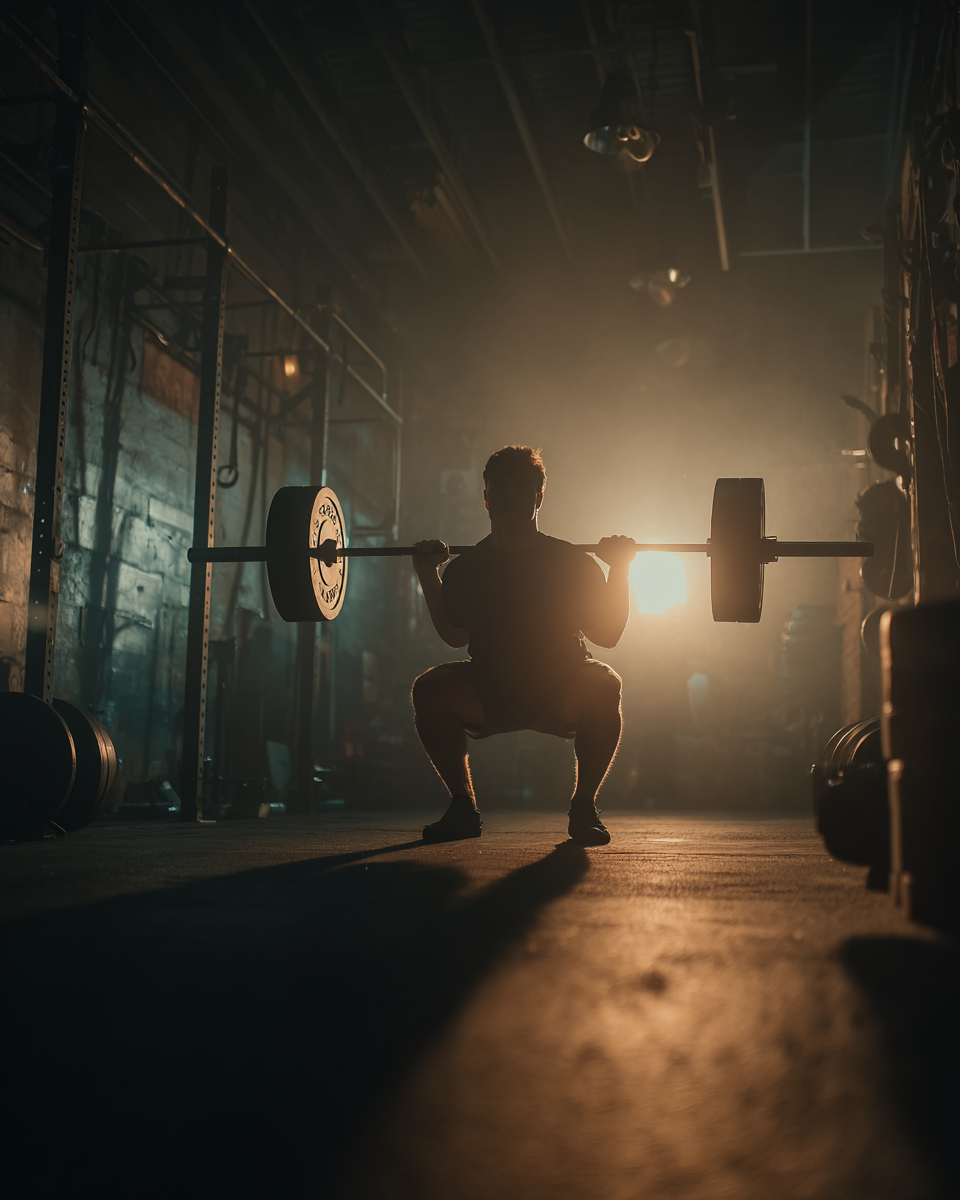
a man doing barbell squats alone in a dark gym

During a workshop in Arizona many years ago, I remember Grandmaster Sam Chin making a pointed observation about physiques that look impressive but are not necessarily functional. Referring to bodybuilders’ overdeveloped upper bodies, he said, “If you really want to know if somebody is dangerous, look at their legs.”

Sifu’s own build says a lot: a long spine and long arms relative to short legs—an advantageous body type for leverage. His youngest son, Hsin, is even more powerfully built, like a silverback gorilla.

These are simply observations about structure, proportion, and mechanical advantage (and maybe some of GM Chin’s inherent bias against strength training; he doesn’t need it to be powerful).

GM Sam Chin is a man of exceptional wisdom and insight, and I disagree with him on very few issues, but the one that stands out most is the value of strength training for martial arts.

I may have big dreams, but I’m cursed with bad genes. Unfortunately, I am better suited to running than to fighting, with a short spine, long legs, and I don’t naturally carry much muscle unless I lift regularly. I graduated from high school at around 155lbs, 6’ 1”. Not exactly an impressive physical specimen.

A useful starting point is the basic relationship between force production and the ground. Renowned strength coach Mark Rippetoe defines strength as “the ability to apply force against an external resistance.” In fighting, the opponent is that resistance. In all human movement, except for some aerial gymnastics and maybe circus acts like the trapeze, the ground serves as the base that allows force to be generated and transferred.

This is where the concept of the kinetic chain becomes relevant. Force is rarely produced by one isolated segment of the body. It is created and transmitted through our physical body from the ground up. In striking, grappling, and throwing, the legs and hips are always the primary drivers: they create propulsion and stability, while the spine helps transfer that force to the extremities of the arms and hands at the point of contact.

Classical martial arts texts describe this in similar terms. The Tai Chi classics, for example, summarize the pathway of force as follows:

其根在脚,发于腿,主宰于腰

“Rooted in the feet, issued through the legs, directed by the waist.”

From this perspective, the argument for squats and deadlifts should be self-evident. Alas, as they say, “Common sense is so rare it should be considered a fucking superpower.”

Both the squat and deadlift load the entire kinetic chain heavily and progressively through large ranges of motion. The squat and the deadlift can be loaded more heavily than any other human movement. A heavier load equals more physical stress, and that equals more adaptation. They are also precisely measurable and incrementally scalable, which makes them useful for long-term development and the safety of the lifter.

At the same time, it is worth addressing a common critique by Rippetoe: that kettlebells are “useless.” If kettlebells are used primarily for high-repetition work done for time, then they are best categorized as conditioning rather than strength development. That does not make them worthless; it just means you’re using the tool for the wrong purpose, or you’re not using a heavy enough bell.

Used intelligently, kettlebells can complement a martial artist’s training, especially for accessory work.

The Get Up is a clear example: it develops controlled transitions from the ground to standing under load, reinforcing coordination, shoulder stability, and the ability to regain posture—qualities that matter in any situation where one finds themselves in the generally undesirable situation of being on the ground in a confrontation where multiple threats exist simultaneously, and they are mobile while you are not.

With all due respect to BJJ (a fantastic art), a primary objective of effective self-defense is being able to “break contact” whenever the situation demands it as the most prudent course of action, both legally and practically, and being stuck flat on your back on the ground does not meet that requirement.

While your average street beef between bros amounts to dueling, if you’ve been keeping track of the mob violence taking place in Minnesota or the color revolution happening in Iran, you’ll see that real-world self-defense requires skills and abilities that fall outside the domain of dueling mano a mano.

Being able to get your ass up off the ground under load is hard to argue against rationally, in my opinion.

The broader question is: why does strength matter in the first place?

“Strong people are harder to kill and more useful in general.”
~Mark Rippetoe

Combat sports have weight classes because size and strength confer advantages: greater mass, greater potential force production, and often greater resilience to impact and injury that a smaller, weaker fighter just doesn’t have.

Outside sport, there are no such constraints. Criminal violence is typically opportunistic; the aim is rarely a fair contest, but an easy target. For that reason, a strong, muscular physique by itself has deterrent value as a signal that the cost of engagement isn’t going to be a discount; anybody who wants my shit is going to pay retail at a minimum.

It is in our best interests to be as big and strong as we can sustainably maintain, to stack the odds in our favor if we ever find ourselves in need.

Strength training also has implications beyond immediate performance. It increases bone density and muscle mass.

Muscle functions as a glucose sink and as a reserve of amino acids during periods of high demand, like illness or recovery from serious injury. Emerging research also emphasizes skeletal muscle as an endocrine organ, involved in signaling that influences metabolism and overall health.

Modern daily life simply doesn’t provide enough physical stress for most people to maintain an adequate level of strength and lean mass necessary for long-term health and physical independence, and the practice of martial arts alone is also limited in this regard.

With all that said, this still leaves an important distinction.

Strength is a supplement, not a substitute for skill (which is where many people lose the plot). Gaining muscle and improving force production upgrades the body’s “hardware,” but it does not automatically improve the “software” of timing, distance, balance, and optimal movement patterns (i.e., technique).

A bigger, stronger fighter inherently hits harder, but not necessarily as hard as they could if their technique were better. Technique must still be optimized through practice. Getting bigger and stronger adds new tissue (hardware), while skill is a nervous system issue (software).

Strength and conditioning increase capacity; practice determines how well that capacity is applied.

image of healthy foods
If you’re struggling with getting a sustainable pattern of behavior off the mats, consider my Fit To Fight coaching program, where I offer guidance, support, and accountability. Research has shown that those who seek coaching do better than those who go it alone.

As human beings, we all face limited resources, including money (food is expensive), time, energy, and recovery capacity. As we approach the limits of our genetic endowment, getting bigger and stronger will yield diminishing returns, and we start to specialize in strength training.

Adding more weight to the bar will necessitate less time on the mats due to the demands of both the time spent in the gym and the recovery required to adapt to the levels of physical stress, and this is obviously counter-productive to our primary objective of being better martial artists.

However, most people are far, far away from the point of that being an issue until they’ve managed somewhere in the neighborhood of a double bodyweight squat and a 2.5x bodyweight deadlift. Feats of strength that are hardly notable in the world of strength training, but easily manageable by most males between the ages of 15 and 50, without detracting from their time on the mats.

The practical takeaway is not that everyone needs to become a powerlifter or that a barbell can replace years of fighting skill. It’s that force still obeys the same rules whether you’re sparring in a gym or trying to get home in one piece.

Strength, in that sense, is insurance. It improves the body’s tolerance for impact, fatigue, and injury. It makes it harder for another human being to move you, fold you, or keep you pinned in place. It also changes how you’re read at a distance. Most predatory violence is not a duel. It’s a selection process. Being bigger and stronger broadcasts to the world that an engagement with you is going to be expensive.

But the honest limitation remains: gaining strength builds capacity, not competence. Improving hardware does not automatically upgrade the software. If you want the force you’ve built to show up on demand, under pressure, in the right direction, at the right time, you still have to practice your art. Timing, distance, balance, and decision-making are trained where they’ve always been trained: on the mats, in contact, against resistance that thinks, hits back, and wants to go home at least as much as you.

There’s also the constraint most people prefer to ignore: resources are finite. Time, recovery, money, and attention all get spent somewhere. Past a certain point, pursuing strength becomes its own specialization, competing directly with mat time and recovery. As the great Thomas Sowell is often quoted, “There are no solutions, only tradeoffs.”

The good news is that almost nobody reading this is anywhere near that problem.

For most men, building to roughly a double bodyweight squat and a 2.5x bodyweight deadlift is a reasonable benchmark: not remarkable in strength sport, but transformative for durability, confidence, and real-world force production—without requiring you to live in the gym or sacrifice the training that actually makes you a better fighter.

Effective self-defense means stacking the odds where you can, and not doing some regular strength training is just leaving money on the table both on and off the mats.

Join us and unlock the secrets of the Old Masters!

Read More!

About the Author

Ashe Higgs, I Liq Chuan Master Instructor & L2 Nutrition Coach

Ashe is a highly skilled martial arts instructor and certified nutrition coach with over two decades of experience in the field. He holds a Master Instructor certification in I Liq Chuan under Sam FS Chin, making him one of only several individuals worldwide to hold the title. He has taught classes and workshops worldwide and is passionate about helping others achieve their fitness and wellness goals.

With a background in full-contact fighting and a Level 2 certification from Precision Nutrition in nutrition coaching, Ashe is a well-rounded expert in the fields of martial arts. In addition to his expertise, he has a wealth of experience in teaching and mentoring others. He has a natural ability to connect with his students and inspire them to reach their full potential.

Read more about Ashe here…

Disclaimers & Conflicts of Interest

I am not a doctor or a lawyer, and the information provided should not be considered medical or legal advice.

The information provided is for educational and informational purposes only and should not be used as a substitute for professional legal or medical advice, diagnosis, or treatment. Consult your doctor or a qualified healthcare professional before making any changes to your diet, exercise routine, or lifestyle.

Please note that some of the links provided in this content may be affiliate links, meaning that I may receive a small commission if you purchase through them. However, please rest assured that any products or services recommended are based on my personal experience and belief in their value. I only recommend products or services that I have personally used and believe in.

Posted on

Dogs for Home Defense: What Most People Get Wrong

A snarling dog in a home defense scenario

When it comes to protecting your home and loved ones, a layered approach to self-defense is always better than a single solution. Cameras, lighting, locks, situational awareness—all of these play a part. But one of the oldest, simplest, and most underrated tools in home defense is the family dog.

Now before you go out and start shopping for a Belgian Malinois trained by Navy SEALs, let’s talk about what a dog actually contributes to your home defense plan—and where the real value lies.

The Dog as Early Warning System

Eighty percent of a dog’s value in home defense comes from one thing: early warning.

Criminals want soft targets. They’re looking for a quick score, not a fight. If a dog starts barking when they approach your door or window, it ruins their element of surprise—and most will move on to the next house.

And here’s the kicker: a dog doesn’t have to be big or mean to be effective. A ten-pound terrier with a loud mouth is just as disruptive as a German Shepherd when it comes to alerting you (and your neighbors) that something’s not right. You’re not trying to stop a threat with your dog. You’re trying to know it’s there before it becomes one.

The truth is, a barking dog is often enough to stop a break-in before it starts. And that’s where the value really lies.

Big Dogs vs. Small Dogs

To reinforce this, let’s look at the perspective of Stonnie Dennis, an expert dog trainer from Kentucky. Stonnie trains both large protection breeds like Dutch Shepherds, and small companion dogs. In one of his videos, he holds up two dogs: a powerful Dutch Shepherd/Malinois mix named Ryder, and a tiny toy Goldendoodle named Lolly.

He says this outright: for most people, Lolly is actually a better protection dog.

Why? Because she barks. Loud. Early. Often.

That barking is going to wake you up, alert the neighbors, and tell the would-be intruder that the element of surprise is gone.

Meanwhile, the big dog—while more physically capable—comes with more liability. If he bites someone, you’re looking at legal consequences. If he reacts at the wrong time, even to the right person, it could cost you.

Small dogs don’t have that problem. They’re easy to control, have almost no ability to do damage, and require far less training to function as an effective deterrent. All you really need is for the dog to bark, and come when called. That’s it.

Deterrence vs. Engagement

Let’s say someone still decides to break in.

Now you’ve lost the advantage of surprise, but you’ve gained one of awareness. Your dog’s bark bought you time to check your security cameras, to grab your phone, to prepare yourself.

If you’ve layered your defense properly, your cameras and lighting kick in next. Most modern setups let you speak through the cameras, alerting the intruder that you see them and that the cops are on their way.

If they still come in after that?

Now you’re dealing with a determined, potentially dangerous individual. And this is where things get real.

At that point, you shouldn’t be relying on a dog—large or small—to physically stop an attacker. This is where you need a well-thought-out self-defense plan. That might include a standard capacity magazine and a clear understanding of when and how to use it.

The Myth of the “Man Fighter”

A lot of people like the idea of owning a “man stopper”—a big dog trained to take down intruders. And sure, there’s a place for that in specific, high-risk environments. But for the average homeowner? That fantasy doesn’t match reality.

Most protection dogs require extensive training, constant reinforcement, and high-level management. They’re not plug-and-play. And unless they’ve been tested, there’s no guarantee they’ll actually engage an intruder when it counts.

More importantly, they come with real liability. If your dog bites someone—even justifiably—you could be sued. If it bites someone unjustifiably? You’re in even deeper trouble.

As Stonnie points out, a dog that decides to bite a shady contractor at the wrong time—even if the guy really is casing your home—can land you in a legal nightmare. Meanwhile, your toy poodle barking at the same guy? No harm, no foul.

What You Really Need

If you’re building a layered self-defense strategy, here’s what makes sense:

  • Step 1: Early Warning — A dog that barks when someone’s around your home.
  • Step 2: Surveillance — Cameras to verify the situation without putting yourself in harm’s way.
  • Step 3: Deterrence — Lights, signs, and audible alerts to let them know they’ve been seen.
  • Step 4: Response — You. With a plan. And the tools (and training) to handle the worst-case scenario.

That’s it. The dog’s job is to alert. Not to attack.

Conclusion

In most homes, the dog’s role in self-defense is simple: bark early, bark often. That alone is enough to derail most criminal plans.

So don’t get hung up on size or breed. Don’t romanticize the idea of your dog protecting you like something out of a movie. Focus on practicality. A small, loud, loyal dog is often the best option you can have—low liability, high return.

Because if someone breaks in, you don’t want your dog doing the fighting. That part is your responsibility.


Want to learn how to build a real, layered plan for personal protection and home defense?

Subscribe to our newsletter for weekly training tips, no-BS analysis, and self-defense strategies that actually work. Visit fallingleaveskungfu.com and get started today.

Train smart. Stay safe. Catch you next time.

Join us and unlock the secrets of the Old Masters!

Read More!

About the Author

Ashe Higgs, I Liq Chuan Master Instructor & L2 Nutrition Coach

Ashe is a highly skilled martial arts instructor and certified nutrition coach with over two decades of experience in the field. He holds a Master Instructor certification in I Liq Chuan under Sam FS Chin, making him one of only several individuals worldwide to hold the title. He has taught classes and workshops worldwide and is passionate about helping others achieve their fitness and wellness goals.

With a background in full-contact fighting and a Level 2 certification from Precision Nutrition in nutrition coaching, Ashe is a well-rounded expert in the fields of martial arts. In addition to his expertise, he has a wealth of experience in teaching and mentoring others. He has a natural ability to connect with his students and inspire them to reach their full potential.

Read more about Ashe here…

Posted on

Is Pepper Spray Effective For Self Defense?

Self‑defense is a fundamental human right, yet exercising it often feels like walking a legal tightrope. A firearm might stop a threat, but in many states it’s illegal to carry, and one wrong shot can turn you into a defendant even if you were justified.

Empty‑hand skills can keep you law‑compliant, but meeting force with fists can leave you badly injured.

OC spray seems like the perfect middle path: compact,often legal (in America) legal where guns aren’t, and capable of stopping most attackers at a distance. But wind can betray you, formulas expire, quality varies, and about one in ten assailants simply don’t react.

Can you build a truly reliable, layered defense—one that keeps you safe without landing you behind bars? In the sections ahead, we’ll expose these hidden pitfalls and guide you toward a smarter toolkit for real‑world self‑protection.

A woman defends herself against an attacker with a blast of pepper spray

What Is Pepper Spray?

Sometimes called OC (oleoresin capsicum) spray, pepper spray is a defensive aerosol formulated to deter assailants. Its active ingredient—capsaicin—derives from chili peppers and is responsible for their intense heat. When deployed toward an attacker’s face, the irritant quickly inflames mucous membranes in the eyes, nose, and throat, producing intense burning, tears, and temporary blindness. This reaction can incapacitate an aggressor long enough for the user to escape or seek help. While pepper spray is a standard tool for many law enforcement agencies, it’s also widely available for civilians seeking a compact, non‑lethal means of personal protection.

Capsaicin—the active irritant in OC spray—targets TRPV1 ion channels found on nerve endings in the eyes, nose, and airways. Once these channels are triggered, they relay intense burning and pain signals to the brain almost immediately. Users typically feel the full effects within seconds, and symptoms can persist for 30 to 45 minutes or more. Because it delivers a potent, non‑lethal shock to an attacker’s sensory system, pepper spray can rapidly disable an aggressor long enough for you to flee or call for assistance.

Is Pepper Spray An Effective Self-Defense Tool?

Self‑defense is a fundamental human right rooted in the basic libertarian principle that each individual owns their own life and body. No government or bureaucrat should be able to strip you of the right to protect yourself when faced with violence. In an ideal world, we’d all be free to choose the most effective self‑defense tools without red tape or moral judgment. But the reality is harsher: laws vary wildly from state to state, public opinion shifts with every tragedy, and the consequences of a defensive action can leave you more vulnerable than the attack itself.

Pepper Spray vs. Firearm For Self-Defense

In practice, the most effective tool for many is a firearm. A well‑placed round can stop an attacker instantly, and in capable hands, a gun offers reach and power unmatched by other means. Yet nearly 80 percent of assaults in the U.S. involve nothing more lethal than fists, feet, or so-called “regular force.”

In those situations, drawing or firing a weapon is not only overkill—it’s often legally unjustifiable and ethically questionable. Discharging a firearm in response to a shove or a punch can land you in court, facing manslaughter or worse charges, even if your intentions were pure.

Adding to the complexity, dozens of states restrict or outright ban carrying a firearm for personal defense. Conversely, most of those same states permit civilian possession of OC (oleoresin capsicum) spray. Pepper spray occupies a legal grey zone that, for many law‑abiding citizens, makes it the only viable “less‑than‑lethal” tool available for everyday carry. It addresses the need for a force multiplier without crossing the bright‑line prohibitions against deadly weapons in public spaces.

Limitations of Pepper Spray

But OC spray is no panacea. First, quality varies dramatically between brands and formulas. Some pocket‑size cans claim military‑grade potency but are little more than scented water when you need them most. Always choose a product from a reputable manufacturer, one that specifies OC concentration, spray pattern, and delivery range.

Then there are the firearm‑like pepperball guns and launchers to consider. They may feel safer for operators unused to firearms, offering projectile delivery of irritant rounds, but their bulk, reload complexity, and potential for serious injury make them fundamentally different tools. Treat them as separate from hand‑held OC—and train accordingly.

Pepper Spray Shelf Life and Expiration Date

Shelf life is another critical factor. OC sprays carry printed expiration dates for a reason: propellant degrades, pressure drops, and the active agents can settle or separate. An expired canister can spew a weak mist or fail outright. Mark your calendar to replace every unit before its sell‑by date, and store spares in your glovebox and range bag.

Pepper Spray & Environmental Factors

Environmental variables can’t be ignored. Wind can blow a stream of spray back into your face, rain can dilute the formula, and confined spaces can turn a defensive cloud into a hazard for both parties. To mitigate drift and maintain effectiveness, some manufacturers now offer OC gels rather than sprays: gels form a narrower, sticky stream that resists wind blowback, holds together in rain, and reduces collateral exposure in tight quarters. Tactical deployment still requires constant situational awareness and consideration of bystander risk.

Even the best OC spray won’t incapacitate all assailants. Some people, due to high pain tolerance, mental state, or drug use, won’t respond. According to firearms researcher and president of the Crime Prevention Research Center, John Lott, A National Institute of Justice study found that pepper gas works only 20% of the time when used by arresting officers. If your only plan is to spray and run, you risk facing a fully functional attacker who’s angrier than before.

Pepper Spray vs. Martial Arts

And the same limitations that apply to a firearm—namely, the window of opportunity to deploy it—apply to OC spray. An attacker who closes the distance in a second can seize your canister, knock it out of your hand, or beat you to the punch. As I’ve written about previously, that reality underscores the need for at least a baseline of empty‑hand martial arts skills. A simple wrist lock, a well‑placed knee, or the ability to break a grip can buy the milliseconds required to deploy your spray or reach for your holster.

At its best, OC spray offers a middle path: it lets you keep distance and apply force without resorting to bullets, but still relies on chemical pain compliance rather than lethal intent. Martial arts, by contrast, offer a defense built on structure, leverage, and timing—but they demand close contact and carry a high risk of injury to both parties. Neither approach stands alone.

Pepper Spray Self-Defense Class

OC spray is no silver bullet. To wield it safely and effectively, you must train—learn proper draw techniques, practice triggering under stress, and rehearse transitions to empty‑hand responses. Familiarity breeds speed and confidence, and confidence can deter violence before it starts.

Avoiding Tool Fixation in Self-Defense

Finally, beware tool fixation: when all you have is a hammer, everything looks like a nail. If your go‑to is always a gun, you’ll default to it even when a swift elbow or a jar of pepper spray would suffice. A truly resilient self‑defense strategy combines multiple layers—firearm, OC spray, and hands‑on skills—giving you options calibrated to the threat, the environment, and the law. That layered approach keeps you safer and, just as importantly, keeps you out of jail.

Best Pepper Spray For Self‑Defense

Best pepper spray for personal protection

When you need consistency under stress, POM Clear delivers. POM’s pepper spray undergoes rigorous CRC testing—using High‑Performance Liquid Chromatography to verify capsaicin and related capsaicinoid content—so you know every canister contains exactly 1.40% CRC (a 10% OC formula at 2 million Scoville Heat Units, per Guardian Self Defense). That concentration balances maximum stopping power with minimal drift, so you’re less likely to miss or overwhelm bystanders.

Safety features matter almost as much as potency. POM’s patented flip‑top design locks the trigger when closed, preventing accidental discharge in your pocket or purse, yet flips open with a single thumb motion when you need it. Combined with clearly printed expiration dates, these quality‑control measures mean you won’t find yourself spraying a weak mist when it counts. For a reliable, law‑compliant, less‑than‑lethal option that you can trust, POM Clear is our top pick.

*As of 21 April 2025, I have no affiliation with POM. I am making my recommendation based solely on the stringency of their quality control methods and general recognition within the self-defense community as a high-quality, reliable brand.

Conclusion

In the end, self‑defense isn’t a luxury—it’s a fundamental human right. Yet rights on paper don’t protect you in the street, and rigid reliance on any single tool carries its own perils. A firearm can be the ultimate equalizer, but legal lines are razor‑thin and misjudgment carries steep costs. Empty‑hand skills keep you legal and hone your resolve, but close‑quarters fights risk real injury. OC spray offers a powerful middle path—legal where guns aren’t, compact, and distance‑keeping—but it, too, has pitfalls in quality, shelf life, weather, and effectiveness. The answer isn’t choosing one over the others, but layering them: train with a firearm where lawful, carry a high‑quality OC spray you know by heart, and develop solid hands‑on techniques to bridge any gaps. That layered approach maximizes your options, minimizes legal exposure, and keeps you ready for the world as it really is.

If you’d like to build those empty‑hand skills and gain confidence under pressure, consider joining a local martial arts class like mine. And if you found this article useful, sign up for my free weekly newsletter—each issue delivers more self‑defense strategies, training tips, and practical insights straight to your inbox.

Join us and unlock the secrets of the Old Masters!

Read More!

About the Author

Ashe Higgs, I Liq Chuan Master Instructor & L2 Nutrition Coach

Ashe is a highly skilled martial arts instructor and certified nutrition coach with over two decades of experience in the field. He holds a Master Instructor certification in I Liq Chuan under Sam FS Chin, making him one of only several individuals worldwide to hold the title. He has taught classes and workshops worldwide and is passionate about helping others achieve their fitness and wellness goals.

With a background in full-contact fighting and a Level 2 certification from Precision Nutrition in nutrition coaching, Ashe is a well-rounded expert in the fields of martial arts. In addition to his expertise, he has a wealth of experience in teaching and mentoring others. He has a natural ability to connect with his students and inspire them to reach their full potential.

Read more about Ashe here…

Disclaimers & Conflicts of Interest

I am not a doctor or a lawyer, and the information provided should not be considered medical or legal advice.

The information provided is for educational and informational purposes only and should not be used as a substitute for professional legal or medical advice, diagnosis, or treatment. Consult your doctor or a qualified healthcare professional before making any changes to your diet, exercise routine, or lifestyle.

Please note that some of the links provided in this content may be affiliate links, meaning that I may receive a small commission if you purchase through them. However, please rest assured that any products or services recommended are based on my personal experience and belief in their value. I only recommend products or services that I have personally used and believe in.

Posted on

Why Hand-to-Hand Combat Still Matters in the Firearm Era

In today’s world, self-defense has evolved beyond the traditional boundaries of martial arts. It’s no longer just about learning how to throw a punch or execute a perfect takedown—it’s about integrating skills that prepare you for real-world scenarios. Whether you carry a firearm or not, mastering basic hand-to-hand combat is a critical component of staying safe and protecting yourself or others in unpredictable situations.

Why Open Carry Can Be a Liability

A recent incident highlights the importance of this. In the blink of an eye, a person’s open-carry firearm became the target of an experienced attacker. While carrying a weapon can provide a sense of security, it’s also a responsibility that requires proper training. In this case, the element of surprise was lost, and the attacker quickly took advantage. If you carry openly, you’re sending a signal, and that signal could make you a target. Even with a double-retention holster, attackers often know how to bypass security features. Time buys you options, but the key to survival lies in your ability to go hands-on.

The Importance of Grappling Skills for Weapon Retention

Hand-to-hand combat training, such as grappling fundamentals, can mean the difference between losing control of your weapon and creating enough space to escape or regain dominance. Techniques like shrimping, sprawling, and bucking are essential for operating effectively in close-quarters scenarios. These skills aren’t just for mixed martial artists—they’re critical for anyone who may find themselves in a life-or-death situation.

A Firearm Alone Isn’t Enough for Self-Defense

It’s a common misconception in the firearm community that having a gun is enough to defend yourself. But as any self-defense expert will tell you, a firearm is just one tool in your arsenal. Without basic martial arts training, you’re at a significant disadvantage if someone closes the gap or surprises you.

The Value of Scenario-Based Training

Scenario-based training is the next step in building your self-defense toolkit. Practicing under pressure helps you learn to retain your weapon, create space, and operate effectively when your adrenaline is pumping. Organizations like ShivWorks are leading the way in teaching these critical skills. They combine hand-to-hand combat with firearms training to ensure students are prepared for close-quarters encounters.

Why Martial Arts Remains Vital in the Age of Firearms

The bottom line is this: even in the age of firearms, martial arts and self-defense training are still vital. They provide the foundation for situational awareness, physical preparedness, and the ability to respond to threats effectively. Don’t be a flat-range hero—train for real-life scenarios. Whether it’s learning how to sprawl, escape a bad position, or fight off an attacker intent on taking your weapon, these skills can save your life.

Self-Defense Is About Mindset and Preparation

At the end of the day, self-defense isn’t just about tools or techniques—it’s about mindset and preparation. Train hard, stay strong, and be ready for anything.

Join us and unlock the secrets of the Old Masters!

Read More!

About the Author

Ashe Higgs, I Liq Chuan Master Instructor & L2 Nutrition Coach

Ashe is a highly skilled martial arts instructor and certified nutrition coach with over two decades of experience in the field. He holds a Master Instructor certification in I Liq Chuan under Sam FS Chin, making him one of only several individuals worldwide to hold the title. He has taught classes and workshops worldwide and is passionate about helping others achieve their fitness and wellness goals.

With a background in full-contact fighting and a Level 2 certification from Precision Nutrition in nutrition coaching, Ashe is a well-rounded expert in the fields of martial arts. In addition to his expertise, he has a wealth of experience in teaching and mentoring others. He has a natural ability to connect with his students and inspire them to reach their full potential.

Read more about Ashe here…

Posted on

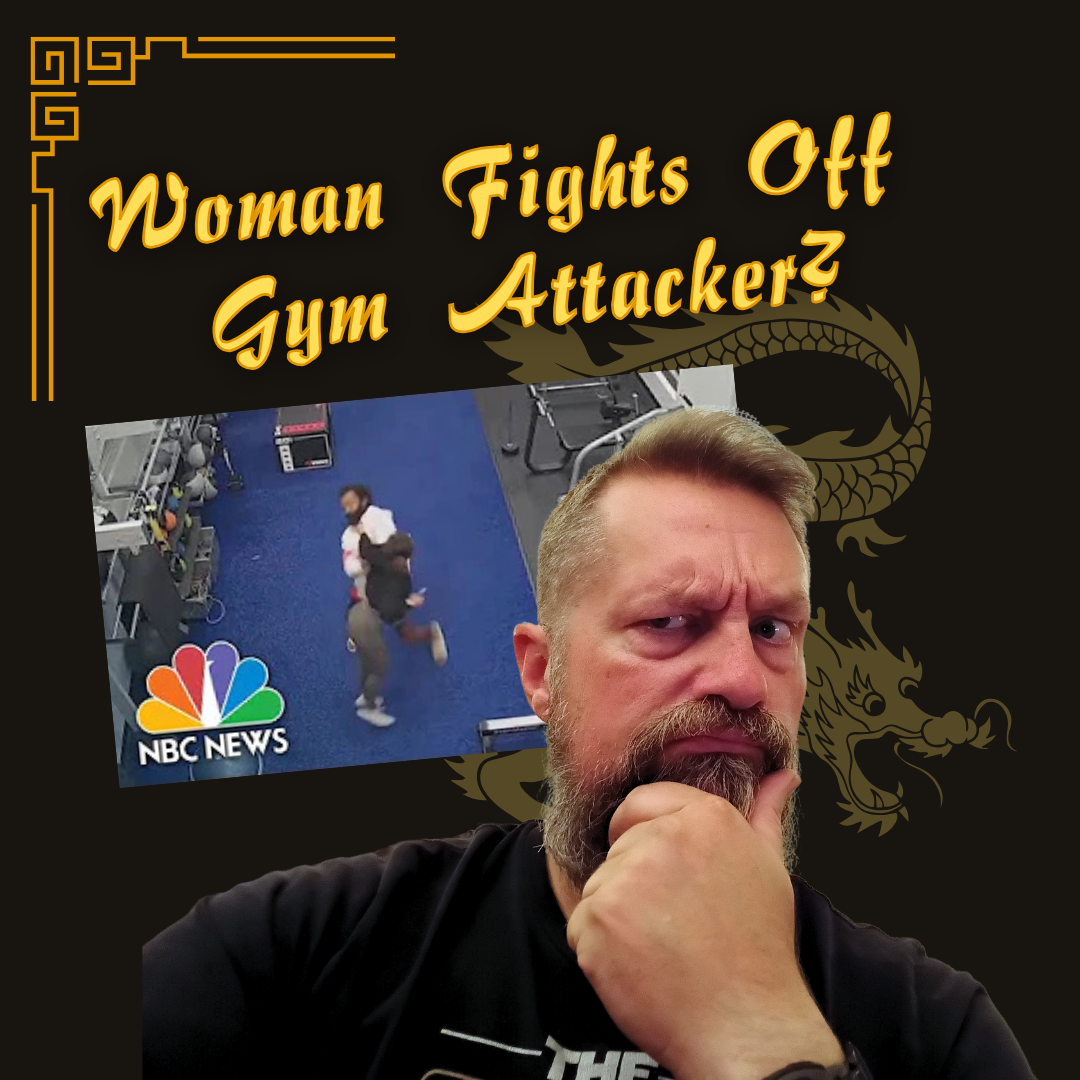
Woman Fight’s Off Her Attacker At The Gym!

(Or Does She?)

In a remarkable incident captured on security footage and widely shared online, a Florida woman “fought off” a male attacker at her gym. While the mainstream media—NBC News included—hailed this as an empowering story of self-defense, the reality of the situation deserves a closer examination. Let’s unpack what actually happened, analyze the implications for self-defense, and discuss the lessons it offers.

screen shot of woman fighting off an attacker at the gym

The Event: What Really Happened

The footage shows a man entering the gym, apparently after the woman allowed him inside. Almost immediately, his behavior turns aggressive, leading to a physical confrontation. The attacker attempts a poorly executed takedown, eventually pinning the woman to the ground. Despite his dominance in the early moments, the woman’s determination and fitness level enable her to resist long enough to escape.

It’s crucial to clarify that this wasn’t a scene of a woman overpowering her attacker in a conventional sense. Instead, her ability to endure and create an opportunity to flee was what ultimately kept her safe. This distinction matters, especially considering how the media has framed the story.

Defining “Fighting Off” vs. “Resisting”

For clarity, let’s establish key definitions:

  • Fighting Off: In my opinion, fighting off an attacker means, at a minimum, the attacker chooses to disengage to save themselves from further harm or is incapacitated and physically incapable of continuing the altercation (e.g., knockout).
  • Resisting: Resisting means that while you are responding to an aggressor’s use of force, you are the one who chooses to, or must disengage to save yourself.

Media Representation: The “Girl Boss” Narrative

The headline “Florida Woman Fights Off Gym Attacker” conjures an image of a woman decisively defeating a male assailant. This portrayal, while inspiring, isn’t accurate. Such embellishments—common in mainstream media—do little to serve public understanding of real-world self-defense, especially in regards to a female defending herself against a male attacker. The focus should be on the woman’s resourcefulness and the factors that contributed to her escape, not on a dramatized narrative that misrepresents the dynamics of the confrontation.

Strength Training: A Key Factor in Survival

One of the most significant takeaways from this incident is the role of physical fitness. The woman’s time spent in the gym clearly paid off. Her strength and endurance allowed her to resist her attacker long enough to escape, even as he overpowered her initially. As Mark Rippetoe famously said, “Strong people are harder to kill and more useful in general.” This scenario exemplifies the practical benefits of strength training—not just for fitness, but for survival.

“Strong people are harder to kill and more useful in general.”
~Mark Rippetoe

Critically, this challenges the traditional martial arts community’s tendency to downplay strength training. While technique and skill are invaluable, physical conditioning often proves to be the deciding factor in real-life confrontations. This isn’t to undermine the importance of martial arts but to highlight the need for a well-rounded approach to self-defense that includes strength and conditioning.

Self-Defense vs. Combat Sports

This incident also underscores a fundamental difference between self-defense and combat sports. In combat sports, the goal is to win the fight; in self-defense, the goal is to escape and survive. From a combat sports perspective, the attacker dominated the encounter. However, from a self-defense standpoint, the woman’s ability to escape unscathed was a definitive victory.

It’s worth noting that combat sports training can enhance self-defense skills but can also lead to a counterproductive mindset if one becomes focused on “fighting to win” rather than “fighting to escape.” A combat sport mindset can box us in mentally, costing us crucial time when every second counts.

Combat sport training is bound by rules.

While the importance of basic striking, kicking, and grappling technique cannot be overstated, many illegal attacks like groin strikes, attacks to the eyes, and small joint manipulation—while not “unbeatable techniques”—can be invaluable tools in a legitimate self-defense scenario, especially when there is a large disparity between combatants as we see in the video.

Lessons Learned

  1. Fitness Matters: Regular strength and endurance training can provide a critical edge in a physical confrontation.
  2. Awareness is Key: The woman’s first misstep was allowing the attacker into the gym. Situational awareness and setting boundaries are essential first lines of defense.
  3. Self-Defense Priorities: The goal isn’t to “win” a fight but to create an opportunity to escape. Training should reflect this reality.
  4. Media Literacy: Recognize and question how stories are framed. Sensationalized narratives can distort public perception of self-defense.

Moving Forward

This incident serves as a powerful reminder of the importance of preparedness and the realities of self-defense. It’s not about mastering a single martial art or relying solely on physical strength. Instead, it’s about cultivating a comprehensive approach that combines fitness, situational awareness, and practical self-defense skills.

As martial artists and individuals, we can use this story as a catalyst for self-reflection and growth. Are we training effectively for real-world scenarios? Are we building the physical and mental resilience needed to handle such situations? These are the questions we should be asking.

In the end, the Florida woman’s escape was a testament to her determination, fitness, and presence of mind. Let’s honor her experience by learning from it and striving to be better prepared in our own lives.

Join us and unlock the secrets of the Old Masters!

Read More!

About the Author

Ashe Higgs, I Liq Chuan Master Instructor & L2 Nutrition Coach

Ashe is a highly skilled martial arts instructor and certified nutrition coach with over two decades of experience in the field. He holds a Master Instructor certification in I Liq Chuan under Sam FS Chin, making him one of only several individuals worldwide to hold the title. He has taught classes and workshops worldwide and is passionate about helping others achieve their fitness and wellness goals.

With a background in full-contact fighting and a Level 2 certification from Precision Nutrition in nutrition coaching, Ashe is a well-rounded expert in the fields of martial arts. In addition to his expertise, he has a wealth of experience in teaching and mentoring others. He has a natural ability to connect with his students and inspire them to reach their full potential.

Read more about Ashe here…

Posted on

The Role of Self-Awareness In Self-Defense

Cooper's Color Code

Introduction

Situational awareness is often touted as a key skill for identifying and reacting to potential threats. This focus on external vigilance is crucial but is only part of the equation. Equally important, though not as frequently discussed, is the role of self-awareness, particularly in high-risk scenarios. This concept was strikingly highlighted in a piece I recently came across by Coach Tony Blauer, a name synonymous with innovative self-defense techniques.

As a long-time instructor of I Liq Chuan – The Martial Art of Awareness, Blauer’s perspectives struck a chord with me, echoing many principles I have embraced and taught for two decades. Self-awareness is about more than being conscious of the threat in high-risk situations. It’s about understanding and managing our internal state – our thoughts, emotions, and physiological responses. This internal monitoring is crucial because it directly impacts how effectively we can apply our situational awareness. It’s the difference between simply recognizing a threat and being able to respond to it appropriately. In self-defense, awareness of both the environment and ourselves is I Liq Chuan’s “stock in trade,” a vital skill set for anyone looking to enhance their personal safety.

Situational Awareness and Its Levels in Self-Defense

Cooper’s Color Code: A Framework for Awareness

Lt. Col. Jeff Cooper, Arizona rancher, former Marine, and renowned firearms instructor, developed a color-coded system to describe different levels of situational awareness and readiness to respond to threats. 

According to Cooper, the key to surviving a deadly encounter lies not in the weapon or martial abilities but rather in the combat mindset. This crucial concept is elaborated in his book, “Principles of Personal Defense,” where he emphasizes that the foremost tool in such situations is one’s mental preparedness and approach.

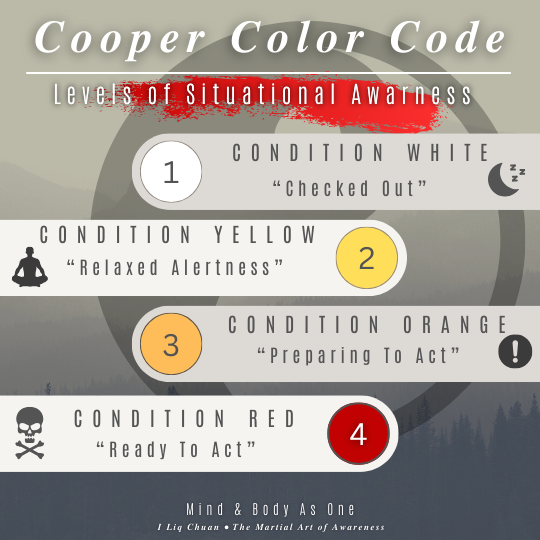
As currently taught, this system, known as Cooper’s Color Code, has become a foundational tool in self-defense and tactical training. It helps individuals gauge and adjust their level of awareness and readiness in various situations. The code consists of four colors, each representing a specific state of alertness:

  1. White: In this state, a person is unprepared and unaware of their surroundings. They are not expecting any conflict or threat. This level of awareness is often seen in safe environments, such as one’s home.
  2. Yellow: This is a relaxed but alert state. People in condition yellow are aware of their surroundings and are prepared for potential threats but do not actively identify any specific danger. It’s a state of general awareness that should be maintained in any unfamiliar or public environment.
  3. Orange: In this heightened state of alertness, a person has identified a potential threat or anomaly in their environment. This doesn’t mean there is an immediate danger, but the individual is prepared to act if the situation escalates.
  4. Red: This is a state of readiness to respond to an immediate threat. When in condition red, a person is ready to take action, having identified a specific threat that requires a response.

The Practical Application of Cooper’s Color Code

This system is not just theoretical; it has practical applications in everyday life and self-defense training. By understanding and applying Cooper’s Color Code, individuals can better prepare themselves for potential threats. For instance, staying in a state of relaxed readiness (condition yellow) in public places allows one to quickly shift to orange or red if a threat appears, thereby reducing reaction time.

Cooper's Color Code illustration

In his book, The Martial Art of Awareness, GM Sam Chin writes, “The difference that distinguishes ‘you are walking, and I am walking’ is the concept of mindfulness. While there is no outer difference between ‘the two persons walking,’ there is an inner difference.  One person may walk with his mind in another world, not even realizing he is walking.  He may be thinking about other things in his life and forget to be in the moment. The other person may be practicing mindfulness and be totally in the moment.”

John Correa of Active Self Protection (A.S.P.) often emphasizes the importance of awareness by saying, “Awareness buys you time, and time buys you options.” This statement underscores the value of situational awareness in self-defense. By being aware, individuals can identify potential threats earlier, giving them more time to respond and more options to handle the situation effectively.

Beyond Awareness: The Integration of Self-Awareness

While situational awareness is critical, it’s only one part of the equation. Self-awareness, particularly in high-risk situations, plays a vital role in how we respond to threats. Understanding our internal state – our thoughts, emotions, and physiological responses – is crucial in these scenarios. This internal monitoring allows us to manage our reactions and make more effective decisions under stress.

For example, in a state of heightened alertness (orange or red), recognizing signs of panic or fear in oneself can be the difference between a calculated response and a rash decision. By being self-aware, individuals can regulate their emotions and maintain clarity of thought, even in high-pressure situations.

The Role of Self-Awareness in Managing Fear for Effective Self-Defense

Self-awareness plays a pivotal role in how we respond to threats and high-risk scenarios. In this context, managing fear and understanding our physiological responses like adrenaline dumps become crucial elements of effective self-defense.

In his seminal work on preparedness, Nuclear War Survival Skills, author Cresson H Kearny writes, “Fear often is a life-saving emotion. When we believe death is close at hand, fear can increase our ability to work harder and longer. Driven by fear, we can accomplish feats that would be impossible otherwise. Trembling hands, weak legs, and cold sweat do not mean that a person has become ineffective.”

Understanding and Managing Fear

Fear is a natural response to perceived danger. It’s an instinctive mechanism that prepares our body to either fight or flee. However, the way we handle this fear can significantly influence our ability to respond effectively in high-risk scenarios. An adrenaline dump, a universal human response characterized by a sudden surge of energy, is common in such situations. For the average person, especially those not accustomed to high-stress situations, this spike in fear and adrenaline can be overwhelming, leading to panic or freezing up.

Drawing from personal experience, I found distinct differences in my reactions in competitive and surprise scenarios. While fighting competitively in San Da, I experienced a significant adrenaline dump and needed to absorb a few hits to work through it. I was prepared for the fight; I knew it was coming. However, in situations where I was caught by surprise, my response was often one of complete Zen, a state of calmness and clarity amidst chaos.

The Impact of Uncontrolled Fear

Uncontrolled fear can have detrimental effects in a self-defense situation. It can cloud judgment, slow decision-making, and hinder the execution of learned self-defense techniques. In contrast, effectively managing fear can lead to more rational and strategic responses, utilizing training and situational awareness to their fullest.

people training in combatives

The First Step: Recognizing Fear

Managing fear begins with recognizing it. It’s about being aware of the signs of fear in our body and mind. Zen mindfulness teaches that contact conditions feeling, and feeling conditions the mind. This awareness is the first step towards managing our response to it. Once we’re aware of these signs, we can start to employ strategies to regulate them.

Training to Manage Fear

The ability to manage fear is not innate; it requires practice and training. This can involve scenario-based training, where individuals are placed in simulated high-stress situations. This type of training allows individuals to experience and learn to manage their fear response in a controlled environment. Alongside physical self-defense techniques, this training helps build a more holistic approach to self-defense.

Techniques to Mitigate Fear

Several techniques can be employed to manage fear effectively:

  • Controlled Breathing: Techniques like box breathing or the physiological sigh can help calm the nervous system and reduce the intensity of the fear response.
  • Mindfulness Training: In this context, we simply recognize how we’re feeling without identifying with the feeling. Mindfulness teaches us to neither embrace nor reject what is there. By not identifying with our thoughts and feelings, we can just let them be and return our focus to the task at hand. I Liq Chuan, in particular, takes a unique approach to martial arts training as a tool specifically to develop mindfulness. Mindfulness is ultimately training for improved situational and self-awareness.
  • Positive Self-Talk: Encouraging oneself to affirm that one is still capable of action when experiencing an adrenaline surge can help maintain focus and confidence in stressful situations.
  • Mental Rehearsal: Visualizing and mentally rehearsing trained responses can prepare the mind to act more efficiently under stress.
Samurai with AR style rifles

 “Meditation on inevitable death should be performed daily. Every day, when one’s body and mind are at peace, one should meditate upon being ripped apart by arrows, rifles, spears, and swords.”

The Hagakure

These techniques help mitigate the impact of fear, allowing for clearer thinking and better decision-making. Managing your response in a potentially life-threatening situation will likely involve some combination of all of these factors rather than applying them in isolation.

Regardless of how one prepares, when the SHTF for real, you never know if you’ll be the one to freeze. All we can do is our best, and when the moment comes hope we can rise to meet the occasion.

Instincts and Intuition: The Underappreciated Pillars of Self-Awareness in Self-Defense

In the context of self-defense, while much emphasis is placed on physical preparedness and situational awareness, an often-overlooked element is the role of our instincts and intuition. Though sometimes dulled by modern living and social conditioning, these innate capabilities should be our first line of defense.

Intuition as a Safety Signal

Our intuition often manifests not as a clear directive but as a vague feeling or a sense that something isn’t right. This gut feeling is an evolutionary tool, a subconscious collection of observations and experiences our conscious mind may not immediately recognize or understand. In situations that could lead to violence or danger, many victims of violent crime report that their gut told them something was off about their attacker before the attack occurred.

Trusting and Acting on Intuition

Trusting and acting on these intuitive signals can be the difference between reacting to a threat and avoiding it altogether. It’s about giving credence to that inner voice that alerts us to danger, even if we can’t immediately rationalize why we feel uneasy. This could manifest in various ways, such as crossing the street to avoid someone who makes us feel uncomfortable or leaving a situation that doesn’t feel right. When it comes to self-defense, the best fight is one you never have to have.

A woman looking concerned in a parking lot after dark.
Victims of violent crime often report their gut warned them.

Training to Recognize and Trust Our Intuition

Just as we train our bodies for physical confrontation, we can also train our minds to recognize better and trust our intuition. This involves paying attention to our surroundings and listening to our internal responses. 

Integrating intuition with situational awareness and physical self-defense skills creates a more comprehensive approach to personal safety. While physical skills and situational awareness prepare us to react to threats, intuition can often help us avoid these situations altogether or give us a crucial head start in responding.

Conclusion

In conclusion, the journey to mastering self-defense is multifaceted, encompassing physical techniques and a deep understanding of both situational and self-awareness. As we’ve explored, situational awareness, guided by frameworks like Cooper’s Color Code, is essential for recognizing and preparing for potential threats. However, the integration of self-awareness – the keen understanding of our internal states, emotions, and physiological responses – truly empowers us to respond effectively in high-risk scenarios.

Moreover, the often-underappreciated role of instincts and intuition in self-defense cannot be overstated. When honed and trusted, these innate capabilities can provide invaluable guidance in dangerous situations, sometimes even preventing confrontations before they occur.

Remember, the path to effective self-defense is continuous and evolving. It’s about more than just learning techniques; it’s about developing a mindset encompassing awareness, preparedness, and the ability to manage fear and trust your instincts.

To deepen your understanding and stay updated on the latest insights and strategies in self-defense and staying fit to fight, sign up for our free newsletter. By joining our community, you’ll gain access to a wealth of knowledge to aid your journey towards personal safety and empowerment. Sign up now and take the first step toward mastering the art of self-defense.

Discuss On Telegram!

Discuss this article in our Telegram group!

Join us and unlock the secrets of the Old Masters!

Read More!

About the Author

Ashe Higgs, I Liq Chuan Master Instructor & L2 Nutrition Coach

Ashe is a highly skilled martial arts instructor and certified nutrition coach with over two decades of experience in the field. He holds a Master Instructor certification in I Liq Chuan under Sam FS Chin, making him one of only several individuals worldwide to hold the title. He has taught classes and workshops worldwide and is passionate about helping others achieve their fitness and wellness goals.

With a background in full-contact fighting and a Level 2 certification from Precision Nutrition in nutrition coaching, Ashe is a well-rounded expert in the fields of martial arts. In addition to his expertise, he has a wealth of experience in teaching and mentoring others. He has a natural ability to connect with his students and inspire them to reach their full potential.

Read more about Ashe here…

Disclaimers & Conflicts of Interest

I am not a doctor or a lawyer, and the information provided should not be considered medical or legal advice.

The information provided is for educational and informational purposes only and should not be used as a substitute for professional legal or medical advice, diagnosis, or treatment. Consult your doctor or a qualified healthcare professional before making any changes to your diet, exercise routine, or lifestyle.

Please note that some of the links provided in this content may be affiliate links, meaning that I may receive a small commission if you purchase through them. However, please rest assured that any products or services recommended are based on my personal experience and belief in their value. I only recommend products or services that I have personally used and believe in.

Posted on

Are Martial Arts Good For Self-Defense?

Can Practicing Martial Arts Help In Self-defense Situations?

Self-defense is an important skill to have. 

In an interview with John Stossel, Canadian best selling-author and psychotherapists Jordan Peterson summarized the greater meaning behind martial arts beautifully.

“It’s very helpful for people to hear that they should make themselves competent and dangerous and take their proper place in the world […] because it makes you formidable, and life is a very difficult process; you’re not prepared for it unless you have the capacity to be dangerous.”

Martial arts training can be a valuable tool in helping individuals to defend themselves and their loved ones. However, it’s essential to recognize that martial arts are not a guarantee of success in a fight and that real-world fights are unpredictable and dangerous.  

In this article, we will explore the role that martial arts can play in self-defense and discuss some key considerations when evaluating options for self-protection. We will also discuss why you can’t count on 911 to save you, the differences between street fights and competitive martial arts, and the use of firearms and knives for self-defense. By understanding these issues, individuals can be better prepared to protect themselves and their loved ones in an emergency.

Key Takeaways
Martial arts training can be helpful in a fight, but it is not a guarantee of success.
The average response time for 911 calls can vary widely, meaning you must rely on yourself first.
Street fights and competitive martial arts are very different.
The best martial art is the one you enjoy practicing and can practice consistently and effectively.
Firearms and knives can be valuable tools for self-defense in certain situations, but they come with a significant level of risk and should be handled with caution and respect.
Self-defense against an assailant with a knife or firearm is more complex and risky than self-defense against an unarmed attacker.
Understanding the more profound philosophy of martial arts can have many benefits.
Jordan Peterson on the value of being dangerous.

Will Martial Arts Help In A Fight?

Martial arts training can certainly be helpful in a fight, as it teaches techniques for defending yourself and disabling an attacker. However, it’s essential to remember that real-world fights are unpredictable and dangerous, and the outcome of a fight can never be guaranteed. Therefore, it’s always best to avoid physical confrontations. If you choose to engage in martial arts training, be sure to do so safely, under the supervision of a qualified instructor, and with the proper protective gear.

You Are Your Own First Responder

YouTube star and firearms advocate Colion Noir is known for saying, “when seconds count, the police are only minutes away.” The average response time for emergency calls in the United States is around 10 minutes. However, this number can be affected by several variables, and it’s common for response times to be shorter or longer in different areas. If you have an emergency and need immediate assistance, it’s always best to call 911 and explain the situation to the operator as clearly and calmly as possible.

However, it’s always a good idea to be prepared to defend yourself. There may be situations where you must protect yourself or your loved ones before law enforcement can arrive. While it’s important to rely on law enforcement and other emergency responders to handle emergencies and keep our communities safe, it’s also important to recognize that they may not always be able to arrive on the scene immediately. 

In some cases, the response time for emergency calls can be significantly longer than the average of 10 minutes, especially if the call is in a remote location or if other emergencies are taking priority. This is why it’s crucial to have a plan in place to protect yourself and your loved ones in a crisis. This might include having a personal safety plan, knowing how to use self-defense techniques, and having access to tools or resources that can help you defend yourself. By being prepared and taking steps to protect yourself, you can increase your chances of staying safe in an emergency.

Self-Defense, Or Sport?

I have written previously about the difference between martial arts for sport and self-defense here and here, but here is a quick summary:

  1. Rules and regulations: Street fights have no rules or regulations, whereas competitive martial arts have strict rules and guidelines that must be followed. This includes rules governing what techniques are allowed, how long the fight lasts, and how the winner is determined.
  2. Purpose: The purpose of a street fight is typically to cause harm to the opponent, whereas competitive martial arts is to test one’s skills and abilities in a controlled environment.
  3. Training: Street fighters may or may not have formal martial arts training, whereas competitive martial artists typically have extensive training in a specific discipline.
  4. Protective gear: Street fights typically involve no protective gear, whereas competitive martial arts often require protective equipment, such as headgear, gloves, and shin guards.
  5. Legal consequences: Street fights are illegal and can result in criminal charges, whereas competitive martial arts are typically legal and are governed by a regulatory body.

Overall, it’s important to note that street fights and competitive martial arts are very different and should not be confused with each other. Street fights are violent and dangerous and should be avoided at all costs. Competitive martial arts, however, can be a fun and challenging way to improve physical fitness and test one’s skills in a controlled environment.

Which Martial Arts Is The Best For Street Fights?

No one martial art is best for a street fight, as street fights are violent, unpredictable, and dangerous and should be avoided at all costs. Engaging in a street fight can result in serious injuries or even death and can have serious legal consequences. In addition, street fights have no rules or regulations and may involve multiple attackers or weapons. Therefore, it’s essential to recognize that martial arts training is not a guarantee of success in a street fight.

If you want to be truly capable of self-defense, learning the fundamentals of using weapons like knives and firearms and empty-hand techniques is necessary.

Understanding the local laws regarding the use of force is also essential to complete personal protection training. For example, in the US, only the states of WA and TX have laws allowing “mutual combat,” which means your buddy’s backyard “Street Beefs” is technically illegal.

Similarly, staying mindful of your behavior on social media is crucial as it may have legal ramifications in the event of a self-defense situation. While proper training is vital, social media posts regarding your training may be used against you in a court of law if you are forced to defend yourself, particularly when firearms are involved. Therefore, it’s best to train hard and always stay humble.

Related Articles

Which Martial Arts Is Most Effective?

It’s generally not accurate to say that any one martial art is the best, as self-defense proficiency is the output of many complex inputs. Generally, the best martial art is the one you enjoy practicing and can practice consistently and effectively. This is because consistent practice is key to developing proficiency in any martial art, and enjoying your training will likely motivate you to continue practicing.

Ultimately, the effectiveness of any martial art in a self-defense situation will depend on several factors, including:

  • Your level of proficiency in the art
  • Your physical fitness and conditioning
  • And the specific problem you are facing. 

Therefore, it’s crucial to choose a martial art instructor that aligns with your goals and interests and practice consistently to develop your skills and abilities.

Armed Or Unarmed?

Self-defense against an assailant with a knife or firearm is different than self-defense against an unarmed attacker in several ways:

  • Risk level: Self-defense against an assailant with a knife or firearm is generally riskier than self-defense against an unarmed attacker
  • Distance: It’s generally safer to maintain a greater distance from an assailant with a knife, as this can help reduce the risk of injury, whereas closing the distance may be your best bet against an assailant with a firearm.
  • Options: When faced with an assailant with a knife or firearm, your options for self-defense may be more limited than when faced with an unarmed attacker. For example, it may not be safe to disarm the assailant or engage in close-quarters combat.
  • Legal considerations: The use of force in self-defense against an assailant with a knife or firearm may be subject to different legal considerations than self-defense against an unarmed attacker. For example, you may be allowed to use greater force to protect yourself from an assailant with a weapon.

Overall, it’s essential to recognize that self-defense against an assailant with a knife or firearm is more complex and risky than self-defense against an unarmed attacker and requires a different approach. If you are faced with an armed assailant, it’s important to try to escape or seek help if possible and to use self-defense techniques only as a last resort.

In the words of Grandmaster Sam Chin, “don’t fight to win; fight to run.”

Are Martial Arts Useful In Real Life?

Martial arts can be helpful in day-to-day life in a number of ways once the more profound philosophy is understood. Some of the benefits of understanding the philosophy of martial arts include the following:

  1. Improved focus and concentration: The discipline and focus required to practice martial arts can translate into other areas of life.
  2. Increased self-control: The principles of martial arts, such as discipline and respect, can help to increase self-control and self-regulation.
  3. Improved physical fitness: Practicing martial arts can improve overall physical fitness and coordination, leading to improved health and well-being.
  4. Improved confidence: martial arts can help build confidence and self-esteem, giving you a sense of accomplishment and mastery.
  5. Improved social skills: Practicing martial arts can help to improve social skills as it requires working with others.

Overall, understanding the deeper philosophy of martial arts can improve focus, self-control, physical fitness, confidence, and social skills, which can be helpful in day-to-day life. We learn how the body affects the mind and how the mind affects the body. This helps us be more robust, competent, and useful for those around us and those who rely on us.  

Conclusion

During our discussion, we talked about how martial arts can be helpful in a fight. Still, it’s important to keep in mind that real-world fights are unpredictable and dangerous. Therefore, it’s always best to avoid physical confrontations and seek help from law enforcement or other authorities if you feel threatened or in danger. We also discussed the average response time for 911 calls, which can vary depending on where you are and the type of emergency you are facing.

We also talked about the differences between street fights and competitive martial arts. First, it’s important to recognize that street fights are violent and dangerous and should be avoided at all costs. Competitive martial arts, however, can be a fun and challenging way to improve physical fitness and test your skills in a controlled environment.

We also talked about how firearms and knives can be helpful tools for self-defense in certain situations. Still, handling them with caution and respect and being aware of their risks and legal implications is essential. And finally, we discussed the benefits of understanding the more profound philosophy of martial arts. These include improved focus, self-control, physical fitness, confidence, and social skills. Overall, it’s important to be prepared and have a plan to protect yourself and your loved ones in an emergency.

The godfather of parkour, French naval officer George Hebert said, “Être fort pour être utile,” which means “be strong to be useful [to others]. Overall, martial arts help us to be better people. We are stronger, more resilient, and more helpful members of our communities. Our strength and capacity to be dangerous is ultimately a service to others.

Join us and unlock the secrets of the Old Masters!

Read More!