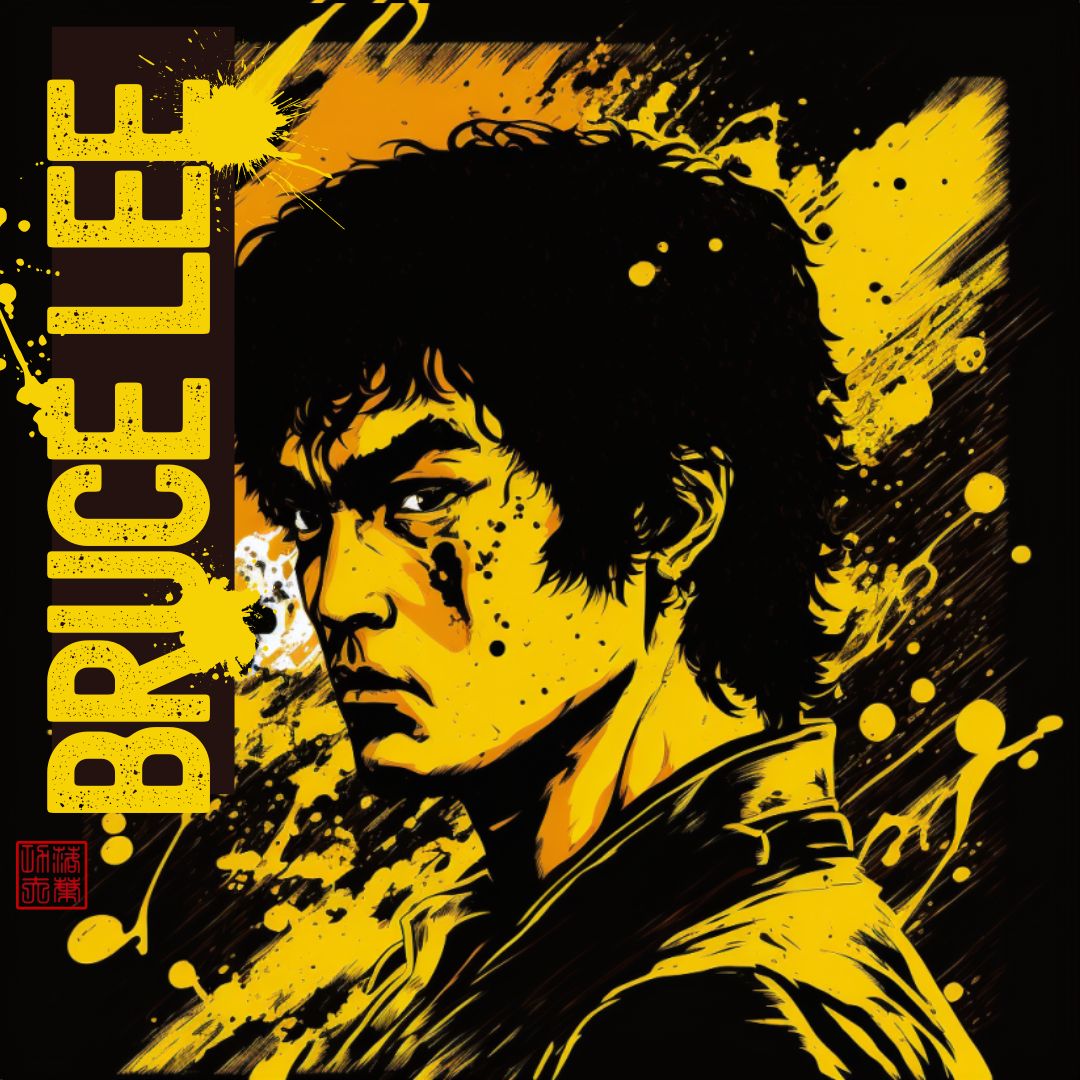
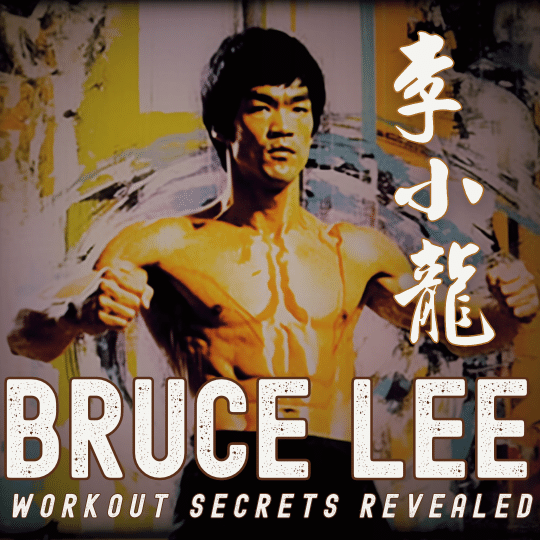
The impact of Bruce Lee’s movies on martial arts was immense. He popularized the idea of a hybrid fighting style, incorporating elements of different martial arts into his own, and revolutionized how martial arts were depicted on screen.
His movies, including “Fist of Fury” and “Enter the Dragon,” showcased his incredible physical abilities and unique fighting style, inspiring a generation of martial artists and action movie stars. To this day, Bruce Lee is considered a legend in the martial arts world, and his influence continues to be felt in the industry.
*Please note that some of the links in this content may be affiliate links, meaning that I may receive a small commission if you purchase through them.
Why Bruce Lee Is Famous
Many more films have been made aboutBruce Lee than he ever made himself. After his death, the Hong Kong film industry saw a rise in the number of Bruce Lee imitators, including Bruce Li, Bruce Lai and many others. These films capitalized on Lee’s popularity and tried to recreate his iconic fighting style and onscreen presence. While these films enjoyed some commercial success, they were seen by many as cheap imitations of the real thing. They could not match the depth and intensity of Lee’s performances. Nevertheless, they played an essential role in keeping Bruce Lee’s memory alive and helped cement his legacy as one of the most incredible action stars of all time.
Bruce Lee’s movies played a significant role in introducing Eastern philosophy to Western audiences. Through his films, he conveyed essential principles such as mindfulness, self-awareness, physical fitness, and the pursuit of self-discipline. In addition, he emphasized the importance of the mental and spiritual aspects of martial art. He showed how they could be applied to everyday life.
Lee’s philosophy of “Be Like Water” encouraged fluidity and adaptability, making it a central theme in his movies. As a result of his unique approach to martial arts and the popularity of his films, Bruce Lee helped popularize Eastern philosophy and spirituality in the West, influencing countless people to embrace these principles and philosophies.
Rise of The Dragon
Lee appeared in many Hong Kong films as a child.
Lee had a family history of acting. His father was Lee Hoi-Chuen, a Cantonese opera star and film actor. The elder Lee rose to prominence when he refused to make propaganda films for the Japanese during the occupation. As a result of his reputation for being a patriot, Lee Hoi-Chuen appeared in over 1,000 movies and was considered one of the most talented actors of his time. He was also a talented musician and singer, and audiences highly acclaimed his performances in Hong Kong and throughout Asia. Despite his success as an actor, Lee Hoi-Chuen struggled for a time with opium addiction and was largely an absent father due to his successful career. This contributed to the young Bruce getting involved with gangs and violence on the streets of Hong Kong. This eventually led to the elder Lee sending Bruce to America.
With his family connections in the industry, Bruce Lee naturally began his acting career as a child in Hong Kong. He appeared in numerous films and TV shows, showcasing his charisma and screen presence from a young age. Lee’s early acting experience taught him valuable skills. It helped him develop the confidence and stage presence that would later make him a legendary martial arts star.
Are Bruce Lee Movies Connected?
Watching Bruce Lee’s movies in order is not necessary to appreciate his legacy and impact. Each of his films stands alone as a showcase of his exceptional skills, unique philosophy, and captivating personality. It’s more important to focus on the content and messages of the films rather than their order.
While it is interesting to see the evolution of Bruce Lee’s career and screen presence, it is not necessary to follow a specific order to appreciate his talent and impact on martial arts cinema. Instead, focus on finding the films that resonate with you and enjoy the thrill of Bruce Lee’s electrifying martial arts displays. So whether you start with “The Big Boss” or “Enter the Dragon,” you will be entertained and inspired by this martial arts legend.
History & Background
The Magnificent Concubine was an early Shaw Brothers classic.
The story of Lee’s movies and Kung Fu cinema as a whole, with its many cult classics, stretches back to Cantonese Opera. There was a relationship between Cantonese Opera and secret societies like the Red Boat Society, which practiced Wing Chun and used the Opera as a front for their political activities. Cantonese Opera enjoyed its peak popularity at the end of the 19th and early 20th Centuries.
In the 1920s, with the introduction of moving pictures, three brothers with roots in Cantonese Opera formed a new movie production company called Tianyi. Tianyi would become more commonly known in the West as “Shaw Bros. Studios.” Initially, the Shaw Brothers mainly produced dramatic films. However, beginning in the 1960s focus shifted to martial arts. They released kung fu classics The Magnificent Concubine in 1962 and The One Armed Swordsmen in 1967.
In 1970, notable film producers Raymond Chow and Leonard Ho left the Shaw Bros. to start their own film production company called Golden Harvest, which took a more decentralized approach to filmmaking as opposed to the tightly controlled, top-down approach favored by Shaw Brothers.
A New Era Dawns
Bruce Lee tells his young student not to pay attention to the finger, or he’ll miss all the heavenly glory. Enter The Dragon, 1973
In 1971, Golden Harvest took the world by storm when they collaborated with the rising young star Bruce Lee on The Big Boss. While Lee hadn’t yet been able to land a leading role in a Hollywood film, he was already attracting attention in some notable Hollywood TV productions, most notably for his recurring role as Kato in the Green Hornet series.
After Lee’s death from cerebral edema in 1973, Golden Harvest went on to produce many more great Kung Fu classics with Jackie Chan, Sammo Hung as well as Donnie Yen, while the Shaw Brothers released several cult classics in the late 70s like The Five Deadly Venoms and The 36th Chamber of Shaolin (currently free on Amazon Prime!).
Which Bruce Lee Movies To Watch
No matter which film you choose to watch, they are all entertaining and inspiring. Every film showcases Lee’s incredible martial arts skills and captivating on-screen presence. Whether you’re a fan of martial arts, action films, or simply great storytelling, you won’t be disappointed.
Here is a brief synopsis of Lee’s films, along with a list of some other famous martial artists!
The Big Boss
Bruce Lee plays Cheng Chao-an, who moves to Thailand to work in an ice factory and discovers illegal activities. He finds himself caught up in the dangerous underworld and must use his martial arts skills to survive.
Bruce Lee plays Chen Zhen, a student of martial arts who seeks revenge for the death of his teacher Huo, Yuanjia. Chen travels to Shanghai to confront the people responsible, leading to a series of battles that showcase Lee’s incredible fighting abilities. While the character of Chen Zhen was fictional, Hua, Yuanjia was a historical figure in Chinese martial arts. You can read more about Master Huo in our article on the History of Kung Fu.
Fun Fact: according to IMBD, there was a mix up with Bruce Lee’s first two films released in the US.
“The Big Boss was originaly released in the U.S. under the title “Fist of Fury”. This movie was shipped to the states along with Bruce Lee’s other film The Chinese Connection. However, due to the films being shipped in the wrong containers the titles were swapped. “The Chinese Connection” was supposed to be titled “Fist of Fury” in the U.S. and “Fist of Fury” (the original U.S. title of “The Big Boss”) was supposed to be released as “The Chinese Connection”. Decades later they were finally recognized in the U.S. by the original chinese titles.”
The fight between the two legends is widely regarded as one of the best onscreen martial arts battles of all time, showcasing both Lee’s incredible speed and power and Norris’s impressive techniques and athleticism.
Experience the legendary showdown in 'Way of the Dragon', where martial arts icons Bruce Lee and Chuck Norris deliver an unforgettable fight. Witness speed, skill, and charisma in a battle that defines martial arts cinema. Perfect for fans of Bruce Lee, Chuck Norris, and classic kung fu action
Bruce Lee plays Lee, a martial artist who participates in a secret and deadly martial arts tournament on a secluded island. Lee joins the tournament to investigate the mysterious disappearance of a friend and uncovers a sinister plot along the way. Jackie Chan, who later became a martial arts legend in his own right, was a stuntman and had a brief cameo onscreen with Bruce Lee in this film.
Jackie Chan appeared briefly on screen with Bruce Lee in this fight scene from Enter The Dragon.
Bruce Lee And Kareem Abdul Jabar
Game of Death
This is Bruce Lee’s final film. He portrays a martial arts movie star. He must battle his way through various floors of a pagoda, each guarded by a different martial artist. The film was unfinished when Lee died and was later completed using footage from his previous movies and stand-ins. Despite the unconventional ending, Game of Death remains a classic of martial arts cinema.
Bruce Lee wore a famous yellow jumpsuit in “Game of Death.” This iconic outfit has had a lasting impact on popular culture, appearing in films like “Kill Bill.” Kill Bill is a two-part martial arts film directed by Quentin Tarantino. The film follows a former assassin seeking revenge. With iconic fight scenes and a soundtrack that draws from a range of musical genres, Kill Bill is a visually stunning and highly entertaining film.
Kareem Abdul-Jabbar and Bruce Lee trained together and became close friends. Kareem appeared in the film “Game of Death” as the character “Hakim.” Abdul-Jabbar was cast as one of Lee’s opponents in the film’s famous tower of martial arts matches. Due to his size and athleticism, Abdul-Jabbar was a natural in the role even though acting was not his trade. He has spoken fondly of his time working with Lee on the film. Abdul-Jabbar’s appearance in the movie has helped to cement his legacy as a part of the Bruce Lee legend.
Myths & Rumors Caused By Game of Death
In “Game of Death,” Bruce Lee’s character pretends to have died. He stages his own death to deceive those who want to kill him and uncover the truth behind their motives. The film follows his journey as he battles his way through several floors of a pagoda filled with martial artists, each more challenging than the last.
The plot of Game of Death helped fuel rumors surrounding the nature of Lee’s death. Many people have speculated that the film is a case of “art imitating life” and that Lee was actually murdered. These rumors frequently attribute Lee’s willingness to teach the secrets of Kung Fu to foreigners. In truth, Lee was a workaholic who had developed a cocaine habit. The fact is that Lee’s hard-working, hard-partying lifestyle combined to undo him. The humid environment of Hong Kong, relentless work schedule, and drugs caused him to develop hyponatremia.
As of the publication of this article, no Bruce Lee movies are available on Netflix. There are, however, several movies inspired by Lee’s life. These include “The Legend of Bruce Lee” and “Birth of the Dragon.” The latter is a highly fictionalized account of Lee’s life, starring Philip Ng. (I met Philip’s father, Sam Ng, at the Legends of Kung Fu tournament in Dallas, Texas, in 2007.)
At present, the simplest method of watching all of Bruce Lee’s movies is through Amazon Prime. Alternatively, they can be owned on Blu-Ray.
From a Chinese perspective, Fist of Fury and The Way of The Dragon are widely considered to be the most nationalistic films, even showcasing a “hatred” of foreigners. However, Lee was actually mixed race (his mother was half-Chinese and half-white). Additionally, Lee’s studies at an American university as a philosophy major made him open-minded and accepting of all people. He freely shared his knowledge and martial skills with everyone and learned from other styles.
The End…
Or is it just the beginning?
Bruce Lee was a talented and iconic figure who profoundly impacted the entertainment industry and martial arts. His movies introduced Eastern philosophy to Western audiences. They brought the art of Kung Fu to the forefront of popular culture. Lee’s childhood acting experiences and his father’s career as a Cantonese opera star also played an essential role in shaping the young actor’s life and career. Despite his struggles, including a complicated relationship with his father and Lee Hoi-chuen’s addiction to opium, Bruce Lee became a legendary figure who inspired countless others to pursue their passions and chase their dreams. Today, he remains one of the most revered and beloved action stars of all time. His legacy continues to inspire and influence generations of fans worldwide.
If you’re a fan of Bruce Lee, martial arts philosophy, and Kung Fu, we invite you to explore more of our articles to deepen your understanding and appreciation of this iconic figure.
Whenever you’re ready to be like Bruce Lee and experience the power and grace of Kung Fu, consider joining our small group classes in Tempe, AZ, or from anywhere in the world online. Get the guidance you need on your journey of self-discovery and growth. Unlock your full potential and share in the legacy of Bruce Lee. So what are you waiting for? Sign up today and take the first step towards realizing your inner warrior.
Kung fu, also known as Chinese martial arts, was born in China over 2000 years ago. Like China itself, kung fu has a long and complex history. The history of Kung Fu is a story full of rivalries, mysteries, heroes, villains, intrigue, secret societies, emperors, monks, and many myths and legends. It’s no wonder that kung fu still serves as a source of inspiration for movies and television. It also draws everyday people worldwide to improve their lives through martial arts!
Four sub-categories group Kung Fu’s many styles: village/family styles, military styles, temple styles, and secret society styles.
Factors such as geography, climate, culture, and history shaped the development and evolution of Kung Fu styles and techniques across regions.
Kung Fu styles and techniques also absorbed elements from other martial arts styles and cultural traditions worldwide.
Where Did Kung Fu Come From?
The origins of Chinese martial arts can be traced back to the Stone Age when people in China used weapons such as spears and knives for hunting and self-defense. As civilization developed, people in China began to study and practice various combat techniques to protect themselves and maintain order.
Many styles of kung fu developed and evolved over time.
Various factors, including China’s geography, climate, culture, and history, influenced the development and evolution of Kung Fu styles and techniques. Kung fu styles and training methods also absorbed elements from other martial arts styles and cultural traditions worldwide, mainly from India.
Today, kung fu is practiced throughout the world and is known for its powerful, graceful movements and as a tool for cultivating discipline and wisdom. It is an integral part of Chinese culture and has influenced martial arts and popular culture worldwide.
Before we dig into the history of kung fu, it might be helpful to understand better what we mean when talking about kung fu. The term “kung fu” (功夫) means “hard work” + “time.” It has the sense of “skill” or “achievement”; it means “mastery.” Kung fu can technically refer to any discipline or skill developed through hard work and practice.
In the West, “kung fu” is usually used to refer specifically to Chinese martial arts; it is a broad term that encompasses a wide range of styles, each with unique training methods and philosophies. These styles are often named after the legendary founder, family, or temple where they originated. Kung fu styles are usually classified as Northern/Southern or internal/external, depending on their characteristics and emphasis.
In addition to its fighting applications, kung fu is also seen as a way of cultivating mental and physical discipline and is often practiced as a path to self-improvement. Many who practice kung fu view it as a way of life, and they strive to embody the values of respect and self-control in all aspects of their lives. This warrior’s code of ethics is referred to in Mandarin as Wude 武 德.
“Wushu” (武术) is a more formal Chinese term that means “martial art” or “martial technique.” It can correctly refer to the traditional Chinese martial arts styles, but most people use Wushu to refer to the modern competitive sport that was developed based on traditional forms but has become more of a performance art. Modern Wushu emphasizes gymnastics with an apparatus (fake weapons) similar to women’s rhythmic gymnastics. While wushu athletes perform displays of tremendous athleticism, modern Wushu training lacks self-defense applications.
“Wuyi” (武艺) means “martial art” or “martial skill.” Wuyi is used to refer to the practical martial arts techniques that were developed for use in combat and self-defense. Dr. Yang, Jwingming, noted author, states that the historical term used was Wuyi. Other appropriate terms for Chinese martial arts are kuoshu 國術 (national art) and quanfa 拳法 (boxing/fighting techniques/methods).
Overall, “kung fu” is the most popular term for Chinese martial arts.
Understanding the different categories or “families” of kung fu can help us understand the history of kung fu in a better context. There are many different styles of Kung Fu, which can generally be grouped into two main categories: northern and southern styles. Within both northern and southern styles, there are four main sub-categories:
village/family styles
military styles
temple styles
secret society styles
Village or family styles: These styles are developed and passed down within a particular village or family and are often closely guarded secrets. These styles are typically passed down from generation to generation within a specific family or community.
Military styles: Military styles were designed to be used in a battlefield context, and tend to focus more heavily on using weapons like the sword, spear, or other long weapons while wearing armor, etc.
Temple styles: Monks developed and practiced Temple styles, which are now considered more spiritual and philosophical. However, historically, temples like Shaolin were known for their martial arts skills and acted as a sort of militia or special forces in many military conflicts and during periods of civil unrest throughout China’s history.
Secret society styles: These styles are developed and practiced by members of secret societies or gangs and are often more underground and subversive. Secret society styles frequently had a political or revolutionary agenda and may be associated with criminal activities.
These sub-categories of kung fu are not mutually exclusive. They all interacted with and influenced each other throughout history. For example, a military officer’s only option for retirement from service to the emperor was often to become a monk. In turn, he might lead a group of renegade monks in rebellion against the corrupt government and then join bandits or go into hiding in a remote village after the government destroyed the temple in retribution. The same individual might have shared his knowledge of martial arts in all four contexts at different points in his career.
The Silk Road played an important part in the development of kung fu
Undoubtedly, one of the most significant historical forces that helped shape the development of Chinese martial arts was The Silk Road. The Silk Road was an ancient trade route connecting China to the Mediterranean. It was called the Silk Road because silk from China was one of the leading products traded along these routes. The Silk Road began in the 2nd century BC and was used for over 1,400 years. It stretched over 6,000 miles and passed through many countries, including modern-day China, India, Iran, Greece, and Italy.
The Silk Road played a crucial role in the cultural exchange between the East and the West. Along with silk and slaves, goods, such as spices, gold, ivory, and precious stones, were traded along these routes. Ideas, religions, and technologies were also exchanged along the Silk Road, leading to the spread of Buddhism, Islam, and Christianity.
Silk, spices, and more nefarious things were bought and sold all along the Silk Road
Mercenaries from within China and those from regions to the West, such as India and Persia, were frequently hired to serve as guards, protecting caravans from bandits on the long, perilous journies between East and West.
The Old Masters of kung fu had the benefit of exchanging training methods with each other and foreign fighters and accruing actual “operational experience.” Ineffective fighting techniques are quickly eliminated from the gene pool in the fiery crucible of battle. This was particularly true in ancient times when combat oftentimes took place close enough to smell your opponent’s breath!
The Silk Road began to decline in the 14th Century due to the rise of maritime trade routes and the decline of the Mongol Empire, which had controlled much of the land along the Silk Road.
The Minnesota Vikings vs. The Green Bay Packers. The New York Yankees vs. The Boston Red Socks. Like these famous modern-era sports rivalries, there have been many rivalries between different schools and styles of Chinese martial arts that reflect the history and geography of ancient China. Perhaps none more fierce than the rivalry between the North and South.
The rivalry between North and South China has a long history that dates back to ancient times. The two regions have traditionally had different cultures, languages, and economic systems, and they have often been at odds with each other.
The Yangtze River divides Northern from Southern China. The Yangtze is the longest river in China and the third longest in the world. It flows from the Tibetan Plateau in the West to the East China Sea in the East.
Mountains in Sichuan Province, China
In ancient times, the North and South were often ruled by separate governments, with frequent conflicts between the two regions. This is reflected in the martial arts styles of the two areas. China is a very diverse country with many different ethnicities. Broadly speaking, the people of northern China are often taller than their southern counterparts. In contrast, the people from the South tend to be shorter and more muscular.
The terrain of the North is rugged, with lots of open steppes and plains. The martial arts of northern China tend to use lots of open, long-range attacks and particular emphasis on kicking techniques. In contrast, rolling hills, fertile river valleys, and a subtropical climate generally characterize the geography of China south of the Yellow River. Southern Chinese martial arts styles tend to focus more on close-range or “inside fighting” techniques using shorter, jerking movements (referred to as “short power”); thus, the famous distinction of “northern leg vs. southern fist.”
During the Qing dynasty (1644-1912), the North and South were united under a single government, but there was still tension between the two regions. In the 20th Century, the rivalry between North and South China was exacerbated by the Chinese Civil War (1927-1949), which was fought between the Nationalist government, based in the South, and the Communist Party, based in the North.
Another famous historic rivalry between kung fu styles is Shaolin vs. Wutang (or Wudang in pinyin).
Wutang Kung Fu
Artistic representation of Wutang Temple, legendary source of Tai Chi and other Taoist martial arts
Wutang Mountain is a southern mountain range located in Hubei Province, China. Wutang Mountain is home to the Wutang Temple, known for its beautiful architecture and importance in the history of Taoism.
The Wutang Temple was built in the 14th Century and is considered one of China’s most prominent Taoist temples, along with Emei (or Omei) Temple at Emei Mountain.
The so-called “internal” styles of Tai Chi Chuan, Baguazhang, and Xingyiquan are generally associated with the Taoist temples, especially Tai Chi, which legend says was developed by the immortal Zhang, Sanfeng after watching a crane fight a snake. Wutang is also known for the Wutang sword style.
The rivalry between Shaolin and Wutang is often summarized as “Shaolin staff vs. Wutang sword.”
Shaolin Kung Fu
Shaolin is a Buddhist temple in the Song Mountains of China’s Henan Province. It is known as the birthplace of Shaolin Kung Fu and is one of the most famous Buddhist temples in China. The temple was built in the 5th Century and had a long history of being a center of Buddhist learning and martial arts training.
Artistic rendition of Shaolin Temple, home of Shaolin Kung Fu
It was initially a center for Indian monks to translate Buddhist scriptures into Chinese, but it eventually became a major center for Chinese Buddhism. The temple is known for its monks’ strict discipline and physical training, renowned for their martial arts skills, and qigong methods like Yijinjing and Marrow Washing. The temple has been destroyed and rebuilt several times throughout its history.
Henan province is north of the Yangtze, while Hubei is in the South. Therefore, the rivalry between Shaolin and Wutang/Wudang can be viewed as an extension of the rivalry between bei quan 北拳 (northern boxing) and nan quan 南拳 (southern boxing).
The Destruction of The Shaolin Temple
Shaolin Temple has a long history of involvement in civil unrest and uprisings in Ancient China, working with and against the government at different times. Some examples of this include:
Tang Dynasty (7th Century AD): the 6th and 7th Centuries were tumultuous times in China, and the Shaolin Temple was a frequent target of thieves and warlords. The monks organized to defend the temple and developed a very high technical and tactical proficiency during this period. In 626 AD, a group of 13 Shaolin monks served as a “special operations” unit in service to the future emperor Li, Shimin, and helped establish the Tang Dynasty.
The Liangshan Uprising* (12th century AD): During the Song dynasty, a group of Shaolin monks joined the Liangshan rebels, a group of outlaws fighting against the corrupt and oppressive government. The Liangshan rebels, led by Song Jiang, became famous for their bravery and resistance against the government.
The Ming dynasty* (14th-17th centuries AD): Shaolin monks were involved in several uprisings against the government during the Ming dynasty. One of the most famous of these was the Tianqi Uprising (1630), in which a group of Shaolin monks led a revolt against the government in an attempt to restore the Ming dynasty.
Nationalist & Cultural Revolution (20th Century AD): After the fall of the Qing Dynasty, China was again rocked by a period of chaos, first during the Nationalist and later the Communist revolution. A warlord shelled The Shaolin Temple during the Nationalist Revolution and largely destroyed it, and then suffered further damage during the Cultural Revolution. The temple was mostly abandoned until the 1980s. At that point, the CCP rebuilt it and today stands as a popular tourist attraction.
Shaolin Temple has been destroyed multiple times throughout it’s history
In these and other cases, the Shaolin monks used their martial arts skills and their reputation for bravery to support causes that they believed in. However, they also faced persecution and retribution from the government for their involvement in these uprisings.
Many kung fu styles trace their roots to Shaolin or were subsumed within the mantle of the Shaolin arts. Known primarily for using long weapons, the staff is the core weapon of Shaolin.
*While these are actual historical events, the genuine involvement of Shaolin monks and the temple’s destruction are possibly distorted or fictional.
Some of the most fascinating histories of kung fu involve secret societies. There are many different ethnic groups and dialects throughout China. The largest ethnic group in China is the Han Chinese, who make up about 92% of the population. However, there are also 55 recognized ethnic minorities in China, including the Hui, Manchu, Tibetan, and Miao.
The many ethnic groups and dialects in China reflect the country’s long history of migration and geography and political, economic, and military struggles. These differences have shaped China’s cultural, linguistic, and political landscape. The rise and fall of various dynasties throughout China’s long history have largely fallen along ethnic lines. These divisions and other cultural factors have contributed to China’s long tradition of secret societies.
These secret societies, also known as fraternal organizations, are groups that come together for a common purpose and have often been associated with resistance to authority and efforts to promote political and social change. As a result, they have played a complex and sometimes controversial role in Chinese history, including the Taiping Rebellion (19th Century), the Boxer Rebellion (late 19th Century), and the Chinese Civil War (20th Century).
Yellow Turban Rebellion
One of China’s earliest and most famous secret societies was the Yellow Turbans, a group of rebels who rose against the Han dynasty in the 2nd century AD. The Yellow Turbans were believed to have been influenced by Taoist religious and philosophical ideas. They were known for their distinctive yellow scarves, which gave them their name. The Yellow Turbans were eventually defeated, but they set a precedent for other secret societies that would emerge in China throughout its history.
Red Turban Rebellion
The Red Turban Rebellion was a peasant uprising in China during the Yuan dynasty (1271-1368) led by groups claiming to be members of the White Lotus Society, a millenarian sect. Widespread poverty, corruption, and religious discontent among the populace fuelled the rebellion. It broke out in the 1350s in the coastal provinces of Guangdong and Fujian and quickly spread. The rebellion challenged the rule of the Mongol-led Yuan dynasty, which had been in power since the 13th Century. The Yuan government eventually defeated the uprising. However, this struggle weakened the crumbling dynasty and contributed to its eventual collapse in the 14th Century.
Boxer Rebellion
Boxer Rebels source: unknown
The Boxer Rebellion was an anti-foreign and anti-Christian uprising in the late 19th Century. It was led by a group of Chinese martial artists known as the “Boxers,” who opposed the influence of foreign powers in China and the spread of Christianity. The Boxers believed that traditional kung fu & qigong training methods like “Iron Shirt” and “Golden Bell” made them invulnerable to bullets. The Boxers launched a series of attacks on foreign diplomats, missionaries, and Chinese Christians in northern China.
Many kung fu movies inspired by real-life and legendary figures from the Boxer Rebellion era have been made over the years. Jackie Chan’s Legend of Drunken Master portrayed a fictional version of the historical hero Wong, Fei-hung. Wong was considered one of “The Five Tigers of Canton.” The Jet Li film, Fearless tells the story of Huo, Yuanjia, another of the Five Tigers. Bruce Lee’s Fist of Fury tells the story of the fictional character Chen Zhen, who seeks revenge on corrupt foreigners for the alleged poisoning of Huo.
The Hung Mun and Hung Sun societies are some of the most well-known secret societies that still exist in various forms today. Hung Mun and Hung Sun have an association with different kung fu styles. A few examples are Choy Lei Fut and Wing Chun Kung Fu, the martial art made famous by Bruce Lee and more recently by the series of films about his teacher Ip Man, starring Donnie Yen.
Hung Mun
The Hung Mun (or Hongmen in pinyin) 洪門 society, also known as the Tiandihui 天地會, is a Chinese fraternal organization that has existed for over 200 years. Hung Mun means “vast gate,” and Tiandihui means “Heaven & Earth Society.” They are sometimes referred to as “Chinese Free Masons.”
The society’s origins can be traced back to the late 18th Century when it was formed as a secret society to overthrow the Qing dynasty and restore the Ming dynasty (“Fan Qing Fu Ming” 反淸復明; lit. ‘Oppose Qing, Restore Ming’). Hung Mun has evolved over time and has been involved in various activities, including business, charity, and political activities. This is particularly true in Taiwan. However, it has also been associated with Chinese organized crime, commonly referred to as “The Triads.”
The Hung Sun society is another secret society operating in China in the 19th Century and operated within the Road Boat Opera Company. Hung Sun 紅船 means “red boat” in Cantonese. The Red Boat Opera Company was a loose-knit association of actors, stagehands, and rapscallions who gave traveling performances of Cantonese opera.
Cantonese opera was at its height in the late 19th and early 20th centuries. The Red Boat Opera company traveled up and down the Pearl River delta in Guandong Province on distinctive red boats. These operas were known for their distinctive style, including a mix of local folk music and kung fu demonstrations, theater performances, and more.
Then, much as the actors and musicians of today, the Red Boat Co. used their platform to spread their political messages throughout the region. At least some members of the opera were also fugitives from the government and used the red boats as a mobile base of operations for anti-government activities.
They were said to have practiced Red Boat Wing Chun. A close friend of Bruce Lee’s family, Fook Yeung, who helped Lee get his start in Seattle, is rumored to have been a member of the Red Boat Opera Co. and a student of Red Boat Wing Chun. Bruce Lee continued his Wing Chun training in Seattle under Fook Yeung, Praying Mantis, and more at the Seattle Chinese Youth Club.
No tale of the fraternal societies of China would be complete without mentioning Chin Woo. Strictly speaking, The Chin Woo Athletic Association (Chin Woo) is not a “secret society” but is a fraternal organization. It can be thought of as a Chinese YMCA. Ching Woo was founded in Shanghai, China, in 1910 by Huo Yuanjia, who became famous after defeating several westerners in single combat. His victories inspired many Chinese, who were demoralized due to the corruption of the Qing dynasty and foreign interference in politics and the economy in China at that time, including the Opium trade. Drug addiction, prostitution, and corruption were rampant.
Master Huo said, “for a nation to grow strong, everyone must train in martial arts.” Huo hoped to help rejuvenate China through the discipline of Kung Fu and the code of Wude.
Chin Woo was banned in 1949 after the Communist Party came to power in China, and many of its members were persecuted. The organization was later re-established in Hong Kong and Taiwan, where it continues to promote traditional Chinese martial arts and culture.
Today, Chin Woo is still active and has branches in several countries worldwide, including the United States, Canada, Australia, and New Zealand. It continues to promote traditional Chinese martial arts and culture and provides training and instruction in Chinese martial arts.
I fought full-contact as a heavyweight in the Chin Woo tournament in Dallas, TX, in 2007 and 2009. The medals I received, bearing the likeness of Huo, Yuanjia, remain one of my most prized possessions. Unfortunately, I lost my gold medal from the ’07 tournament, but I still have my silver and bronze from 2009. I am very proud to have participated in the tradition of Chin Woo, and I hope to follow in Master Huo’s footsteps of renewing my nation’s strength and spirit through kung fu!
As dynasties rose and fell and military tactics, warfare, and weapons systems evolved throughout China’s history, different kung fu styles came in and out of favor with the military. One such story is that of the famous General Yue Fei and the art of Xingyiquan (also known as Hsinh-I Chuan).
General Yue Fei is credited with the origins of both Xingyiquan & Eagle Claw Kung Fu
Yue Fei was a Chinese general and national hero who lived during the Song Dynasty (960-1279). He is best known for leading the Song army in the wars against the Jurchen-led Jin dynasty. He led several successful campaigns against the Jin dynasty. He recaptured much of the territory that had been lost to the Jurchens. However, General Yue was betrayed by the emperor and executed after he was falsely accused of treason.
Legend says that Yue Fei developed Xingyiquan to prepare his troops for battle quickly. The linear empty-hand fighting techniques resemble the movements you would use when standing in formation with a spear or sword and shield combination. Therefore Yue Fei would have only had to teach a single set of movements a foot soldier could use with or without a weapon. Yue Fei is also credited with the creation of Eagle Claw Kung Fu.
In reality, Xingyiquan likely was developed in the 19th Century. However, the fact remains that as the nature of warfare evolved in ancient China, as men returned home from military service, they continued to practice what they had learned and adapt it to civilian life.
Therefore, it is probably more honest and fair to say that there are no military “styles” of kung fu per se, but that military training techniques and combat experience influenced the civilian styles of kung fu practiced in the temples and villages and vice versa.
Village styles of Kung Fu refer to the traditional martial arts styles developed and passed down within specific villages or communities in China. Traditionally these styles were only passed down through generations within the community, often only to the oldest son or son-in-law.
Village styles of Kung Fu were developed by people who needed to protect themselves and their communities. “You are your own first responder” is something we strongly believe here at Falling Leaves Kung Fu! In ancient China, people in remote villages couldn’t depend on the government to protect them from bandits who might want to victimize their communities (or, more commonly, to fight rival villagers over natural resources such as river water, land disputes, or just for the best location in the fish market). In dense urban environments, gangs and criminals meant people needed to be prepared to defend themselves.
Some examples of village styles of Kung Fu include:
Hung Gar: Developed in the southern Chinese village of Gulao, it is characterized by its solid stances and powerful hand techniques.
Lau Gar: Developed in the southern Chinese village of Lau Gar, it is characterized by its fluid and circular movements and emphasis on leg techniques.
Artistic representation of rural Chinese village.
One of the most famous village/family styles is Chen-style Tai Chi (Taijiquan). Chen village has a long martial arts history, and Tai Chi has been passed down through generations. The Chen family has been the source of Tai Chi practitioners for centuries. The village is home to many martial arts schools and training centers.
Chen-style Tai Chi is characterized by its fast, explosive movements and powerful energy. It is often considered the most martial of the Tai Chi styles. It is known for its silk-reeling exercises, jumping and stamping movements, and fighting applications.
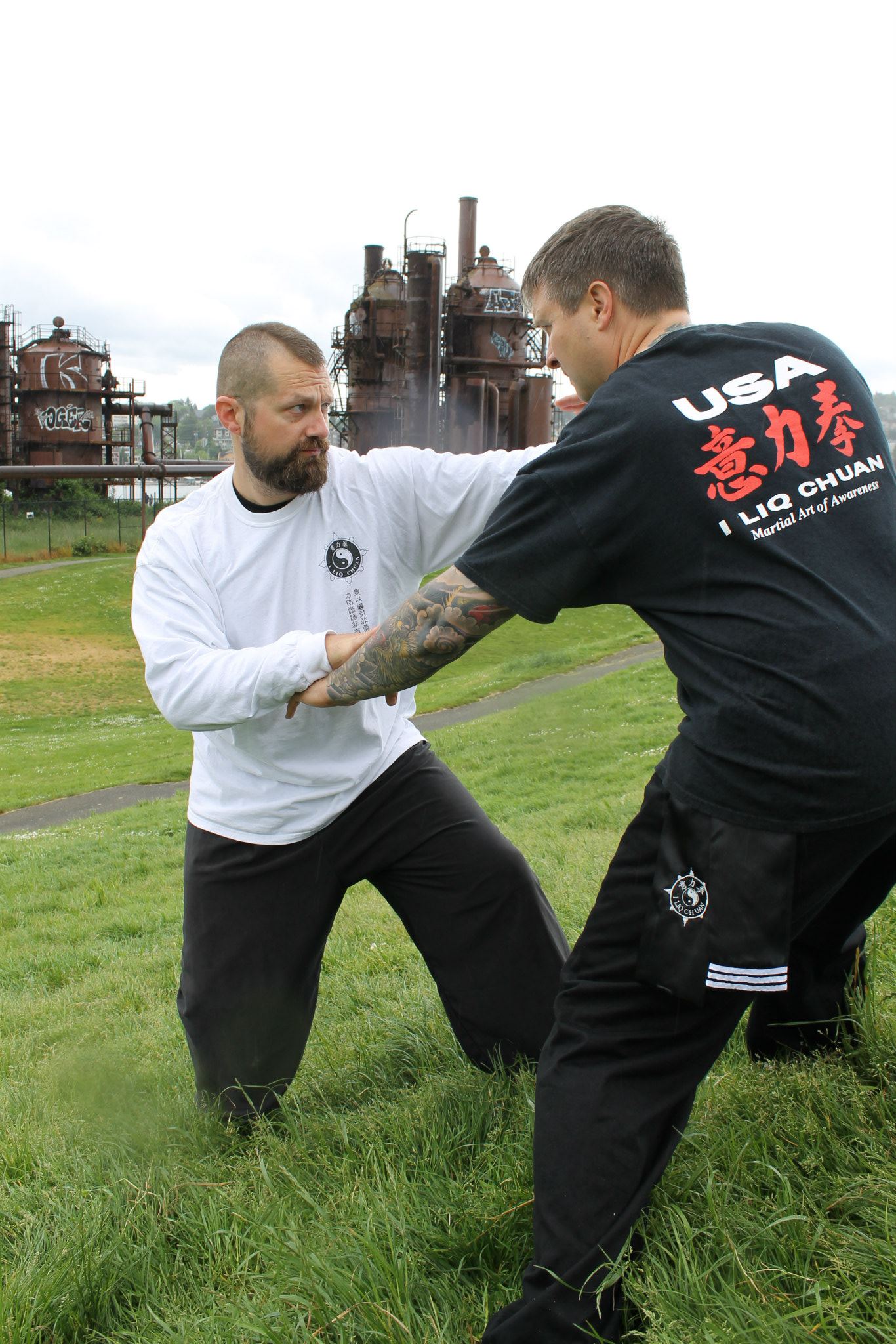
I Liq Chuan, the martial art we train here at Falling Leaves Kung Fu, is a family style from the Chin family. The Chins are Hakka people from the Chinese community in Kuala Lumpur people, and I Liq Chuan has its roots in the old Hakka kung fu styles.
The Hakka people are a subgroup of Han Chinese with their own distinct culture, language, and customs that are different from other Han Chinese groups. The name “Hakka” means “guest families.” It is thought to originate from the fact that the Hakka people were historically known as nomads. To protect themselves on their travels, the Hakka developed their own unique styles of kung fu. However, the Hakka also absorbed many other styles and took people into their communities who already had martial arts experience.
As we have seen, the origins of Kung Fu stretch back into antiquity. It encompasses a wide range of styles, each with unique training methods and philosophies. Kung fu is a vital part of Chinese culture. Various factors have influenced it over the centuries, including China’s geography, ethnic tensions, politics, religion, and trade.
Military conflicts during the rise and fall of the many Imperial Dynasties and international commerce along The Silk Road played crucial roles in developing training methods for Kung Fu. In contrast, the Old Master often played pivotal roles in shaping the history of China.
The spirit of Kung Fu lives on today through the generosity, hard work, and sacrifice of the Chinese diaspora, who have spread throughout the world. Kung fu is a living tradition, passed on through touch from teacher to student across generations in back alleys, around kitchen tables, and on rooftops everywhere.
Like any nation’s story, kung fu is one of blood, sweat, betrayal, and triumph over incredible odds. But Kung Fu is also a story of loyalty, hope, and transcendence over human weakness. It is a gift to the world, a path to cultivate within ourselves the best qualities of being human: moral discipline, wisdom, courage, and a deep appreciation of life and death. It is a story that lives on through each of us who pick up the banner and carry it forward another generation.
A question I hear frequently is, “will martial arts help me lose weight?” Martial arts have been around for thousands of years and have evolved into diverse practices that can be used for self-defense, fitness, and personal growth. With the growing emphasis on health and wellness, many people are now turning to martial arts to lose weight and improve their overall fitness. This article will explore the pros and cons of using martial arts for weight loss and the principles most effective for burning calories and shedding pounds.
Today, martial arts are synonymous with good health and fitness in most people’s minds, and this is in no small part due to the impact that people like Bruce Lee have had on the world of martial arts and fitness. Bruce Lee was a legendary martial artist known for his famous quote, “Be water, my friend.”
More than 50 years after his death, he is still widely considered to be one of the most influential figures in the history of martial arts. His incredible build and persona have inspired many people to pursue martial arts to improve their health and fitness.
Thank’s to Lee’s amazing physique, it’s no wonder so many people pursue martial arts to help lose weight.
The short answer to this question is yes; martial arts can help you lose weight. Many styles involve high-intensity cardio and strength training, which can result in significant calorie burn and weight loss. However, it is important to remember that weight loss is not the only goal of martial arts training. Many people also practice martial arts for self-defense, mindfulness, and personal growth.
When it comes to weight loss, it’s important to understand that the underlying principle is simple: you have to be in a calorie deficit to lose weight. This means you need to consume fewer calories than your body is burning. While there are many different approaches to weight loss, this basic truth remains the same.
The Power of Martial Arts in Supporting Weight Loss Efforts
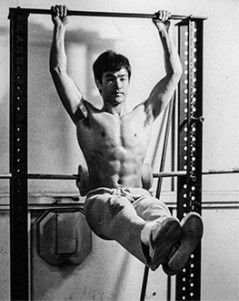
Bruce Lee represents the ultimate martial arts physique in the minds of many people.
Martial arts, like other forms of exercise, can support your weight loss efforts in two key ways:
helps provide stimulus to maintain muscle mass during a calorie deficit
helps create or increase a deficit by burning extra calories
First, exercise like martial arts helps to provide a stimulus to maintain muscle massduring a calorie deficit. When you’re in a calorie deficit, your body tends to break down muscle tissue to use it for energy.
“But if you choose to lose weight, you have to focus on losing fat, not muscle.
Unfortunately, the average person who cuts calories to lose weight will lose between 40% and two-thirds of that weight as lean mass. This ratio is HORRIBLE.
There is no need whatsoever to lose as much or more muscle as fat, and this shows you that standard calorie-cutting is a tremendously bad way to lose weight.”
Losing lean tissue can be a problem because muscle tissue is a key contributor to your metabolism, meaning that the more muscle you have, the more calories your body burns at rest. Additionally, not all lean tissue is muscle; this includes organ tissue and bone mass as well.
Again, quoting from Chris Masterjohn’s article:
There is no need whatsoever to lose as much or more muscle as fat, and this shows you that standard calorie-cutting is a tremendously bad way to lose weight.
There is no need whatsoever to lose as much or more muscle as fat, and this shows you that standard calorie-cutting is a tremendously bad way to lose weight.
So how do we preserve lean mass when losing weight?
Exercise more, do not eat less. Rather, get your total resistance training and high-intensity workouts up to six hours per week with the base of this being full-body resistance training and the remainder high-intensity intervals and sprints.
Add some moderate-intensity work on top of this base and lots of light activity like walking. If you are able to recover from this exercise and feel good, and you are not losing weight fast enough, add more activity. If you hit a wall exceeding your recovery capacity, it is time to cut food intake.
Exercise like martial arts can be a great form the of moderate to high-intensity exercise discussed by Masterjohn to prevent muscle tissue loss. This can help maintain your metabolism and offset the dreaded “metabolic slowdown” that often accompanies weight loss.
Second, exercise like martial arts can help to create or increase a calorie deficit by burning extra calories. When you engage in physical activity, your body burns calories to fuel your movement. The more intense the activity, the more calories you burn. Martial arts can be a great way to get in some extra physical activity and create a calorie deficit, which can help you to lose weight.
Additionally, martial arts are renowned for fostering self-discipline. We develop a strong sense of focus and commitment by setting and working towards goals in the training environment. This mindset can be easily transferred to other areas of life, such as eating healthier, which is key to weight loss success. By setting achievable nutrition goals and sticking to them, we can improve our overall health and well-being.
Support & Accountability
Not all peer pressure is bad. Belonging to a community of like-minded individuals is a powerful motivator. Martial arts helps us not only take responsibility for our own safety, but for all of our thoughts, feelings, and actions. By working alongside others towards common goals, individuals are held accountable for their progress and can stay motivated. The camaraderie of a martial arts community can help individuals stay on track with their weight loss goals and encourage them to continue improving their health and fitness.
Belonging to a community of people committed to taking responsibility for their own health can be a powerful motivator
Mindfulness of Food
Zen philosophy is key to many martial arts practices like I Liq Chuan. Whenever we have been on meditation retreats at MABA (Mid-America Buddhist Association), mindfulness of food and eating was always stressed as part of the training. By cultivating mindfulness of food, we can approach mealtime with a greater sense of balance and awareness. This can greatly support long-term weight loss efforts.
I Liq Chuan students listen to a lecture by Master Jiru at MABA.
Eating slowly and mindfully can have a greater impact on weight loss and overall health than just focusing on what, when, and how much we eat. Eating mindfully can bring immediate benefits, such as eating less without feeling deprived [1]. Physiology and psychology play a role in this, as our body needs time to register feelings of fullness, and savoring our food leads to feeling satisfied with less.
Eating slowly and mindfully can also improve digestion, reduce bloating and stomach pain, and increase nutrient absorption. This, in turn, leads to feeling better physically and mentally and helps develop a better relationship with food by learning to listen to our body’s internal hunger and satiety cues. This skill can lead to healthier food choices for the rest of our life instead of relying on a rigid meal plan.
Four Tips for Effective Weight Loss with Martial Arts
Starting a weight loss journey can be a challenge, but with martial arts as your companion, you can achieve your goals. To help you get started, here are four tips to consider:
eating more protein can help with weight loss
Calories count
Eat more protein
Avoid liquid calories
Focus on whole foods
It’s important to remember that martial arts alone do not mean guaranteed weight loss. When it comes to weight loss, there’s really only one requirement: you have to be in a calorie deficit. If you’re eating more calories than you’re burning, you won’t lose weight, regardless of how much martial arts you do.
However, when combined with a healthy diet and a calorie deficit, martial arts can be a powerful tool for weight loss.
Calories are King
When it comes to weight loss, calories are still king. We cannot break the laws of thermodynamics. Counting calories can be a tedious task, but it can be extremely useful short term, especially in the beginning. By tracking your calorie intake, you’ll better understand how much you’re eating and how many calories you need to cut back to create a deficit. This can help you to make informed choices about what to eat and how much of it to eat. Remember, to lose weight; you need to be in a calorie deficit.
Calories are still king of weight loss
Eat More Protein
Protein is an important nutrient that helps to build and maintain muscle mass. When you’re in a calorie deficit, your body tends to break down muscle tissue to use it for energy. Eating enough protein can help to prevent this [2], which can be especially important if you’re engaging in martial arts or other forms of exercise as part of your weight loss journey. People tend to eat more calories when they undereat protein, so it’s important to make sure you’re getting enough.
Whether you’re looking to maintain muscle mass, create a calorie deficit, or both, eating more protein can help to support your weight loss efforts and improve your overall health and fitness.
The best protein options are the ones we’ve eaten for millennia.
Avoid Liquid Calories
Drinks like soda, Starbucks frappuccinos, and smoothies can pack a lot of calories from sugar. Although smoothies and shakes are often touted as helpful for weight loss, in reality, the opposite is usually true. Shakes and smoothies can easily top 1000 calories or more; liquids also tend to empty your stomach quickly. This can leave you feeling hungry again soon. To avoid liquid calories and help with weight loss, drink water or other calorie-free drinks like green tea instead.
Smoothies & shakes are not helpful for long-term weight loss
Focus On Whole Foods
Focusing on whole foods during a calorie deficit boosts micronutrient intake (vitamins and minerals) and helps you eat fewer calories. Whole foods provide essential nutrients while taking longer to chew. This helps keep you feeling satisfied and reduces the temptation to snack. Getting enough vitamins and minerals is important because they play a role in the metabolic processes that help us burn body fat for fuel [3] and keep our immune systems strong.
By following these tips, you’ll be on your way to effective weight loss. Remember, weight loss is a journey, and just like martial arts, it’s important to be patient and persistent. By incorporating martial arts into your routine, you’ll improve your overall health and fitness and progress towards your weight loss goals.
Other Questions About Martial Arts & Weight Loss
Here are some other common questions regarding martial arts and weight loss:
Which Martial Art is Best for Weight Loss?
intensity matters more for calorie burning than any martial art style
No single martial art is best for weight loss, as each style has its unique combination of physical and mental benefits. The number of calories burned during martial arts training depends on the intensity and resistance of the workout, not the specific martial art style. Higher intensity and resistance lead to more calories burned, improving fitness and weight loss. However, some styles, like MMA and Thai Boxing, are more likely to include high-intensity workouts, which can be especially effective for burning calories and losing weight.
In contrast, low-impact styles like Tai Chi might better suit older folks or those with limitations. While not as intense as other styles, all activity counts and is much better than sitting on the couch! Qigong (breathing exercises) can also reduce pain, helping us to be more active overall, which can be helpful for managing weight. Breathing exercises can also help those who are already fit recover better from intense training so they can see even better results.
Can Martial Arts Reduce Belly Fat?
While martial arts can help you lose weight overall, unfortunately, it’s impossible to target specific body areas for fat loss. However, building lean muscle mass and increasing your metabolism can burn calories and reduce body fat, including belly fat.
Which Martial Art Burns the Most Calories?
Krav Maga is a style of martial arts known for it’s high intensity workouts which can help burn calories
The number of calories burned during a martial arts workout will vary depending on your age, weight, fitness level, and the intensity of your workout.
However, some styles are known for their high-intensity workouts, which can result in significant calorie burn. Some of the most calorie-intensive martial arts styles include:
Muay Thai
Boxing
Krav Maga
Brazillian Jiu-jitsu (BJJ)
Does Martial Arts Increase Metabolism?
Martial arts training can help increase your metabolism by building lean muscle mass and improving cardiovascular health. The more muscle you have, the more calories you burn, even when resting. Additionally, you can improve your cardiovascular fitness and metabolism by engaging in high-intensity workouts, helping you lose weight and keep it off.
Summary & Conclusion
Martial arts can support our weight loss efforts in two key ways. First, it helps to provide a stimulus to maintain muscle mass during a calorie deficit, preventing us from losing muscle tissue. Second, martial arts can create or increase a calorie deficit by burning extra calories, resulting in weight loss.
In addition to physical benefits, martial arts also promote self-discipline and mindfulness of food, which help us make better long-term food choices and eat less without feeling deprived.
Belonging to a martial arts community helps us stay accountable and motivated toward our weight loss goals.
While martial arts alone do not guarantee weight loss, they can be a powerful tool when combined with a healthy diet and calorie deficit. Remember that the underlying principle of weight loss is simple: you have to be in a calorie deficit to lose weight.
Ready To Take The Next Step?
If you’re looking to get involved with martial arts classes to lose weight, get in shape, or improve your health, you’re not alone. It’s one of the most common reasons people say they’re interested in a martial arts class, but remember what you do “off the mats” is just as important, if not more so, than what you do on the mats. A complete martial arts program is not just about fighting; it’s a way of life!
If you’re still not sure about how to get started, you can join my one-on-one health coaching program and receive personalized guidance, support, and accountability no matter where you are in the world. With my guidance and support, you’ll have the tools and confidence you need to reach your goals and achieve lasting results. Sign up for a free discovery call and find out if my program is right for you!
If you’re just looking for martial arts training, join us for personalized lessons during our small group classes or from the comfort of your own home with our online classes.
Andrade, Ana M., Geoffrey W. Greene, and Kathleen J. Melanson. “Eating slowly led to decreases in energy intake within meals in healthy women.” Journal of the American Dietetic Association 108.7 (2008): 1186-1191.
Jo, Edward, et al. “Resistance training during a 12-week protein supplemented VLCD treatment enhances weight-loss outcomes in obese patients.” Clinical Nutrition 38.1 (2019): 372-382.
Johnston, C.S., Corte, C. & Swan, P.D. Marginal vitamin C status is associated with reduced fat oxidation during submaximal exercise in young adults. Nutr Metab (Lond) 3, 35 (2006). https://doi.org/10.1186/1743-7075-3-35
Ashe is a highly skilled martial arts instructor and certified nutrition coach with over two decades of experience in the field. He holds a Master Instructor certification in I Liq Chuan under Sam FS Chin, making him one of only several individuals worldwide to hold the title. He has taught classes and workshops worldwide and is passionate about helping others achieve their fitness and wellness goals.
With a background in full-contact fighting and a Level 2 certification from Precision Nutrition in nutrition coaching, Ashe is a well-rounded expert in the fields of martial arts. In addition to his expertise, he has a wealth of experience in teaching and mentoring others. He has a natural ability to connect with his students and inspire them to reach their full potential.
I am not a doctor or a lawyer, and the information provided should not be considered medical or legal advice.
The information provided is for educational and informational purposes only and should not be used as a substitute for professional legal or medical advice, diagnosis, or treatment. Consult your doctor or a qualified healthcare professional before making any changes to your diet, exercise routine, or lifestyle.
Please note that some of the links provided in this content may be affiliate links, meaning that I may receive a small commission if you purchase through them. However, please rest assured that any products or services recommended are based on my personal experience and belief in their value. I only recommend products or services that I have personally used and believe in.
One of the most frequently asked questions I get is, “can martial arts help me build muscle?” Crossfit and bodybuilding aren’t for everybody, but most people still understand at a gut level that building muscle and strength is important. Indeed, a recent review of 10 studies looking at the benefits of strength training found the strongest evidence to date (no pun intended) that any amount of strength training significantly reduced death from all causes, including heart disease and cancer!
Martial arts are a popular form of exercise that can be a great way to build muscle, improve overall fitness, and develop coordination and skill. This article will explore three ways martial arts can help build muscle, including resistance training, sparring, and conditioning exercises.
Key Takeaways
Martial arts can help you build muscle in three ways:
Resistance Training
Partner Work
Conditioning
Limitations of martial arts & building muscle:
Specificity
Intensity
Individual factors like age
diet & lifestyle factors like sleep
We’ll also consider potential limitations or challenges that may affect the extent to which martial arts can help build muscle, such as intensity, focus on muscle growth, and individual differences. Whether martial arts is an effective way to build muscle will depend on your current condition and any potential limitations or challenges.
In addition to the physical benefits of building muscle, practicing martial arts can also have numerous other benefits, such as improving coordination, flexibility, and mental focus. It can also be a fun and enjoyable way to stay active, maintain a healthy lifestyle, and meet like-minded people who share your values.
Will Martial Arts Build Muscle?
The author in peak condition
If you haven’t been very active recently, almost anything can help you build muscle. This study looked at how different types of exercise affected obese women’s bodies and health. The women were split into two groups. One group did cardio, and the other did resistance exercise for 12 weeks. Both groups lost fat and gained lean muscle mass.
However, as individuals become more accustomed to their training program and less out of shape, the adaptation processes start to specialize; this means that after about eight weeks, if you want to continue to develop new muscle, you will have to adjust your training. After that, how much muscle you can develop will depend on several factors.
3 Ways Martial Arts Training Can Help You Build Muscle & Get In Shape
Resistance training: Western-style weightlifting is a recent addition to martial arts programs, but traditional martial arts have always incorporated resistance training of various kinds over the centuries.
Sparring: Many martial arts styles, such as boxing, kickboxing, and judo, include sparring as a regular part of training. However, hard sparring isn’t the only type of partner training you will practice in martial arts. For example, in I Liq Chuan, we have a unique training method called spinning hands, which involves a lot of heavy pulling and pushing with a partner. It can help to build muscle, as well as improve cardiovascular endurance and overall physical fitness.
Conditioning training: A martial arts conditioning program typically includes a variety of exercises to improve cardiovascular endurance, power, speed, and flexibility. These may consist of running, plyometrics, agility drills, and stretching. The program may also have specific exercises or drills to improve martial arts skills, such as footwork, punching, and kicking.
Resistance Training
Bruce Lee represents the pinnacle of the martial artist’s physique in the minds of many, and for a good reason. Lee was a pioneer in incorporating modern resistance training methods into his martial arts regimen. Resistance training involves using external resistance to increase muscle strength and endurance. Martial arts have always included resistance training. However, it has taken very different shapes and forms throughout history.
Western-style strength training primarily uses barbells and dumbbells. It tends to focus on the sagittal plane and moving the bar in a straight line. In contrast, Eastern strength training methods are much more circular and multiplanar in nature.
The earliest form of strength training in martial arts likely originated in ancient Persia. It involved using heavy clubs called ‘meel,’ large wooden shields called ‘sang,’ and a board called the ‘shena’ for pushup-like exercises. These ancient forms of resistance training are still in use today, especially in Iran, where men meet and train in “houses of strength.” This type of training has a history stretching back possibly 5000 years.
Chinese Kung Fu has its own unique strength training culture, which uses a variety of specialized equipment. The Chinese also developed training methods using a barbell made of bamboo or wood with stone plates on one or both ends, called the “single-head” and “double-head,” respectively. Unlike a Western-style barbell, single and double-headed exercises in martial arts are very dynamic. They involve a lot of swinging and twirling the weights around the body in a circular manner or tossing and catching the weights to strengthen the hands for fighting.
The stone lock is another tool unique to Chinese kung fu. Also used in a swinging, circular fashion or thrown and caught, You can train the stone lock alone or with a partner/small group.
Partner Training
Partner training is another form of training common in martial arts that can help you build muscle, particularly in grappling arts. No activity on earth is more intense and exhausting than fighting or wrestling with another human being! If you’ve ever seen the bull-like necks, thick traps, and gorilla-esque arms of an Olympic wrestler, there can be no doubt about the effectiveness of partner training for building muscle. Remember, resistance exercise is just applying force to an external resistance, which can include another person.
In I Liq Chuan, our fundamental partner training exercise is spinning hands. Unlike Western-style strength training with a barbell, spinning hands develops strength through rotation via a series of pushing, pulling, and “grinding” circular movements with a partner.
Conditioning
Some possible components of a martial arts conditioning program may include:
Cardio training: This may involve activities such as running, shadow boxing, or skipping rope to improve cardiovascular endurance.
Strength training: This may involve weight lifting, calisthenics, or bodyweight exercises to build strength and muscle.
Power training may involve exercises such as plyometrics or medicine ball throws to improve explosive power and speed.
Speed and agility training may involve drills and exercises designed to improve quickness and coordination, such as ladder or cone drills.
Flexibility training: This may involve activities such as stretching or yoga to improve flexibility and reduce the risk of injury.
Body hardening: many martial arts have a variety of body hardening training to desensitize the body to pain, increase bone density for striking and kicking, and ability to absorb impact without injury.
Chinese kung fu, in particular, has a rich history of conditioning and body-hardening techniques. In the video below, Sifu Chris Heintzman demonstrates a few of the unique methods for strength training and body hardening from his Tibetan Hop Gar lineage. (I know Chris from my san da days, and he’s one of the teachers active today I would recommend without hesitation.)
Historically, traditional kung fu had many different training programs to improve resilience and toughness, such as “iron vest/iron body” and “Golden Bell” sets. In addition to subjecting the body to increased stress through repeatedly striking wooden posts, sandbags, etc., these sets also involved various forms of qigong and herbs to help improve recovery between training sessions and help prevent the disability that can happen when we subject ourselves to intense conditioning methods.
Limitations Of Martial Arts & Building Muscle
It’s worth noting that while martial arts can be an excellent way to build muscle, it may not be suitable for everyone, and there may be certain limitations to the extent to which it can help build muscle. Here are three potential reasons why martial arts may not help build muscle for some people:
Insufficient intensity: While martial arts can be a high-intensity workout, it may not be sufficient to stimulate muscle growth for some people, especially if they are already highly fit or are not training with enough intensity or volume. Muscle growth occurs when the muscles are subjected to progressively more challenging workouts over time, and the intensity and volume of the training need to be sufficient to stimulate this adaptation.
Limited focus on muscle growth: While some martial arts styles may include specific training drills and exercises that focus on building muscle, others may not emphasize this aspect of training. As a result, individuals primarily interested in building muscle may see less progress through martial arts compared to other training types that focus on muscle growth.
Individual differences: Finally, it’s essential to remember that everyone is different and will respond differently to training. Some people may have a natural tendency to build muscle more easily than others, which can be influenced by genetics, age, and hormone levels. As a result, even if martial arts is an effective way to build muscle for some people, it may have a different effect for everyone.
Other Considerations For Building Muscle
You can’t out-train a bad diet! Proper sleep and nutrition are crucial. Adequate sleep allows the body to recover, while a balanced diet provides the necessary nutrients for growth. Skimping on either of these lifestyle factors will hinder progress.
get into fighting shape with one-on-one health coaching!
The martial arts are known for helping to cultivate discipline. This is one of the most valuable personal qualities we can develop. Discipline protects us from the tyranny of our own worst thoughts, feelings, and behaviours. Having discipline doesn’t mean we have to white-knuckle it through our lives, though.
If you’ve been having trouble losing weight and getting into fighting shape, you’re not alone. A nutrition coach can help you meet your goals by providing personalized nutrition guidance and support. Coaching may include educating on the importance of different nutrients for muscle building or weight loss or offering strategies for overcoming challenges such as cravings or a busy schedule. A nutrition coach can also provide accountability and motivation to help you stay on track and progress toward your goals. If that sounds like something you’re looking for, check out our Fit To Fightone-on-one health coaching program!
Summary
While martial arts can be an excellent way to build muscle and improve physical fitness, it’s essential to consider your individual goals and needs and any potential limitations or challenges when deciding whether it is the right form of exercise for you.
In summary, practicing martial arts can be a fun and effective way to build muscle and improve overall physical fitness and coordination. Martial arts can build muscle through resistance training, sparring, and conditioning exercises.
The intensity and focus on muscle growth may vary depending on the martial arts style and individual factors, including age, sex, stress levels, and lifestyle.
Join our martial arts classes to experience the benefits of building muscle, improving body composition, and developing physical fitness and coordination. Learn from experienced instructors and train with other motivated individuals in a supportive and challenging environment.
Ashe is a highly skilled martial arts instructor and certified nutrition coach with over two decades of experience in the field. He holds a Master Instructor certification in I Liq Chuan under Sam FS Chin, making him one of only several individuals worldwide to hold the title. He has taught classes and workshops worldwide and is passionate about helping others achieve their fitness and wellness goals.
With a background in full-contact fighting and a Level 2 certification from Precision Nutrition in nutrition coaching, Ashe is a well-rounded expert in the fields of martial arts. In addition to his expertise, he has a wealth of experience in teaching and mentoring others. He has a natural ability to connect with his students and inspire them to reach their full potential.
I am not a doctor or a lawyer, and the information provided should not be considered medical or legal advice.
The information provided is for educational and informational purposes only and should not be used as a substitute for professional legal or medical advice, diagnosis, or treatment. Consult your doctor or a qualified healthcare professional before making any changes to your diet, exercise routine, or lifestyle.
Please note that some of the links provided in this content may be affiliate links, meaning that I may receive a small commission if you purchase through them. However, please rest assured that any products or services recommended are based on my personal experience and belief in their value. I only recommend products or services that I have personally used and believe in.
Can Practicing Martial Arts Help In Self-defense Situations?
Self-defense is an important skill to have.
In an interview with John Stossel, Canadian best selling-author and psychotherapists Jordan Peterson summarized the greater meaning behind martial arts beautifully.
“It’s very helpful for people to hear that they should make themselves competent and dangerous and take their proper place in the world […] because it makes you formidable, and life is a very difficult process; you’re not prepared for it unless you have the capacity to be dangerous.”
Martial arts training can be a valuable tool in helping individuals to defend themselves and their loved ones. However, it’s essential to recognize that martial arts are not a guarantee of success in a fight and that real-world fights are unpredictable and dangerous.
In this article, we will explore the role that martial arts can play in self-defense and discuss some key considerations when evaluating options for self-protection. We will also discuss why you can’t count on 911 to save you, the differences between street fights and competitive martial arts, and the use of firearms and knives for self-defense. By understanding these issues, individuals can be better prepared to protect themselves and their loved ones in an emergency.
Jordan Peterson on the value of being dangerous.
Will Martial Arts Help In A Fight?
Martial arts training can certainly be helpful in a fight, as it teaches techniques for defending yourself and disabling an attacker. However, it’s essential to remember that real-world fights are unpredictable and dangerous, and the outcome of a fight can never be guaranteed. Therefore, it’s always best to avoid physical confrontations. If you choose to engage in martial arts training, be sure to do so safely, under the supervision of a qualified instructor, and with the proper protective gear.
You Are Your Own First Responder
YouTube star and firearms advocate Colion Noir is known for saying, “when seconds count, the police are only minutes away.” The average response time for emergency calls in the United States is around 10 minutes. However, this number can be affected by several variables, and it’s common for response times to be shorter or longer in different areas. If you have an emergency and need immediate assistance, it’s always best to call 911 and explain the situation to the operator as clearly and calmly as possible.
However, it’s always a good idea to be prepared to defend yourself. There may be situations where you must protect yourself or your loved ones before law enforcement can arrive. While it’s important to rely on law enforcement and other emergency responders to handle emergencies and keep our communities safe, it’s also important to recognize that they may not always be able to arrive on the scene immediately.
In some cases, the response time for emergency calls can be significantly longer than the average of 10 minutes, especially if the call is in a remote location or if other emergencies are taking priority. This is why it’s crucial to have a plan in place to protect yourself and your loved ones in a crisis. This might include having a personal safety plan, knowing how to use self-defense techniques, and having access to tools or resources that can help you defend yourself. By being prepared and taking steps to protect yourself, you can increase your chances of staying safe in an emergency.
Self-Defense, Or Sport?
I have written previously about the difference between martial arts for sport and self-defense here and here, but here is a quick summary:
Rules and regulations: Street fights have no rules or regulations, whereas competitive martial arts have strict rules and guidelines that must be followed. This includes rules governing what techniques are allowed, how long the fight lasts, and how the winner is determined.
Purpose: The purpose of a street fight is typically to cause harm to the opponent, whereas competitive martial arts is to test one’s skills and abilities in a controlled environment.
Training: Street fighters may or may not have formal martial arts training, whereas competitive martial artists typically have extensive training in a specific discipline.
Protective gear: Street fights typically involve no protective gear, whereas competitive martial arts often require protective equipment, such as headgear, gloves, and shin guards.
Legal consequences: Street fights are illegal and can result in criminal charges, whereas competitive martial arts are typically legal and are governed by a regulatory body.
Overall, it’s important to note that street fights and competitive martial arts are very different and should not be confused with each other. Street fights are violent and dangerous and should be avoided at all costs. Competitive martial arts, however, can be a fun and challenging way to improve physical fitness and test one’s skills in a controlled environment.
Which Martial Arts Is The Best For Street Fights?
No one martial art is best for a street fight, as street fights are violent, unpredictable, and dangerous and should be avoided at all costs. Engaging in a street fight can result in serious injuries or even death and can have serious legal consequences. In addition, street fights have no rules or regulations and may involve multiple attackers or weapons. Therefore, it’s essential to recognize that martial arts training is not a guarantee of success in a street fight.
If you want to be truly capable of self-defense, learning the fundamentals of using weapons like knives and firearms and empty-hand techniques is necessary.
Understanding the local laws regarding the use of force is also essential to complete personal protection training. For example, in the US, only the states of WA and TX have laws allowing “mutual combat,” which means your buddy’s backyard “Street Beefs” is technically illegal.
Similarly, staying mindful of your behavior on social media is crucial as it may have legal ramifications in the event of a self-defense situation. While proper training is vital, social media posts regarding your training may be used against you in a court of law if you are forced to defend yourself, particularly when firearms are involved. Therefore, it’s best to train hard and always stay humble.
It’s generally not accurate to say that any one martial art is the best, as self-defense proficiency is the output of many complex inputs. Generally, the best martial art is the one you enjoy practicing and can practice consistently and effectively. This is because consistent practice is key to developing proficiency in any martial art, and enjoying your training will likely motivate you to continue practicing.
Ultimately, the effectiveness of any martial art in a self-defense situation will depend on several factors, including:
Your level of proficiency in the art
Your physical fitness and conditioning
And the specific problem you are facing.
Therefore, it’s crucial to choose a martial art instructor that aligns with your goals and interests and practice consistently to develop your skills and abilities.
Armed Or Unarmed?
Self-defense against an assailant with a knife or firearm is different than self-defense against an unarmed attacker in several ways:
Risk level: Self-defense against an assailant with a knife or firearm is generally riskier than self-defense against an unarmed attacker
Distance: It’s generally safer to maintain a greater distance from an assailant with a knife, as this can help reduce the risk of injury, whereas closing the distance may be your best bet against an assailant with a firearm.
Options: When faced with an assailant with a knife or firearm, your options for self-defense may be more limited than when faced with an unarmed attacker. For example, it may not be safe to disarm the assailant or engage in close-quarters combat.
Legal considerations: The use of force in self-defense against an assailant with a knife or firearm may be subject to different legal considerations than self-defense against an unarmed attacker. For example, you may be allowed to use greater force to protect yourself from an assailant with a weapon.
Overall, it’s essential to recognize that self-defense against an assailant with a knife or firearm is more complex and risky than self-defense against an unarmed attacker and requires a different approach. If you are faced with an armed assailant, it’s important to try to escape or seek help if possible and to use self-defense techniques only as a last resort.
In the words of Grandmaster Sam Chin, “don’t fight to win; fight to run.”
Are Martial Arts Useful In Real Life?
Martial arts can be helpful in day-to-day life in a number of ways once the more profound philosophy is understood. Some of the benefits of understanding the philosophy of martial arts include the following:
Improved focus and concentration: The discipline and focus required to practice martial arts can translate into other areas of life.
Increased self-control: The principles of martial arts, such as discipline and respect, can help to increase self-control and self-regulation.
Improved physical fitness: Practicing martial arts can improve overall physical fitness and coordination, leading to improved health and well-being.
Improved confidence: martial arts can help build confidence and self-esteem, giving you a sense of accomplishment and mastery.
Improved social skills: Practicing martial arts can help to improve social skills as it requires working with others.
Overall, understanding the deeper philosophy of martial arts can improve focus, self-control, physical fitness, confidence, and social skills, which can be helpful in day-to-day life. We learn how the body affects the mind and how the mind affects the body. This helps us be more robust, competent, and useful for those around us and those who rely on us.
Conclusion
During our discussion, we talked about how martial arts can be helpful in a fight. Still, it’s important to keep in mind that real-world fights are unpredictable and dangerous. Therefore, it’s always best to avoid physical confrontations and seek help from law enforcement or other authorities if you feel threatened or in danger. We also discussed the average response time for 911 calls, which can vary depending on where you are and the type of emergency you are facing.
We also talked about the differences between street fights and competitive martial arts. First, it’s important to recognize that street fights are violent and dangerous and should be avoided at all costs. Competitive martial arts, however, can be a fun and challenging way to improve physical fitness and test your skills in a controlled environment.
We also talked about how firearms and knives can be helpful tools for self-defense in certain situations. Still, handling them with caution and respect and being aware of their risks and legal implications is essential. And finally, we discussed the benefits of understanding the more profound philosophy of martial arts. These include improved focus, self-control, physical fitness, confidence, and social skills. Overall, it’s important to be prepared and have a plan to protect yourself and your loved ones in an emergency.
The godfather of parkour, French naval officer George Hebert said, “Être fort pour être utile,” which means “be strong to be useful [to others]. Overall, martial arts help us to be better people. We are stronger, more resilient, and more helpful members of our communities. Our strength and capacity to be dangerous is ultimately a service to others.
Flow, center, balance, breath control & awareness are the key Tai Chi principles taught in our program in Tempe, Arizona.
We believe Falling Leaves Kung Fu offers Arizona’s most comprehensive Tai Chi program. However, before going any further, we should clarify that this is not Taijiquan; it’s a program based on Tai Chi Principles.
Our program is based on the teachings of Grandmaster Sam FS Chin. His family’s martial art of I Liq Chuan has been refined over generations. Handed down from the mysterious nomads of ancient China to Chin, Lik-Keong, the grandmaster’s father. Grandmaster Sam learned the art from his father in Malaysia before coming to the US in 1990.
We have been offering our program in locations throughout Arizona since 2005. We have classes available in Tempe, Payson, and Sedona.
The foundation of our system is Zen philosophy and Tai Chi principles. Our program is designed to give the student a complete understanding of tai chi principles and how they can be applied to self-defense situations and every facet of daily life. It becomes a new way of thinking and looking at the world.
Our program covers everything from Qigong to meditation, striking and grappling, and even some firearms training!
By offering such a comprehensive curriculum, we can provide our students with everything they need to develop a deep theoretical and practical understanding of Tai Chi principles.
Our 21 Form is very similar to other Tai Chi forms you may have seen
What Does Tai Chi Mean?
The basic principles of Tai Chi are rooted in the philosophy of Tao, which emphasizes the center, harmony of yin/yang, and flow.
The Tao Te Ching says, “From wuji to tai chi, from tai chi to yin/yang, and from yin/yang, everything arises.”
The literal translation of the Chinese characters 太極 (Tai Chi) is “supreme ultimate” or “grand ultimate.” However, it’s a mistake to translate many Chinese phrases literally.
The Old Masters were keen observers of nature. They recognized that nature works in a continuously flowing cycle. The characters hint at the two most extreme points in a cycle.
Yin/yang are not opposites; they are one but different. When awareness is there, we can clearly recognize the difference between things.
We can act with wisdom and skill when we see things as they are.
The Fundamental Principles Of Tai Chi
Flowing with master Wu, Amin; “The Princess of Tai Chi.” photo by Dino Oliva
Flow
Relaxation
Center
Breath
Awareness
Flow
The Tai Chi Classic by Wang, Zhongyue says, “no gap, no resistance” bù diū bù dǐng 不丟不頂. Like water, our movements should flow with the qualities of fluidity and fullness.
Water is an excellent example of how to flow with change. Water can adapt to its environment. It is always moving and constantly changing but always remains the same. Bruce Lee famously said, “water can flow, or it can crash!” Water can flow into the tiniest opening yet have the power to support a large boat or turn it over.
The Tao is the way of nature. It is the path that all things follow; it is the way of change. Change and transformation are the fundamental quality of nature.
To flow is to change with the change; you put water in a cup, and it “becomes the cup.” When we flow, we learn to move based on our opponents’ pressure. Like water, where they are empty, we flow in, and where they are full, we flow around, or like a tidal wave, we crash.
The secret lies in awareness. More on this is below.
Relaxation
Tai Chi is the balance of yin/yang. When we balance the body with the cycle of yin/yang, we can let go of unnecessary tension in the body. We can respond faster, generate more power and move with a sense of ease and effortlessness.
The Tai Chi principle of relaxation is a prerequisite for flow. It’s tough to drive fast with one foot on the brake. Relaxation allows us the freedom to change.
Center
Grandmaster Sam likes to use the phrase bùlí zhòng 不離中. “Never leave the center.” However, there is not merely one center; there are many. The mind and body each have a center. Within the body, there are many lesser centers. Like a cloud of soap bubbles drifting through the air, the cloud has a center, but each bubble has its own center as well. With strong attention, we can hold more centers within the scope of our awareness.
GM Sam Chin explains the Tai Chi principle of using the center.
“Everything is about the center; the center must be strong. Sometimes I use candlelight as an example.
When the flame is constantly flickering, you cannot see clearly. The light is steady when there’s nothing to disturb the flame, and you can see clearly.
If the center is shaky, there is no precise direction. Also, if the candlelight is too dim, you also cannot see the bigger view. You only see within a small area. If the candlelight is bright, you can see a bigger view more clearly.
You must hold the center stable to have precise direction and separation. To be strong, the center is balanced by multiple directions simultaneously.”
Learning to properly use the breath has always been essential to martial arts practice. The Old Masters knew long ago that the breath was the secret to both power and longevity.
Learning to relax and breathe freely allows us to maximize our performance under pressure, whether that’s the stress of a self-defense situation, competition, or high-pressure circumstances at work or home.
Skillful breathing allows us to hit harder, have more energy and improve our health. The secret lies within the diaphragm and its link to the autonomic nervous system: the vagus nerve.
The science behind breath control has started catching up to ancient wisdom; research is verifying the experience of the Old Masters. As a result, everyone from Olympic athletes to elite special forces operatives now practice special breathing techniques to help stay calm and alert, improve performance, or manage the stress of combat and high-stakes competition.
“Your body has numerous major systems, including the endocrine (hormone), cardiovascular, immune, gastrointestinal, and nervous systems. If you want to use the mind-body connection to lower your stress, cool the fires, and improve your long-term health, what’s the optimal point of entry into all these systems? It’s the autonomic nervous system (ANS).
When we master our breath, we can perform at our best, reduce stress, activate (or deactivate) our immune system, or even use it as a tool for personal growth and development.
One of the main goals of our program is to cultivate a heightened sense of awareness, both within ourselves and externally, of our surroundings.
In his treatise on Zen and martial arts, Takuan Soho wrote, “the immovable mind is the mind that doesn’t stop.”
By “immovable,” Soho means a mind that can’t be moved away from the center of being “present, formless, and neutral.”
Soho continues, “In battle, if your mind goes to your opponent’s sword, it will stop there, and you will be cut down.”
Likewise, Grandmaster Sam says, “If my reference is clear, then from one point, it expands and returns back. Without this clarity, then we say that you will be very easily influenced.
In meditation, we say that you train until your focus is unshakable; what do I mean by unshakable? That means cannot be moved. Concentration so strong it cannot be moved. Mentally and physically cannot be moved. Your concentration must be that strong.”
A mind that can’t be moved off its center is free of anxiety, anger, and doubt. From the center, stillness and clarity can arise. The mind becomes calm, and we see things clearly, as they are.
Group photo from one of our classes in Tempe, Arizona. Our classes can be a great way to meet new people!
Tai Chi For Self-Defense
Regarding self-defense, not all programs following Tai Chi principles are created equal.
When I first looked for a Tai Chi program, I took a free trial class at a well-known school here in Arizona. After spending 45 minutes working on a move from Yang-style Tai Chi known as “Wild Horse Parts Mane,” I asked what the self-defense application was.
The instructor looked at me blankly and said, “I don’t know. Let’s go check the book!”
I’ll give him credit for his honesty, but I don’t need to pay someone to teach me from a book, do you?
When spending your hard-earned money, do you want someone trying desperately to stay one lesson ahead of the class? Or do you want an instructor that has received direct transmission from a master?
Do you want an instructor who teaches fantasy or an instructor who understands the reality of applying their skills against a resisting opponent?
Full contact fighting in July 2009
Grandmaster Sam Chin was known as “The Tiger of Malaysia.” He was undefeated in full-contact tournaments until he retired from fighting. The I Liq Chuan association even ran an open challenge to all comers in the local newspapers in Kuala Lumpur for many years!
Unlike my Sifu, I did not remain undefeated; however, I continued the tradition of testing I Liq Chuan’s application of Tai Chi principles in the ring. During the early 2000s, I traveled throughout the country, winning multiple championship medals before retiring from competition in 2007.
If you’re looking for Tai Chi in Arizona, you won’t find a more comprehensive program. The principles of Tai Chi and Zen philosophy form the basis of our system, which has been handed down through the generations directly from the Old masters.
We offer classes in multiple locations throughout Arizona, including Tempe, Payson, and Sedona. Please contact us directly, and we will connect you with the regional instructor for class times and locations.
You will cultivate the skills of flowing, balance, breath control, and awareness.
Through those skills, you will gain a practical understanding of Tai Chi principles and how to apply them to everyday challenges and conflicts, as well as to hand-to-hand combat. Additionally, you will learn to relax under pressure and stay calm yet alert during life’s challenges.
If you’re thinking about starting to train, you might wonder what equipment is needed for martial arts, especially if you’re looking to train at home. But what do you need, and where can you get it? Don’t worry; we’ve got you covered. This article will give you a beginner’s guide to the best martial arts equipment for working out at home.
I will post some Amazon affiliate links to some gear I recommend and give some general advice on choosing the best martial arts equipment (and saving money) by buying used. You can find all of the recommended martial arts gear included in this post on our Amazon Storefront page. Your purchase helps support more content like this!
Bare Minimum Equipment Needed For Martial Arts
The good news is the amount of space and equipment you need for martial arts isn’t very long. The Old Master used to say, “kung fu can be trained in the space a cow lays down.” When it comes to equipment, you can get away with just two pieces of training gear.
Joints and tissues need feedback and mechanical stress from impact to adapt properly and execute techniques with real efficiency and power.
A six-foot heavy bag will allow you to train ALL your kicking and striking patterns and combinations, from low, to high. You can take it down and use it to train throwing movements or lay it flat on the floor to practice “ground and pound.”
a heavy bag is an essential piece of equipment you need for martial arts. You can find the gloves pictured here on Amazon.
A six-foot, 100-pound bag will generally be heavy enough that even big men can train with it effectively.
Another important consideration for training at home is that, when hung properly, the six-foot length allows the bottom of the bag to rest lightly on the floor. This will prevent the bag from swinging wildly when you hit it and eliminates the need for a partner to hold the bag for you. This is something you cannot do with a smaller heavy bag.
Bag Gloves
A pair of bag gloves help protect your skin from abrasion when hitting the bag, and a small bar runs transversely across the glove. This helps keep your bones in proper alignment when striking to reduce the risk of giving yourself a “boxer’s fracture.” Some bag gloves also have a hook and loop strap, providing additional wrist support and preventing injury.
Regardless of the brand, I recommend buying equipment made of heavy-duty cowhide. Do not buy vinyl or “pleather” gear. It will wear out too fast and need to be replaced frequently. Equipment made of cowhide can be maintained and lasts a single user for nearly a lifetime.
I prefer the “clamshell” style MMA training gloves pictured above because the padding allows you to use the glove as a defacto striking mitt, which makes certain partner drills easier than having to supply every other person on the mats with their own mitts. Everyone should have their own gloves, however, for personal hygiene. At the same time, the open hand still allows for grabbing, which is important for self-defense training (as opposed to sport).
Hanging Your Heavy Bag At Home
The Shrimp Trawler by Rogue is a deluxe option for hanging a heavy bag in your home gym
If you don’t have the ability to hang the bag from a rafter or other solid structure, you may need to purchase a bag stand like this:
Training your footwork, or the ability to move and strike, is important in martial arts. Generally speaking, I prefer to hang a heavy bag from the ceiling or rafters whenever possible instead of using a stand. You can move 360° around a bag hanging from the ceiling. A bag stand will get in your way and reduce movement around the bag to about 180°, and you risk accidentally kicking the lower extremities of the stand in some places.
If you want to hang your bag from the ceiling or rafter, you’ll need a nice heavy-duty steel bracket with a swivel like this:
Having a bracket with a swivel is important as the swivel will allow the bag to rotate after you hit it, prevent the chain from becoming twisted, and cause the bag to become tilted and move off center or otherwise ruin your workout.
This is all the equipment a single person training at home needs to get a great workout and develop some usable, fundamental striking and kicking ability.
Double-End Bag
A double-end bag is a very useful piece of martial arts equipment to have
If you have the room and the budget to add some additional equipment, the next most useful piece of gear a person training at home alone can have is something that can add a reactionary element to your training, like a double-end bag:
Unlike a heavy bag that is meant to be stationary and used to develop technique and power, a double-end bag is suspended off the floor between two bungee cords, allowing the bag to move in response to being hit. The elastic nature of the bungees means that the bag moves back towards simulating a moving and/or counter-striking opponent. The double-end bag is about speed and finesse rather than power.
Pro Tip: The bladders are fairly cheap and dry out after a few months. Nothing lasts forever, so it’s best to buy extras and have them on hand when needed.
Mats
tatami mats are expensive, but a beautiful option for martial arts equipment if you have the budget.
If you have any additional budget remaining, the next consideration for any home gym should be flooring, and without a doubt, the go-to option should be stall mats like this:
Having some rubber mats on the floor helps protect your floor, equipment, and body. Get as many 4′x6′ mats as you need to fill your space. They should be at least 1/2″ thick, though 3/4″ is better.
Training on a rubber stall mat helps to absorb some of the impacts from things like skipping rope and helps reduce unnecessary stress on your joints over time.
WARNING: a 4′x6′ rubber stall mat is heavy; about 100lbs, so you’ll probably want some help when they show up.
You can find rubber stall mats locally by looking for the nearest “feed & tack” or “tractor supply” store nearby. You’ll save about $30/mat by buying them at a tractor supply place compared to ordering from the link I posted.
4 ft x 8 ft Gymnastics Mat
Rubber stall mats are heavy-duty, will last a lifetime, and are great for general use; they’re not suitable for wrestling or grappling. They’re too dense and too rough for grappling or wrestling. Even with high-quality grappling mats like Zebra brand, “mat burn” is still a significant issue. Grappling on a stall mat will rub your skin off practically to the bone.
If you want to train in grappling, or plan to spend much time on the floor, then you may want to invest in some folding mats like these:
A low-cost but essential piece of home gym equipment is going to be a high-quality speed rope for skipping:
a speed rope is a great piece of equipment for martial arts training
Skipping rope is good for developing the quality of being light on your feet and improving fitness. I didn’t mention this simple piece of kit until we had covered flooring because while a wood floor is okay, you want to avoid skipping rope on concrete or other hard surfaces if you value the health of your hips and knees.
Save Money On The Best Martial Arts Equipment
OfferUp is a great app for finding used martial arts equipment in your area.
You can save yourself money by buying the equipment used. Many people buy gear without understanding their actual needs and priorities, and after gathering dust in a closet for many years, trade it in at a used sporting goods store or sell it online through an app like OfferUp or Facebook Marketplace. Their loss is your gain, as you can buy all the equipment you need for martial arts at steeply discounted prices!
While most of the gear I linked to was from Ringside, several high-quality options exist. Generally speaking, the equipment sold by the following manufacturers will be high quality, reliable, and long-lasting, provided you care for it correctly.
When looking for used equipment, look for the following brands:
In my opinion, Everlast is a low-quality equipment brand that you should never purchase. Everlast martial arts equipment is made to be sold in big-box sporting goods stores and Walmarts. Their products are cheaply made and will not last. Save your money and buy from a better-quality brand.
There are many other better-quality brands out there that sell superior products for a similar price. You should pick from the list above and invest in a brand that will last. Everlast products are not worth your money.
Summary
Some people might think that in order to train in martial arts, they need an extensive and expensive arsenal of equipment. However, this is not the case. While there are certainly some items that can be helpful to have, the reality is that all you really need to get started is a heavy bag and some bag gloves. Of course, many other items can be useful for training martial arts if you have the space and budget.
When it comes down to it, the three most important things you need for martial arts are a good instructor, good training partners, and a good attitude.
A good instructor will not only be able to teach you the techniques you need to know but also help you develop the correct mindset. Training partners can provide support, motivation, and a different perspective on what you may not be doing as well as you think you are. It’s always helpful to have someone to train with who can offer feedback and help push you to be your best, and no piece of equipment can ever truly replace an actual human body.
The beginner’s mind is the mind that is inexperienced, childlike, and open to new possibilities. It is like an empty cup that can be filled with new knowledge and experiences. Martial arts requires dedication and commitment, and it’s not always easy. But if you approach it with the right mindset, it can be an incredibly rewarding experience. Don’t forget that you can find everything mentioned in this article on our Amazon Storefront page.
Many people wonder if martial arts can be self-taught. If you’re asking, “can I invent a martial art out of thin air, with no experience and no guidance?” then the answer is, of course, “no.”
However, I think most people mean, “can you learn a martial art online?” or perhaps, “can I learn a martial art at home?”
These are much more interesting questions with nuanced answers.
This article contains some affiliate links. I earn a commission if you make a purchase.
Key Takeaways
Benefits of Online Learning
Distance is not a limitation
Make friends with people from around the world
You can learn at your own pace and rewind and review sections as needed.
You can learn from the comfort of your own home.
Limitations of Learning Martial Arts At Home
It may require the purchase of additional gear
Touch Free
No Training Partners
It can be challenging to stay motivated
Learning martial arts from home is possible, but with some limitations.
Before Learning Martial Arts At Home
Before reading any further, I advise you to complete the following exercise; take out a pen and paper and fill in the blanks:
“I would like to learn martial arts at home so I can ______, so I can _____.”
This simple exercise can help you find tremendous clarity on your goals and priorities regarding an online martial arts program. Clear goals and priorities can help you decide which program is right for you. (If any.)
If you answered, “I want to learn martial arts at home so I can learn to fight, so I can compete and win a bunch of trophies,” no online program can help you. Instead, you need to find a good coach near you and work with them regularly.
If you answered something like
“I want to learn martial arts at home so I can learn something new that’s fun and interesting, so I can enjoy my free time in a way that is convenient for me.”
Or “I want to learn martial arts at home because I’m interested in a certain style and there’s no instructor near me,” then keep reading.
New Possibilities
If there was a silver lining to the pandemic and lockdowns around the world, it opened people’s minds to the idea of taking online classes for things like martial arts or yoga.
Before the global lockdowns, companies like Peloton produced indoor cycling bikes and related services, including a streaming app with live and on-demand classes. The company was founded in 2012 and was already relatively popular. However, the 2020 global response to COVID left many with no option but to look online for ways to participate in a group fitness class and connect with others. The possibilities for people like me to offer our services online exploded.
But first, we need to be realistic. Learning martial arts online is not the same as learning directly in person, so naturally, there are some significant limitations and a few unique benefits.
This article will explore how you can learn martial arts at home. We’ll also look at some of the most significant limitations, how to work around them, and help you decide if our online classes (or someone else’s) are right for you.
Good Reasons For Martial Arts Zoom Classes?
There are many reasons why it might be difficult for someone to join a traditional dojo or gym. Many of these reasons are often work-related. For example, many people work nights or travel frequently, making it difficult to get to a gym consistently.
A great reason to learn martial arts online is that a particular instructor or style of martial art resonates deeply with you; however, there is no school nearby. This was the case for me in 2002.
After spending three years looking for an instructor that I felt was right, I met Prof. Em. Sam Chin, and there was no looking back. However, he lived in NY, and I live in AZ, so I have always been a remote learner. I will discuss some of the ways I managed to navigate the obstacles of remote learning in more detail below.
In 2002 it was very challenging; however, in 2022, there has never been a better time to learn remotely. Learning martial arts online may be the next best option if you want to learn a martial art but can’t join a regular dojo or gym.
Many websites and online courses can help you learn the fundamentals of martial arts from home. You can usually find videos and written instructions for specific techniques and exercises, as well as general information about the history and philosophy of the art.
All martial arts have a variety of solo exercises which teach you the important fundamental movement patterns of the art and how to use your body most effectively and efficiently.
BJJ uses drills like “shrimping” while striking arts practice “shadow-boxing.” Chinese martial arts like I Liq Chuan have basic exercises to improve coordination and balance, as well as qigong, which improves health and strengthens the mind-body connection.
In Chinese martial arts, or “Kung Fu,” these fundamentals are referred to as jibengong 基本功. These “basic exercises” are essential to progress whether you’re learning in a group class or at home. They lend themselves very well to an at-home or online course.
What To Look For In An Online Martial Arts Class
When choosing an online class or instructor, there are several things to keep in mind.
First, ensure that the instructor is experienced and knowledgeable in the martial art style you’re interested in. Unfortunately, many so-called “instructors” do not have the proper understanding or training to effectively teach martial arts, especially online.
Second, ensure that the class is structured in a way that will allow you to progress effectively. A good online program will provide clear instructions, demonstrations, step-by-step progression, and regular feedback to track your progress.
The last point is crucial. Having access to pre-recorded content can be helpful. Still, if you want to make real progress, it’s essential to choose a program where you get to ask questions and get feedback in real-time.
I engage with everybody individually in my martial arts zoom classes. I assess their movement and understanding of the material and give them a chance to ask questions on anything that might be unclear.
Martial Art Is One Big Family
Reconnecting with friends in the UK during a training camp
Without a doubt, the most important benefit of any martial arts class, whether in person or online, is the friends we make. My Sifu (teacher), Prof. Em. Sam Chin, is like a father to me, and many of my students have become some of my closest friends. In addition, I’ve met many amazing people through martial arts and had the opportunity to travel to many different countries.
Joining a martial arts Zoom class throws those doors wide open, allowing you to connect regularly with people worldwide. For example, my online course has students logging in from places like the US, Canada, and Germany.
For the whole first year of the pandemic, I Liq Chuan held daily Zoom classes as it was the only option for many students in Europe and worldwide.
Thankfully, we never really locked down here in Arizona. Yet, it was still a relief to join and sometimes lead those sessions, connecting with friends from all over during a stressful time and meeting some new members for the first time.
I Liq Chuan Zoom led by me during the pandemic
Learn At Your Own Pace
When you’re learning martial art at home or online, you can go at your own pace and pause or review sections as needed without worrying that you might be disrupting the class flow. This is a great advantage if you have a busy schedule or want to take things slowly at first. You can also rewatch videos or read through sections of written material as often as you need to understand the concepts thoroughly.
I Liq Chuan is based on Zen philosophy and Tai Chi principles. These concepts can be unintuitive or just downright confusing to Westerners, so learning at your own pace is very helpful.
Learning online can help you explore the philosophy & concepts at your own pace.
Additionally, every martial art style uses specific terms and phrases to refer to different techniques or positions. Therefore, access to a glossary of terms and supplemental materials can shorten the learning curve dramatically, even if you take lessons in person.
That’s why everyone in my group classes here in Tempe also gets full access to the online materials, including over 30 hours of pre-recorded material. This library includes deep dives into the application of Zen philosophy to martial arts, how it can also apply to our daily lives, terminology, and basic exercises.
Learn Martial Arts From The Comfort of Your Own Home
One of the great advantages of learning martial arts at home is that you can do it without ever leaving the house. This means that you don’t have to commute to and from a dojo or academy, and you can train at any time of day that is convenient for you. When I was younger, I spent many hours training at midnight alone in my kitchen due to my work schedule at that time.
Additionally, if you have young children at home, this can be a great way to spend some quality time with them while also getting in your training.
Limitations of Learning Martial Arts Online
When practicing martial arts at home, you won’t have access to all the resources you would if you were learning at an academy or with a private instructor. This includes things like specialized equipment.
Here are a few items you may need to purchase for your home:
some small folding mats if you plan to enroll in an online program for Brazillian Jiu-jitsu or Aikido.
Having equipment at home, like a heavy bag or a double-end bag, is excellent. However, they still don’t truly add a reactionary element to your training, like someone holding striking mitts or paddles for you.
This isn’t that important if your goal is to improve your fitness. However, getting supplemental coaching with a nearby trainer is necessary if you would like to develop some usable self-defense skills.
Most martial arts instructors like myself offer one-on-one appointments that you can book at a convenient time. Spending an hour with an experienced trainer online or in person is like spending 10 hours training alone when you’re just starting.
Motivation & Accountability
In addition to the lack of equipment mentioned previously, there are some other significant shortcomings when learning martial arts at home.
For example, if you want to learn martial arts at home, you must be very disciplined in your training. Letting time slip by without training can be very easy without others holding you accountable and motivating you.
Training together, we support and motivate each other and hold each other accountable for showing up to each class.
Learning at home means setting aside regular time to practice and being willing to put in the hard work required to master the techniques. Without a sense of discipline, it will be challenging to make progress.
However, if you can find a friend or family member to practice with you, this can help. Regular training partners can also help you practice the material, identify what you don’t understand or what’s not working well, and ask your instructor questions.
No Touch
Lastly, the most significant limitation of learning martial arts at home or online is the lack of touch from your instructor.
In this sense, distance is still the most significant obstacle. Complex movement skills, like those found in martial arts training, absolutely require hands-on corrections to get them right.
In the so-called “internal martial arts” like I Liq Chuan, they must be “transmitted directly,” as we say. Your instructor must allow you to touch their body to “feed you” the correct feel.
For example, in I Liq Chuan, we talk about “fork energy.” Fork energy is a concept from our system that follows the principle of “one-to-two.” Fork energy means creating at least two different vectors of force from every point of contact. One direction of force is created by either pulling or pushing directly, and at least a second is made by rotation.
These are qualities you probably won’t be able to see easily on your screen and must feel to be truly understood.
Attend A Workshop
Suppose scheduling issues or other reasons prevent you from getting to the gym regularly. However, you still want to learn a martial art. In that case, most organizations hold regular workshops or clinics.
Attending workshops can be helpful if you’ve been learning at home.
If you’re learning martial arts from home, you can attend a workshop three or four times a year. Workshops or clinics help reinforce the material you’ve been studying, and you can get hands-on corrections from a qualified instructor.
While your progress will be slower following this hybrid model, it still works quite well to ensure that you have a usable martial arts skill if that’s a priority.
Workshops are always great for connecting face-to-face with the friends you’ve made through training. Although your schedule might not accommodate getting on the mats regularly, most people can still carve out a few weekends per year.
Additionally, you’ll make rapid progress when you immerse yourself in the material for a few days. So attending a weekend clinic or a week-long training camp is still a good idea, even if you participate in regular group classes.
If you’re learning martial arts at home, it’ll give you new insights to take home to deepen your practice and hopefully train with a partner. In addition, sharing what you learned with others is one of the best ways to clarify and reinforce new material.
Summary
Martial arts cannot be entirely self-taught. At best, you’ll be reinforcing habits you already have, and at worst, you’ll be wasting your time with nonsense that has no practical application.
If you want to learn martial arts at home, you’ll need to find a good instructor online who can help spot mistakes you might be making and offer additional insights.
While Zoom-based martial arts classes can be convenient or help connect you with a remote instructor that resonates with you, by themselves, online lessons are incomplete. Therefore, you must supplement your online studies with periodic personal training, weekend clinics, or occasional training camps.
You may also need to invest in additional equipment, like a heavy bag, as joints and tissues need feedback from contact to adapt appropriately and use your skills effectively.
While everybody can benefit from learning martial arts online, zoom classes are best for
someone looking for something new and exciting to do from home
or intends to practice a particular style for a long time and periodically receive supplemental training in person.
The hybrid model was the model I followed as a distance student of Prof. Em. Sam FS Chin. It took me about three years to finally build up enough skill that other people were interested in training with me. That might seem like a long time, but it was tremendously rewarding in the long run.
I have made many close relationships and have been fortunate to see many new places. When I started out, I didn’t have nearly as many resources available to me as a remote learner as you do today. Today, it’s never been more feasible to learn remotely.
Join Us
Consider my weekly, live online class if you’re interested in learning martial art online. Replays are generally available for a week. I also have a private Discord server where you can ask questions between classes, connect with other students, and access additional materials.
My Zoom classes have no restrictions on how many people can participate with you. I want to help people start study groups for I Liq Chuan in their area.
It’s hard to think about Bruce Lee without thinking of the washboard abs, those lats that spread out like a cobra, and the ripped and shredded physique. Bruce accomplished his iconic look in a time when there were even professional football players in the NFL who did not believe in lifting weights or following a strength & conditioning program.
The results of Bruce Lee’s workouts were so impressive that they continue to inspire millions of people today, nearly 50 years after his death, including many of the world’s top bodybuilders.
Champions such as Dorian Yates, Lou Ferrigno, Lee Haney, and Arnold Schwarzenegger were all inspired by Bruce’s physique.
4-time Arnold Classic Winner, Flex Wheeler, said that “Bruce was a pioneer by incorporating bodybuilding into his training as a martial artist. He took inspiration from bodybuilders and made his training more sports specific.”
“Research your own experience. Absorb what is useful, reject what is useless, add what is essentially your own.”
Bruce was a trailblazer in many areas. He felt he should draw on many sources, only keeping what worked for him, discarding what didn’t, and then adding something uniquely his to the process.
When it came to strength and conditioning for martial arts, Bruce Lee was at least a generation ahead of everyone else at the time.
When many people think about the chiseled physique of a seasoned martial artist, Bruce Lee is probably the first person they picture.
Nearly a half-century after his death, the methods and techniques used by Lee to create his sleek, muscular appearance is something people still find fascinating today.
Like his death, many myths, legends, and controversies exist regarding Bruce Lee’s workout methods.
Bruce Lee’s Training History
In May 1965, Bruce Lee visited Hak Keung Gymn in Hong Kong and saved his workout card from his workout that day. Detractors of Bruce Lee like to use this as part of their argument for why they believe Bruce Lee is an overhyped fraud.
Before we can really look more closely at his training from that day, it’s important to rewind the clock further and understand the events that led to Bruce Lee radically overhauling his approach to his martial arts workout.
Bruce Lee’s Most Famous Real Fight
Cause and effect arise together. For better or worse, pioneers are also frequently disruptive, and Bruce Lee was no exception in this regard. Lee was already making waves in the West coast Kung Fu community in 1964. In August of that year, Lee gave a demonstration at the Sun Sing theater in Oakland.
Matthew Polly, the author of the biography “Bruce Lee: A Life,” documents the events leading up to the infamous Wong Jack Man fight thusly:
After demonstrating his martial arts, Lee proclaimed on stage, “In China, 80 percent of what they teach is nonsense; here in America, it’s 90 percent.”
“These old tigers, they have no teeth.”
Before leaving the stage, Lee made a statement that could only be interpreted as an open challenge to Chinatown’s traditional kung fu community; if anyone wanted a lesson in his art, they could find him at his Oakland school.
(In traditional kung fu culture, showing up at someone’s school unannounced and asking for a “lesson” in their style or “offering” someone a lesson is a polite way of saying you’re asking for a challenge match.)
Southern Fist vs. Northern Kicks
In November of 1964, the late, renowned master of Tibetan Hop Gar, David Chin, then just in his early 20s, along with Wong Jack Man and several others, showed up at Lee’s school in Oakland to settle the grudge match.
A very dramatized depiction of Lee vs. Wong Jack Man in “Birth of The Dragon.”
While accounts of the exact details of the fight vary, one thing was certain: Lee felt that the fight had lasted too long, and he was far too tired and winded (or “gassed”) afterward. Lee realized he was woefully unprepared for the intensity of an all-out brawl. The fight with Wong caused him to reevaluate and reorient his training program radically.
Before the fight with Wong, when Lee was still in Seattle, he was already experimenting with strength training and various conditioning methods, but he wasn’t yet taking them seriously. In one interview, Lee said that “the practice of kung fu is more important than calisthenics.”
Bruce Lee turned to his students and friends in Oakland, James Lee and Allen Joe, to help him develop the program he was using when he visited the Hong Kong gym.
Allen Joe, at one time, used to work out with Hollywood legend Steve Reeves, so they had Bruce Lee following a bodybuilder’s routine focusing on hypertrophy (growth) rather than pure strength and performance.
Training with James Lee and Allen Joe, Bruce would eventually go from 140 to 165 lbs. At that point, Lee shifted his focus to a strength and conditioning program that complemented his martial arts practice instead of adding muscle just to be bigger. Lee rightly felt the extra mass by itself hadn’t improved his performance.
When Bruce Lee returned from Hong Kong, he was under contract for Number One Son, which eventually morphed into his role as Kato on “The Green Hornet.” At that point in his career, Lee was trying to balance several competing demands.
Lee Ditches Bodybuilding
As an actor, Lee needed to train for aesthetics to maintain his on-camera appearance. But, at the same time, he also needed to train with a focus on performance as a martial artist and a martial arts teacher, as well as maintaining the readiness to meet the grueling demands involved with the long days on set filming fight scenes and stunts.
At this point in the 1960s-America, Asian martial arts were experiencing something of a heyday, thanks largely to US servicemen returning home from serving overseas in countries like Korea and Japan, where they had picked up martial arts like Judo and Karate.
Many of these former servicemen were putting the strength and conditioning methods they had learned in the military to good use on the tournament circuit. However, when it came to his physical preparation, Lee set himself apart from his contemporaries.
Bruce Lee & Eugen Sandow
Bruce Lee was a voracious reader with an extensive library. He devoured all the material he could find on physical conditioning. Initially, Lee studied the material of Jack Lalanne, who was the era’s biggest “fitness influencer.” Lee also set himself apart from other martial artists at the time by studying the works of old-time strongmen like “The Mighty Atom,” Alexander Zass– the Amazing Samson, and Eugen Sandow.
Eugen Sandow’s “Strength and How to Obtain It” was one of the volumes found in Bruce Lee’s vast collection of books on strength training and bodybuilding. Figures like Sandow and Zass were not big men at all, but they were considered some of the strongest men in the world of their time.
Sandow could perform amazing feats of strength and lift heavy weights, but he did not have the hulking physique most people typically associate with bodybuilders and powerlifters of today. Instead, Sandow’s physique resembled Michaelangelo’s David.
Sandow advocated using light weights in training, but the real secret of his training method was using the mind.
In “Strength and How To Obtain It,” Sandow wrote, “you can all become strong if you have the will and use it in the right direction. But in the first place, you must learn to exercise your mind. This first of all lessons in physical training is of the utmost importance. For on it, the whole of my system depends.”
With his background in Chinese Kung Fu, these words must have resonated with Lee in a familiar way.
The concept of yi 意, or the “will,” “intent,” or “the mind,” is a cornerstone of Chinese martial arts, and arts like Yiquan, Xingyiquan, and I Liq Chuan all emphasize that the body is merely a tool for training the mind.
What We Can Learn From How Bruce Worked Out
Was Eugene Sandow’s high repetition, light weights program the secret to Bruce Lee’s incredible power? Not really, at least not exclusively.
Although Lee experimented with the old-time strong man’s methods, the real insight Lee gained from Sandow, and other old-time strongmen, was that it was possible to become extremely strong without becoming “musclebound” or sacrificing performance.
American karate champion and actor Joe Lewis, who knew Bruce Lee, recounts that Lee could hold a 120lbs barbell straight out in front of himself at arm’s length. Lewis also recounted that Lee’s training focused heavily on his deeper stabilizer muscles rather than the more superficial “mirror muscles” of a bodybuilding program.
Isometric Strength
Isometrics is one of the most overlooked parts of Bruce Lee’s training that helped him develop his amazing strength and power.
Isometric training became very popular in the mid-to-late 60s, but it mostly fell out of favor. Many bodybuilders using isometrics in their training also used anabolic steroids, so people dismissed the hard work these athletes were doing in the gym.
Bill Starr was himself a legend and pioneer in the American strength training and Olympic weightlifting community. He was an Olympian and an Olympic Team Coach.
In an article written by Bill Starr on isometric training published on the Starting Strength website, Starr concludes the article by saying, “In my mind, it’s the ultimate strength exercise, and it’s in danger of being lost. That can’t be allowed to happen.”
In the 60s and 70s, a very forward-thinking Bruce Lee looked into isometric training, especially the works of Bob Hoffman. Hoffman advocated for using eight basic isometric exercises based on the Olympic lifts, the clean-and-jerk, and the snatch.
The Basic 8 Exercises
Overhead Press Lockout
Overhead Press Start
High Pull
Parallel Squat
Shrug
Deadlift (start)
Deadlift (lockout)
Quarter Squat
After a thorough warmup, each exercise is done for one set of six to 12-second repetitions, or “reps.” The goal is to generate maximum muscle tension for the duration. The training should take place daily. This is a program for raw strength, not size. The benefits of such a program are a minimal investment of time (about 15 minutes in total) with very little space or equipment required. Strength gains when training isometrics are
Bruce Lee made the “iso-chain” and Hoffman’s 8 Basics a staple of his training regimen.
Although less common today, you can still find savvy athletes using isometrics as part of their training routine. The founder of “Kinstretch,” Dr. Andreo Spina, uses isometric contractions at the end range of movement as part of his “internal strength training” model. If you want to integrate isometrics into your training program, Dragon Door has upgraded Bruce Lee’s Isochain for the 21st century.
Plyometrics
Lee also incorporated explosive plyometrics into his training program. Plyometrics training is a contentious subject, often misunderstood and misapplied in training programs.
Power can be looked at as force divided by time. The same amount of force applied faster is more powerful. We often would describe this as “explosiveness.”
Explosiveness is largely determined by genetics and exposure to testosterone in the womb and during puberty. Dedicated plyometric training seems only to be able to improve explosiveness by 10-15%.
Vertical leap is an excellent measure of an individual’s raw explosive potential. The average male has a vertical jump of about 20″ or so. With smart, dedicated training; he might see an improvement of 2-3″. By comparison, elite male vertical jumps start at ~30 “+.
However, for gifted athletes like Lee, looking to eke out every last percent in performance, a 15% improvement in power can mean the difference between never making it past college ball and the pros; for martial arts, it can mean the difference between victory and defeat.
Traditional Chinese Kung Fu has always incorporated specialized exercises called fa jin 發勁 or fa li 發力, along with esoteric breathing exercises for maximizing power generation.
Bruce Lee owned a 300 lbs punching bag gifted to him by Bob Wall. Lee used it to develop his kicking power as part of his overall training for explosiveness.
Bruce Lee was a pioneer when it came to strength & conditioning. He experimented with a variety of methods, from old-time strongmen to isometrics. He also continued to use traditional strength training methods from Chinese Kung Fu. Lee focused heavily on the strength of his core and stabilizer muscles. This made him incredibly strong and agile, which helped him become one of the most famous martial artists of all time.
If you found this article useful, you can support my blog by making a purchase from our Amazon Storefront and help me continue to provide valuable content.
If you’re ready to embark on your own journey of personal growth through martial arts, here are three ways I can help:
Wrestling has been part of the Olympics since 1896, except for the 1900 Games.
The IOC made a controversial decision to drop wrestling from the program in 2013. Wrestling was the main event during the ancient Games in Greece and throughout modern times, and after considerable backlash, the IOC restored wrestling to its rightful place on the program for the 2016 Games.
By comparison, Western Boxing has been a part of the summer games since 1904. At that time, the heavyweight category was a mere 158lbs or 71kg.
Fencing joins wrestling as an “OG” Olympic sport, having been a part of the program since the first modern games in 1896.
According to Wikipedia, “judo was first included in the Summer Olympic Games at the 1964 Games in Tokyo, Japan. After not being included in 1968, judo has been an Olympic sport in each Olympiad since.”
Taekwondo is a relative newcomer to the Games, making its first appearance as an Olympic sport in 1988, with karate taking the spot as the most recent addition to the Summer Olympics in 2020.
The IOC determines which martial arts are Olympic sports; they keep one open slot in the program for each of The Games so the host nation can showcase a sport unique to its culture and heritage. Whether or not it becomes a permanent addition to the program depends on whether or not there is already an equivalent sport as part of the regular lineup.
For example, fencing is a sword art that has been part of the games since its inception, so other sword arts like Kendo or Iaido are not included. Likewise, judo and wrestling already represent the grappling arts, so there is no BJJ (Brazillian Jiu-jitsu). Additionally, boxing, karate, and taekwondo already represent a range of striking and kicking arts, so kung fu is not a part of the program.
There are over 2500 recognized distinct kung fu styles in the Chinese martial arts, plus countless small family and village styles. Who gets to decide which of those styles represents all of kung fu? At some point, you must choose what gets included (and excluded) just for expediency. The Summer Games would take all year if they were “all-inclusive.”