Posted on

What Is The Martial Arts Yell?

The Martial Arts Yell Explained

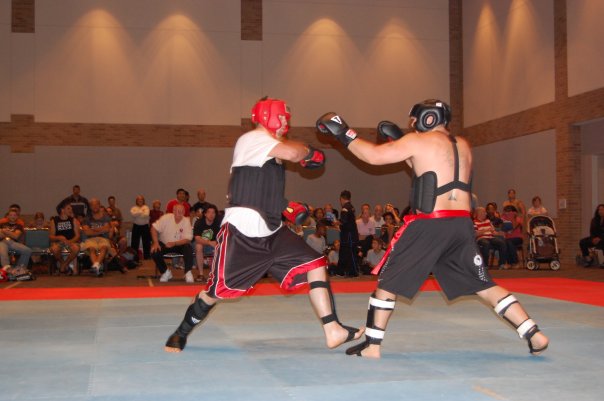
Are you wondering why people demonstrating martial arts yell at the top of their lungs? What we see in most demonstrations is silly. However, the origin of yelling in martial arts is based on sound physiology and a little bit of psychology. We’re going to discuss everything you need to know. What it is, what it’s actually called, and why martial artists of all styles use it.

Let’s get right to the most important point: why the heck do we do it? The short answer is that it increases power. All martial arts train three things: attack, defense, and power.

We train them for one specific purpose: to end a fight as fast as possible. Without power, attack and defense are useless, so anything that increases power is invaluable.

Bruce Lee using his kiai, or martial arts yell.
Bruce Lee put his famous martial arts yell to good use in The Big Boss.

For self-defense, the penalties for failure can be catastrophic. Maximizing your power output could mean the difference between life and death.

How The Martial Arts Yell Works

All Power Comes From The Ground

I’ve written about some of the physiology and psychology of this subject before, which you can read here. The secret lies in the diaphragm and a little bit of physics. All power comes from the ground. Regardless of the activity, everyone is stronger when they can establish a solid connection to the floor to generate force.

One of the feats of strength I enjoy demonstrating for friends is tearing a deck of cards in half. Not all cards are created equal, and some are more difficult than others. In particular, the cards used in casinos tend to be very difficult. They’re thicker than a standard deck of cards. They’re also coated with a thin film of plastic called an “air cushion finish.” It makes the cards more durable for heavy use. I can tear an easy deck in half while sitting down. But to rip a challenging deck of cards in half, I always have to be standing up. Standing lets me fully connect to the ground through my legs and engage my core.

You see the same thing in powerlifting during the bench press. Even when lying on a flat bench, athletes still need to get good leg drive to lift the most weight. My theory is that your nervous system needs to feel your feet on the ground to generate maximum “neural drive.”

Anatomy of The Martial Arts Yell

illustration of the diaphragm and muscles of the deep core and pelvic floor
some deep core anatomy

While many people might be tempted to only think of a strong core as “six-pack abs,” the six-pack is only the most superficial layer of muscle. The real core is much deeper and can be thought of as a ball. The bottom half of the ball is formed by the bony structure of the pelvis, which is lined with many small muscles (the so-called “pelvic floor”), and the diaphragm comprises the top half of the ball. It’s a large, dome-shaped muscle that separates the heart and lungs from the organs, which rest below in the pelvic bowl. The top and bottom are joined together by a belt of large muscles around the trunk.

When you activate the pelvic floor, the diaphragm, and “the belt”, you create global compression around the abdominal cavity, which is mostly water and therefore cannot be compressed. Instead, you form a very firm fluid ball with the spine supported nicely inside. This helps you effectively transfer force from the ground, through the spine, and out to the arms.

“Something I tell my patients is that when you are using the exhale forcefully (like fogging up a mirror aggressively) it intensifies the contraction of all of your core.”
~Marci Zavala, BS, MSPT, NTP

When In Doubt, Breathe Out

GM Sam FS Chin quote

Grandmaster Sam Chin, the founder of Zhong Xin Dao I Liq Chuan, says, “don’t let the movement interfere with your breathing .”

When we need to generate maximum force, during weightlifting, for example, it’s common to perform what’s known as a Valsalva maneuver. During a Valsalva, the glottis (throat muscles) are closed to create a tight seal with a big breath trapped in the lungs, making the entire trunk as stiff as possible.

This “interference” with the breath is entirely appropriate in this scenario. Any given set might only last 15 seconds, followed by the luxury of a prolonged recovery period.

However, during hand-to-hand combat, particularly in a battlefield scenario, where fighting might go on for an extended period, maintaining your breathing is a literal matter of life and death.

Another difference between using the breath in weightlifting and martial arts is that the movements are more of a grind during heavy lifting. For fighting, we only need maximum tension for a split second at the moment of impact for striking or kicking.

The Espresso Press Example

Allow me a brief but relevant tangent here. With the cost of everything going berserk lately, I decided to invest in an espresso maker for the house. For $130, I could save myself $6 per day by making a double shot at home and just adding water and ice when I’m ready for an iced coffee later in the day.

Flair Neo flow control valve

The thing about making espresso is, you need a lot of pressure, between six and nine bars, to be exact. Usually, this is achieved by grinding the coffee very finely, which requires a lot of pressure to pass water through once you’ve tamped the ground coffee down. This can be a problem if you don’t have a grinder that can grind your beans finely enough. The makers of the Flair Neo addressed this problem by designing their basket with a “pressure control valve .”

Essentially it restricts the flow of the espresso into a tiny nozzle, so the plunger is trying to push the liquid through faster than what the little valve will allow. This creates additional backpressure in the brew chamber, and we get to our magic six-nine bars.

When we shout, the glottis briefly contracts, similar to a Valsalva. We get the same effect as my espresso press by shouting, yelling, or grunting. The large muscles of the core are suddenly contracting and trying to force a massive volume of air through the now very narrow valve of the throat. This increases the pressure in our abdomen while at the same time allowing us to breathe continuously during a prolonged period of high oxygen demand. You could think of the shout as a “micro-breath hold” amid a flowing breath, like the old Tai Chi Classics, which tell us to seek the “stillness in movement.”

What’s In A Name?

The Japanese term for the martial arts yell is kiai (氣合). The literal translation is “energy harmony” or “energy unification.” However, I’ve often seen it transliterated as “spirit shout,” which is much less vague. The Japanese word ki (or qi 氣 in Mandarin) means something like “vital energy .”

Hanzi/Kanji characters are often a combination of simpler characters, as is the case with the word ki/qi. We see the character for steam or vapor, but it can also be thought of as the breath. In the West, we have a similar Latin word, anima, which also means spirit or breath, depending on the context. It’s a recognition by the ancients that, in the words of Mr. Miyagi, “no breathe, no life .” In that sense, the spirit shout can be considered the “unification of mind, breath, and body/action as one.”

The Koreans use a very similar term called kihup (기합).

“One cry, one instant containing all space-time, the entire universe.”

In Mandarin, the term is fasheng (發聲), meaning “vocalize.” When I asked my kung fu brother and native Chinese speaker Jeff Wong about it, he said:

“You see the similarity of the term fasheng (pronounced fa shung), or fat sing in Cantonese, to fajin 發勁 (fat ging in Cantonese). Fa 發 is to issue or manifest.

Kiai in Japanese Kanji (Chinese characters) means ‘breath+harmonization’, which is the true purpose of fasheng. However, kiai doesn’t really describe the action, whereas fasheng is literal, with the purpose obscured.”

InThe Zen Way To The Martial Arts, the great zen master Taisen Deshimaru says “The kiai is that same (full) exhalation, combined with a loud voice; the sound has to spring out naturally from the depths of the body, and for that one obviously has to know how to breathe, which few people do.”

Related Post

Bruce Lee Movies
Learn about the stories behind the movies.

At the beginning of this article, I mentioned how most of the dramatic screaming done in modern martial arts demonstrations is ridiculous. The keyword is “dramatic”; much like Will Smith “slapping” Chris Rock at the Academy Awards, it’s strictly for performance. The performer uses a high-pitched yell coming from the upper chest most of the time. When done this way, the mechanics are all wrong, and the long, drawn-out nature means the glottis isn’t constricted; we don’t get the appropriate backpressure we’re looking for. At best, this type of screaming can help get you into a heightened state of arousal.

Whether you choose to vocalize with a “ha,” “hut/hup,” “oss,” or simply grunt or hiss, the sound should be short and sharp to contract the glottis and timed to coincide with the impact of the blow.

Conclusion

So there we have it! Everything you need to know about what the martial arts yell is all about.

In the traditional Japanese arts, it’s referred to as a kiai. In kung fu, we call it fasheng. Western arts like boxing don’t have a specific term, but they still do it, often simply grunting or hissing.

Although holding our breath increases trunk stability and thus power, holding the breath is inappropriate in a hand-to-hand combat scenario. This is because the length of time we need maximal trunk stability for self-defense is much shorter. The length of time we may be engaged with an opponent is much longer than we might experience during a set of strength training and without the benefit of nice, safe rest periods to recover any oxygen debt.

Getting the most out of every action was critical for the old masters when it meant whether or not they would live to see another day. The act of shouting engages the deep core muscles and the diaphragm in particular. A nice stiff core supports the spine and is an effective bridge to transfer force from the ground.

Lastly, remember that the shout should be some sort of short, sharp sound when done correctly. While other sounds can be made, like heng, om, or even simply humming, these kinds of breathing/sounds are more appropriate for relaxation and recovery. For power, we want a sound that helps contract the glottis and the core muscles to get the kind of deep abdominal pressure we’re looking for.

Show Some Love

If you found this article useful, you can support my blog by making a purchase from our Amazon Storefront and help me continue to provide valuable content.

If you’re ready to embark on your own journey of personal growth through martial arts, here are three ways I can help:

  1. Consider our small group or online martial arts classes to start your practice.
  2. Explore our other articles to deepen your understanding.
  3. Book a free discovery call to find out if one of our programs is right for you.
Start your journey to mastery today!

Read More!

Posted on

I Liq Chuan – Martial Art of Awareness

What Is I LIq Chuan

I Liq Chuan (ee lee chwen) means “mental-physical martial art”. We often refer to it as “The Martial Art of Awareness”. As a system of martial arts training, the curriculum has three main sections:

  • Philosophy, Concepts & Principles
  • Solo drills
  • Partner Training

Philosophy, Concepts & Principles

Philosophy & Concepts of The Martial Art of Awareness

I Liq Chuan is not just about self-defense techniques. We say that “we are not training to be the best, but to bring out the best in ourselves.” You could say that self-improvement is our most important objective.

In other words, we are using martial arts as a tool, not as a goal.

Training martial arts “as a goal” means that self-defense is your primary endpoint. You only care about what works in the ring or on the street. While this has the benefit of ensuring that you’ll be the most effective fighter that you can be, it doesn’t mean you’ll be the most effective person you can be. The application of what you develop in training narrows down to just a very narrow slice of possible experiences.

If you’re a professional fighter, law enforcement, or security professional, this approach makes perfect sense, especially in the short term, where maximum usable self-defense skills in the shortest amount of time is imperative. However, for the majority of people, with no urgent need to defend themselves, we can go a bit slower and a bit deeper to understand the principles.

To put it another way, a technique is like knowing how to use a fire extinguisher as the quickest, easiest way to put out a fire. Understanding the principle is knowing that a fire needs oxygen to burn; take away the oxygen, and you put out the fire, and there are many ways to cut off the oxygen to a fire, for example. The fire extinguisher is quick and easy, but understanding the principle is adaptable to more situations. The principles, once mastered, will make the same person a better fighter than they would be if they only knew techniques.

The Martial Art of Awareness As A Tool

Coming back to the idea of martial arts as a tool, as opposed to a goal: when you train martial arts as a tool, rather than developing skills that have a very narrow application, we develop skills that have very broad applications. We use the body (physical) to train the mind (mental). In other words, through the practice of martial arts, we cultivate wisdom.

The philosophy, concepts, and principles are like a compass guiding all of our training. They teach us to look closely at ourselves. Through careful observation, we learn to see things more clearly, and we learn how to remain calm (i.e., “still and clear”) under high-pressure situations (like a fight).

Stillness and clarity are skills that can be applied in any situation. In short, I Liq Chuan emphasizes an approach based on mindfulness.

Solo Drills

The Basic Exercises of I Liq Chuan

The second section of The Martial Art of Awareness is all the solo or individual training (basic exercises). We describe this section of our training as “unification of mental and physical”; you could say it’s the process of “uniting mind and body as one.”

Basic exercises help us get our body organized and integrated; they develop fundamental motor skills around three essential qualities: power, balance, and relaxation. At their core, basic exercises are a process of exploring how your body moves in three dimensions and its relationship with gravity.

All martial arts make use of some kind of basic exercises practiced by one’s self or under the watchful eye of a coach. Western martial arts like boxing will make use of solo drills like shadowboxing, hitting the heavy bag, or working the slip bag. The purpose of basic exercises is to take complex motor skills and break them down into their core components and drill them repeatedly over time to improve neuromuscular efficiency. To put that more simply, we learn to move better and with less effort.

Although kung fu, or Asian martial arts in general, are often more well known for their forms or kata, basic exercises are actually considered to be more important. Basic exercises are referred to in Chinese as jibengong (基本功). The term jiben has the Chinese word for “root,” and altogether means “fundamentals” or “basic skills”. Forms should just be demonstrations of motor skills developed through basic exercises the way the performance of a complete song is the result of the practice of more fundamental musical skills like scales.

Balance To Change

The body benefits from movement, the mind benefits from stillness.
Basic exercises become dynamic meditation when done with focused awareness.

Tai Chi principles teach us that change is the most basic quality of our experience. The highest goal of Tai Chi then is to “change with change”.

In a self-defense scenario, we’re looking for the ability to easily change directions.

Although we need a certain amount of tension to exert force, it’s tough to change direction when we’re stiff, or rigid, therefore it is important to learn how to maintain relaxation during movement. Relaxation also helps us to conserve energy.

Find Your Center

Self-defense situations are dynamic and unpredictable. An attacker will not simply strike once, and then pause mid-motion for you to launch your counter-assault as we see in so many bad martial arts demonstrations. They will change level, change direction and use multiple attacks from different angles. We must have balance to change with change.

Although when children are young, we often teach them they are not the center of the universe, from a practical point of view, we are the center of our own experience.

Balance comes from the center. However there is not one center; the mind has a center, the body has a center, and true balance is not just “50/50” of two different things. There is a synergy in true balance that comes from the partnership of opposites, like “one long and one short”, or “one heavy and one light”, or “form and formlessness”.

The Martial Art of Awareness: Mind & Body As one

The mind is formless, the body is form.

When mind and body are one, people are capable of amazing things. In modern terms, we often refer to this as a “state of flow” or “being in the zone.” Synergy is an outcome above and beyond the sum of the whole. Conversely, 0.8 x 0.2 = 0.16. If you’re like me and not very good at math, let me emphasize the obvious here: 0.16 is less than either 0.8 or 0.2.

Practically, what this means for our lives is that when we operate at a fraction, outcomes are less than the whole.

Most of us spend the majority of our time operating by fractions, particularly in today’s distracted, digital world. When we’re eating and scrolling on social media, for example, we neither truly notice and enjoy our food nor actually process what we’re seeing on our phones or how what we’re seeing makes us feel, which can, in turn, affect how much we eat. It becomes a vicious, negative feedback loop.

However, when we bring the mind and body together, a state of stillness and clarity arises. We can see more and do more, perhaps even much more than we ever thought ourselves capable of.

Partner Training Drills of I Liq Chuan

“Everybody has a plan till they get punched in the mouth.”

Mike Tyson
Examples of some partner training in our Tempe, AZ martial arts classes

Basic exercises improve balance and coordination, but by themselves are not enough to learn how to fight. In the words of Bruce Lee, “You cannot learn how to swim on dry land.” Throwing a ball, carrying a bag of groceries in from the car, or lifting a child off the ground are all applications of force, and likewise, hand-to-hand combat between two (or more) people simply boils down to the application of force, which we perceive as pressure.

So then martial arts, at its core, is simply the study of force, or pressure: how to apply force (offense), how to deal with a force being applied to us (defense), and how to create the most force possible (power).

In Chinese kung fu, we use the term san da, or san shou, to describe “free fighting”. The Chinese word san means “scattered” and has the sense of “chaos”; it’s a recognition by the old masters that real fights tend to be messy and chaotic. Only choreographed, cinematic fights look pretty. Real violence is ugly and messy, but within chaos, we can find order (principles).

Any good martial arts system takes the chaos, scales it down into simple drills that focus on principles, and then progresses the drills back to more and more free, real-time applications that more closely resemble the chaotic messiness of a real fight.

The Martial Art of Awareness uses two different types of partner training to study pressure: spinning hands and sticky hands. Both spinning and sticky hand training have multiple stages and almost endless possible variations.

Spinning Hands

Although in combination, our arms are capable of an amazing variety of movements across multiple planes, if we look closely, the arm is only capable of five basic movements.

  • flexion (open)
  • extension (close)
  • adduction (close)
  • abduction (open)
  • rotation

We can move the arm above our heads, which is technically referred to as flexion; we can move the arm downward and eventually behind the body. This is referred to as extension. Flexion and extension happen on the verticle axis.

We can move the arm in, across the body, which is referred to as adduction, and if we move the arm out, away from our body, this is referred to as abduction. Adduction and abduction happen on the horizontal axis. As we can see from the diagram above, with the shoulder joint as the fixed center, we get a kind of cross; we can move up and down and side to side (or you could say in and out), and we can rotate from the center of the cross.

Only Two Circles

Subsequently, if we look at a complete cycle (i.e., full range of motion, in sequence), we can reach

  1. up
  2. in
  3. down
  4. out

Or we can go in the opposite direction and go down, in, up, and out. This gives us two basic circles of movement, one from out-to-in and one in-to-out. All upper body movements come from just these two circles.

I LIq Chuan Spinning Hands Two Basic Circles
The Two Basic Circles

When we look at some different types of punches, a hook, a cross, and a haymaker are all examples of “out-to-in,” whereas a straight punch, a jab, and a back fist are “in-to-out.”

With this in mind, we’re just training these two circles and how to maintain the right pressure throughout the entire circumference or range of motion. We call it spinning because we’re turning the circles over and over again. It’s a process of repeatedly looking at the change.

It’s All About Pressure (& Space)

Spinning hands helps you to develop the right pressure; right pressure has the effect of a virtual sphere, a quality of roundness. It’s the pressure that keeps your opponent from being able to hit you while at the same time creating the space for you to hit your opponent. We refer to right pressure as “fullness.”

A short clip on fullness from our martial arts zoom classes.

In meditation, we look at the continuous rise and fall of the breath, which we know by the change in pressure in the body. Likewise, in spinning hands, we are repeatedly observing the “rise and fall” of pressure on the point of contact with our partner as we move continuously from in-to-out or out-to-in. In this way, spinning hands becomes a dynamic, moving meditation.

Sticky Hand

Learning how to maintain the quality of a ball or sphere is necessary, but by itself is not sufficient for self-defense. The final, objective outcome of effective self-defense training is the ability to finish a fight. Just as in sports, defense alone will not win the game. You must score points (and more points than your opponent) to win.

I Liq Chuan sticky hand training develops four fundamental qualities for self-defense:

  1. flow
  2. fend
  3. control
  4. freeze

Flow

Flowing means “to be with.” It comes very much from the quality of mindfulness and being present. In the context of The Martial Art of Awareness, it’s neither anticipating nor catching up to your training partner. With regard to pressure, when we touch our training partner, we neither resist nor allow any gaps to happen. The pressure should neither increase nor decrease. However, there is a “minimum viable pressure” that must be maintained at all times. Contact is not enough; there must be connection. There is much more that could be written technically about flowing, but we’ll save that for our members-only area.

Fend

After we develop some flowing, we must bring the quality of the ball back into our training. When we fend, we learn always to keep the quality of the ball between us and our training partner as they move freely and try to tap our bodies. It’s a dynamic, spontaneous application of maintaining the sphere of fullness; it’s a more actively defensive level of training.

Control

As we develop more skills, we can make the application of the ball more precise and further restrain our training partner’s movements by controlling both their hands and their balance. When someone is fighting for their balance, it’s hard for them to fight you. The central nervous system shuts down the ability to generate power when it thinks we’re falling and acts reflexively to try and regain balance as a first priority. By continuously manipulating our partner’s balance, we’re essentially putting our training partner into a perpetual state of falling. This is control.

Freeze

Freezing could also be referred to as “jamming.” If we compare it to firearms, when a weapon misfires, it’s temporarily unable to function until we “clear the jam.” Freezing your training partner is similar in the sense that our application of pressure is so precise that they are temporarily “unable to function” with regard to effective attack and defense.

Another way of thinking about freezing is that you are put into such a perfect state of balance that any movement away from that position puts you into a state of imbalance. You could think of it like someone holding you in place on a tightrope. As long as they’re holding on to you, you’ll be fine, but if they let go, or you struggle to get free of their control or try to attack them, you’ll only succeed in making yourself fall off the rope.

In real-time self-defense applications, “freezing” might only last for a split second, but it represents a brief moment of time when you are completely free to attack your opponent “at will” while they are briefly “immobilized”, which translates into a tremendous advantage for anyone who has that level of skill.

Conclusion

Let’s review; all martial arts train three things:

  • Power
  • Offense
  • Defense

I Liq Chuan’s two-pronged approach to developing these qualities is unique, focusing on “cause” rather than “effect” and deliberate, mindful action.

Our basic exercises bring mind and body together; they teach you to look within, to know yourself. They help develop coordination, balance, and, most importantly, mindfulness. When you know yourself and understand both your strength/power and its limitations, you can use yourself skillfully.

At their most basic, the skills of both offense and defense just come down to pressure.

Defense is based on “fullness” or maintaining the qualities of a sphere. Offense comes from recognizing the “empty” (gaps) or penetrating the opponent’s sphere.

I Liq Chuan uses partner work called spinning hands and sticky hands to learn how to recognize, maintain and use the right pressure, distance, and angles.

The Martial Art of Awareness is a good tool for developing mindfulness because a gap in your awareness is a gap in your defense. When you get hit or lose your balance, you know right away. You get instant feedback on your progress. Fullness is “yes” or “no.” You can’t fake it.

In the end, everything circles back to that first component of the system, the philosophy, concepts, and principles. It’s about “knowing.” When we move, we know. We are aware. We are not simply reacting reflexively.

Knowing from the present moment is not just a sterile, intellectual grasp of things; it’s understanding. Understanding is wisdom. Overall, that’s our primary goal for training I Liq Chuan; to use martial art as a tool to cultivate this kind of stillness and clarity.

So, in other words, we’re using martial arts to train the mind.

Start your journey to mastery today!

Read More!

Posted on

Bruce Lee’s “Like Water” Quote Hidden Meaning

Water is always an excellent example to follow for martial arts; as Bruce Lee famously said, “Be water, my friend.” However, Lee’s famous quote needs to be better understood, even by long-time martial arts students. So let’s explore Bruce Lee’s most recognized inspirational quote more deeply.

Key Takeaways

  • “Be water, my friend” was a line from an episode of Longstreet
  • water has no mind; it just follows nature
  • to flow, you must be mindful
  • “full” & “empty” is simply a matter of pressure
  • like a tsunami, we can “crash” if we have enough power
screenshot of Bruce Lee saying "be water my friend" on the Pierre Burton Show
This article is an installment in our series about Bruce Lee.

The Origins of Bruce Lee’s “Be Water My Friend”

In September 1971, Bruce Lee appeared in an episode of Longstreet titled “The Way of The Intercepting Fist” as the character Li Tsung. However, those words became iconic after his interview with Pierre Burton later that same year.

In the episode, the titular character Mike Longstreet, a blind man, hires Li Tsung to help him learn how to fight so he can defend himself. After complaining to “Li” that there was “too much to remember,” Li scolds Longstreet telling him “if you try to remember, you will lose!”

The sagacious Li then offers his seminal advice:

“Empty your mind.
Be formless, shapeless, like water.
You put water into a cup; it becomes the cup.
You put water into a bottle; it becomes the bottle.
You put it into a teapot; it becomes the teapot.
Now water can flow, or it can crash.
Be water, my friend.”

Bruce Lee’s Longstreet Episode – Way of The Intercepting Fist.

What Did Bruce Lee Mean By “Be Like Water”?

I spoke about Bruce Lee’s inspirational quote during one of my Zoom classes.

“Water has no mind; it simply follows nature or Tao 道 (the natural order of existence). By default, water is present, formless, and neutral; it simply obeys pressure and tension.”

We should pause here to discuss the concepts of “no mind” and “present, formless and neutral” in more depth.

No mind, or mushin 無心, is an essential concept in Zen philosophy with clear applications to martial arts. Mushin is a state of wordless awareness. It is a state of no thinking, but no thought doesn’t mean a state of blankness like a sleepwalker. On the contrary, it’s a state of deep knowing. One can clearly see the differences from one moment to the next, but without an ongoing internal dialogue or mental narrative.

When you can see and change with change without any sense of either attachment or aversion, we call this “flowing.”

So we want to develop that quality of being “like water” so that point of contact tells me, “if this is full, I flow around. If it’s not full, I just flow in,” or “I already know that I have enough power that I can just crash through full or empty, it doesn’t matter anymore, I can just attack it directly.”

And again, this pressure is already there; it’s just a matter of whether or not you can observe it to know full and empty. And to know whether you can just attack it, attack the fullness, or you need to flow around.

So it’s how we want to tune our minds as we train.

Mind & Body As One

On the physical side of training, we have our diagnostic checklists. We have a checklist of the “six physical principles.” We have the checklist of the 13 points to scan ourselves to observe the balance of the internal tension between the yin and yang muscles, and because we’re talking I Liq Chuan, we’re talking about mind and body.

So on the mental side now, we have the three mental factors to constantly guide our training; so that I can observe my mind while I train, “am I present and formless”; am I acting like water right now? Is my mind like water?

I simply observe the pressure and the tension. Am I harmonizing with the pressure and the tension, or am I trying to fit a square peg into a round hole? So in many martial arts, they talk about “intent” or “will,” but in I Liq Chuan training, we talked about the yi as just being attention, like the mirror, right?

Still water has no image of it’s own, it simply reflects on it’s surface. As Bruce Lee said “empty your mind, and be water my friend.”

Show Some Love

If you found this article useful, you can support my blog by making a purchase from our Amazon Storefront and help me continue to provide valuable content.

If you’re ready to embark on your own journey of personal growth through martial arts, here are three ways I can help:

  1. Consider our small group or online martial arts classes to start your practice.
  2. Explore our other articles to deepen your understanding.
  3. Book a free discovery call to find out if one of our programs is right for you.
Start your journey to mastery today!

Read More!

Posted on

Are Breathing Exercises Good For You?

A Look At Breathing Exercises Benefits & Limitations

We’re going to take look at one of the most important ways breathing exercises can be good for us. We’ll also consider some of the limitations. This post is a follow-up of last week’s article on the “four quarters of breathing,”

As always, it’s important to be clear that I am not a doctor. Nothing in this post meant to be considered medical advice. I only share my own practice and motivations for others to consider. Always consult with a licensed and credentialed functional medicine practitioner before making any changes to your exercise and lifestyle routine.

Deep Breathing Exercises Can Be Improved By Providing Resistance

Allow me to introduce you to my newest toy:  the Breather Fit. This tool allows you to add variable resistance to both the inhale and exhale.

Yes, it does look exactly like a crack pipe. 

Breather Fit

There is a free app meant to be used in conjunction with this piece of equipment, but in my experience, it’s not necessary and not very high quality or interesting to use.

So, why would we want to bother adding resistance to our breathing?

In one word: reserves.

Let’s look at the graphic below, which illustrates lung volumes, and corroborates my premise that a full breath cycle should have “four quarters.”

http://www.pathwaymedicine.org/lung-volumes

Failure to maintain adequate reserves is the physiological equivalent of living paycheck to paycheck. It’s all good until you find yourself in a high-demand state. We want to keep as much money in reserve as possible to cover those unexpected bills.

Our bodies are constantly adjusting to the signals it receives; if all they ever receive are weak signals, our bodies adapt towards weakness.

The Last Word On Why Breathing Exercises Are Good For You

When’s the last time you heard somebody complaining they had too much time in the day? Technology hasn’t saved us any time in our day-to-day lives, but it has saved us energy. It generally takes much less effort to complete tasks today than in the past. That reduced effort translates into reduced messages to our bodies. Without these signals from our environment, we won’t maintain our strength or the ability to meet our oxygen demands.

In the 21st Century, we must seek opportunities to expose ourselves to healthy physical stress regularly. If we don’t, our reserves dwindle to the bare minimum necessary to support us while sitting indoors in central air and artificial lighting. It leaves us unprepared for the inevitable unexpected challenges of life.

Posted on

The Four Quarters of The Breath

GM Sam Chin likes to say “if it’s a circle, it has a center.  If it has a center it has four quarters.”


We tend to think of breathing as simply inhale and exhale, but I began to notice during my breathwork a year or so ago, one full breath cycle should also have four quarters.

Each inhale and exhale has two phases; an active phase and a passive phase separated by a neutral point.

The neutral point is when the diaphragm is completely relaxed and there is no movement of either inhale or exhale because the relative pressure inside the lungs matches the external pressure.


If we inhale from here, the inhale is active, requiring some effort from muscles like the external intercostals of the ribs, and if done properly the rib cage expands as the lungs fill with air.  At the very top of the breath, we reach maximum pressure inside the lungs.

From here we can simply relax and the built-up pressure will cause the air to rush out of our lungs until we reach the neutral point again.  This is the passive phase of the exhale.  Below the neutral point, we can use some effort to continue to exhale actively, which should cause the waist and rib cage to continue to condense by activating muscles like the internal intercostals and transversus.

At the bottom of the active exhale, we’ve built up some negative pressure inside the lungs;  if we simply relax, the vacuum will draw some air into the lungs until we reach neutral, and this is the passive phase of the inhale.

We need to acknowledge and actively train each of the four phases to some degree.

Why? Like anything else, it’s “use it or lose it” as we age.

Lung function declines by almost 40% over the lifetime of an average individual, more so in men than women.


Most people develop a shallow, “vertical” breathing pattern that involves too much involvement of the neck and shoulders as their activity levels decline, spending most of their time breathing at and just above the neutral point.

This lack of excursion (change in diameter) causes ossification in the rib cage. As the rib cage becomes increasingly stiff, we’re forced to take more breaths to maintain our normal 5-6L of air per minute. Heart rate and sympathetic (fight or flight) nervous system activation are directly linked to our diaphragm, this increased number of breaths per minute shifts us into mild chronic physiological stress.  

The alveoli, the tiny sacs in our lungs where O2/CO2 are exchanged, become deflated and increase dead airspace within the lungs reducing our ability to take in fresh oxygen.

Respiratory muscle strength decreases with disuse, impairing effective airway clearance leaving us prone to infection.

We’re also left with less and less reserve to meet our needs during high demand states like when we’re fighting off a bear (or pneumonia).

Pulmonary (lung) function measured as a function of forced expiratory volume has been shown to be a reliable indicator of life expectancy.

We also have research that shows that breathwork can and does improve lung function in older adults, so if your over 50 and you haven’t been doing breathwork your whole life, you don’t need to throw in the towel.

Start today and do what you can, with what you have where you’re at.


Here’s what to do

  • become more mindful of your breathing all the time. Make sure you’re spending time breathing in all four quarters throughout the day.
  • incorporate max inhales and exhales during your breathwork.  Reach both hands above your head, inhale to your max and try to flare your ribs as wide as possible like the hood of a cobra
  • Ball your hands into fists and pull arms down close to your sides and exhale as much as possible.  Feel your rib cage and waist get as small as possible. Repeat 10x. (bonus, if you’re training a martial art like I Liq Chuan, when you fajin, you’re already training your forced expiratory volume!)

Posted on

Marrow Washing – Can You Breathe Your Way To A Healthier Brain?

A new scientific study may shed some light on how the practice of bone marrow washing in qigong may work. At its core, all qigong essentially boils down to coordinating your breathing and movement with focused attention: yi dao qi dao li dao 意到氣到力到 (attention arrives, energy arrives, power arrives).

Shaolin is famous for two sets of qigong in particular: the yijinjing (易筋經) and xisuijing (洗髓經) (although you’ll be hard-pressed to find any two teachers who agree on precisely what either of them should look like).

The yijinjing, loosely translated, means “muscle/tendon changing classic.” This is the set that Master Jiru teaches as part of his approach to “mindfulness of feeling.”

Xisuijing – Marrow Washing Qigong

Xisuijing means something like “marrow washing exercises”. Dr. Yang Jwingming writes “Xi means “to wash” or “to clean.” Sui includes Gu Sui, which means “bone marrow,” and Nao Sui, which refers to the brain—including the cerebrum, cerebellum, and medulla oblongata. Jing () means “classic or bible.” This work is commonly translated “Marrow Washing Classic,” but “Brain/Marrow Washing Classic” is a more accurate translation.”

In I Liq Chuan, GM Sam Chin teaches that “expand and condense” helps to cycle the qi from the center of the bones (the marrow) out through the ligaments, tendons, and skin and back, and considers this training to be xisuijing.

Other systems of kung fu, such as Little Nine Heavens, incorporate specific exercises that utilize weights tied to the genitals as a major component, if not the singular focus, of xisuijing.

The Purpose of Bone Marrow Washing Qigong

<—WARNING: long, but relevant tangent ahead—>

In his book “Qigong, The Secret of Youth” Yang, Jwingming translated many old documents detailing the practice of xisuijing, and while there were exercises that involved the testicles, no mention was made of swinging weights from them, therefore I’m inclined to think that either only certain schools adopted this practice as part of their specific approach to marrow washing, or over time most schools abandoned the practice.

Remember the semi-mythical founder of Zen, Bodhidharma, was an Aryan prince turned monk who’d traveled to Shaolin from India around the 5th century AD, where he found the monks in poor health due to lack of exercise (they spent all their time translating sutras from Sanskrit into Chinese).

Learn More About Qigong

image of Damo, the semi-mythical founder of Shaolin Kung Fu
Bodhidharma, aka Damo or Daruma.

As the story goes, Bodhidharma taught the monks various yogic practices, which became the foundation of Shaolin’s qigong and kung fu. There are Indian yogis who also practice hanging weights from their genitals, so it almost certainly pre-dates its practice in China, and potentially was an important part of the original xisuigong.

<—/tangent—>

In his article on the purpose of xisuijing, Yang Jwingming writes
“Most important of all, the practitioner of Brain/Marrow Washing Qigong is able to lead Qi to his brain to nourish it, and to raise his spirit. To the Daoists and Buddhists, Brain/Marrow Washing Qigong is the path to reach the final goal of enlightenment or Buddhahood.”

How does one lead the qi? With focused attention: yi dao qi dao li dao 意到氣到力到.

“Where the attention goes, the energy goes.”

New Science Meets Ancient Practices

Now that we’ve established some background on marrow washing and the role of focused attention and breathing in qigong methods, let’s take a look at some recent discoveries that support the premise that we can use intentional breathing exercises to optimize the health and function of our brains.

Our brains are our most metabolically active organs; they account for only about 2% of our body weight, yet consume ~20-25% of all the calories we eat; as a result, they produce large amounts of metabolic waste products. Accumulation of these harmful substances, like amyloid plaques, is associated with cognitive decline as seen in Alzheimer’s, and one of the most essential functions of sleep is clearing out waste from the brain by circulating (i.e., “washing”) the CSF, or cerebrospinal fluid. Breathing, however, also plays a role in the process!

A recent study published in the journal Nature Scientific Reports demonstrated that slow breathing has a significant impact on the flow of cerebrospinal fluid (CSF).

How Slow Breathing Helps Clean Your Brain

fMRI of the effects of breathing on the brain
frame rate is faster than real time

The volume of CSF circulated was four times greater due to breathing than to changes in heart rate, and this was for a “normal” breath rate of 15 breaths per minute.

On Instagram, Dr. Steven Lin writes “During an inhale and exhale the chest rises and falls. The change in pressure flows upward to the cerebrospinal fluid (CSF) dynamics surrounding the brain.

​Here’s how it works:
Breath in (inspiration) – Lowers chest pressure and empties the venous plexus. CSF flows down the spine.
Breath out (expiration) – Increases chest pressure and fills the venous plexus, pushing CSF up the spine into the head.”

Slower breathing, like that used in qigong and breathwork, can be 5-6 breaths per minute (or less).

In an article from Science Norway, study author Vegard Vinje explained why fewer deep breaths have a greater impact on the flow of brain fluid than faster, shallow breathing. Essentially, the longer waves that result from deep breaths can carry more volume. He compares it to ocean waves hitting the land.

“Imagine a beach with rubbish. A long wave will remove garbage and clutter on a beach more efficiently than a short one,” he said.

Although there is a certain risk of trying to shoehorn modern data to explain ancient practices, recent research has continued to support and expand on these findings. A 2022 study published in Nature Scientific Reports replicated the earlier results of Vinje and colleagues, showing that controlled yogic breathing techniques—especially deep abdominal breathing—significantly increase the cranial flow of cerebrospinal fluid (CSF).

*Replication is an essential hallmark of solid, evidence-based practices.

Using real-time MRI technology, researchers demonstrated that respiratory-driven CSF movement not only complements but can even rival cardiac-driven flow during slow, intentional breathing.

These findings lend additional scientific support to the internal logic of Marrow Washing Qigong: that breath, mind, and subtle movement can be used to enhance the brain’s self-cleansing mechanisms and promote long-term neurological health.

I believe that the old masters developed deep insights into the inner workings of their bodies and minds, and modern imaging technology is finally allowing us to see and measure what they were feeling all along.

Start your journey to mastery today!

Read More!

Posted on

Grip Strength & Martial Arts [VIDEO]

A video of me demonstrating a feat of grip strength by tearing an entire deck of cards in half.

Traditional martial arts instructors often frown on strength training (or at least the version of it that is most often practiced in the West), and my own teacher GM Sam Chin is no exception; however, one type of strength and strength training is revered by almost all martial artists is grip strength!

When it comes to “lifting weights,” even GM Sam Chin is in favor of training the grip.

Your feet are how you connect to the ground to generate power (not including ground fighting like jiu-jitsu), but the hands are how you connect to your opponent or to a weapon to apply power.

In addition to training with heavy weapons like long spears and poles, maces, and swords, traditional martial arts often used additional grip training methods like “gripping jars” called nigiri game by practitioners of karate and the stone locks of China (similar to kettlebells) to develop multiple aspects of grip strength like crushing and pinching strength.

Most traditional martial arts emphasize four categories of techniques: striking, kicking, wrestling, and grappling, which involves grabbing the opponent’s limbs and essentially “bending and twisting” to either dislocate a joint or break a bone.   All wrestling and grappling require maximum grip strength to be effective.

In more modern times, scientists have even discovered that grip strength is an excellent indicator of your overall health: many studies, like the PURE study, have shown that grip strength is a better indicator of your risk of death in the following 10-12 years than biomarkers like blood pressure!

Whether you want to be an effective martial artist, or just want to be lean, strong, and healthy, train your hands!

Posted on

Mind & Body As One

I was thinking about “right effort” last night at the end of our martial arts class here in Mesa.

Right Effort is one of the factors of the Noble Eightfold Path in Zen, alongside right speech, right action, right livelihood, right intent, right concentration, and right mindfulness. These are often grouped into three broad categories: discipline, concentration, and wisdom. If you’ve ever received an email from me, you might have noticed those three words tucked into my signature—they’ve always been a kind of compass for me.

Zen quote: "To look for some target outside of oneself is not the true meaning of Zen."

But the truth is, despite what we intend to do with our time, life rarely cooperates. It throws obstacles at us: family responsibilities, financial stress, health scares, even something as mundane as car trouble.

Right now, my own “stress bucket” feels pretty full. My dad’s health is on my mind, my vehicle’s giving me grief, and my sleep hasn’t been ideal. By the time we reached the end of class last night and began the 21 form, I wasn’t exactly in peak condition.

I Liq Chuan 21 Form

Standing at the front of my students, it would have been easy to just “phone it in.” After all, who would know? I’ve put in my hours, tens of thousands by now. Habit and muscle memory could have carried me through the motions. But looking out over the water, I caught myself: What are you doing? What do you really want here? Because the truth is, when you let concentration slip and effort slacken, you’re not fooling anyone but yourself.

That question stuck with me: how often do we cheat ourselves? How many little promises do we break to ourselves in a day, a week, a month? And what’s the cost? Every time we do it, we chip away at our own integrity, our own peace of mind.

“Complete every action with your mind as taut as an iron bow strung with wire. … Use your mind strongly even when you walk down the street, such that you wouldn’t even blink if someone unexpectedly thrust a lance at your nose.”
~Suzuki Shosan

On the flip side, when we bring thought and action into alignment, it feels like “mind and body as one.” That alignment doesn’t make things easier—in fact, it often feels harder. It demands attention, discipline, and a willingness to show up even when you’d rather not. But the payoff is real. Knowing that our actions line up with our values, that we’re practicing the discipline of right effort, brings a kind of steadiness. A peace that isn’t dependent on circumstances, but on the trust we’ve built with ourselves.


Start your journey to mastery today!

Read More!

About the Author

Ashe Higgs, I Liq Chuan Master Instructor & L2 Nutrition Coach

Ashe is a highly skilled martial arts instructor and certified nutrition coach with over two decades of experience in the field. He holds a Master Instructor certification in I Liq Chuan under Sam FS Chin, making him one of only several individuals worldwide to hold the title. He has taught classes and workshops worldwide and is passionate about helping others achieve their fitness and wellness goals.

With a background in full-contact fighting and a Level 2 certification from Precision Nutrition in nutrition coaching, Ashe is a well-rounded expert in the fields of martial arts. In addition to his expertise, he has a wealth of experience in teaching and mentoring others. He has a natural ability to connect with his students and inspire them to reach their full potential.

Read more about Ashe here…

Disclaimers & Conflicts of Interest

I am not a doctor or a lawyer, and the information provided should not be considered medical or legal advice.

The information provided is for educational and informational purposes only and should not be used as a substitute for professional legal or medical advice, diagnosis, or treatment. Consult your doctor or a qualified healthcare professional before making any changes to your diet, exercise routine, or lifestyle.

Please note that some of the links provided in this content may be affiliate links, meaning that I may receive a small commission if you purchase through them. However, please rest assured that any products or services recommended are based on my personal experience and belief in their value. I only recommend products or services that I have personally used and believe in.

Posted on

Qigong Breathing

Brain Over Body – Inner Workings of The Inner Fire

Thrive Market 

I’ve been training in adaptation to both hot and cold for several years (each one has particular benefits to health, and performance), but it wasn’t until this past October that I attended a formal workshop on the material with the Art of Breath coach Rob Wilson. Although I had done Wim Hof’s 10 Week Course, I wasn’t completely happy with it. I felt that there were “secrets” missing from the material, some of which I uncovered by accident, in Scott Carney’s book “What Doesn’t Kill Us”.


The workshop with Rob Wilson was a good experience on many levels, the most important of which was just validating my experience with training cold exposure up to now, and also helped clarify my experience with the Wim Hof online course; compared to deep meditation methods like Vipassana or Zen which are meant to completely overhaul your mental “operating system”, cold exposure practice is really so simple, there’s not much “how to” to talk about, just do it, and nature pretty much handles the rest over time. The keys are a little bit of intent, and controlling your breathing to manage your physiological state.

Recently I posted about a review paper that detailed some of the relationships between breathing exercises and improvements in immune function and now, we have some more exciting new findings in regards to respiration / breathing exercises and cold exposure from Wayne State University as part of exerting active control over normally autonomic functions in the body. The study is titled “Brain over body”–A study on the willful regulation of autonomic function during cold exposure Here are a few highlights from the study

  •  fMRI analyses indicated that the WHM activates primary control centers for descending pain/cold stimuli modulation in the periaqueductal gray (PAG)
  • The periaqueductal gray (PAG), also known as the central gray, constitutes a cell dense region surrounding the midbrain aqueduct.
  • In addition, the WHM also engages higher-order cortical areas (left anterior and right middle insula) that are uniquely associated with self-reflection, and which facilitate both internal focus and sustained attention in the presence of averse (e.g. cold) external stimuli.

I think one of the more interesting findings from the study was that BAT, or brown fat, played a negligible role in generating heat to maintain core temperature during cold exposure, but instead the muscles of the rib cage, the intercostals, played the chief role by burning massive amounts of glucose.
This helps add some understanding to my own experience with the practice, which is that anytime I’m sleep deprived, or in a fasted state I have a much more difficult time resisting the cold compared to when I’m fed, and rested.

I commonly fast two days a week, and the first three or four days of every month. In a fasted state, core temp drops a bit anyway, and my system may not yet be fat adapted well enough to efficiently keep up with the higher demand for blood sugar through gluconeogenesis. (I suspect this is true, as I still have not recovered 100% of my exercise performance since switching to a ketogenic diet in June of this year). There was also a recent study done that showed blood ketone levels above 2.0 (which wouldn’t be uncommon during fasting) basically results in “ketone resistance”.

 Similarly, cortisol levels are high, and you’re naturally more insulin resistant when sleep deprived, so again, this could potentially play a role in not being able to keep up with the glucose demands of the “inner fire” practice.

If you’d like a  nice animated synopsis of the study and the results, the official Wim Hof YouTube channel released a nice video about it.


Complete coaching for MIND &  BODY.
● Nutrition ● Mindfulness ● Martial Arts ●
Staying strong over 40. Sign up for my FREE newsletter👇👇👇 (http://bit.ly/2sGor97) Classes held in Tempe, AZ and workshops worldwide.

References 1. “Brain over body”–A study on the willful regulation of autonomic function during cold exposure
Author links open overlay panelOttoMuzik
https://www.sciencedirect.com/science/article/pii/S1053811918300673?via%3Dihub

Posted on

Qigong For Health – New Science [Part 1]

The Science Behind Qigong For Health

The old masters discovered centuries ago that deep breathing practices like qigong and pranayama lead to long life and abundant health. I teach several of these traditional qigong sets as part of our local martial arts classes here in Tempe, AZ, including a variation of yijinjing 易筋經 unique to I Liq Chuan, as well as a qigong for health set taught by GM Sam Chin and the “five contemplations of breathing” taught by Venerable Jiru of the Mid-America Buddhist Association.

Possible Benefits of Qi Gong For Health

A new review article recently published in Frontiers in Psychiatry [1] reveals some mechanisms behind such practices and their applications in treating mental and physical disorders like anxiety, depression, inflammatory bowel disease (IBD), and Crohn’s disease.

At over 15 pages and full of scientific jargon, the original review paper is quite long and dense for many readers, so I’ll summarize some of the more critical details below. Even as a summary, I’m going to break this post up into multiple parts:

Part 1: some basic anatomy
Part 2: The Immune System

Basic Anatomy

The human gut has an estimated 100-500 million neurons; this is more neurons than the spine. It’s the most significant accumulation of nerve cells in the human body. Often referred to as “the second brain,” it is more appropriately referred to as the enteric nervous system. Well-known author of martial arts and qigong books, Yang, Jwingming, has been writing about this since at least the 90s.

The enteric nervous system produces more than 30 neurotransmitters and communicates directly with the brain (and vice versa) via the vagus nerve. The vagus nerve originates in the brain stem and extends downward through the torso connecting to all the major organs, including the brain, heart, liver, lungs, and the gut. Due to its length and complexity, it’s called “the wandering nerve” (vagus means wandering in Latin).

The Gut-Brain Axis

This “two-lane highway” between gut and brain via the vagus nerve is referred to as the gut-brain axis or GBA.

From an “Eastern” point of view, the body tissues can be divided into yin and yang types like flexors and extensors in the muscles or arteries and veins in the circulatory system. Nerves are similarly divided into two different fiber types: afferent (long “A” like hay) and efferent (long “E” like feel) fibers.

Afferent fibers bring information from the point of contact (stimulus) back to the brain and central nervous system. In contrast, efferent fibers carry information from the CNS back to the other end of the system. You could say that afferent fibers bring information “from out-to-in,” while efferent fibers bring information “from in-to-out.”

A whopping 90% of the nerve fibers in the vagus are afferent fibers, bringing detailed information about the gut and the state of its internal environment back to the brain, then to the brain stem and limbic system (more on this later). In comparison, the remaining 10% of fibers are efferent, communicating information about our external environment and mental state back to the gut. This intimate connection explains why you feel moody when you’ve eaten the wrong foods or why you get butterflies in your stomach when you get nervous.

How Qigong Works – Slow Breathing

So that you don’t forget to do important things like breathe, say, after you fall asleep, by default, respiration (breathing) is hardwired into the autonomic nervous system. However, being able to speed up or slow down our breathing voluntarily is an ability we all possess. (As a side note, I recently heard about a condition in which people lose the autonomic function and basically can’t sleep anymore. Every time they try to fall asleep, they wake up because they quit breathing and eventually die of sleep deprivation!)

The nervous system can be divided into two main parts, the voluntary (somatic) nervous system and the autonomic nervous system, which can be again divided into the enteric nervous system, the sympathetic (fight or flight), and the parasympathetic (rest and digest) nervous system. The vagus nerve is the primary regulator of the parasympathetic branch of the autonomic nervous system. To make a rough analogy, if the nervous system were your house and the autonomic nervous system your central heating, the vagus nerve would be the thermostat.

As you may have guessed by now, breathing practices can directly stimulate the vagus nerve by increasing the vagal tone, leading to an improvement in autonomic regulation, clarity of thought, improved mood, and ability to cope with stress.

Heart Rate Variability & Vagal Tone

Simple breathing exercises seem to restore vagal tone, at least in part, through heart rate variability.

Each of us naturally has a different heart rate between the inhale and exhale, as well as from beat to beat. When you inhale, the heart rate speeds up a bit, and when you exhale, the heart rate goes down.

Good heart rate variability indicates that you’re in a relaxed state, whereas poor variability indicates a stressed, sympathetic state. So by slowing down the number of breaths we take in a minute and focusing on making the exhale longer than the inhale, we naturally cause the heart rate to drop, which restores vagal tone and increases relaxation as we shift from a sympathetic into a more parasympathetic state. Once in the parasympathetic state, the gut then upregulates the production of “feel good” neurotransmitters like serotonin, which go back to the brain, increasing relaxation and beginning a cascade that feeds forward into itself.

The old saying goes, “happy wife, happy life,” but “happy gut makes a happy brain” might be more accurate.

Although the effects of practicing various qigong for health techniques are at least initially, global, masters of breathing exercises like Wim Hof have shown that conscious and direct, targeted increases in autonomic nervous functions like immune responses to pathogens like e. Coli can be achieved.[3]

Slow your breathing, heart rate drops, and the gut starts doing all kinds of things beneficial to our health. We can do all this consciously because the forward, “thinking” brain is wired into the brain stem through the limbic system (the emotional center of the brain), which is in turn wired to the vagus nerve.

Part two will continue with how stimulating the vagus nerve through breathing exercises like qigong and pranayama helps to regulate the immune system and improve blood pressure and gut health.

Learn More About Qigong

References

[1]Vagus Nerve as Modulator of the Brain-Gut Axis in Psychiatric and Inflammatory Disorders
Sigrid Breit, Aleksandra Kupferberg, Gerhard Rogler and Gregor Hasler

[2] Sudarshan kriya yoga: Breathing for health
Sameer A Zope, Rakesh A Zope[3] Voluntary activation of the sympathetic nervous system and attenuation of the innate immune response in humans
Matthijs Kox, et. al