Maurice de Saxe (1696–1750) was a French Marshal General, known both for his battlefield record and for his influential military treatise, Reveries on the Art of War. His writing is notable for its practical emphasis on how bodies perform under stress, rather than merely on how armies maneuver on paper.
“All the mystery of combat is in the legs, and it is to the legs that we should apply ourselves.”
~Marshal Maurice de Saxe

During a workshop in Arizona many years ago, I remember Grandmaster Sam Chin making a pointed observation about physiques that look impressive but are not necessarily functional. Referring to bodybuilders’ overdeveloped upper bodies, he said, “If you really want to know if somebody is dangerous, look at their legs.”
Sifu’s own build says a lot: a long spine and long arms relative to short legs—an advantageous body type for leverage. His youngest son, Hsin, is even more powerfully built, like a silverback gorilla.
These are simply observations about structure, proportion, and mechanical advantage (and maybe some of GM Chin’s inherent bias against strength training; he doesn’t need it to be powerful).
GM Sam Chin is a man of exceptional wisdom and insight, and I disagree with him on very few issues, but the one that stands out most is the value of strength training for martial arts.
I may have big dreams, but I’m cursed with bad genes. Unfortunately, I am better suited to running than to fighting, with a short spine, long legs, and I don’t naturally carry much muscle unless I lift regularly. I graduated from high school at around 155lbs, 6’ 1”. Not exactly an impressive physical specimen.
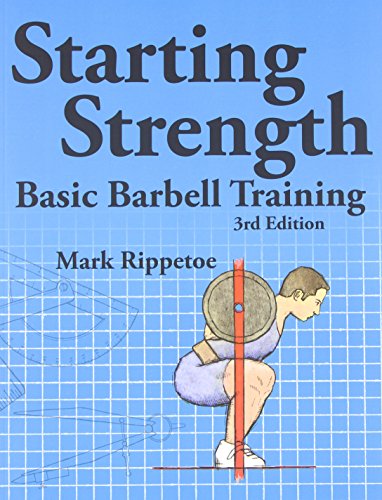
A useful starting point is the basic relationship between force production and the ground. Renowned strength coach Mark Rippetoe defines strength as “the ability to apply force against an external resistance.” In fighting, the opponent is that resistance. In all human movement, except for some aerial gymnastics and maybe circus acts like the trapeze, the ground serves as the base that allows force to be generated and transferred.
This is where the concept of the kinetic chain becomes relevant. Force is rarely produced by one isolated segment of the body. It is created and transmitted through our physical body from the ground up. In striking, grappling, and throwing, the legs and hips are always the primary drivers: they create propulsion and stability, while the spine helps transfer that force to the extremities of the arms and hands at the point of contact.
Classical martial arts texts describe this in similar terms. The Tai Chi classics, for example, summarize the pathway of force as follows:
其根在脚,发于腿,主宰于腰
“Rooted in the feet, issued through the legs, directed by the waist.”
From this perspective, the argument for squats and deadlifts should be self-evident. Alas, as they say, “Common sense is so rare it should be considered a fucking superpower.”
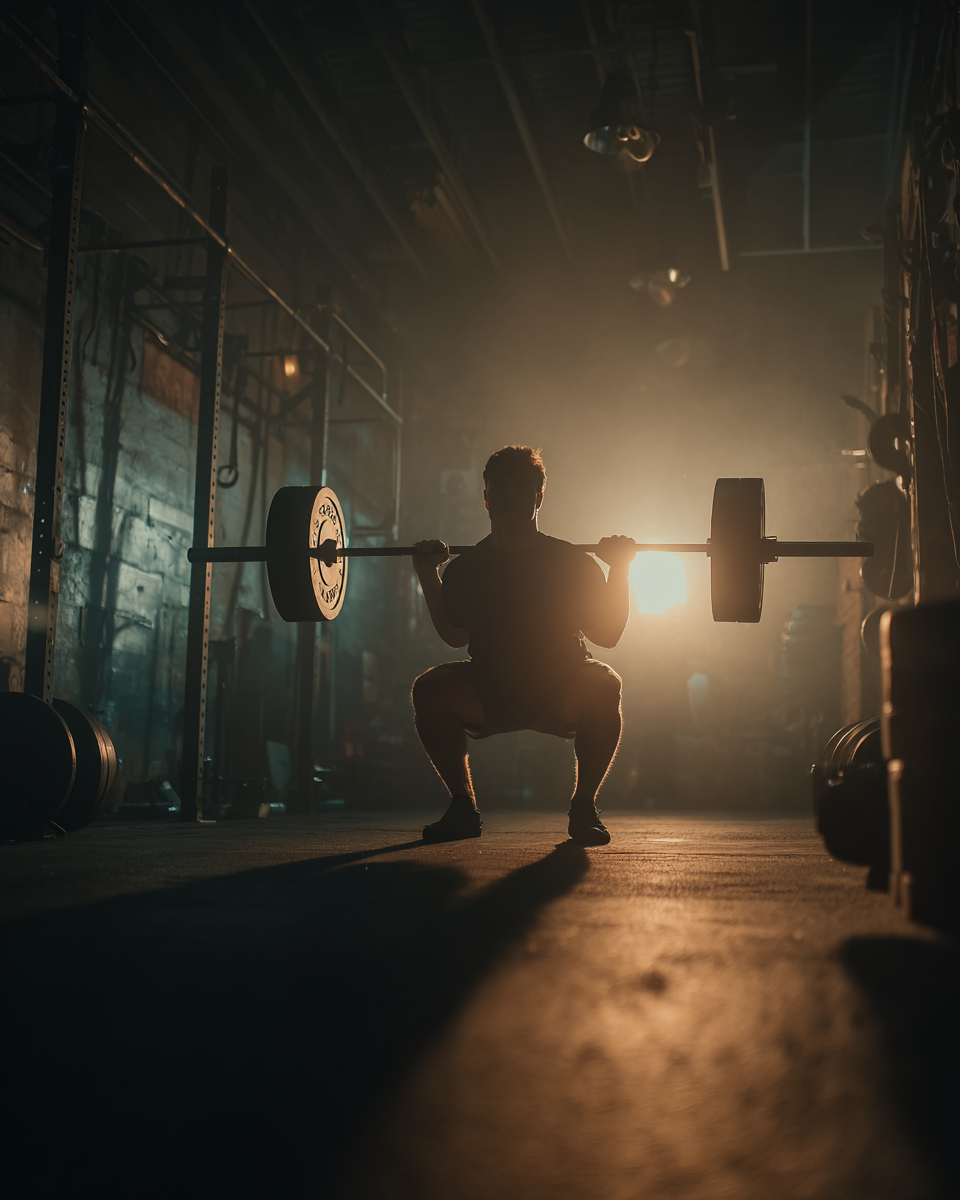
Both the squat and deadlift load the entire kinetic chain heavily and progressively through large ranges of motion. The squat and the deadlift can be loaded more heavily than any other human movement. A heavier load equals more physical stress, and that equals more adaptation. They are also precisely measurable and incrementally scalable, which makes them useful for long-term development and the safety of the lifter.
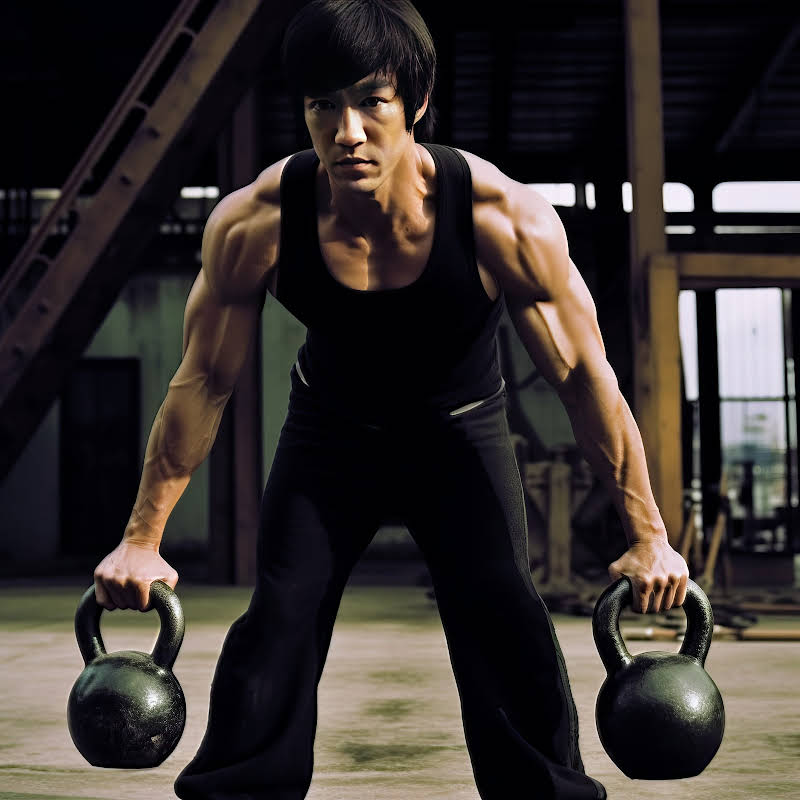
At the same time, it is worth addressing a common critique by Rippetoe: that kettlebells are “useless.” If kettlebells are used primarily for high-repetition work done for time, then they are best categorized as conditioning rather than strength development. That does not make them worthless; it just means you’re using the tool for the wrong purpose, or you’re not using a heavy enough bell.
Used intelligently, kettlebells can complement a martial artist’s training, especially for accessory work.
The Get Up is a clear example: it develops controlled transitions from the ground to standing under load, reinforcing coordination, shoulder stability, and the ability to regain posture—qualities that matter in any situation where one finds themselves in the generally undesirable situation of being on the ground in a confrontation where multiple threats exist simultaneously, and they are mobile while you are not.
With all due respect to BJJ (a fantastic art), a primary objective of effective self-defense is being able to “break contact” whenever the situation demands it as the most prudent course of action, both legally and practically, and being stuck flat on your back on the ground does not meet that requirement.
While your average street beef between bros amounts to dueling, if you’ve been keeping track of the mob violence taking place in Minnesota or the color revolution happening in Iran, you’ll see that real-world self-defense requires skills and abilities that fall outside the domain of dueling mano a mano.
Being able to get your ass up off the ground under load is hard to argue against rationally, in my opinion.
The broader question is: why does strength matter in the first place?
“Strong people are harder to kill and more useful in general.”
~Mark Rippetoe
Combat sports have weight classes because size and strength confer advantages: greater mass, greater potential force production, and often greater resilience to impact and injury that a smaller, weaker fighter just doesn’t have.
Outside sport, there are no such constraints. Criminal violence is typically opportunistic; the aim is rarely a fair contest, but an easy target. For that reason, a strong, muscular physique by itself has deterrent value as a signal that the cost of engagement isn’t going to be a discount; anybody who wants my shit is going to pay retail at a minimum.
It is in our best interests to be as big and strong as we can sustainably maintain, to stack the odds in our favor if we ever find ourselves in need.
Strength training also has implications beyond immediate performance. It increases bone density and muscle mass.
Muscle functions as a glucose sink and as a reserve of amino acids during periods of high demand, like illness or recovery from serious injury. Emerging research also emphasizes skeletal muscle as an endocrine organ, involved in signaling that influences metabolism and overall health.
Modern daily life simply doesn’t provide enough physical stress for most people to maintain an adequate level of strength and lean mass necessary for long-term health and physical independence, and the practice of martial arts alone is also limited in this regard.
With all that said, this still leaves an important distinction.
Strength is a supplement, not a substitute for skill (which is where many people lose the plot). Gaining muscle and improving force production upgrades the body’s “hardware,” but it does not automatically improve the “software” of timing, distance, balance, and optimal movement patterns (i.e., technique).
A bigger, stronger fighter inherently hits harder, but not necessarily as hard as they could if their technique were better. Technique must still be optimized through practice. Getting bigger and stronger adds new tissue (hardware), while skill is a nervous system issue (software).
Strength and conditioning increase capacity; practice determines how well that capacity is applied.

As human beings, we all face limited resources, including money (food is expensive), time, energy, and recovery capacity. As we approach the limits of our genetic endowment, getting bigger and stronger will yield diminishing returns, and we start to specialize in strength training.
Adding more weight to the bar will necessitate less time on the mats due to the demands of both the time spent in the gym and the recovery required to adapt to the levels of physical stress, and this is obviously counter-productive to our primary objective of being better martial artists.
However, most people are far, far away from the point of that being an issue until they’ve managed somewhere in the neighborhood of a double bodyweight squat and a 2.5x bodyweight deadlift. Feats of strength that are hardly notable in the world of strength training, but easily manageable by most males between the ages of 15 and 50, without detracting from their time on the mats.
The practical takeaway is not that everyone needs to become a powerlifter or that a barbell can replace years of fighting skill. It’s that force still obeys the same rules whether you’re sparring in a gym or trying to get home in one piece.
Strength, in that sense, is insurance. It improves the body’s tolerance for impact, fatigue, and injury. It makes it harder for another human being to move you, fold you, or keep you pinned in place. It also changes how you’re read at a distance. Most predatory violence is not a duel. It’s a selection process. Being bigger and stronger broadcasts to the world that an engagement with you is going to be expensive.
But the honest limitation remains: gaining strength builds capacity, not competence. Improving hardware does not automatically upgrade the software. If you want the force you’ve built to show up on demand, under pressure, in the right direction, at the right time, you still have to practice your art. Timing, distance, balance, and decision-making are trained where they’ve always been trained: on the mats, in contact, against resistance that thinks, hits back, and wants to go home at least as much as you.
There’s also the constraint most people prefer to ignore: resources are finite. Time, recovery, money, and attention all get spent somewhere. Past a certain point, pursuing strength becomes its own specialization, competing directly with mat time and recovery. As the great Thomas Sowell is often quoted, “There are no solutions, only tradeoffs.”
The good news is that almost nobody reading this is anywhere near that problem.
For most men, building to roughly a double bodyweight squat and a 2.5x bodyweight deadlift is a reasonable benchmark: not remarkable in strength sport, but transformative for durability, confidence, and real-world force production—without requiring you to live in the gym or sacrifice the training that actually makes you a better fighter.
Effective self-defense means stacking the odds where you can, and not doing some regular strength training is just leaving money on the table both on and off the mats.

Read More!
- You Should Be As Strong As Possible For Self-Defense (& Daily Life)

- Warrior’s Diet: The Omega-3 Hack That Makes You Nearly Invincible in the Cold

- Five Concepts To Help Build Real Fighting Skill (No Matter What Martial Art You Train)

- Testosterone & Prostate Health

About the Author

Ashe Higgs, I Liq Chuan Master Instructor & L2 Nutrition Coach
Ashe is a highly skilled martial arts instructor and certified nutrition coach with over two decades of experience in the field. He holds a Master Instructor certification in I Liq Chuan under Sam FS Chin, making him one of only several individuals worldwide to hold the title. He has taught classes and workshops worldwide and is passionate about helping others achieve their fitness and wellness goals.
With a background in full-contact fighting and a Level 2 certification from Precision Nutrition in nutrition coaching, Ashe is a well-rounded expert in the fields of martial arts. In addition to his expertise, he has a wealth of experience in teaching and mentoring others. He has a natural ability to connect with his students and inspire them to reach their full potential.
Disclaimers & Conflicts of Interest
I am not a doctor or a lawyer, and the information provided should not be considered medical or legal advice.
The information provided is for educational and informational purposes only and should not be used as a substitute for professional legal or medical advice, diagnosis, or treatment. Consult your doctor or a qualified healthcare professional before making any changes to your diet, exercise routine, or lifestyle.
Please note that some of the links provided in this content may be affiliate links, meaning that I may receive a small commission if you purchase through them. However, please rest assured that any products or services recommended are based on my personal experience and belief in their value. I only recommend products or services that I have personally used and believe in.