Unlock the Secrets of Good Health & Longevity: Discover the Numerous Benefits of Chinese Martial Arts
The Old Master discovered the secrets to good health & long life centuries ago.
Martial arts are not just about self-defense; they offer a wide range of benefits for a healthy lifestyle. From breath work and mental balance to discipline and physical fitness, martial arts provide a comprehensive approach to wellness. The training can help individuals improve their lung capacity, reduce stress, increase focus, and make healthier food choices. Martial arts also provide a sense of community and social support, making it a great way to improve mental and physical health.
Learning how to use your breath properly has always been an important part of martial arts practice; the Old Masters figured out long ago that the breath was the secret to power and longevity. Kung Fu teaches controlled breathing can improve lung capacity and immune function and reduces stress.
Tai Chi principles encourage harmony with nature, promoting a connection to the environment and mental balance. Regular outdoor training improves mental and physical health.
Discipline and good habits are cornerstones of martial arts training. These habits carry over into other areas of life, leading to increased self-control. The discipline and self-control developed through training can be applied to nutrition, leading to healthier food choices.
Physical activity is a crucial component of martial arts, improving cardiovascular health, strength, and flexibility. The variety of techniques and styles offer a comprehensive workout that can be adapted to individual fitness levels.
Martial arts training fosters a sense of community and teamwork. Being surrounded by like-minded individuals committed to taking personal responsibility for their own health can positively impact our health when we have others holding us accountable.
Whether you’re interested in self-defense, fitness, or want to try something new, our articles will provide the guidance to start your journey. Don’t wait any longer; read more and learn about the numerous benefits of Chinese martial arts today!
I am not a doctor and the information provided should not be considered as medical advice. The information provided is for educational and informational purposes only and should not be used as a substitute for professional medical advice, diagnosis, or treatment. Consult your doctor or a qualified healthcare professional before making any changes to your diet, exercise routine or lifestyle.
Please note that some of the links provided in this content may be affiliate links, meaning that I may receive a small commission if you purchase through them. However, please rest assured that any products or services recommended are based on my personal experience and belief in their value. I only recommend products or services that I have personally used and believe in.
Welcome to another edition of the Weekly Round-Up, where we explore the intersection between ancient practices and modern science as part of a more natural way of living so that we can experience our best physical and mental health. In this installment, we’ll explore three exciting topics that are sure to get you thinking about your fitness and wellness routine in a whole new way.
Winter Swimming
I’ve been exploring and writing about heat and cold exposure as part of my Natural Way of Living approach since 2015. I recently learned of the work of Dr. Susannah Soeberg of Denmark in this area.
Dr. Soeberg, a renowned expert in the field of health and wellness, recently conducted a study on the effects of cold water immersion and heat exposure on the human body. The study, which was published in Cell Reports Medicine in 2021, discovered the minimum threshold for experiencing significant health benefits from these practices.
According to Dr. Soeberg’s study, only 11 minutes of cold water immersion and 57 minutes of sauna per week can increase focus, energy, and mood. It’s important to note that this time should be divided into two to three days, ideally alternating between the two practices. During cold water immersion, noradrenaline and dopamine levels increase 2.5x within minutes and can last for hours. This hormone increase has been shown to activate brown fat, leading to improved metabolism and overall health.
Brown fat activation is a key factor in the health benefits of cold water immersion and heat exposure, as Dr. Soeberg’s study found. Brown fat activation increases during cold water immersion and people who regularly practice this technique are better able to tolerate the cold. The study also found that brown fat activation leads to lower insulin production and faster glucose metabolism. Additionally, the study found that brown fat activation has a circadian rhythm in humans, with higher activation levels early in the morning before waking up. This means that people who regularly practice cold water immersion and heat exposure may have a higher metabolic rate and feel warmer throughout the day.
Dr. Susannah Soeberg studied the effects of cold water immersion and heat exposure on the human body.
The study was published in Cell Reports Medicine in 2021.
The study found that only 11 minutes of cold water immersion and 57 minutes of sauna per week can lead to significant health benefits.
Brown fat activation is a key factor in the health benefits of cold water immersion and heat exposure.
People who regularly practice cold water immersion and heat exposure may have a higher metabolic rate and feel warmer throughout the day.
End on the cold to force the body to activate more brown fat.
Dr. Soeberg recommends starting slow and gradually building up your tolerance over time when incorporating cold water immersion and heat exposure into your daily routine. When practicing both techniques, it’s important to end on the cold to force the body to activate more brown fat and reheat naturally. This is known as the “Soeberg principle,” and it has been endorsed by Professor Andrew Huberman from Stanford University.
Dr. Soeberg’s study has shown that cold water immersion and heat exposure can have significant health benefits, including increased focus, energy, and mood, improved brown fat activation, and faster metabolism. By incorporating these practices into your daily routine, you can improve your overall health and well-being. Learn more about Dr. Soebergs work at The Soeberg Institute.
Explore how cold exposure can improve your health and energy levels today! Buy ‘Winter Swimming’ by Dr. Susannah Solberg on Amazon now.
Additional Articles From This Week
The Hidden Meaning of Crouching Tiger Hidden Dragon
Discover the fascinating origins of the title “Crouching Tiger, Hidden Dragon.” This iconic film draws from Chinese culture and features stunning martial arts scenes. Explore the hidden meanings behind the title, the connections to the characters, and the allusions to the film’s storyline. Don’t miss out on this must-read article for martial arts and Chinese culture fans. Read the full article to learn more!
Join us on a journey through the fascinating world of five martial arts like Tai Chi, including I Liq Chuan, and more.
We’ll delve deeper into the history and philosophy of these practices, examine their unique training methods, and highlight their many benefits for modern-day living. Unlock the secrets of these ancient martial arts. Read the full article and discover the magic for yourself.
I am not a doctor or a lawyer, and the information provided should not be considered medical or legal advice.
The information provided is for educational and informational purposes only and should not be used as a substitute for professional legal or medical advice, diagnosis, or treatment. Consult your doctor or a qualified healthcare professional before making any changes to your diet, exercise routine, or lifestyle.
Please note that some of the links provided in this content may be affiliate links, meaning that I may receive a small commission if you purchase through them. However, please rest assured that any products or services recommended are based on my personal experience and belief in their value. I only recommend products or services that I have personally used and believe in.
References
Søberg, Susanna, et al. “Altered brown fat thermoregulation and enhanced cold-induced thermogenesis in young, healthy, winter-swimming men.” Cell Reports Medicine 2.10 (2021): 100408.
According to research, many neurodegenerative disorders are associated with the build-up of toxins in the brain, which can lead to cognitive issues such as brain fog. To maintain good brain health, it’s important to understand how your body clears toxins and waste products, and one key system involved in this process is the glymphatic system. This system relies on movement and breathing to function effectively.
Welcome to the Weekly Round-Up, where we explore the intersection between ancient practices and modern science as part of a more natural way of living. We aim to help you experience your best physical and mental health by incorporating these practices into your life. In this series, we explore exciting topics that are sure to get you thinking about your fitness and wellness routine in a whole new way.
Breathing Exercises: How to Help Your Body Clear Brain Toxins and Improve Brain Function
New research has identified the sub-arachnoid lymphatic membrane (SLYM) as a crucial component of the glymphatic system. This thin, delicate membrane acts as a barrier, allowing only small molecules to pass through and separate “clean” and “dirty” cerebrospinal fluid (CSF). It also helps to maintain the brain’s defenses by preventing outside immune cells from entering.
To help your glymphatic system function at its best, Dr. Steven Lin recommends engaging in the following practices:
Nasal breathing at night: Breathing through your nose helps to keep the flow of CSF to the brain tightly managed. Mouth breathing or snoring can interfere with this process.
Movement: Regular physical activity can help to keep your glymphatic system functioning well. Engage in moderate exercise for at least 30 minutes a day.
Correct tongue posture and swallowing: Proper posture and swallowing techniques can help to clear the vessel systems in your head and neck, allowing for effective glymphatic system function.
By engaging in these practices, you can help to clear toxins and waste products from your brain, improving brain function and reducing brain fog. If you suffer from cognitive issues or neuro-degenerative disorders, it’s important to talk to your healthcare provider about incorporating these practices into your routine.
I have written about the glymphatic system and a possible relationship to the ancient neigong 內功 practices of xisuijing 洗髓經 or Marrow Washing previously here and here.
Uncover the Secrets to Achieving Your Fitness and Martial Arts Goals: The Key Metrics You Need to Know
At the heart of any martial arts or fitness journey is the desire to improve performance, prevent injuries, and achieve your goals. But how do you measure progress and make sure you are on the right track? The answer lies in tracking the right metrics, which can help you identify areas of weakness and focus on continuous improvement. In this article, we will reveal the key metrics that every martial artist and fitness enthusiast should track to maximize their performance and reach their full potential.
Discover the ancient roots of martial arts and fitness and how they are intimately connected to help you become stronger, more explosive, and more resilient. Learn the proven strategies to develop power, grip strength, leg strength, and core strength to take your training to the next level. Don’t fall for common myths and bro-science; read on to learn the truth and achieve your fitness and martial arts goals efficiently and effectively!
In this week’s edition of “The Weekly Round-Up,” we explored how breathing exercises can help to clear your brain of toxins. To take your fitness and wellness routine to the next level, check out our in-person and online martial arts instruction and our “fit-to-fight” online health coaching program. Learn how to become stronger, more explosive, and more resilient and achieve your fitness and martial arts goals efficiently and effectively!
Ashe is a highly skilled martial arts instructor and certified nutrition coach with over two decades of experience in the field. He holds a Master Instructor certification in I Liq Chuan under Sam FS Chin, making him one of only several individuals worldwide to hold the title. He has taught classes and workshops worldwide and is passionate about helping others achieve their fitness and wellness goals.
With a background in full-contact fighting and a Level 2 certification from Precision Nutrition in nutrition coaching, Ashe is a well-rounded expert in the fields of martial arts. In addition to his expertise, he has a wealth of experience in teaching and mentoring others. He has a natural ability to connect with his students and inspire them to reach their full potential.
I am not a doctor or a lawyer, and the information provided should not be considered medical or legal advice.
The information provided is for educational and informational purposes only and should not be used as a substitute for professional legal or medical advice, diagnosis, or treatment. Consult your doctor or a qualified healthcare professional before making any changes to your diet, exercise routine, or lifestyle.
Please note that some of the links provided in this content may be affiliate links, meaning that I may receive a small commission if you purchase through them. However, please rest assured that any products or services recommended are based on my personal experience and belief in their value. I only recommend products or services that I have personally used and believe in.
References
Møllgård, Kjeld, et al. “A mesothelium divides the subarachnoid space into functional compartments.” Science 379.6627 (2023): 84-88.
Unlocking Your Full Martial Arts & Fitness Potential
Are you ready to unlock your full potential with your martial arts and fitness training? It all starts with tracking the right metrics to improve your performance, prevent injuries, and achieve your goals.
But which metrics should you track, and how can they help you reach your full potential? The truth is, there’s a lot of martial arts and fitness myths and “bro-science” floating around that could hinder your progress.
In this article, we will reveal the key metrics that every martial artist and fitness enthusiast should track to maximize their performance. By the end of this article, you will have a clear understanding of how these metrics can help you achieve your goals and reach your full potential.
Martial arts and fitness are intimately connected. Being fit to fight is crucial, and all cultures across history have recognized the importance of conditioning their soldiers.
A martial artist must have the discipline, concentration, and physical ability to execute techniques with power and explosiveness while maintaining balance and center.
For self-defense, the penalty for failure can be catastrophic. Individual fitness and physical performance could mean the difference between life and death, especially for soldiers on the battlefield.
From Sparta To Modern Day
The ancient Greeks placed a high value on developing a strong mind and body. The Spartans, in particular, were renowned for their rigorous physical training and discipline, which were considered essential to producing elite warriors.
They believed that a strong body was necessary for a strong mind and that physical fitness was integral to mental well-being. The ancient Greeks had it right all along!
Without a high level of aerobic and anaerobic capacity, muscular endurance, and strength, a fighter will struggle to last long in a fight or deliver effective strikes and blocks. Being fit to fight helps prevent injury, as a strong, healthy body is less prone to it and can recover faster.
It’s understandable to feel overwhelmed with all the conflicting information out there. Many people fall prey to common myths and bro-science, wasting time and effort. But fear not; by focusing on proven strategies outlined below, you can achieve your fitness and martial arts goals more efficiently and effectively. Discover the truth about what really works and what doesn’t. Get ready to level up your game with these secrets.
The more you sweat in training, the less you bleed in battle. ~Patton
The Spartans were famous for their martial arts and fitness training. IYKYK
Before we dive in, it’s important to note that this article is not a specific fitness program. Rather, it serves as a guide to help you focus on key areas, evaluate your current fitness level, and set achievable goals. Please consult a qualified medical professional before beginning any new exercise program or making significant changes to your current routine.
Key Metrics For Martial Arts And Fitness
Beautiful Strength
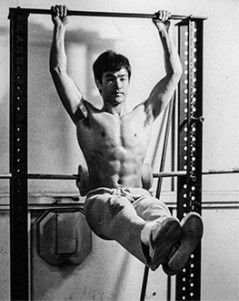
Bruce Lee focused heavily on his core strength. He was famous for his “dragon flag.”
The old Greek phrase “kalos stenos” translates to “beautiful strength” in English. It is the root of our modern term “calisthenics.” Strength refers to the maximum force an athlete can generate against resistance. It is an essential metric for martial arts and fitness performance, as it determines an athlete’s ability to lift heavy weights and resist external forces (such as an opponent).
In research on mortality, there tends to be a publication bias favoring low-intensity steady-state cardio (LISS). This is due at least in part because it takes no skill on the part of study participants to jump on a treadmill or an exercise bike, or any coaching skill on the part of researchers to do the same.
However, strength has been shown to be a better predictor of your mortality risk than aerobic fitness. Increasing your strength will yield the greatest return on investment for your overall health and quality of life.
Grip strength is an often underdeveloped aspect of physical fitness. However, it is essential for martial arts practitioners, who need to be able to control their opponents’ movements and techniques.
Research has shown that grip strength is a strong predictor of mortality in both men and women, regardless of age or health status.[1] The link between grip strength and mortality is thought to be due to the fact that grip strength is a measure of overall muscle strength and is indicative of a person’s overall physical function and health. As such, grip strength is increasingly being recognized as an important measure of overall health and a useful tool for identifying individuals at risk of premature death.
Gripping jars, or wine jars/pots, 酒罈 jiu3 tan2 in Chinese, were traditional methods of improving grip strength.
Traditional martial arts like Uechi-ryu, a style of Okinawan karate, utilize a unique training tool called Nigiri Game, or “gripping jars,” to develop grip strength. These jars come in various sizes and weights and are filled with sand or pebbles.
Practitioners grip the jars with their fingers, forearms, and wrists, and perform various exercises to strengthen their grip. The use of Nigiri Game in Uechi-ryu is an effective way to improve grip strength, which is essential for performing techniques that require a strong grip in martial arts.
In the modern era, trainees have a wide variety of equipment available to train their grip strength. You can check out a selection of equipment I use myself in our Amazon Storefront in the grip strength section.
The low stances used in traditional martial arts improve the strength and flexibility of the legs.
Leg strength is another critical area for martial arts practitioners. Strong legs are essential for generating power in strikes and kicks, as well as for maintaining balance and stability during movements.
Grandmaster Sam Chin, the founder of Zhong Xin Dao I Liq Chuan is often critical of Western strength training methods, especially the disproportionate emphasis on upper-body strength by your average gym bro. GM Chin says, “Chinese Kung Fu doesn’t focus on the upper body so much; we focus more on the legs. If you want to know if someone is dangerous, look at their legs.“
Martial arts and fitness training can help develop leg strength through exercises such as squats and low-stance movements. These exercises focus on developing the leg muscles, improving both strength and endurance.
The ability to transition from sitting on the floor to standing without using your hands has been shown to be another strong predictor of mortality.[2]
*Edit – the validity of the results of this research has been debated; however, I think it’s hard to argue against the ability to quickly and easily transition from the ground to a standing position, particularly with regards to martial arts and self-defense.)
One of the oldest strength-training methods for martial arts still in use comes from ancient Persia (modern-day Iran). Persian strength-training methods use three tools: meel, shena, and sang.
The meel is a long, wooden club used in pairs for rotational and swinging exercises to improve grip strength and overall body control. The shena is a flat, rectangular wooden plank used for exercises resembling Hindu pushups, focusing on upper-body and core strength. They use these tools to improve grip strength, core stability, and overall physical strength and conditioning.
Power is the ability to exert maximum force in the shortest possible time. It is a crucial metric for martial arts and fitness performance, as it determines a fighter’s explosiveness and ability to generate force quickly.
In Chinese martial arts (kung fu), Fajin 發勁 refers to an explosive release of power, a sudden burst of energy from the whole body directed toward the target. The term Fajin literally translates to “explosive power.”
Internal martial arts styles, such as Tai Chi and Bagua, and external martial arts styles, such as Shaolin Kung Fu, often use Fajin. The practice of Fajin involves a combination of physical and mental training. It requires an understanding of body mechanics, breathing techniques, and mental focus to execute the technique effectively. To generate Fajin, a practitioner must first generate and store energy through proper breathing and relaxation techniques. This energy is then released explosively through the entire body, from the feet to the hands, resulting in a sudden burst of power.
Some of the modern exercises that can improve power include explosive plyometrics, Olympic lifts, and medicine ball throws. Using a heavy bag and hitting pads are effective methods to develop power in martial arts and combat sports.
These tools allow practitioners to practice striking with maximum force and speed, which can translate into more powerful strikes during competition. Consistent training on the heavy bag and pads can also improve overall technique and accuracy.
Body composition refers to the proportion of fat and muscle mass in an athlete’s body. It is a crucial metric for martial arts and fitness performance, as it determines an athlete’s overall health and fitness level. A low body fat percentage and a high muscle mass percentage indicate good body composition. Proper nutrition and regular exercise can help improve body composition.
While not the primary focus of martial arts and fitness training, building muscle mass is still an essential component of physical fitness. Building muscle can improve overall strength, power, and endurance. Combat sports athletes who compete in a specific weight class may need to be careful not to build too much muscle.
Muscle mass is also a very oxygen-hungry tissue and may adversely impact endurance to varying degrees or change weight classes.
Dr. Gabrielle Lyon conducts research on protein and refers to muscle as “the organ of longevity.” She believes that muscle is critical for healthy aging and can prevent chronic diseases. Muscle mass not only helps us interact with our environment more effectively by making us stronger, but it also plays a role in both a healthy immune system [3] and a healthy hormonal milieu [4], including insulin sensitivity and testosterone levels.
Combat Sports & Weight Class
For athletes who compete in weight classes, the goal is to be as strong and lean as possible at the lightest weight within their class. This allows them to maximize their power-to-weight ratio and compete at their optimal performance level. However, it is important to note that super heavyweights can be an exception to this rule, as they are not limited by weight restrictions.
To achieve their optimal body composition, athletes must focus on proper nutrition and training. This includes a high-protein diet balanced with fat and carbohydrate, as well as strength and conditioning training that targets both muscle development and fat loss. It is important for athletes to work with a qualified nutritionist and strength coach to develop a plan that is tailored to their individual needs and goals.
Maintaining a healthy body composition is not only important for performance in competition but also for overall health and well-being. Excessive weight cutting or gaining can have negative effects on an athlete’s health, both in the short and long term. Therefore, it is crucial for athletes to approach weight management in a responsible and sustainable way, in order to maximize their potential and ensure their long-term health and success.
If you would like to read more about martial arts and building muscle, please read our article Can Martial Arts Build Muscle?
Muscular endurance is the ability of a fighter’s muscles to perform repetitive contractions without fatigue. It is a crucial metric for martial arts and fitness performance, as it determines an athlete’s ability to sustain prolonged efforts.
Chinese Kung Fu styles like Hung Gar have special exercises like “Iron Wire,” which require us to maintain constant tension throughout the body. In I Liq Chuan, we use a similar training method, which we refer to as “wrapping” or “winding.”
Kettlebells are an especially effective tool for developing muscular endurance, as are low-load, high-repetition lifts used frequently by many CrossFit facilities. Regular sparring and grappling in martial arts will also effectively improve muscular endurance, especially in grappling, where muscular contraction is frequently held for sustained periods during submission holds such as chokes.
Anaerobic capacity refers to an athlete’s ability to perform high-intensity activities without enough oxygen (i.e., the mechanical limitations of your breathing cannot keep up with the demand for oxygen). It is an essential metric for martial arts and fitness performance, as it determines an athlete’s ability to perform explosive movements and quick bursts of energy. Sprinting, HIIT, and plyometrics are some of the exercises that can improve anaerobic capacity. Intense sparring or live rolling in martial arts will also increase anaerobic capacity. If you’re training hard enough that you cannot maintain nasal breathing only, you are training in the anaerobic range, often referred to as Zone 3, or Zone 4 training, where lactate production in the muscle is high.
Aerobic capacity refers to an athlete’s ability to perform prolonged activities with sufficient oxygen. It is an essential metric for martial arts and fitness performance, as it determines an athlete’s ability to perform activities for an extended period. If you can breathe comfortably through only your nose, or you can carry on a conversation while training, you’re in the aerobic zone, or Zone 2.
Zone 2 & The MAF Method
Zone 2 training is a method of endurance training that involves working out at a specific heart rate range, which is generally between 60-70% of an individual’s maximum heart rate. This method of training is aimed at improving an athlete’s aerobic capacity and endurance, which can have significant benefits for overall health and athletic performance.
Phil Maffetone is an excellent resource for zone 2 training, as he is a renowned coach and author who has popularized the method. Maffetone’s approach to training is based on the principles of developing an efficient aerobic system, which is achieved through consistent training at a low intensity in Zone 2. He believes that this approach helps to improve an athlete’s metabolic efficiency, allowing them to burn fat as a primary fuel source and conserve carbohydrate stores.
Maffetone’s approach to training is based on the concept of the MAF (Maximum Aerobic Function) heart rate, which is the highest heart rate at which an individual can maintain a strictly aerobic effort. By training at or below this heart rate, athletes can improve their aerobic capacity and endurance without the negative effects of overtraining or injury.
Zone 2 training has become increasingly popular in endurance sports, with many athletes and coaches recognizing its benefits for long-term health and performance. By focusing on developing the aerobic system through consistent low-intensity training, athletes can improve their ability to perform at higher intensities without experiencing the negative effects of overtraining or injury.
VO₂ max is the maximum amount of oxygen an athlete can consume during exercise. It is a crucial metric for martial arts and fitness performance, as it determines an athlete’s endurance capacity.
VO₂ max is the maximum amount of oxygen an athlete can consume during exercise and is typically measured in milliliters of oxygen per kilogram of body weight per minute (ml/kg/min).
The measurement of VO₂ max involves an athlete performing a graded exercise test on a treadmill or stationary bike, while wearing a mask or mouthpiece that measures their oxygen consumption and carbon dioxide production. During the test, the intensity of the exercise is gradually increased until the athlete reaches their maximum effort level.
The test measures the amount of oxygen the athlete consumes and the amount of carbon dioxide they produce during exercise. By analyzing these measurements, the athlete’s VO₂ max can be calculated. The test is typically conducted in a laboratory setting, and the results can provide valuable information about an athlete’s cardiovascular fitness level and endurance capacity.
There are several factors that can affect an athlete’s VO₂ max, including genetics, age, gender, and training level. However, by focusing on endurance training activities such as running, cycling, or swimming, athletes can improve their VO₂ max over time.
Stanford professor of neurobiology and podcaster Andrew Huberman recently ran a six-episode series on all things fitness with guest Andy Galpin. Andy is a well-known professor of exercise physiology and researcher in the field of human performance. He is also a strength and conditioning coach who has worked with various professional athletes and teams. Below is a summary of the key fitness assessments and their requirements that you can use to evaluate yourself, presented by Professor Galpin throughout the series.
Power is the combination of strength and speed. But how can you measure power? By measuring your jumps.
To pass this test, you must be able to complete a broad jump that is at least the same length as your height. For females, a 15% deduction is applied. A vertical jump, with hands together above your head, is also an option. A minimum of 24 inches is required for men, while those over 50 can get away with 20 inches. For women, a 15% deduction is also applied.
Body Composition:
Your body composition is the foundation of your physical performance. By tracking your body fat percentage and muscle mass, you can optimize your strength, speed, and endurance. But what is the ideal body fat percentage for men and women, and how can you measure it accurately?
The DEXA scan Fat-Free Mass Index (FFMI) should be 20 or higher for men and 18 for women, assuming the person has a body fat below 30%. Less than 17 for men and 15 for women is not considered good.
At Home Test
To assess body composition at home, a simple test measures the hip-to-waist ratio with a tool like a body tape. To do this, measure the narrowest part of the waist and the widest part of the hips, then divide the hip measurement by the waist measurement. A ratio greater than 0.8 for women or 1.0 for men suggests excess body fat and increased risk for health problems. This method provides a quick and easy way to monitor body composition changes over time.
Aerobic Capacity Test:
You must maintain a non-walking pace for at least 20 minutes straight, ideally with nasal breathing only.
Strength Tests:
Grip strength is crucial in this test, with 40 kgs being the minimum requirement. Ideally, you should be able to lift past 60 kgs with less than a 10% deviation between your hands. Women have a 35kg cutoff, with 50 kg being preferred. You can optionally do a dead hang for time, with an average of 30 to 50 seconds. Over 60 seconds is excellent, with women usually performing better in this area. A bilateral leg extension of one rep with body weight is also required. For those over 40 years of age, a 10% decrease per decade is acceptable. You can also do a goblet squat hold with half your body weight for 45 seconds. As an intro, 1/3 of your body weight for 30 seconds is okay.
Muscular Endurance:
You must hold a front plank for 60 seconds and a side plank for 45 seconds. For push-ups, a minimum of ten reps is required, with 25+ consecutive push-ups being ideal. Between 10-25 reps is acceptable, with 15 reps for females being preferred. 5-15 is okay, while sub 5 is slightly problematic. Zero is a significant issue.
VO2 Max:
You can perform this test by running for 12 minutes to measure the maximum distance covered or by doing it in a lab with a mask on. You need to cover a minimum of 1 to 2+ miles within 12 minutes.
Anaerobic Capacity:
This test requires 30 seconds of maximal effort without worrying about technique. Your maximum heart rate should decrease by 0.5 beats per second or 30 beats every minute for the next three minutes.
Mark Rippetoe, aka “Rip,” developed the Starting Strength method. image source: Wikipedia
Mark Rippetoe, aka “Rip,” is a strength training coach and author who has developed the Starting Strength method, a program focused on the basic barbell exercises: squat, bench press, deadlift, press, and power clean. Rip proposes a much simpler standard for strength and fitness that requires no specialized equipment (besides a barbell and a stopwatch):
Martial arts and fitness must be balanced to bring out the best in ourselves.
In martial arts and combat sports, skill and fitness are crucial for success. Skill rests atop capacity, meaning that one’s ability to perform well in their chosen discipline ultimately depends on their physical capacity. To train effectively, practitioners must be fit for duty, but this does not mean that fitness should take priority over skill development.
Like yin and yang, the two must be kept in balance. While it is important to focus on improving physical fitness through strength and conditioning training, it is equally important to dedicate time to skill development through technique drills and sparring. Neglecting either component can lead to an imbalance in training, which can negatively impact performance in competition or self-defense.
Fitness Is Individual
Maintaining a balance between skill and fitness also requires an understanding of one’s individual strengths and weaknesses. By identifying areas of weakness, practitioners can tailor their training to address these areas, whether it be through additional skill development or targeted fitness training.
Ultimately, well-rounded martial artists should prioritize the development of technique and skill while also incorporating strength and conditioning training to supplement their abilities. By maintaining a balanced approach to training, martial artists can achieve the highest level of success and proficiency in their chosen art.
In conclusion, martial arts and fitness training offer a comprehensive approach to physical fitness, encompassing strength, endurance, and agility. Whether you want to improve your health, develop practical self-defense skills, or simply challenge yourself, martial arts and fitness are excellent choices. So embrace the philosophy, practice with discipline, and become like water, adapting to any situation with ease and grace. Remember, martial arts and fitness are not just about physical prowess but also about achieving balance and harmony in all aspects of your life.
Next Steps
Are you looking for a unique way to improve your fitness and mind-body connection? Join Falling Leaves Kung Fu and experience the transformative power of I Liq Chuan. Our expert instructors will guide you through this complete martial art, designed to strengthen your body and sharpen your mind. Don’t miss this opportunity to improve your health and well-being. Sign up for our classes today! With online coaching available, you can join our program from anywhere worldwide. You can also check out our guides on deciding which martial art program is right for you or what to look for in a martial arts school.
Ashe is a highly skilled martial arts instructor and certified nutrition coach with over two decades of experience in the field. He holds a Master Instructor certification in I Liq Chuan under Sam FS Chin, making him one of only several individuals worldwide to hold the title. He has taught classes and workshops worldwide and is passionate about helping others achieve their fitness and wellness goals.
With a background in full-contact fighting and a Level 2 certification from Precision Nutrition in nutrition coaching, Ashe is a well-rounded expert in the fields of martial arts. In addition to his expertise, he has a wealth of experience in teaching and mentoring others. He has a natural ability to connect with his students and inspire them to reach their full potential.
I am not a doctor or a lawyer, and the information provided should not be considered medical or legal advice.
The information provided is for educational and informational purposes only and should not be used as a substitute for professional legal or medical advice, diagnosis, or treatment. Consult your doctor or a qualified healthcare professional before making any changes to your diet, exercise routine, or lifestyle.
Please note that some of the links provided in this content may be affiliate links, meaning that I may receive a small commission if you purchase through them. However, please rest assured that any products or services recommended are based on my personal experience and belief in their value. I only recommend products or services that I have personally used and believe in.
Gale, Catharine R., et al. “Grip strength, body composition, and mortality.” International journal of epidemiology 36.1 (2007): 228-235.
De Brito, Leonardo Barbosa Barreto, et al. “Ability to sit and rise from the floor as a predictor of all-cause mortality.” European journal of preventive cardiology 21.7 (2014): 892-898.
Rogeri, Patricia S et al. “Crosstalk Between Skeletal Muscle and Immune System: Which Roles Do IL-6 and Glutamine Play?.” Frontiers in physiology vol. 11 582258. 16 Oct. 2020, doi:10.3389/fphys.2020.582258
Pedersen, Bente K., and Mark A. Febbraio. “Muscle as an endocrine organ: focus on muscle-derived interleukin-6.” Physiological reviews (2008).
A question I hear frequently is, “will martial arts help me lose weight?” Martial arts have been around for thousands of years and have evolved into diverse practices that can be used for self-defense, fitness, and personal growth. With the growing emphasis on health and wellness, many people are now turning to martial arts to lose weight and improve their overall fitness. This article will explore the pros and cons of using martial arts for weight loss and the principles most effective for burning calories and shedding pounds.
Today, martial arts are synonymous with good health and fitness in most people’s minds, and this is in no small part due to the impact that people like Bruce Lee have had on the world of martial arts and fitness. Bruce Lee was a legendary martial artist known for his famous quote, “Be water, my friend.”
More than 50 years after his death, he is still widely considered to be one of the most influential figures in the history of martial arts. His incredible build and persona have inspired many people to pursue martial arts to improve their health and fitness.
Thank’s to Lee’s amazing physique, it’s no wonder so many people pursue martial arts to help lose weight.
The short answer to this question is yes; martial arts can help you lose weight. Many styles involve high-intensity cardio and strength training, which can result in significant calorie burn and weight loss. However, it is important to remember that weight loss is not the only goal of martial arts training. Many people also practice martial arts for self-defense, mindfulness, and personal growth.
When it comes to weight loss, it’s important to understand that the underlying principle is simple: you have to be in a calorie deficit to lose weight. This means you need to consume fewer calories than your body is burning. While there are many different approaches to weight loss, this basic truth remains the same.
The Power of Martial Arts in Supporting Weight Loss Efforts
Bruce Lee represents the ultimate martial arts physique in the minds of many people.
Martial arts, like other forms of exercise, can support your weight loss efforts in two key ways:
helps provide stimulus to maintain muscle mass during a calorie deficit
helps create or increase a deficit by burning extra calories
First, exercise like martial arts helps to provide a stimulus to maintain muscle massduring a calorie deficit. When you’re in a calorie deficit, your body tends to break down muscle tissue to use it for energy.
“But if you choose to lose weight, you have to focus on losing fat, not muscle.
Unfortunately, the average person who cuts calories to lose weight will lose between 40% and two-thirds of that weight as lean mass. This ratio is HORRIBLE.
There is no need whatsoever to lose as much or more muscle as fat, and this shows you that standard calorie-cutting is a tremendously bad way to lose weight.”
Losing lean tissue can be a problem because muscle tissue is a key contributor to your metabolism, meaning that the more muscle you have, the more calories your body burns at rest. Additionally, not all lean tissue is muscle; this includes organ tissue and bone mass as well.
Again, quoting from Chris Masterjohn’s article:
There is no need whatsoever to lose as much or more muscle as fat, and this shows you that standard calorie-cutting is a tremendously bad way to lose weight.
There is no need whatsoever to lose as much or more muscle as fat, and this shows you that standard calorie-cutting is a tremendously bad way to lose weight.
So how do we preserve lean mass when losing weight?
Exercise more, do not eat less. Rather, get your total resistance training and high-intensity workouts up to six hours per week with the base of this being full-body resistance training and the remainder high-intensity intervals and sprints.
Add some moderate-intensity work on top of this base and lots of light activity like walking. If you are able to recover from this exercise and feel good, and you are not losing weight fast enough, add more activity. If you hit a wall exceeding your recovery capacity, it is time to cut food intake.
Exercise like martial arts can be a great form the of moderate to high-intensity exercise discussed by Masterjohn to prevent muscle tissue loss. This can help maintain your metabolism and offset the dreaded “metabolic slowdown” that often accompanies weight loss.
Second, exercise like martial arts can help to create or increase a calorie deficit by burning extra calories. When you engage in physical activity, your body burns calories to fuel your movement. The more intense the activity, the more calories you burn. Martial arts can be a great way to get in some extra physical activity and create a calorie deficit, which can help you to lose weight.
Additionally, martial arts are renowned for fostering self-discipline. We develop a strong sense of focus and commitment by setting and working towards goals in the training environment. This mindset can be easily transferred to other areas of life, such as eating healthier, which is key to weight loss success. By setting achievable nutrition goals and sticking to them, we can improve our overall health and well-being.
Support & Accountability
Not all peer pressure is bad. Belonging to a community of like-minded individuals is a powerful motivator. Martial arts helps us not only take responsibility for our own safety, but for all of our thoughts, feelings, and actions. By working alongside others towards common goals, individuals are held accountable for their progress and can stay motivated. The camaraderie of a martial arts community can help individuals stay on track with their weight loss goals and encourage them to continue improving their health and fitness.
Belonging to a community of people committed to taking responsibility for their own health can be a powerful motivator
Mindfulness of Food
Zen philosophy is key to many martial arts practices like I Liq Chuan. Whenever we have been on meditation retreats at MABA (Mid-America Buddhist Association), mindfulness of food and eating was always stressed as part of the training. By cultivating mindfulness of food, we can approach mealtime with a greater sense of balance and awareness. This can greatly support long-term weight loss efforts.
I Liq Chuan students listen to a lecture by Master Jiru at MABA.
Eating slowly and mindfully can have a greater impact on weight loss and overall health than just focusing on what, when, and how much we eat. Eating mindfully can bring immediate benefits, such as eating less without feeling deprived [1]. Physiology and psychology play a role in this, as our body needs time to register feelings of fullness, and savoring our food leads to feeling satisfied with less.
Eating slowly and mindfully can also improve digestion, reduce bloating and stomach pain, and increase nutrient absorption. This, in turn, leads to feeling better physically and mentally and helps develop a better relationship with food by learning to listen to our body’s internal hunger and satiety cues. This skill can lead to healthier food choices for the rest of our life instead of relying on a rigid meal plan.
Four Tips for Effective Weight Loss with Martial Arts
Starting a weight loss journey can be a challenge, but with martial arts as your companion, you can achieve your goals. To help you get started, here are four tips to consider:
eating more protein can help with weight loss
Calories count
Eat more protein
Avoid liquid calories
Focus on whole foods
It’s important to remember that martial arts alone do not mean guaranteed weight loss. When it comes to weight loss, there’s really only one requirement: you have to be in a calorie deficit. If you’re eating more calories than you’re burning, you won’t lose weight, regardless of how much martial arts you do.
However, when combined with a healthy diet and a calorie deficit, martial arts can be a powerful tool for weight loss.
Calories are King
When it comes to weight loss, calories are still king. We cannot break the laws of thermodynamics. Counting calories can be a tedious task, but it can be extremely useful short term, especially in the beginning. By tracking your calorie intake, you’ll better understand how much you’re eating and how many calories you need to cut back to create a deficit. This can help you to make informed choices about what to eat and how much of it to eat. Remember, to lose weight; you need to be in a calorie deficit.
Calories are still king of weight loss
Eat More Protein
Protein is an important nutrient that helps to build and maintain muscle mass. When you’re in a calorie deficit, your body tends to break down muscle tissue to use it for energy. Eating enough protein can help to prevent this [2], which can be especially important if you’re engaging in martial arts or other forms of exercise as part of your weight loss journey. People tend to eat more calories when they undereat protein, so it’s important to make sure you’re getting enough.
Whether you’re looking to maintain muscle mass, create a calorie deficit, or both, eating more protein can help to support your weight loss efforts and improve your overall health and fitness.
The best protein options are the ones we’ve eaten for millennia.
Avoid Liquid Calories
Drinks like soda, Starbucks frappuccinos, and smoothies can pack a lot of calories from sugar. Although smoothies and shakes are often touted as helpful for weight loss, in reality, the opposite is usually true. Shakes and smoothies can easily top 1000 calories or more; liquids also tend to empty your stomach quickly. This can leave you feeling hungry again soon. To avoid liquid calories and help with weight loss, drink water or other calorie-free drinks like green tea instead.
Smoothies & shakes are not helpful for long-term weight loss
Focus On Whole Foods
Focusing on whole foods during a calorie deficit boosts micronutrient intake (vitamins and minerals) and helps you eat fewer calories. Whole foods provide essential nutrients while taking longer to chew. This helps keep you feeling satisfied and reduces the temptation to snack. Getting enough vitamins and minerals is important because they play a role in the metabolic processes that help us burn body fat for fuel [3] and keep our immune systems strong.
By following these tips, you’ll be on your way to effective weight loss. Remember, weight loss is a journey, and just like martial arts, it’s important to be patient and persistent. By incorporating martial arts into your routine, you’ll improve your overall health and fitness and progress towards your weight loss goals.
Other Questions About Martial Arts & Weight Loss
Here are some other common questions regarding martial arts and weight loss:
Which Martial Art is Best for Weight Loss?
intensity matters more for calorie burning than any martial art style
No single martial art is best for weight loss, as each style has its unique combination of physical and mental benefits. The number of calories burned during martial arts training depends on the intensity and resistance of the workout, not the specific martial art style. Higher intensity and resistance lead to more calories burned, improving fitness and weight loss. However, some styles, like MMA and Thai Boxing, are more likely to include high-intensity workouts, which can be especially effective for burning calories and losing weight.
In contrast, low-impact styles like Tai Chi might better suit older folks or those with limitations. While not as intense as other styles, all activity counts and is much better than sitting on the couch! Qigong (breathing exercises) can also reduce pain, helping us to be more active overall, which can be helpful for managing weight. Breathing exercises can also help those who are already fit recover better from intense training so they can see even better results.
Can Martial Arts Reduce Belly Fat?
While martial arts can help you lose weight overall, unfortunately, it’s impossible to target specific body areas for fat loss. However, building lean muscle mass and increasing your metabolism can burn calories and reduce body fat, including belly fat.
Which Martial Art Burns the Most Calories?
Krav Maga is a style of martial arts known for it’s high intensity workouts which can help burn calories
The number of calories burned during a martial arts workout will vary depending on your age, weight, fitness level, and the intensity of your workout.
However, some styles are known for their high-intensity workouts, which can result in significant calorie burn. Some of the most calorie-intensive martial arts styles include:
Muay Thai
Boxing
Krav Maga
Brazillian Jiu-jitsu (BJJ)
Does Martial Arts Increase Metabolism?
Martial arts training can help increase your metabolism by building lean muscle mass and improving cardiovascular health. The more muscle you have, the more calories you burn, even when resting. Additionally, you can improve your cardiovascular fitness and metabolism by engaging in high-intensity workouts, helping you lose weight and keep it off.
Summary & Conclusion
Martial arts can support our weight loss efforts in two key ways. First, it helps to provide a stimulus to maintain muscle mass during a calorie deficit, preventing us from losing muscle tissue. Second, martial arts can create or increase a calorie deficit by burning extra calories, resulting in weight loss.
In addition to physical benefits, martial arts also promote self-discipline and mindfulness of food, which help us make better long-term food choices and eat less without feeling deprived.
Belonging to a martial arts community helps us stay accountable and motivated toward our weight loss goals.
While martial arts alone do not guarantee weight loss, they can be a powerful tool when combined with a healthy diet and calorie deficit. Remember that the underlying principle of weight loss is simple: you have to be in a calorie deficit to lose weight.
Ready To Take The Next Step?
If you’re looking to get involved with martial arts classes to lose weight, get in shape, or improve your health, you’re not alone. It’s one of the most common reasons people say they’re interested in a martial arts class, but remember what you do “off the mats” is just as important, if not more so, than what you do on the mats. A complete martial arts program is not just about fighting; it’s a way of life!
If you’re still not sure about how to get started, you can join my one-on-one health coaching program and receive personalized guidance, support, and accountability no matter where you are in the world. With my guidance and support, you’ll have the tools and confidence you need to reach your goals and achieve lasting results. Sign up for a free discovery call and find out if my program is right for you!
If you’re just looking for martial arts training, join us for personalized lessons during our small group classes or from the comfort of your own home with our online classes.
Andrade, Ana M., Geoffrey W. Greene, and Kathleen J. Melanson. “Eating slowly led to decreases in energy intake within meals in healthy women.” Journal of the American Dietetic Association 108.7 (2008): 1186-1191.
Jo, Edward, et al. “Resistance training during a 12-week protein supplemented VLCD treatment enhances weight-loss outcomes in obese patients.” Clinical Nutrition 38.1 (2019): 372-382.
Johnston, C.S., Corte, C. & Swan, P.D. Marginal vitamin C status is associated with reduced fat oxidation during submaximal exercise in young adults. Nutr Metab (Lond) 3, 35 (2006). https://doi.org/10.1186/1743-7075-3-35
Ashe is a highly skilled martial arts instructor and certified nutrition coach with over two decades of experience in the field. He holds a Master Instructor certification in I Liq Chuan under Sam FS Chin, making him one of only several individuals worldwide to hold the title. He has taught classes and workshops worldwide and is passionate about helping others achieve their fitness and wellness goals.
With a background in full-contact fighting and a Level 2 certification from Precision Nutrition in nutrition coaching, Ashe is a well-rounded expert in the fields of martial arts. In addition to his expertise, he has a wealth of experience in teaching and mentoring others. He has a natural ability to connect with his students and inspire them to reach their full potential.
I am not a doctor or a lawyer, and the information provided should not be considered medical or legal advice.
The information provided is for educational and informational purposes only and should not be used as a substitute for professional legal or medical advice, diagnosis, or treatment. Consult your doctor or a qualified healthcare professional before making any changes to your diet, exercise routine, or lifestyle.
Please note that some of the links provided in this content may be affiliate links, meaning that I may receive a small commission if you purchase through them. However, please rest assured that any products or services recommended are based on my personal experience and belief in their value. I only recommend products or services that I have personally used and believe in.
One of the most frequently asked questions I get is, “can martial arts help me build muscle?” Crossfit and bodybuilding aren’t for everybody, but most people still understand at a gut level that building muscle and strength is important. Indeed, a recent review of 10 studies looking at the benefits of strength training found the strongest evidence to date (no pun intended) that any amount of strength training significantly reduced death from all causes, including heart disease and cancer!
Martial arts are a popular form of exercise that can be a great way to build muscle, improve overall fitness, and develop coordination and skill. This article will explore three ways martial arts can help build muscle, including resistance training, sparring, and conditioning exercises.
Key Takeaways
Martial arts can help you build muscle in three ways:
Resistance Training
Partner Work
Conditioning
Limitations of martial arts & building muscle:
Specificity
Intensity
Individual factors like age
diet & lifestyle factors like sleep
We’ll also consider potential limitations or challenges that may affect the extent to which martial arts can help build muscle, such as intensity, focus on muscle growth, and individual differences. Whether martial arts is an effective way to build muscle will depend on your current condition and any potential limitations or challenges.
In addition to the physical benefits of building muscle, practicing martial arts can also have numerous other benefits, such as improving coordination, flexibility, and mental focus. It can also be a fun and enjoyable way to stay active, maintain a healthy lifestyle, and meet like-minded people who share your values.
Will Martial Arts Build Muscle?
The author in peak condition
If you haven’t been very active recently, almost anything can help you build muscle. This study looked at how different types of exercise affected obese women’s bodies and health. The women were split into two groups. One group did cardio, and the other did resistance exercise for 12 weeks. Both groups lost fat and gained lean muscle mass.
However, as individuals become more accustomed to their training program and less out of shape, the adaptation processes start to specialize; this means that after about eight weeks, if you want to continue to develop new muscle, you will have to adjust your training. After that, how much muscle you can develop will depend on several factors.
3 Ways Martial Arts Training Can Help You Build Muscle & Get In Shape
Resistance training: Western-style weightlifting is a recent addition to martial arts programs, but traditional martial arts have always incorporated resistance training of various kinds over the centuries.
Sparring: Many martial arts styles, such as boxing, kickboxing, and judo, include sparring as a regular part of training. However, hard sparring isn’t the only type of partner training you will practice in martial arts. For example, in I Liq Chuan, we have a unique training method called spinning hands, which involves a lot of heavy pulling and pushing with a partner. It can help to build muscle, as well as improve cardiovascular endurance and overall physical fitness.
Conditioning training: A martial arts conditioning program typically includes a variety of exercises to improve cardiovascular endurance, power, speed, and flexibility. These may consist of running, plyometrics, agility drills, and stretching. The program may also have specific exercises or drills to improve martial arts skills, such as footwork, punching, and kicking.
Resistance Training
Bruce Lee represents the pinnacle of the martial artist’s physique in the minds of many, and for a good reason. Lee was a pioneer in incorporating modern resistance training methods into his martial arts regimen. Resistance training involves using external resistance to increase muscle strength and endurance. Martial arts have always included resistance training. However, it has taken very different shapes and forms throughout history.
Western-style strength training primarily uses barbells and dumbbells. It tends to focus on the sagittal plane and moving the bar in a straight line. In contrast, Eastern strength training methods are much more circular and multiplanar in nature.
The earliest form of strength training in martial arts likely originated in ancient Persia. It involved using heavy clubs called ‘meel,’ large wooden shields called ‘sang,’ and a board called the ‘shena’ for pushup-like exercises. These ancient forms of resistance training are still in use today, especially in Iran, where men meet and train in “houses of strength.” This type of training has a history stretching back possibly 5000 years.
Chinese Kung Fu has its own unique strength training culture, which uses a variety of specialized equipment. The Chinese also developed training methods using a barbell made of bamboo or wood with stone plates on one or both ends, called the “single-head” and “double-head,” respectively. Unlike a Western-style barbell, single and double-headed exercises in martial arts are very dynamic. They involve a lot of swinging and twirling the weights around the body in a circular manner or tossing and catching the weights to strengthen the hands for fighting.
The stone lock is another tool unique to Chinese kung fu. Also used in a swinging, circular fashion or thrown and caught, You can train the stone lock alone or with a partner/small group.
Partner Training
Partner training is another form of training common in martial arts that can help you build muscle, particularly in grappling arts. No activity on earth is more intense and exhausting than fighting or wrestling with another human being! If you’ve ever seen the bull-like necks, thick traps, and gorilla-esque arms of an Olympic wrestler, there can be no doubt about the effectiveness of partner training for building muscle. Remember, resistance exercise is just applying force to an external resistance, which can include another person.
In I Liq Chuan, our fundamental partner training exercise is spinning hands. Unlike Western-style strength training with a barbell, spinning hands develops strength through rotation via a series of pushing, pulling, and “grinding” circular movements with a partner.
Conditioning
Some possible components of a martial arts conditioning program may include:
Cardio training: This may involve activities such as running, shadow boxing, or skipping rope to improve cardiovascular endurance.
Strength training: This may involve weight lifting, calisthenics, or bodyweight exercises to build strength and muscle.
Power training may involve exercises such as plyometrics or medicine ball throws to improve explosive power and speed.
Speed and agility training may involve drills and exercises designed to improve quickness and coordination, such as ladder or cone drills.
Flexibility training: This may involve activities such as stretching or yoga to improve flexibility and reduce the risk of injury.
Body hardening: many martial arts have a variety of body hardening training to desensitize the body to pain, increase bone density for striking and kicking, and ability to absorb impact without injury.
Chinese kung fu, in particular, has a rich history of conditioning and body-hardening techniques. In the video below, Sifu Chris Heintzman demonstrates a few of the unique methods for strength training and body hardening from his Tibetan Hop Gar lineage. (I know Chris from my san da days, and he’s one of the teachers active today I would recommend without hesitation.)
Historically, traditional kung fu had many different training programs to improve resilience and toughness, such as “iron vest/iron body” and “Golden Bell” sets. In addition to subjecting the body to increased stress through repeatedly striking wooden posts, sandbags, etc., these sets also involved various forms of qigong and herbs to help improve recovery between training sessions and help prevent the disability that can happen when we subject ourselves to intense conditioning methods.
Limitations Of Martial Arts & Building Muscle
It’s worth noting that while martial arts can be an excellent way to build muscle, it may not be suitable for everyone, and there may be certain limitations to the extent to which it can help build muscle. Here are three potential reasons why martial arts may not help build muscle for some people:
Insufficient intensity: While martial arts can be a high-intensity workout, it may not be sufficient to stimulate muscle growth for some people, especially if they are already highly fit or are not training with enough intensity or volume. Muscle growth occurs when the muscles are subjected to progressively more challenging workouts over time, and the intensity and volume of the training need to be sufficient to stimulate this adaptation.
Limited focus on muscle growth: While some martial arts styles may include specific training drills and exercises that focus on building muscle, others may not emphasize this aspect of training. As a result, individuals primarily interested in building muscle may see less progress through martial arts compared to other training types that focus on muscle growth.
Individual differences: Finally, it’s essential to remember that everyone is different and will respond differently to training. Some people may have a natural tendency to build muscle more easily than others, which can be influenced by genetics, age, and hormone levels. As a result, even if martial arts is an effective way to build muscle for some people, it may have a different effect for everyone.
Other Considerations For Building Muscle
You can’t out-train a bad diet! Proper sleep and nutrition are crucial. Adequate sleep allows the body to recover, while a balanced diet provides the necessary nutrients for growth. Skimping on either of these lifestyle factors will hinder progress.
get into fighting shape with one-on-one health coaching!
The martial arts are known for helping to cultivate discipline. This is one of the most valuable personal qualities we can develop. Discipline protects us from the tyranny of our own worst thoughts, feelings, and behaviours. Having discipline doesn’t mean we have to white-knuckle it through our lives, though.
If you’ve been having trouble losing weight and getting into fighting shape, you’re not alone. A nutrition coach can help you meet your goals by providing personalized nutrition guidance and support. Coaching may include educating on the importance of different nutrients for muscle building or weight loss or offering strategies for overcoming challenges such as cravings or a busy schedule. A nutrition coach can also provide accountability and motivation to help you stay on track and progress toward your goals. If that sounds like something you’re looking for, check out our Fit To Fightone-on-one health coaching program!
Summary
While martial arts can be an excellent way to build muscle and improve physical fitness, it’s essential to consider your individual goals and needs and any potential limitations or challenges when deciding whether it is the right form of exercise for you.
In summary, practicing martial arts can be a fun and effective way to build muscle and improve overall physical fitness and coordination. Martial arts can build muscle through resistance training, sparring, and conditioning exercises.
The intensity and focus on muscle growth may vary depending on the martial arts style and individual factors, including age, sex, stress levels, and lifestyle.
Join our martial arts classes to experience the benefits of building muscle, improving body composition, and developing physical fitness and coordination. Learn from experienced instructors and train with other motivated individuals in a supportive and challenging environment.
Ashe is a highly skilled martial arts instructor and certified nutrition coach with over two decades of experience in the field. He holds a Master Instructor certification in I Liq Chuan under Sam FS Chin, making him one of only several individuals worldwide to hold the title. He has taught classes and workshops worldwide and is passionate about helping others achieve their fitness and wellness goals.
With a background in full-contact fighting and a Level 2 certification from Precision Nutrition in nutrition coaching, Ashe is a well-rounded expert in the fields of martial arts. In addition to his expertise, he has a wealth of experience in teaching and mentoring others. He has a natural ability to connect with his students and inspire them to reach their full potential.
I am not a doctor or a lawyer, and the information provided should not be considered medical or legal advice.
The information provided is for educational and informational purposes only and should not be used as a substitute for professional legal or medical advice, diagnosis, or treatment. Consult your doctor or a qualified healthcare professional before making any changes to your diet, exercise routine, or lifestyle.
Please note that some of the links provided in this content may be affiliate links, meaning that I may receive a small commission if you purchase through them. However, please rest assured that any products or services recommended are based on my personal experience and belief in their value. I only recommend products or services that I have personally used and believe in.