Posted on

Can Martial Arts Build Muscle?

unknown (1)

One of the most frequently asked questions I get is, “can martial arts help me build muscle?” Crossfit and bodybuilding aren’t for everybody, but most people still understand at a gut level that building muscle and strength is important. Indeed, a recent review of 10 studies looking at the benefits of strength training found the strongest evidence to date (no pun intended) that any amount of strength training significantly reduced death from all causes, including heart disease and cancer!

Martial arts are a popular form of exercise that can be a great way to build muscle, improve overall fitness, and develop coordination and skill. This article will explore three ways martial arts can help build muscle, including resistance training, sparring, and conditioning exercises.

Key Takeaways

Martial arts can help you build muscle in three ways:
  • Resistance Training
  • Partner Work
  • Conditioning
Limitations of martial arts & building muscle:
  • Specificity
  • Intensity
  • Individual factors like age
  • diet & lifestyle factors like sleep

We’ll also consider potential limitations or challenges that may affect the extent to which martial arts can help build muscle, such as intensity, focus on muscle growth, and individual differences. Whether martial arts is an effective way to build muscle will depend on your current condition and any potential limitations or challenges.

In addition to the physical benefits of building muscle, practicing martial arts can also have numerous other benefits, such as improving coordination, flexibility, and mental focus. It can also be a fun and enjoyable way to stay active, maintain a healthy lifestyle, and meet like-minded people who share your values.

Will Martial Arts Build Muscle?

The author in peak condition

If you haven’t been very active recently, almost anything can help you build muscle. This study looked at how different types of exercise affected obese women’s bodies and health. The women were split into two groups. One group did cardio, and the other did resistance exercise for 12 weeks. Both groups lost fat and gained lean muscle mass. 

However, as individuals become more accustomed to their training program and less out of shape, the adaptation processes start to specialize; this means that after about eight weeks, if you want to continue to develop new muscle, you will have to adjust your training. After that, how much muscle you can develop will depend on several factors.


3 Ways Martial Arts Training Can Help You Build Muscle & Get In Shape

  1. Resistance training: Western-style weightlifting is a recent addition to martial arts programs, but traditional martial arts have always incorporated resistance training of various kinds over the centuries.
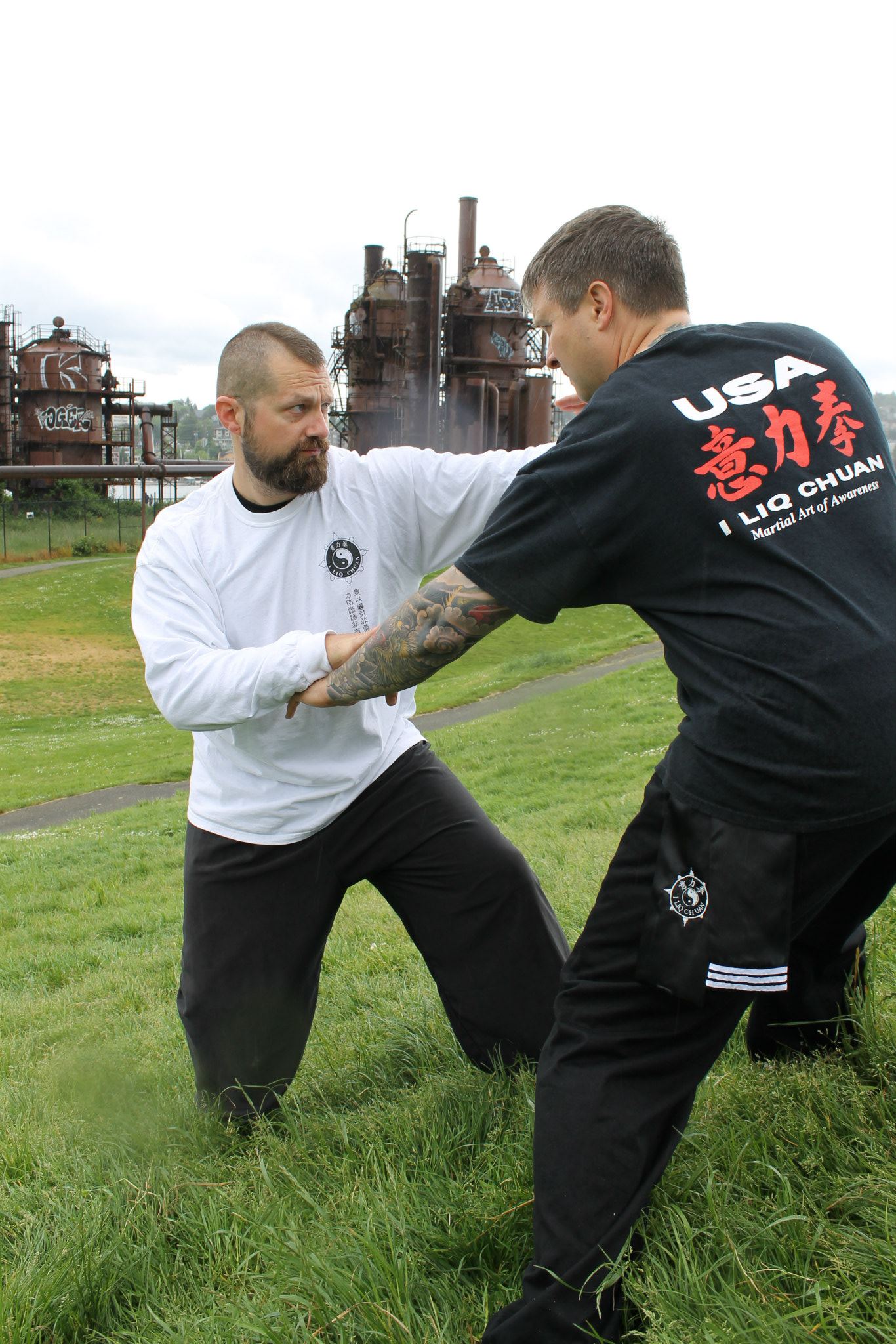
  2. Sparring: Many martial arts styles, such as boxing, kickboxing, and judo, include sparring as a regular part of training. However, hard sparring isn’t the only type of partner training you will practice in martial arts. For example, in I Liq Chuan, we have a unique training method called spinning hands, which involves a lot of heavy pulling and pushing with a partner. It can help to build muscle, as well as improve cardiovascular endurance and overall physical fitness.
  3. Conditioning training: A martial arts conditioning program typically includes a variety of exercises to improve cardiovascular endurance, power, speed, and flexibility. These may consist of running, plyometrics, agility drills, and stretching. The program may also have specific exercises or drills to improve martial arts skills, such as footwork, punching, and kicking.

Resistance Training

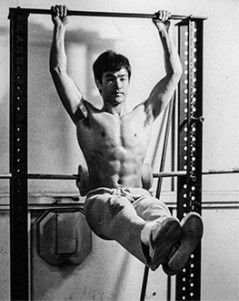
Bruce Lee represents the pinnacle of the martial artist’s physique in the minds of many, and for a good reason. Lee was a pioneer in incorporating modern resistance training methods into his martial arts regimen. Resistance training involves using external resistance to increase muscle strength and endurance. Martial arts have always included resistance training. However, it has taken very different shapes and forms throughout history.

Ancient Resistance Training Methods

Western-style strength training primarily uses barbells and dumbbells. It tends to focus on the sagittal plane and moving the bar in a straight line. In contrast, Eastern strength training methods are much more circular and multiplanar in nature. 

The earliest form of strength training in martial arts likely originated in ancient Persia. It involved using heavy clubs called ‘meel,’ large wooden shields called ‘sang,’ and a board called the ‘shena’ for pushup-like exercises. These ancient forms of resistance training are still in use today, especially in Iran, where men meet and train in “houses of strength.” This type of training has a history stretching back possibly 5000 years.

Chinese Kung Fu has its own unique strength training culture, which uses a variety of specialized equipment. The Chinese also developed training methods using a barbell made of bamboo or wood with stone plates on one or both ends, called the “single-head” and “double-head,” respectively. Unlike a Western-style barbell, single and double-headed exercises in martial arts are very dynamic. They involve a lot of swinging and twirling the weights around the body in a circular manner or tossing and catching the weights to strengthen the hands for fighting.

The stone lock is another tool unique to Chinese kung fu. Also used in a swinging, circular fashion or thrown and caught, You can train the stone lock alone or with a partner/small group.

Partner Training

Partner training is another form of training common in martial arts that can help you build muscle, particularly in grappling arts. No activity on earth is more intense and exhausting than fighting or wrestling with another human being! If you’ve ever seen the bull-like necks, thick traps, and gorilla-esque arms of an Olympic wrestler, there can be no doubt about the effectiveness of partner training for building muscle. Remember, resistance exercise is just applying force to an external resistance, which can include another person.

In I Liq Chuan, our fundamental partner training exercise is spinning hands. Unlike Western-style strength training with a barbell, spinning hands develops strength through rotation via a series of pushing, pulling, and “grinding” circular movements with a partner.

Conditioning

Some possible components of a martial arts conditioning program may include:

  1. Cardio training: This may involve activities such as running, shadow boxing, or skipping rope to improve cardiovascular endurance.
  2. Strength training: This may involve weight lifting, calisthenics, or bodyweight exercises to build strength and muscle.
  3. Power training may involve exercises such as plyometrics or medicine ball throws to improve explosive power and speed.
  4. Speed and agility training may involve drills and exercises designed to improve quickness and coordination, such as ladder or cone drills.
  5. Flexibility training: This may involve activities such as stretching or yoga to improve flexibility and reduce the risk of injury.
  6. Body hardening: many martial arts have a variety of body hardening training to desensitize the body to pain, increase bone density for striking and kicking, and ability to absorb impact without injury.

Chinese kung fu, in particular, has a rich history of conditioning and body-hardening techniques. In the video below, Sifu Chris Heintzman demonstrates a few of the unique methods for strength training and body hardening from his Tibetan Hop Gar lineage. (I know Chris from my san da days, and he’s one of the teachers active today I would recommend without hesitation.)

Historically, traditional kung fu had many different training programs to improve resilience and toughness, such as “iron vest/iron body” and “Golden Bell” sets. In addition to subjecting the body to increased stress through repeatedly striking wooden posts, sandbags, etc., these sets also involved various forms of qigong and herbs to help improve recovery between training sessions and help prevent the disability that can happen when we subject ourselves to intense conditioning methods.

Limitations Of Martial Arts & Building Muscle

It’s worth noting that while martial arts can be an excellent way to build muscle, it may not be suitable for everyone, and there may be certain limitations to the extent to which it can help build muscle. Here are three potential reasons why martial arts may not help build muscle for some people:

  1. Insufficient intensity: While martial arts can be a high-intensity workout, it may not be sufficient to stimulate muscle growth for some people, especially if they are already highly fit or are not training with enough intensity or volume. Muscle growth occurs when the muscles are subjected to progressively more challenging workouts over time, and the intensity and volume of the training need to be sufficient to stimulate this adaptation.
  2. Limited focus on muscle growth: While some martial arts styles may include specific training drills and exercises that focus on building muscle, others may not emphasize this aspect of training. As a result, individuals primarily interested in building muscle may see less progress through martial arts compared to other training types that focus on muscle growth.
  3. Individual differences: Finally, it’s essential to remember that everyone is different and will respond differently to training. Some people may have a natural tendency to build muscle more easily than others, which can be influenced by genetics, age, and hormone levels. As a result, even if martial arts is an effective way to build muscle for some people, it may have a different effect for everyone.

Other Considerations For Building Muscle

You can’t out-train a bad diet! Proper sleep and nutrition are crucial. Adequate sleep allows the body to recover, while a balanced diet provides the necessary nutrients for growth. Skimping on either of these lifestyle factors will hinder progress. 

image of whole foods; a diet of whole foods is important when it comes to building muscle
get into fighting shape with one-on-one health coaching!

The martial arts are known for helping to cultivate discipline. This is one of the most valuable personal qualities we can develop. Discipline protects us from the tyranny of our own worst thoughts, feelings, and behaviours. Having discipline doesn’t mean we have to white-knuckle it through our lives, though.

If you’ve been having trouble losing weight and getting into fighting shape, you’re not alone. A nutrition coach can help you meet your goals by providing personalized nutrition guidance and support. Coaching may include educating on the importance of different nutrients for muscle building or weight loss or offering strategies for overcoming challenges such as cravings or a busy schedule. A nutrition coach can also provide accountability and motivation to help you stay on track and progress toward your goals. If that sounds like something you’re looking for, check out our Fit To Fight one-on-one health coaching program!

Summary

While martial arts can be an excellent way to build muscle and improve physical fitness, it’s essential to consider your individual goals and needs and any potential limitations or challenges when deciding whether it is the right form of exercise for you.

In summary, practicing martial arts can be a fun and effective way to build muscle and improve overall physical fitness and coordination. Martial arts can build muscle through resistance training, sparring, and conditioning exercises. 

The intensity and focus on muscle growth may vary depending on the martial arts style and individual factors, including age, sex, stress levels, and lifestyle. 

Join our martial arts classes to experience the benefits of building muscle, improving body composition, and developing physical fitness and coordination. Learn from experienced instructors and train with other motivated individuals in a supportive and challenging environment.

Start your journey to mastery today!

Read More!

About the Author

Ashe Higgs, I Liq Chuan Master Instructor & L2 Nutrition Coach

Ashe is a highly skilled martial arts instructor and certified nutrition coach with over two decades of experience in the field. He holds a Master Instructor certification in I Liq Chuan under Sam FS Chin, making him one of only several individuals worldwide to hold the title. He has taught classes and workshops worldwide and is passionate about helping others achieve their fitness and wellness goals.

With a background in full-contact fighting and a Level 2 certification from Precision Nutrition in nutrition coaching, Ashe is a well-rounded expert in the fields of martial arts. In addition to his expertise, he has a wealth of experience in teaching and mentoring others. He has a natural ability to connect with his students and inspire them to reach their full potential.

Read more about Ashe here…

Disclaimers & Conflicts of Interest

I am not a doctor or a lawyer, and the information provided should not be considered medical or legal advice.

The information provided is for educational and informational purposes only and should not be used as a substitute for professional legal or medical advice, diagnosis, or treatment. Consult your doctor or a qualified healthcare professional before making any changes to your diet, exercise routine, or lifestyle.

Please note that some of the links provided in this content may be affiliate links, meaning that I may receive a small commission if you purchase through them. However, please rest assured that any products or services recommended are based on my personal experience and belief in their value. I only recommend products or services that I have personally used and believe in.
Posted on

Are Martial Arts Good For Self-Defense?

Can Practicing Martial Arts Help In Self-defense Situations?

Self-defense is an important skill to have. 

In an interview with John Stossel, Canadian best selling-author and psychotherapists Jordan Peterson summarized the greater meaning behind martial arts beautifully.

“It’s very helpful for people to hear that they should make themselves competent and dangerous and take their proper place in the world […] because it makes you formidable, and life is a very difficult process; you’re not prepared for it unless you have the capacity to be dangerous.”

Martial arts training can be a valuable tool in helping individuals to defend themselves and their loved ones. However, it’s essential to recognize that martial arts are not a guarantee of success in a fight and that real-world fights are unpredictable and dangerous.  

In this article, we will explore the role that martial arts can play in self-defense and discuss some key considerations when evaluating options for self-protection. We will also discuss why you can’t count on 911 to save you, the differences between street fights and competitive martial arts, and the use of firearms and knives for self-defense. By understanding these issues, individuals can be better prepared to protect themselves and their loved ones in an emergency.

Key Takeaways
Martial arts training can be helpful in a fight, but it is not a guarantee of success.
The average response time for 911 calls can vary widely, meaning you must rely on yourself first.
Street fights and competitive martial arts are very different.
The best martial art is the one you enjoy practicing and can practice consistently and effectively.
Firearms and knives can be valuable tools for self-defense in certain situations, but they come with a significant level of risk and should be handled with caution and respect.
Self-defense against an assailant with a knife or firearm is more complex and risky than self-defense against an unarmed attacker.
Understanding the more profound philosophy of martial arts can have many benefits.
Jordan Peterson on the value of being dangerous.

Will Martial Arts Help In A Fight?

Martial arts training can certainly be helpful in a fight, as it teaches techniques for defending yourself and disabling an attacker. However, it’s essential to remember that real-world fights are unpredictable and dangerous, and the outcome of a fight can never be guaranteed. Therefore, it’s always best to avoid physical confrontations. If you choose to engage in martial arts training, be sure to do so safely, under the supervision of a qualified instructor, and with the proper protective gear.

You Are Your Own First Responder

YouTube star and firearms advocate Colion Noir is known for saying, “when seconds count, the police are only minutes away.” The average response time for emergency calls in the United States is around 10 minutes. However, this number can be affected by several variables, and it’s common for response times to be shorter or longer in different areas. If you have an emergency and need immediate assistance, it’s always best to call 911 and explain the situation to the operator as clearly and calmly as possible.

However, it’s always a good idea to be prepared to defend yourself. There may be situations where you must protect yourself or your loved ones before law enforcement can arrive. While it’s important to rely on law enforcement and other emergency responders to handle emergencies and keep our communities safe, it’s also important to recognize that they may not always be able to arrive on the scene immediately. 

In some cases, the response time for emergency calls can be significantly longer than the average of 10 minutes, especially if the call is in a remote location or if other emergencies are taking priority. This is why it’s crucial to have a plan in place to protect yourself and your loved ones in a crisis. This might include having a personal safety plan, knowing how to use self-defense techniques, and having access to tools or resources that can help you defend yourself. By being prepared and taking steps to protect yourself, you can increase your chances of staying safe in an emergency.

Self-Defense, Or Sport?

I have written previously about the difference between martial arts for sport and self-defense here and here, but here is a quick summary:

  1. Rules and regulations: Street fights have no rules or regulations, whereas competitive martial arts have strict rules and guidelines that must be followed. This includes rules governing what techniques are allowed, how long the fight lasts, and how the winner is determined.
  2. Purpose: The purpose of a street fight is typically to cause harm to the opponent, whereas competitive martial arts is to test one’s skills and abilities in a controlled environment.
  3. Training: Street fighters may or may not have formal martial arts training, whereas competitive martial artists typically have extensive training in a specific discipline.
  4. Protective gear: Street fights typically involve no protective gear, whereas competitive martial arts often require protective equipment, such as headgear, gloves, and shin guards.
  5. Legal consequences: Street fights are illegal and can result in criminal charges, whereas competitive martial arts are typically legal and are governed by a regulatory body.

Overall, it’s important to note that street fights and competitive martial arts are very different and should not be confused with each other. Street fights are violent and dangerous and should be avoided at all costs. Competitive martial arts, however, can be a fun and challenging way to improve physical fitness and test one’s skills in a controlled environment.

Which Martial Arts Is The Best For Street Fights?

No one martial art is best for a street fight, as street fights are violent, unpredictable, and dangerous and should be avoided at all costs. Engaging in a street fight can result in serious injuries or even death and can have serious legal consequences. In addition, street fights have no rules or regulations and may involve multiple attackers or weapons. Therefore, it’s essential to recognize that martial arts training is not a guarantee of success in a street fight.

If you want to be truly capable of self-defense, learning the fundamentals of using weapons like knives and firearms and empty-hand techniques is necessary.

Understanding the local laws regarding the use of force is also essential to complete personal protection training. For example, in the US, only the states of WA and TX have laws allowing “mutual combat,” which means your buddy’s backyard “Street Beefs” is technically illegal.

Similarly, staying mindful of your behavior on social media is crucial as it may have legal ramifications in the event of a self-defense situation. While proper training is vital, social media posts regarding your training may be used against you in a court of law if you are forced to defend yourself, particularly when firearms are involved. Therefore, it’s best to train hard and always stay humble.

Related Articles

Which Martial Arts Is Most Effective?

It’s generally not accurate to say that any one martial art is the best, as self-defense proficiency is the output of many complex inputs. Generally, the best martial art is the one you enjoy practicing and can practice consistently and effectively. This is because consistent practice is key to developing proficiency in any martial art, and enjoying your training will likely motivate you to continue practicing.

Ultimately, the effectiveness of any martial art in a self-defense situation will depend on several factors, including:

  • Your level of proficiency in the art
  • Your physical fitness and conditioning
  • And the specific problem you are facing. 

Therefore, it’s crucial to choose a martial art instructor that aligns with your goals and interests and practice consistently to develop your skills and abilities.

Armed Or Unarmed?

Self-defense against an assailant with a knife or firearm is different than self-defense against an unarmed attacker in several ways:

  • Risk level: Self-defense against an assailant with a knife or firearm is generally riskier than self-defense against an unarmed attacker
  • Distance: It’s generally safer to maintain a greater distance from an assailant with a knife, as this can help reduce the risk of injury, whereas closing the distance may be your best bet against an assailant with a firearm.
  • Options: When faced with an assailant with a knife or firearm, your options for self-defense may be more limited than when faced with an unarmed attacker. For example, it may not be safe to disarm the assailant or engage in close-quarters combat.
  • Legal considerations: The use of force in self-defense against an assailant with a knife or firearm may be subject to different legal considerations than self-defense against an unarmed attacker. For example, you may be allowed to use greater force to protect yourself from an assailant with a weapon.

Overall, it’s essential to recognize that self-defense against an assailant with a knife or firearm is more complex and risky than self-defense against an unarmed attacker and requires a different approach. If you are faced with an armed assailant, it’s important to try to escape or seek help if possible and to use self-defense techniques only as a last resort.

In the words of Grandmaster Sam Chin, “don’t fight to win; fight to run.”

Are Martial Arts Useful In Real Life?

Martial arts can be helpful in day-to-day life in a number of ways once the more profound philosophy is understood. Some of the benefits of understanding the philosophy of martial arts include the following:

  1. Improved focus and concentration: The discipline and focus required to practice martial arts can translate into other areas of life.
  2. Increased self-control: The principles of martial arts, such as discipline and respect, can help to increase self-control and self-regulation.
  3. Improved physical fitness: Practicing martial arts can improve overall physical fitness and coordination, leading to improved health and well-being.
  4. Improved confidence: martial arts can help build confidence and self-esteem, giving you a sense of accomplishment and mastery.
  5. Improved social skills: Practicing martial arts can help to improve social skills as it requires working with others.

Overall, understanding the deeper philosophy of martial arts can improve focus, self-control, physical fitness, confidence, and social skills, which can be helpful in day-to-day life. We learn how the body affects the mind and how the mind affects the body. This helps us be more robust, competent, and useful for those around us and those who rely on us.  

Conclusion

During our discussion, we talked about how martial arts can be helpful in a fight. Still, it’s important to keep in mind that real-world fights are unpredictable and dangerous. Therefore, it’s always best to avoid physical confrontations and seek help from law enforcement or other authorities if you feel threatened or in danger. We also discussed the average response time for 911 calls, which can vary depending on where you are and the type of emergency you are facing.

We also talked about the differences between street fights and competitive martial arts. First, it’s important to recognize that street fights are violent and dangerous and should be avoided at all costs. Competitive martial arts, however, can be a fun and challenging way to improve physical fitness and test your skills in a controlled environment.

We also talked about how firearms and knives can be helpful tools for self-defense in certain situations. Still, handling them with caution and respect and being aware of their risks and legal implications is essential. And finally, we discussed the benefits of understanding the more profound philosophy of martial arts. These include improved focus, self-control, physical fitness, confidence, and social skills. Overall, it’s important to be prepared and have a plan to protect yourself and your loved ones in an emergency.

The godfather of parkour, French naval officer George Hebert said, “Être fort pour être utile,” which means “be strong to be useful [to others]. Overall, martial arts help us to be better people. We are stronger, more resilient, and more helpful members of our communities. Our strength and capacity to be dangerous is ultimately a service to others.

Start your journey to mastery today!

Read More!

Posted on

What Equipment Do You Need For Martial Arts?

woman in boxing gloves

Beginner’s Guide To Best Martial Arts Equipment

If you’re thinking about starting to train, you might wonder what equipment is needed for martial arts, especially if you’re looking to train at home. But what do you need, and where can you get it? Don’t worry; we’ve got you covered. This article will give you a beginner’s guide to the best martial arts equipment for working out at home.

woman in boxing gloves

I will post some Amazon affiliate links to some gear I recommend and give some general advice on choosing the best martial arts equipment (and saving money) by buying used. You can find all of the recommended martial arts gear included in this post on our Amazon Storefront page. Your purchase helps support more content like this!

Bare Minimum Equipment Needed For Martial Arts

The good news is the amount of space and equipment you need for martial arts isn’t very long. The Old Master used to say, “kung fu can be trained in the space a cow lays down.” When it comes to equipment, you can get away with just two pieces of training gear.

  1. a 6′ heavy bag like this: Ringside 100-pound Muay Thai Punching Heavy Bag, Black
  2. a pair of bag gloves like these: Ringside Econo Bag Gloves

Heavy Bag

Joints and tissues need feedback and mechanical stress from impact to adapt properly and execute techniques with real efficiency and power.

A six-foot heavy bag will allow you to train ALL your kicking and striking patterns and combinations, from low, to high. You can take it down and use it to train throwing movements or lay it flat on the floor to practice “ground and pound.”

a heavy bag is an essential piece of equipment you need for martial arts. You can find the gloves pictured here on Amazon.

A six-foot, 100-pound bag will generally be heavy enough that even big men can train with it effectively.

Another important consideration for training at home is that, when hung properly, the six-foot length allows the bottom of the bag to rest lightly on the floor. This will prevent the bag from swinging wildly when you hit it and eliminates the need for a partner to hold the bag for you. This is something you cannot do with a smaller heavy bag.

Bag Gloves

A pair of bag gloves help protect your skin from abrasion when hitting the bag, and a small bar runs transversely across the glove. This helps keep your bones in proper alignment when striking to reduce the risk of giving yourself a “boxer’s fracture.” Some bag gloves also have a hook and loop strap, providing additional wrist support and preventing injury.

Regardless of the brand, I recommend buying equipment made of heavy-duty cowhide. Do not buy vinyl or “pleather” gear. It will wear out too fast and need to be replaced frequently. Equipment made of cowhide can be maintained and lasts a single user for nearly a lifetime.

I prefer the “clamshell” style MMA training gloves pictured above because the padding allows you to use the glove as a defacto striking mitt, which makes certain partner drills easier than having to supply every other person on the mats with their own mitts. Everyone should have their own gloves, however, for personal hygiene. At the same time, the open hand still allows for grabbing, which is important for self-defense training (as opposed to sport).

Hanging Your Heavy Bag At Home

The Shrimp Trawler by Rogue is a deluxe option for hanging a heavy bag in your home gym

If you don’t have the ability to hang the bag from a rafter or other solid structure, you may need to purchase a bag stand like this:

Training your footwork, or the ability to move and strike, is important in martial arts. Generally speaking, I prefer to hang a heavy bag from the ceiling or rafters whenever possible instead of using a stand. You can move 360° around a bag hanging from the ceiling. A bag stand will get in your way and reduce movement around the bag to about 180°, and you risk accidentally kicking the lower extremities of the stand in some places.

If you want to hang your bag from the ceiling or rafter, you’ll need a nice heavy-duty steel bracket with a swivel like this:

Having a bracket with a swivel is important as the swivel will allow the bag to rotate after you hit it, prevent the chain from becoming twisted, and cause the bag to become tilted and move off center or otherwise ruin your workout.

This is all the equipment a single person training at home needs to get a great workout and develop some usable, fundamental striking and kicking ability.

Double-End Bag

photo of a double end bag
A double-end bag is a very useful piece of martial arts equipment to have

If you have the room and the budget to add some additional equipment, the next most useful piece of gear a person training at home alone can have is something that can add a reactionary element to your training, like a double-end bag:

Unlike a heavy bag that is meant to be stationary and used to develop technique and power, a double-end bag is suspended off the floor between two bungee cords, allowing the bag to move in response to being hit. The elastic nature of the bungees means that the bag moves back towards simulating a moving and/or counter-striking opponent. The double-end bag is about speed and finesse rather than power.

Pro Tip: The bladders are fairly cheap and dry out after a few months. Nothing lasts forever, so it’s best to buy extras and have them on hand when needed.

Mats

photo of tatami mats
tatami mats are expensive, but a beautiful option for martial arts equipment if you have the budget.

If you have any additional budget remaining, the next consideration for any home gym should be flooring, and without a doubt, the go-to option should be stall mats like this:

American Floor Mats – Horse/Stable Mats – Heavy Duty Stall Mats –

Having some rubber mats on the floor helps protect your floor, equipment, and body. Get as many 4′x6′ mats as you need to fill your space. They should be at least 1/2″ thick, though 3/4″ is better.

Training on a rubber stall mat helps to absorb some of the impacts from things like skipping rope and helps reduce unnecessary stress on your joints over time.

WARNING: a 4′x6′ rubber stall mat is heavy; about 100lbs, so you’ll probably want some help when they show up.

You can find rubber stall mats locally by looking for the nearest “feed & tack” or “tractor supply” store nearby. You’ll save about $30/mat by buying them at a tractor supply place compared to ordering from the link I posted.

blue tri-fold mats for martial arts
4 ft x 8 ft Gymnastics Mat

Rubber stall mats are heavy-duty, will last a lifetime, and are great for general use; they’re not suitable for wrestling or grappling. They’re too dense and too rough for grappling or wrestling. Even with high-quality grappling mats like Zebra brand, “mat burn” is still a significant issue. Grappling on a stall mat will rub your skin off practically to the bone.

If you want to train in grappling, or plan to spend much time on the floor, then you may want to invest in some folding mats like these:

4 ft x 8 ft Gymnastics Mat, Folding Tumbling Mat

Cardio Equipment For Martial Arts

A low-cost but essential piece of home gym equipment is going to be a high-quality speed rope for skipping:

woman holding a jump rope
a speed rope is a great piece of equipment for martial arts training

Skipping rope is good for developing the quality of being light on your feet and improving fitness. I didn’t mention this simple piece of kit until we had covered flooring because while a wood floor is okay, you want to avoid skipping rope on concrete or other hard surfaces if you value the health of your hips and knees.

Save Money On The Best Martial Arts Equipment

OfferUp logo
OfferUp is a great app for finding used martial arts equipment in your area.

You can save yourself money by buying the equipment used. Many people buy gear without understanding their actual needs and priorities, and after gathering dust in a closet for many years, trade it in at a used sporting goods store or sell it online through an app like OfferUp or Facebook Marketplace. Their loss is your gain, as you can buy all the equipment you need for martial arts at steeply discounted prices!

While most of the gear I linked to was from Ringside, several high-quality options exist. Generally speaking, the equipment sold by the following manufacturers will be high quality, reliable, and long-lasting, provided you care for it correctly.

When looking for used equipment, look for the following brands:

The One Brand You Should Never Buy!

photo showing a thumbs down on martial arts equipment
I do not recommend Everlast products

Do not buy anything by Everlast.

In my opinion, Everlast is a low-quality equipment brand that you should never purchase. Everlast martial arts equipment is made to be sold in big-box sporting goods stores and Walmarts. Their products are cheaply made and will not last. Save your money and buy from a better-quality brand.

There are many other better-quality brands out there that sell superior products for a similar price. You should pick from the list above and invest in a brand that will last. Everlast products are not worth your money.

Summary

Some people might think that in order to train in martial arts, they need an extensive and expensive arsenal of equipment. However, this is not the case. While there are certainly some items that can be helpful to have, the reality is that all you really need to get started is a heavy bag and some bag gloves. Of course, many other items can be useful for training martial arts if you have the space and budget.

When it comes down to it, the three most important things you need for martial arts are a good instructor, good training partners, and a good attitude.

group photo

A good instructor will not only be able to teach you the techniques you need to know but also help you develop the correct mindset. Training partners can provide support, motivation, and a different perspective on what you may not be doing as well as you think you are. It’s always helpful to have someone to train with who can offer feedback and help push you to be your best, and no piece of equipment can ever truly replace an actual human body.

The beginner’s mind is the mind that is inexperienced, childlike, and open to new possibilities. It is like an empty cup that can be filled with new knowledge and experiences. Martial arts requires dedication and commitment, and it’s not always easy. But if you approach it with the right mindset, it can be an incredibly rewarding experience.  Don’t forget that you can find everything mentioned in this article on our Amazon Storefront page.

Start your journey to mastery today!

Read More!

Posted on

Can You Learn Martial Arts At Home?

Many people wonder if martial arts can be self-taught. If you’re asking, “can I invent a martial art out of thin air, with no experience and no guidance?” then the answer is, of course, “no.”

However, I think most people mean, “can you learn a martial art online?” or perhaps, “can I learn a martial art at home?”

These are much more interesting questions with nuanced answers.

This article contains some affiliate links. I earn a commission if you make a purchase.

Key Takeaways

Benefits of Online Learning

  • Distance is not a limitation
  • Make friends with people from around the world
  • You can learn at your own pace and rewind and review sections as needed.
  • You can learn from the comfort of your own home.

Limitations of Learning Martial Arts At Home

  • It may require the purchase of additional gear
  • Touch Free
  • No Training Partners
  • It can be challenging to stay motivated
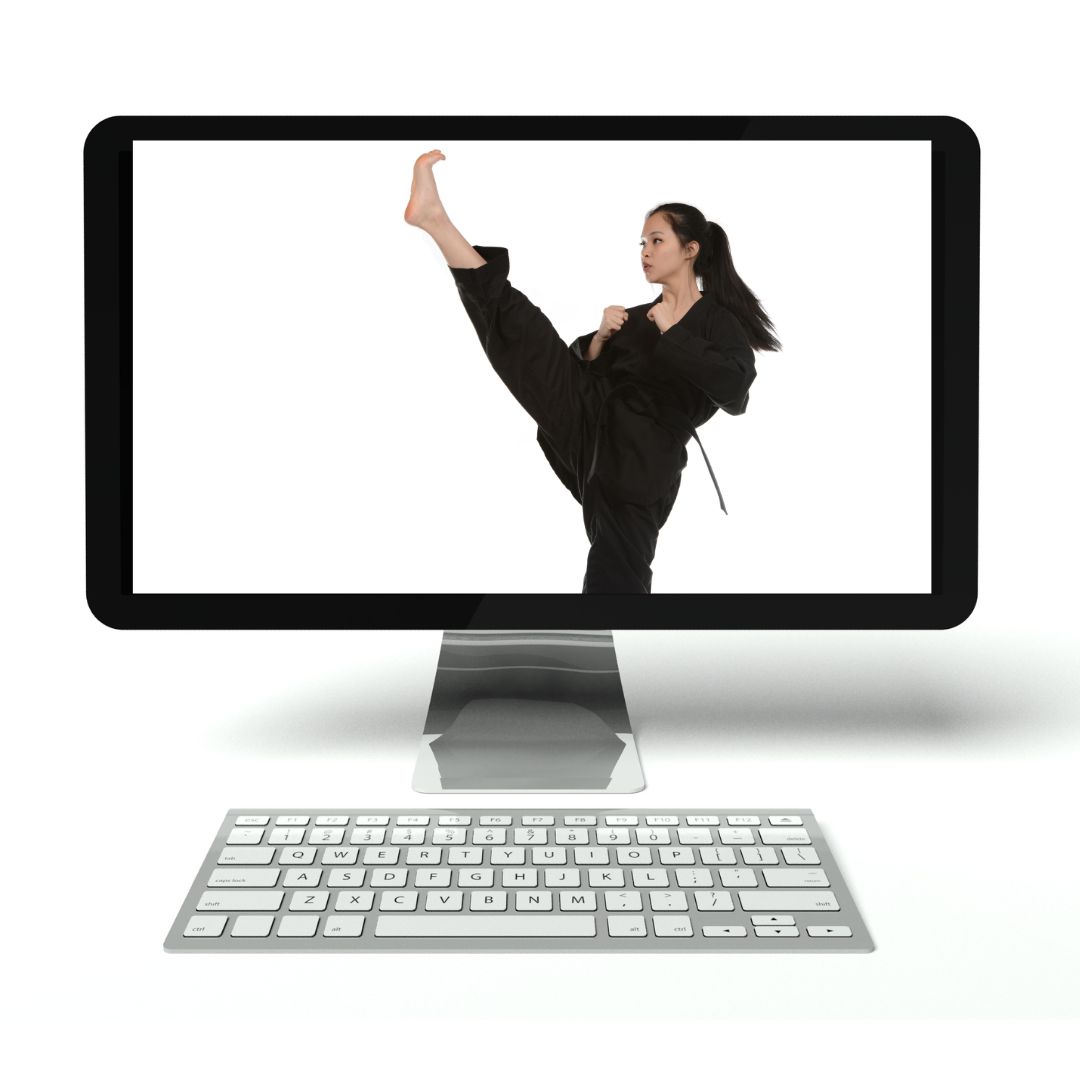
woman doing martial arts online
Learning martial arts from home is possible, but with some limitations.

Before Learning Martial Arts At Home

Before reading any further, I advise you to complete the following exercise; take out a pen and paper and fill in the blanks: 

“I would like to learn martial arts at home so I can ______, so I can _____.”

This simple exercise can help you find tremendous clarity on your goals and priorities regarding an online martial arts program. Clear goals and priorities can help you decide which program is right for you. (If any.)

If you answered, “I want to learn martial arts at home so I can learn to fight, so I can compete and win a bunch of trophies,” no online program can help you. Instead, you need to find a good coach near you and work with them regularly.

If you answered something like

  • “I want to learn martial arts at home so I can learn something new that’s fun and interesting, so I can enjoy my free time in a way that is convenient for me.” 
  • Or “I want to learn martial arts at home because I’m interested in a certain style and there’s no instructor near me,” then keep reading.

New Possibilities

If there was a silver lining to the pandemic and lockdowns around the world, it opened people’s minds to the idea of taking online classes for things like martial arts or yoga. 

Before the global lockdowns, companies like Peloton produced indoor cycling bikes and related services, including a streaming app with live and on-demand classes. The company was founded in 2012 and was already relatively popular. However, the 2020 global response to COVID left many with no option but to look online for ways to participate in a group fitness class and connect with others. The possibilities for people like me to offer our services online exploded.

But first, we need to be realistic. Learning martial arts online is not the same as learning directly in person, so naturally, there are some significant limitations and a few unique benefits. 

This article will explore how you can learn martial arts at home. We’ll also look at some of the most significant limitations, how to work around them, and help you decide if our online classes (or someone else’s) are right for you.

Good Reasons For Martial Arts Zoom Classes?

There are many reasons why it might be difficult for someone to join a traditional dojo or gym. Many of these reasons are often work-related. For example, many people work nights or travel frequently, making it difficult to get to a gym consistently.

A great reason to learn martial arts online is that a particular instructor or style of martial art resonates deeply with you; however, there is no school nearby. This was the case for me in 2002. 

After spending three years looking for an instructor that I felt was right, I met Prof. Em. Sam Chin, and there was no looking back. However, he lived in NY, and I live in AZ, so I have always been a remote learner. I will discuss some of the ways I managed to navigate the obstacles of remote learning in more detail below.

In 2002 it was very challenging; however, in 2022, there has never been a better time to learn remotely. Learning martial arts online may be the next best option if you want to learn a martial art but can’t join a regular dojo or gym.

Many websites and online courses can help you learn the fundamentals of martial arts from home. You can usually find videos and written instructions for specific techniques and exercises, as well as general information about the history and philosophy of the art.

You can find instructors and courses for almost any martial art style online, from Kenpo to Brazilian Jiu-Jitsu (BJJ).

Martial Arts Exercises You Can Learn Online

All martial arts have a variety of solo exercises which teach you the important fundamental movement patterns of the art and how to use your body most effectively and efficiently.

BJJ uses drills like “shrimping” while striking arts practice “shadow-boxing.” Chinese martial arts like I Liq Chuan have basic exercises to improve coordination and balance, as well as qigong, which improves health and strengthens the mind-body connection.

In Chinese martial arts, or “Kung Fu,” these fundamentals are referred to as jibengong 基本功. These “basic exercises” are essential to progress whether you’re learning in a group class or at home. They lend themselves very well to an at-home or online course.

What To Look For In An Online Martial Arts Class

When choosing an online class or instructor, there are several things to keep in mind.

First, ensure that the instructor is experienced and knowledgeable in the martial art style you’re interested in. Unfortunately, many so-called “instructors” do not have the proper understanding or training to effectively teach martial arts, especially online.

Second, ensure that the class is structured in a way that will allow you to progress effectively. A good online program will provide clear instructions, demonstrations, step-by-step progression, and regular feedback to track your progress. 

The last point is crucial. Having access to pre-recorded content can be helpful. Still, if you want to make real progress, it’s essential to choose a program where you get to ask questions and get feedback in real-time.

I engage with everybody individually in my martial arts zoom classes. I assess their movement and understanding of the material and give them a chance to ask questions on anything that might be unclear.

Martial Art Is One Big Family

Reconnecting with friends in the UK during a training camp

Without a doubt, the most important benefit of any martial arts class, whether in person or online, is the friends we make. My Sifu (teacher), Prof. Em. Sam Chin, is like a father to me, and many of my students have become some of my closest friends. In addition, I’ve met many amazing people through martial arts and had the opportunity to travel to many different countries.

Joining a martial arts Zoom class throws those doors wide open, allowing you to connect regularly with people worldwide. For example, my online course has students logging in from places like the US, Canada, and Germany.

For the whole first year of the pandemic, I Liq Chuan held daily Zoom classes as it was the only option for many students in Europe and worldwide. 

Thankfully, we never really locked down here in Arizona. Yet, it was still a relief to join and sometimes lead those sessions, connecting with friends from all over during a stressful time and meeting some new members for the first time.

I Liq Chuan Zoom led by me during the pandemic

Learn At Your Own Pace

When you’re learning martial art at home or online, you can go at your own pace and pause or review sections as needed without worrying that you might be disrupting the class flow. This is a great advantage if you have a busy schedule or want to take things slowly at first. You can also rewatch videos or read through sections of written material as often as you need to understand the concepts thoroughly. 

I Liq Chuan is based on Zen philosophy and Tai Chi principles. These concepts can be unintuitive or just downright confusing to Westerners, so learning at your own pace is very helpful.

Learning online can help you explore the philosophy & concepts at your own pace.

Additionally, every martial art style uses specific terms and phrases to refer to different techniques or positions. Therefore, access to a glossary of terms and supplemental materials can shorten the learning curve dramatically, even if you take lessons in person. 

That’s why everyone in my group classes here in Tempe also gets full access to the online materials, including over 30 hours of pre-recorded material. This library includes deep dives into the application of Zen philosophy to martial arts, how it can also apply to our daily lives, terminology, and basic exercises.

Learn Martial Arts From The Comfort of Your Own Home

One of the great advantages of learning martial arts at home is that you can do it without ever leaving the house. This means that you don’t have to commute to and from a dojo or academy, and you can train at any time of day that is convenient for you. When I was younger, I spent many hours training at midnight alone in my kitchen due to my work schedule at that time.

Additionally, if you have young children at home, this can be a great way to spend some quality time with them while also getting in your training.


Limitations of Learning Martial Arts Online

When practicing martial arts at home, you won’t have access to all the resources you would if you were learning at an academy or with a private instructor. This includes things like specialized equipment. 

Here are a few items you may need to purchase for your home:

Read my full beginner’s guide to martial arts equipment for home here.

Kicking the heavy bag is a great workout at home

Having equipment at home, like a heavy bag or a double-end bag, is excellent. However, they still don’t truly add a reactionary element to your training, like someone holding striking mitts or paddles for you. 

This isn’t that important if your goal is to improve your fitness. However, getting supplemental coaching with a nearby trainer is necessary if you would like to develop some usable self-defense skills.

Most martial arts instructors like myself offer one-on-one appointments that you can book at a convenient time. Spending an hour with an experienced trainer online or in person is like spending 10 hours training alone when you’re just starting. 

Motivation & Accountability

In addition to the lack of equipment mentioned previously, there are some other significant shortcomings when learning martial arts at home.

For example, if you want to learn martial arts at home, you must be very disciplined in your training. Letting time slip by without training can be very easy without others holding you accountable and motivating you. 

Training together, we support and motivate each other and hold each other accountable for showing up to each class.

Learning at home means setting aside regular time to practice and being willing to put in the hard work required to master the techniques. Without a sense of discipline, it will be challenging to make progress.

However, if you can find a friend or family member to practice with you, this can help. Regular training partners can also help you practice the material, identify what you don’t understand or what’s not working well, and ask your instructor questions.

No Touch

Lastly, the most significant limitation of learning martial arts at home or online is the lack of touch from your instructor.

In this sense, distance is still the most significant obstacle. Complex movement skills, like those found in martial arts training, absolutely require hands-on corrections to get them right. 

In the so-called “internal martial arts” like I Liq Chuan, they must be “transmitted directly,” as we say. Your instructor must allow you to touch their body to “feed you” the correct feel.

For example, in I Liq Chuan, we talk about “fork energy.” Fork energy is a concept from our system that follows the principle of “one-to-two.” Fork energy means creating at least two different vectors of force from every point of contact. One direction of force is created by either pulling or pushing directly, and at least a second is made by rotation. 

These are qualities you probably won’t be able to see easily on your screen and must feel to be truly understood.

Attend A Workshop

Suppose scheduling issues or other reasons prevent you from getting to the gym regularly. However, you still want to learn a martial art. In that case, most organizations hold regular workshops or clinics.

people smiling during a kung fu workshop in Arizona
Attending workshops can be helpful if you’ve been learning at home.

If you’re learning martial arts from home, you can attend a workshop three or four times a year. Workshops or clinics help reinforce the material you’ve been studying, and you can get hands-on corrections from a qualified instructor.

While your progress will be slower following this hybrid model, it still works quite well to ensure that you have a usable martial arts skill if that’s a priority.

Workshops are always great for connecting face-to-face with the friends you’ve made through training. Although your schedule might not accommodate getting on the mats regularly, most people can still carve out a few weekends per year. 

Additionally, you’ll make rapid progress when you immerse yourself in the material for a few days. So attending a weekend clinic or a week-long training camp is still a good idea, even if you participate in regular group classes.

If you’re learning martial arts at home, it’ll give you new insights to take home to deepen your practice and hopefully train with a partner. In addition, sharing what you learned with others is one of the best ways to clarify and reinforce new material.

Summary

Martial arts cannot be entirely self-taught. At best, you’ll be reinforcing habits you already have, and at worst, you’ll be wasting your time with nonsense that has no practical application.

If you want to learn martial arts at home, you’ll need to find a good instructor online who can help spot mistakes you might be making and offer additional insights.

While Zoom-based martial arts classes can be convenient or help connect you with a remote instructor that resonates with you, by themselves, online lessons are incomplete. Therefore, you must supplement your online studies with periodic personal training, weekend clinics, or occasional training camps.

You may also need to invest in additional equipment, like a heavy bag, as joints and tissues need feedback from contact to adapt appropriately and use your skills effectively.

While everybody can benefit from learning martial arts online, zoom classes are best for 

  • someone looking for something new and exciting to do from home
  • or intends to practice a particular style for a long time and periodically receive supplemental training in person.

The hybrid model was the model I followed as a distance student of Prof. Em. Sam FS Chin. It took me about three years to finally build up enough skill that other people were interested in training with me. That might seem like a long time, but it was tremendously rewarding in the long run.

I have made many close relationships and have been fortunate to see many new places. When I started out, I didn’t have nearly as many resources available to me as a remote learner as you do today. Today, it’s never been more feasible to learn remotely.

Join Us

Consider my weekly, live online class if you’re interested in learning martial art online. Replays are generally available for a week. I also have a private Discord server where you can ask questions between classes, connect with other students, and access additional materials.

My Zoom classes have no restrictions on how many people can participate with you. I want to help people start study groups for I Liq Chuan in their area.

 Click here to sign up today!

our programs banner image
Posted on

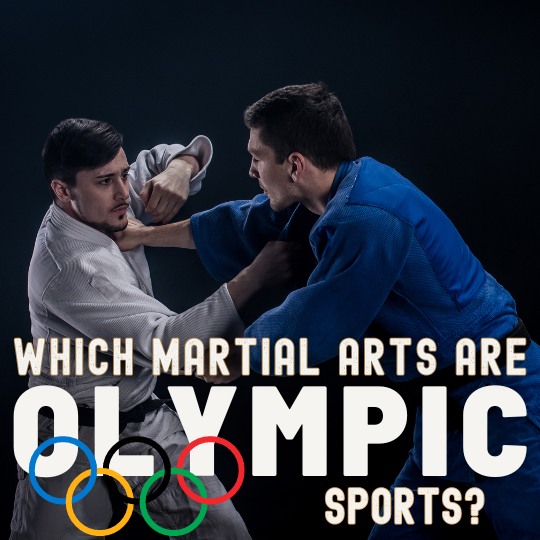
Which Martial Arts Are Olympic Sports?

photo of Olympic judoka
source: https://catalog.archives.gov/

Wondering which martial arts are Olympic sports? Currently, six martial arts are a part of the Olympic games:

  1. Western Boxing
  2. Fencing
  3. Judo
  4. Wrestling
  5. Taekwondo
  6. Karate

Wrestling has been part of the Olympics since 1896, except for the 1900 Games.

The IOC made a controversial decision to drop wrestling from the program in 2013. Wrestling was the main event during the ancient Games in Greece and throughout modern times, and after considerable backlash, the IOC restored wrestling to its rightful place on the program for the 2016 Games.

By comparison, Western Boxing has been a part of the summer games since 1904. At that time, the heavyweight category was a mere 158lbs or 71kg.

Fencing joins wrestling as an “OG” Olympic sport, having been a part of the program since the first modern games in 1896.

According to Wikipedia, “judo was first included in the Summer Olympic Games at the 1964 Games in Tokyo, Japan. After not being included in 1968, judo has been an Olympic sport in each Olympiad since.”

Taekwondo is a relative newcomer to the Games, making its first appearance as an Olympic sport in 1988, with karate taking the spot as the most recent addition to the Summer Olympics in 2020.

Related Post

Why Isn’t My Style An Olympic Sport?

The IOC determines which martial arts are Olympic sports; they keep one open slot in the program for each of The Games so the host nation can showcase a sport unique to its culture and heritage. Whether or not it becomes a permanent addition to the program depends on whether or not there is already an equivalent sport as part of the regular lineup.

For example, fencing is a sword art that has been part of the games since its inception, so other sword arts like Kendo or Iaido are not included. Likewise, judo and wrestling already represent the grappling arts, so there is no BJJ (Brazillian Jiu-jitsu). Additionally, boxing, karate, and taekwondo already represent a range of striking and kicking arts, so kung fu is not a part of the program.

There are over 2500 recognized distinct kung fu styles in the Chinese martial arts, plus countless small family and village styles. Who gets to decide which of those styles represents all of kung fu? At some point, you must choose what gets included (and excluded) just for expediency. The Summer Games would take all year if they were “all-inclusive.”

Start your journey to mastery today!

Read More!

Posted on

Are Martial Arts Sports Or Self-Defense?

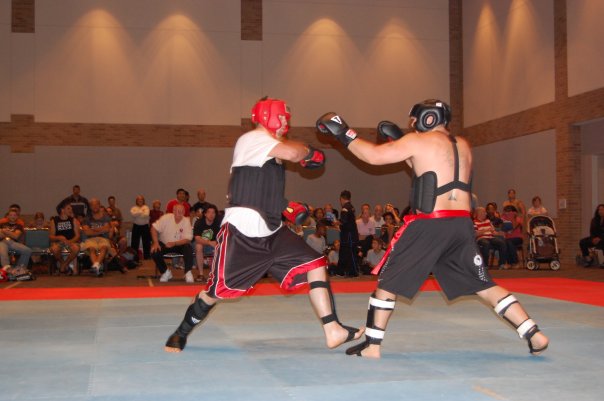
the author fighting at Legends of Kung Fu 2009

Are martial arts considered a sport, a form of self-defense, or something else altogether? Like many complex topics, the answer is “it depends.” If you read the forums and subreddits, you’ll find heated debate on all sides. I’m going to tell you what I think everybody should know based on my 20 years as a student, instructor, and former competitive fighter.

There are a few different ways to answer these questions. For example, some people would say that in the modern day, martial arts are a sport, while others might argue that they are more of a means of self-defense or even a way of life.

So let’s take a look at each.

Martial Arts As Sport

The author posing with GM Sam Chin after winning a gold medal as a light-heavyweight; Taiji Legacy 2007

Before we can answer the question of “are martial arts considered a sport,” it may first be helpful to ask, “what is a sport?”

Oxford dictionary defines sport as “an activity involving physical exertion and skill in which an individual or team competes against another or others for entertainment.”

If you consider a sport to be any activity that requires physical skill and is competitive, martial arts can undoubtedly qualify. Martial artists are generally very physically fit and must be able to execute techniques with precision and power. Moreover, many martial arts styles hold tournaments where practitioners can compete against each other or students of different types.

Let’s take a closer look at a few of the factors that define competition in a sports context, especially concerning martial arts:

Sports Performance

the author fighting at Legends of Kung Fu 2009
The author (in black) fighting at The Legends of Kung Fu Tournament July 2009
  • fixed time and place for performance
  • Rules and safety equipment
  • Referees to enforce rules and keep competitors safe
  • training will focus on precision, accuracy, and endurance
  • weight classes
  • competitors are evenly matched based on experience level

Sport competitions have clear rules, unlike an actual self-defense situation which is “no holds barred.” This makes martial art competitions more fair and entertaining to watch.

Competitions take place on a fixed date, which can be trained and prepared for, unlike self-defense which can happen without warning. Having a set date can considerably impact how training looks as it allows the athlete to structure training to “peak” on the date in question, with an off-season or deload period. As an athlete gets closer to the competition, training will likely focus on fine-tuning techniques and HIIT or High-Intensity Interval Training for endurance.

Weight classes are another consideration for martial arts and combat sports, especially. A skilled fighter can indeed use good technique to overcome a larger unskilled opponent. However, when both fighters are equally trained, size matters; weight classes help keep both fighters safe. An athlete who’s heavier than their intended weight class may need time to diet and lose weight. (Check out our online health coaching if you need some help getting “fit to fight!)

Another difference between sports and self-defense is that fighters are usually matched based on experience level in competition. So if it’s your first time fighting, you won’t (or shouldn’t) be fighting somebody with 100 fights already.

Some martial arts, like Wushu, are more like gymnastics; competitions focus more on the individual’s athleticism rather than fighting ability.

Related Post

Combat Sports

The term “combat sports” was coined in the early 2000s to refer to martial arts focused exclusively on full-contact fighting. These modern iterations of traditional martial arts have mostly abandoned forms as a method of learning new techniques in favor of freestyle training and current strength and conditioning techniques, which are more effective in the ring/cage.

Some examples of combat sports are:

  • Western boxing
  • Muay Thai
  • MMA

Many combat sports fans will argue that MMA proved that traditional martial arts training was ineffective. However, many fighters from traditional arts like karate man Lyoto Machida or Roy “Big Country” Nelson (who got his start in kung fu) have successfully adapted their arts to become champions.

With the exception of arts like fencing or kendo, most competitive martial arts practices and combat sports will rarely focus on training how to use or defend against weapons.

All in all, you could say the defining trait of martial arts as a sport is a focus on a fair fight.

Martial Arts For Self-Defense

By comparison, a fair fight is the last thing you want when life or death is a potential outcome. In the military, it’s common to hear something like “if you find yourself in a fair fight, your tactics suck” or “if you’re not cheating, you’re not trying.”

Martial arts training can provide invaluable self-defense skills in a variety of situations. It’s crucial to be prepared for anything in a real-life self-defense situation because there are no rules or referees. In addition, self-defense may involve multiple attackers and weapons, and the focus is often on finding or creating an opportunity to escape to safety.

For those who train martial arts for personal safety, the only outcome that matters is ending the fight as quickly as possible. This often requires different techniques than those used in competition. For example, strikes to the throat, eyes, or groin are usually illegal in competition, but they may be the most effective way to end a self-defense situation. This is why it is so important to train under an instructor who understands your goals and can help you practice effectively.

There are many differences between sports and self-defense. In self-defense, there are no rules and no one to intervene if you start losing. Attackers could be of any size, number, or experience level. This makes self-defense much more dangerous than sports.

Self-Defense

  • will happen unexpectedly
  • no rules
  • no one to intervene on your behalf if you start losing
  • strength, power, and building a broad base of techniques
  • attackers could be of any size, number, or experience level

Because a violent attack is unpredictable, preparation or conditioning for self-defense can look very different from sports preparation. It’s impossible for anyone to stay in “peak” condition year round. By definition, a peak is a high point. For sports, a “peak” is usually timed to fall on the date of the competition. Additionally, since violent attacks are usually over in seconds, endurance is less of a factor. As a result, training can often focus on building strength and power. Rather than “cardio,” you might just maintain a baseline of GPP, or “general physical preparedness.”

Size Matters

For combat sports, the goal is to show up to a fight as strong as possible, at the lightest possible body weight for that fighter’s unique combination of height and build. Another way of looking at it would be the goal is to come in as heavy as possible, while staying under the limit for the preferred weight class. However you look at it, the fighter in question has to solve the same problem: there’s a limit to how much they can weigh at weigh-in time.

There are no weight classes when it comes to self-defense however; indeed, having a bit of extra mass is an advantage for self-defense. Not only does extra bodyweight improve your leverage, but it also gives you some additional protection from injury.

Strong prople are harder to kill and more useful in general. Mark Rippetoe
source: https://www.azquotes.com/quote/668412

Self-defense training can include, or even focus primarily, on the use of weapons like edged weapons or firearms. Empty-hand or hand-to-hand fighting is considered a last resort.

Some martial arts that focus primarily on weapons and self-defense training are:

  • Silat
  • Arnis
  • Krav Maga

A Path To Self-Improvement

With the right guiding philosophy and principles, martial arts like I Liq Chuan are like the elephant’s footprint; all the other animal’s footprints can fit within it. What this means is that our martial arts practice becomes a tool rather than a goal. Our practice opens up, rather than narrowing down; it informs our whole lives and helps us to be better people.

Martial arts have been a method of personal development for centuries. Disciplined training can help to improve concentration and focus while also teaching important life lessons such as patience and respect. For many practitioners, the goal is not simply to become physically stronger or more skilled in combat but to become the best version of themselves. It’s a journey in which one explores their strengths, test their limits, and learn how make the best use of themselves in daily life.

When trained as a method of personal development, self-discipline, concentration, and wisdom are the long-term goals.

Zen & Budo

How you do anything is how you do everything.

In his book “The Zen Way To Martial Arts“, Zen master Taisen Deshimaru said the following:

“They are simply using the martial arts as playthings; to them, they are sports are like any others.

But people who want to live their lives on a higher dimension do have to understand (the difference).
Nobody can be compelled, and nobody can be criticized. The first lot are like children playing with toy cars, while the second drive real automobiles. I have nothing against sports; they train the body and develop stamina and endurance. But the spirit of competition and power that presides over them is not good. It reflects a distorted vision of life. The root of the martial arts is not there.

The teachers are partly responsible for this state of affairs; they train the body and teach technique, but do nothing for consciousness. As a result, their pupils fight to win, like children playing war games. There is no wisdom in this approach, and it is no use at all in the business of managing one’s life.
What good to them is their technique in everyday life?

Sports are only amusement, and in the end, because of the spirit of competition, they wear out the body. That is why the martial arts should strive to recapture their original dimension. Inthe spirit of Zen and budo, everyday life becomes the contest.

There must be awareness at every moment; getting up in the morning, working, eating, going to bed. That is the place for mastery of the self.”

For GM Sam Chin, martial arts are not a sport but a way of life.

It’s About Knowing Yourself

In an interview with Bryson Newell of the Somatic Primer podcast, my Sifu, Grandmaster Sam FS Chin, had this to say about martial arts for personal development:

“In the end, most Chinese martial arts do come down to cultivation (i.e., self-improvement). We use martial arts as a tool to learn about and train ourselves, like Shaolin monks. Shaolin used martial arts to cultivate themselves [spiritually]. 

Traditionally, Chinese martial arts always had the concept that in the end, you will go down the path of self-cultivation.

I like martial arts as the basis for self-cultivation because martial art itself needs a kind of readiness, and alertness, to begin with, you see. Likewise, as you cultivate yourself, you need alertness, readiness, right, [you need mental clarity].”

Martial arts can be a sport, trained for self-defense, and can be a way of life and self-development. The key is having the right mindset. Having the right philosophy, concepts, and principles adjusts your point of view and opens your mind.

Start your journey to mastery today!

Read More!

Posted on

What Is The Martial Arts Yell?

The Martial Arts Yell Explained

Are you wondering why people demonstrating martial arts yell at the top of their lungs? What we see in most demonstrations is silly. However, the origin of yelling in martial arts is based on sound physiology and a little bit of psychology. We’re going to discuss everything you need to know. What it is, what it’s actually called, and why martial artists of all styles use it.

Let’s get right to the most important point: why the heck do we do it? The short answer is that it increases power. All martial arts train three things: attack, defense, and power.

We train them for one specific purpose: to end a fight as fast as possible. Without power, attack and defense are useless, so anything that increases power is invaluable.

Bruce Lee using his kiai, or martial arts yell.
Bruce Lee put his famous martial arts yell to good use in The Big Boss.

For self-defense, the penalties for failure can be catastrophic. Maximizing your power output could mean the difference between life and death.

How The Martial Arts Yell Works

All Power Comes From The Ground

I’ve written about some of the physiology and psychology of this subject before, which you can read here. The secret lies in the diaphragm and a little bit of physics. All power comes from the ground. Regardless of the activity, everyone is stronger when they can establish a solid connection to the floor to generate force.

One of the feats of strength I enjoy demonstrating for friends is tearing a deck of cards in half. Not all cards are created equal, and some are more difficult than others. In particular, the cards used in casinos tend to be very difficult. They’re thicker than a standard deck of cards. They’re also coated with a thin film of plastic called an “air cushion finish.” It makes the cards more durable for heavy use. I can tear an easy deck in half while sitting down. But to rip a challenging deck of cards in half, I always have to be standing up. Standing lets me fully connect to the ground through my legs and engage my core.

You see the same thing in powerlifting during the bench press. Even when lying on a flat bench, athletes still need to get good leg drive to lift the most weight. My theory is that your nervous system needs to feel your feet on the ground to generate maximum “neural drive.”

Anatomy of The Martial Arts Yell

illustration of the diaphragm and muscles of the deep core and pelvic floor
some deep core anatomy

While many people might be tempted to only think of a strong core as “six-pack abs,” the six-pack is only the most superficial layer of muscle. The real core is much deeper and can be thought of as a ball. The bottom half of the ball is formed by the bony structure of the pelvis, which is lined with many small muscles (the so-called “pelvic floor”), and the diaphragm comprises the top half of the ball. It’s a large, dome-shaped muscle that separates the heart and lungs from the organs, which rest below in the pelvic bowl. The top and bottom are joined together by a belt of large muscles around the trunk.

When you activate the pelvic floor, the diaphragm, and “the belt”, you create global compression around the abdominal cavity, which is mostly water and therefore cannot be compressed. Instead, you form a very firm fluid ball with the spine supported nicely inside. This helps you effectively transfer force from the ground, through the spine, and out to the arms.

“Something I tell my patients is that when you are using the exhale forcefully (like fogging up a mirror aggressively) it intensifies the contraction of all of your core.”
~Marci Zavala, BS, MSPT, NTP

When In Doubt, Breathe Out

GM Sam FS Chin quote

Grandmaster Sam Chin, the founder of Zhong Xin Dao I Liq Chuan, says, “don’t let the movement interfere with your breathing .”

When we need to generate maximum force, during weightlifting, for example, it’s common to perform what’s known as a Valsalva maneuver. During a Valsalva, the glottis (throat muscles) are closed to create a tight seal with a big breath trapped in the lungs, making the entire trunk as stiff as possible.

This “interference” with the breath is entirely appropriate in this scenario. Any given set might only last 15 seconds, followed by the luxury of a prolonged recovery period.

However, during hand-to-hand combat, particularly in a battlefield scenario, where fighting might go on for an extended period, maintaining your breathing is a literal matter of life and death.

Another difference between using the breath in weightlifting and martial arts is that the movements are more of a grind during heavy lifting. For fighting, we only need maximum tension for a split second at the moment of impact for striking or kicking.

The Espresso Press Example

Allow me a brief but relevant tangent here. With the cost of everything going berserk lately, I decided to invest in an espresso maker for the house. For $130, I could save myself $6 per day by making a double shot at home and just adding water and ice when I’m ready for an iced coffee later in the day.

Flair Neo flow control valve

The thing about making espresso is, you need a lot of pressure, between six and nine bars, to be exact. Usually, this is achieved by grinding the coffee very finely, which requires a lot of pressure to pass water through once you’ve tamped the ground coffee down. This can be a problem if you don’t have a grinder that can grind your beans finely enough. The makers of the Flair Neo addressed this problem by designing their basket with a “pressure control valve .”

Essentially it restricts the flow of the espresso into a tiny nozzle, so the plunger is trying to push the liquid through faster than what the little valve will allow. This creates additional backpressure in the brew chamber, and we get to our magic six-nine bars.

When we shout, the glottis briefly contracts, similar to a Valsalva. We get the same effect as my espresso press by shouting, yelling, or grunting. The large muscles of the core are suddenly contracting and trying to force a massive volume of air through the now very narrow valve of the throat. This increases the pressure in our abdomen while at the same time allowing us to breathe continuously during a prolonged period of high oxygen demand. You could think of the shout as a “micro-breath hold” amid a flowing breath, like the old Tai Chi Classics, which tell us to seek the “stillness in movement.”

What’s In A Name?

The Japanese term for the martial arts yell is kiai (氣合). The literal translation is “energy harmony” or “energy unification.” However, I’ve often seen it transliterated as “spirit shout,” which is much less vague. The Japanese word ki (or qi 氣 in Mandarin) means something like “vital energy .”

Hanzi/Kanji characters are often a combination of simpler characters, as is the case with the word ki/qi. We see the character for steam or vapor, but it can also be thought of as the breath. In the West, we have a similar Latin word, anima, which also means spirit or breath, depending on the context. It’s a recognition by the ancients that, in the words of Mr. Miyagi, “no breathe, no life .” In that sense, the spirit shout can be considered the “unification of mind, breath, and body/action as one.”

The Koreans use a very similar term called kihup (기합).

“One cry, one instant containing all space-time, the entire universe.”

In Mandarin, the term is fasheng (發聲), meaning “vocalize.” When I asked my kung fu brother and native Chinese speaker Jeff Wong about it, he said:

“You see the similarity of the term fasheng (pronounced fa shung), or fat sing in Cantonese, to fajin 發勁 (fat ging in Cantonese). Fa 發 is to issue or manifest.

Kiai in Japanese Kanji (Chinese characters) means ‘breath+harmonization’, which is the true purpose of fasheng. However, kiai doesn’t really describe the action, whereas fasheng is literal, with the purpose obscured.”

InThe Zen Way To The Martial Arts, the great zen master Taisen Deshimaru says “The kiai is that same (full) exhalation, combined with a loud voice; the sound has to spring out naturally from the depths of the body, and for that one obviously has to know how to breathe, which few people do.”

Related Post

Bruce Lee Movies
Learn about the stories behind the movies.

At the beginning of this article, I mentioned how most of the dramatic screaming done in modern martial arts demonstrations is ridiculous. The keyword is “dramatic”; much like Will Smith “slapping” Chris Rock at the Academy Awards, it’s strictly for performance. The performer uses a high-pitched yell coming from the upper chest most of the time. When done this way, the mechanics are all wrong, and the long, drawn-out nature means the glottis isn’t constricted; we don’t get the appropriate backpressure we’re looking for. At best, this type of screaming can help get you into a heightened state of arousal.

Whether you choose to vocalize with a “ha,” “hut/hup,” “oss,” or simply grunt or hiss, the sound should be short and sharp to contract the glottis and timed to coincide with the impact of the blow.

Conclusion

So there we have it! Everything you need to know about what the martial arts yell is all about.

In the traditional Japanese arts, it’s referred to as a kiai. In kung fu, we call it fasheng. Western arts like boxing don’t have a specific term, but they still do it, often simply grunting or hissing.

Although holding our breath increases trunk stability and thus power, holding the breath is inappropriate in a hand-to-hand combat scenario. This is because the length of time we need maximal trunk stability for self-defense is much shorter. The length of time we may be engaged with an opponent is much longer than we might experience during a set of strength training and without the benefit of nice, safe rest periods to recover any oxygen debt.

Getting the most out of every action was critical for the old masters when it meant whether or not they would live to see another day. The act of shouting engages the deep core muscles and the diaphragm in particular. A nice stiff core supports the spine and is an effective bridge to transfer force from the ground.

Lastly, remember that the shout should be some sort of short, sharp sound when done correctly. While other sounds can be made, like heng, om, or even simply humming, these kinds of breathing/sounds are more appropriate for relaxation and recovery. For power, we want a sound that helps contract the glottis and the core muscles to get the kind of deep abdominal pressure we’re looking for.

Show Some Love

If you found this article useful, you can support my blog by making a purchase from our Amazon Storefront and help me continue to provide valuable content.

If you’re ready to embark on your own journey of personal growth through martial arts, here are three ways I can help:

  1. Consider our small group or online martial arts classes to start your practice.
  2. Explore our other articles to deepen your understanding.
  3. Book a free discovery call to find out if one of our programs is right for you.
Start your journey to mastery today!

Read More!

Posted on

I Liq Chuan – Martial Art of Awareness

What Is I LIq Chuan

I Liq Chuan (ee lee chwen) means “mental-physical martial art”. We often refer to it as “The Martial Art of Awareness”. As a system of martial arts training, the curriculum has three main sections:

  • Philosophy, Concepts & Principles
  • Solo drills
  • Partner Training

Philosophy, Concepts & Principles

Philosophy & Concepts of The Martial Art of Awareness

I Liq Chuan is not just about self-defense techniques. We say that “we are not training to be the best, but to bring out the best in ourselves.” You could say that self-improvement is our most important objective.

In other words, we are using martial arts as a tool, not as a goal.

Training martial arts “as a goal” means that self-defense is your primary endpoint. You only care about what works in the ring or on the street. While this has the benefit of ensuring that you’ll be the most effective fighter that you can be, it doesn’t mean you’ll be the most effective person you can be. The application of what you develop in training narrows down to just a very narrow slice of possible experiences.

If you’re a professional fighter, law enforcement, or security professional, this approach makes perfect sense, especially in the short term, where maximum usable self-defense skills in the shortest amount of time is imperative. However, for the majority of people, with no urgent need to defend themselves, we can go a bit slower and a bit deeper to understand the principles.

To put it another way, a technique is like knowing how to use a fire extinguisher as the quickest, easiest way to put out a fire. Understanding the principle is knowing that a fire needs oxygen to burn; take away the oxygen, and you put out the fire, and there are many ways to cut off the oxygen to a fire, for example. The fire extinguisher is quick and easy, but understanding the principle is adaptable to more situations. The principles, once mastered, will make the same person a better fighter than they would be if they only knew techniques.

The Martial Art of Awareness As A Tool

Coming back to the idea of martial arts as a tool, as opposed to a goal: when you train martial arts as a tool, rather than developing skills that have a very narrow application, we develop skills that have very broad applications. We use the body (physical) to train the mind (mental). In other words, through the practice of martial arts, we cultivate wisdom.

The philosophy, concepts, and principles are like a compass guiding all of our training. They teach us to look closely at ourselves. Through careful observation, we learn to see things more clearly, and we learn how to remain calm (i.e., “still and clear”) under high-pressure situations (like a fight).

Stillness and clarity are skills that can be applied in any situation. In short, I Liq Chuan emphasizes an approach based on mindfulness.

Solo Drills

The Basic Exercises of I Liq Chuan

The second section of The Martial Art of Awareness is all the solo or individual training (basic exercises). We describe this section of our training as “unification of mental and physical”; you could say it’s the process of “uniting mind and body as one.”

Basic exercises help us get our body organized and integrated; they develop fundamental motor skills around three essential qualities: power, balance, and relaxation. At their core, basic exercises are a process of exploring how your body moves in three dimensions and its relationship with gravity.

All martial arts make use of some kind of basic exercises practiced by one’s self or under the watchful eye of a coach. Western martial arts like boxing will make use of solo drills like shadowboxing, hitting the heavy bag, or working the slip bag. The purpose of basic exercises is to take complex motor skills and break them down into their core components and drill them repeatedly over time to improve neuromuscular efficiency. To put that more simply, we learn to move better and with less effort.

Although kung fu, or Asian martial arts in general, are often more well known for their forms or kata, basic exercises are actually considered to be more important. Basic exercises are referred to in Chinese as jibengong (基本功). The term jiben has the Chinese word for “root,” and altogether means “fundamentals” or “basic skills”. Forms should just be demonstrations of motor skills developed through basic exercises the way the performance of a complete song is the result of the practice of more fundamental musical skills like scales.

Balance To Change

The body benefits from movement, the mind benefits from stillness.
Basic exercises become dynamic meditation when done with focused awareness.

Tai Chi principles teach us that change is the most basic quality of our experience. The highest goal of Tai Chi then is to “change with change”.

In a self-defense scenario, we’re looking for the ability to easily change directions, and flow with our opponent(s).

Although we need a certain amount of tension to exert force, it’s tough to change direction when we’re stiff or rigid; therefore, it is important to learn how to maintain relaxation during movement. Relaxation also helps us to conserve energy.

Find Your Center

Self-defense situations are dynamic and unpredictable. An attacker will not simply strike once, and then pause mid-motion for you to launch your counter-assault as we see in so many bad martial arts demonstrations. They will change level, change direction, and use multiple attacks from different angles. We must have balance to change with change.

Although when children are young, we often teach them they are not the center of the universe, from a practical point of view, we are the center of our own experience.

Balance comes from the center. However, there is not one center; the mind has a center, the body has a center, and true balance is not just “50/50” of two different things. There is a synergy in true balance that comes from the partnership of opposites, like “one long and one short”, or “one heavy and one light”, or “form and formlessness”.

The Martial Art of Awareness: Mind & Body As One

The mind is formless, the body is form.

When mind and body are one, people are capable of amazing things. In modern terms, we often refer to this as a “state of flow” or “being in the zone.” Synergy is an outcome above and beyond the sum of the whole. Conversely, 0.8 x 0.2 = 0.16. If you’re like me and not very good at math, let me emphasize the obvious here: 0.16 is less than either 0.8 or 0.2.

Practically, what this means for our lives is that when we operate at a fraction, outcomes are less than the whole.

Most of us spend the majority of our time operating by fractions, particularly in today’s distracted, digital world. When we’re eating and scrolling on social media, for example, we neither truly notice and enjoy our food nor actually process what we’re seeing on our phones or how what we’re seeing makes us feel, which can, in turn, affect how much we eat. It becomes a vicious, negative feedback loop.

However, when we bring the mind and body together, a state of stillness and clarity arises. We can see more and do more, perhaps even much more than we ever thought ourselves capable of.

Partner Training Drills of I Liq Chuan

“Everybody has a plan till they get punched in the mouth.”

Mike Tyson
Examples of some partner training in our Tempe, AZ martial arts classes

Basic exercises improve balance and coordination, but by themselves are not enough to learn how to fight. In the words of Bruce Lee, “You cannot learn how to swim on dry land.” Throwing a ball, carrying a bag of groceries in from the car, or lifting a child off the ground are all applications of force, and likewise, hand-to-hand combat between two (or more) people simply boils down to the application of force, which we perceive as pressure.

So then martial arts, at its core, is simply the study of force, or pressure: how to apply force (offense), how to deal with a force being applied to us (defense), and how to create the most force possible (power).

In Chinese kung fu, we use the term san da, or san shou, to describe “free fighting”. The Chinese word san means “scattered” and has the sense of “chaos”; it’s a recognition by the old masters that real fights tend to be messy and chaotic. Only choreographed, cinematic fights look pretty. Real violence is ugly and messy, but within chaos, we can find order (principles).

Any good martial arts system takes the chaos, scales it down into simple drills that focus on principles, and then progresses the drills back to more and more free, real-time applications that more closely resemble the chaotic messiness of a real fight.

The Martial Art of Awareness uses two different types of partner training to study pressure: spinning hands and sticky hands. Both spinning and sticky hand training have multiple stages and almost endless possible variations.

Spinning Hands

Although in combination, our arms are capable of an amazing variety of movements across multiple planes, if we look closely, the arm is only capable of five basic movements.

  • flexion (open)
  • extension (close)
  • adduction (close)
  • abduction (open)
  • rotation

We can move the arm above our heads, which is technically referred to as flexion; we can move the arm downward and eventually behind the body. This is referred to as extension. Flexion and extension happen on the verticle axis.

We can move the arm in, across the body, which is referred to as adduction, and if we move the arm out, away from our body, this is referred to as abduction. Adduction and abduction happen on the horizontal axis. As we can see from the diagram above, with the shoulder joint as the fixed center, we get a kind of cross; we can move up and down and side to side (or you could say in and out), and we can rotate from the center of the cross.

Only Two Circles

Subsequently, if we look at a complete cycle (i.e., full range of motion, in sequence), we can reach

  1. up
  2. in
  3. down
  4. out

Or we can go in the opposite direction and go down, in, up, and out. This gives us two basic circles of movement, one from out-to-in and one in-to-out. All upper body movements come from just these two circles.

I LIq Chuan Spinning Hands Two Basic Circles
The Two Basic Circles

When we look at some different types of punches, a hook, a cross, and a haymaker are all examples of “out-to-in,” whereas a straight punch, a jab, and a back fist are “in-to-out.”

With this in mind, we’re just training these two circles and how to maintain the right pressure throughout the entire circumference or range of motion. We call it spinning because we’re turning the circles over and over again. It’s a process of repeatedly looking at the change.

It’s All About Pressure (& Distance)

Spinning hands helps you to develop the right pressure; right pressure has the effect of a virtual sphere, a quality of roundness. It’s the pressure that keeps your opponent from being able to hit you while at the same time creating the space for you to hit your opponent. We refer to right pressure as “fullness.”

A short clip on fullness from our martial arts zoom classes.

In meditation, we look at the continuous rise and fall of the breath, which we know by the change in pressure in the body. Likewise, in spinning hands, we are repeatedly observing the “rise and fall” of pressure on the point of contact with our partner as we move continuously from in-to-out or out-to-in. In this way, spinning hands becomes a dynamic, moving meditation.

Sticky Hand

Learning how to maintain the quality of a ball or sphere is necessary, but by itself is not sufficient for self-defense. The final, objective outcome of effective self-defense training is the ability to finish a fight. Just as in sports, defense alone will not win the game. You must score points (and more points than your opponent) to win.

I Liq Chuan sticky hand training develops four fundamental qualities for self-defense:

  1. flow
  2. fend
  3. control
  4. freeze

Flow

Flowing means “to be with.” It comes very much from the quality of mindfulness and being present. In the context of The Martial Art of Awareness, it’s neither anticipating nor catching up to your training partner. With regard to pressure, when we touch our training partner, we neither resist nor allow any gaps to happen. The pressure should neither increase nor decrease. However, there is a “minimum viable pressure” that must be maintained at all times. Contact is not enough; there must be connection. There is much more that could be written technically about flowing, but we’ll save that for our members-only area.

Fend

After we develop some flowing, we must bring the quality of the ball back into our training. When we fend, we learn always to keep the quality of the ball between our training partner and us as they move freely and try to tap our bodies. It’s a dynamic, spontaneous application of maintaining the sphere of fullness; it’s a more actively defensive level of training.

Control

As we develop more skills, we can make the application of the ball more precise and further restrain our training partner’s movements by controlling both their hands and their balance. When someone is fighting for their balance, it’s hard for them to fight you. The central nervous system shuts down the ability to generate power when it thinks we’re falling and acts reflexively to try and regain balance as a first priority. By continuously manipulating our partner’s balance, we’re essentially putting our training partner into a perpetual state of falling. This is control.

Freeze

Freezing could also be referred to as “jamming.” If we compare it to firearms, when a weapon misfires, it’s temporarily unable to function until we “clear the jam.” Freezing your training partner is similar in the sense that our application of pressure is so precise that they are temporarily “unable to function” with regard to effective attack and defense.

Another way of thinking about freezing is that you are put into such a perfect state of balance that any movement away from that position puts you into a state of imbalance. You could think of it like someone holding you in place on a tightrope. As long as they’re holding on to you, you’ll be fine, but if they let go, or you struggle to get free of their control or try to attack them, you’ll only succeed in making yourself fall off the rope.

In real-time self-defense applications, “freezing” might only last for a split second, but it represents a brief moment of time when you are completely free to attack your opponent “at will” while they are briefly “immobilized”, which translates into a tremendous advantage for anyone who has that level of skill.

Conclusion

Let’s review: all martial arts train three things:

  • Power
  • Offense
  • Defense

I Liq Chuan’s two-pronged approach to developing these qualities is unique, focusing on “cause” rather than “effect” and deliberate, mindful action.

Our basic exercises bring mind and body together; they teach you to look within, to know yourself. They help develop coordination, balance, and, most importantly, mindfulness. When you know yourself and understand both your strength/power and its limitations, you can use yourself skillfully.

At their most basic, the skills of both offense and defense just come down to pressure.

Defense is based on “fullness” or maintaining the qualities of a sphere. Offense comes from recognizing the “empty” (gaps) or penetrating the opponent’s sphere.

I Liq Chuan uses partner work called spinning hands and sticky hands to learn how to recognize, maintain and use the right pressure, distance, and angles.

The Martial Art of Awareness is a good tool for developing mindfulness because a gap in your awareness is a gap in your defense. When you get hit or lose your balance, you know right away. You get instant feedback on your progress. Fullness is “yes” or “no.” You can’t fake it.

In the end, everything circles back to that first component of the system, the philosophy, concepts, and principles. It’s about “knowing.” When we move, we know. We are aware. We are not simply reacting reflexively.

Knowing from the present moment is not just a sterile, intellectual grasp of things; it’s understanding. Understanding is wisdom. Overall, that’s our primary goal for training I Liq Chuan; to use martial art as a tool to cultivate this kind of stillness and clarity.

So, in other words, we’re using martial arts to train the mind.

Start your journey to mastery today!

Read More!

Posted on

Bruce Lee’s “Like Water” Quote Hidden Meaning

Water is always an excellent example to follow for martial arts; as Bruce Lee famously said, “Be water, my friend.” However, Lee’s famous quote needs to be better understood, even by long-time martial arts students. So let’s explore Bruce Lee’s most recognized inspirational quote more deeply.

Key Takeaways

  • “Be water, my friend” was a line from an episode of Longstreet
  • water has no mind; it just follows nature
  • to flow, you must be mindful
  • “full” & “empty” is simply a matter of pressure
  • like a tsunami, we can “crash” if we have enough power
screenshot of Bruce Lee saying "be water my friend" on the Pierre Burton Show
This article is an installment in our series about Bruce Lee.

The Origins of Bruce Lee’s “Be Water My Friend”

In September 1971, Bruce Lee appeared in an episode of Longstreet titled “The Way of The Intercepting Fist” as the character Li Tsung. However, those words became iconic after his interview with Pierre Burton later that same year.

In the episode, the titular character Mike Longstreet, a blind man, hires Li Tsung to help him learn how to fight so he can defend himself. After complaining to “Li” that there was “too much to remember,” Li scolds Longstreet telling him “if you try to remember, you will lose!”

The sagacious Li then offers his seminal advice:

“Empty your mind.
Be formless, shapeless, like water.
You put water into a cup; it becomes the cup.
You put water into a bottle; it becomes the bottle.
You put it into a teapot; it becomes the teapot.
Now water can flow, or it can crash.
Be water, my friend.”

Bruce Lee’s Longstreet Episode – Way of The Intercepting Fist.

What Did Bruce Lee Mean By “Be Like Water”?

I spoke about Bruce Lee’s inspirational quote during one of my Zoom classes.

“Water has no mind; it simply follows nature or Tao 道 (the natural order of existence). By default, water is present, formless, and neutral; it simply obeys pressure and tension.”

We should pause here to discuss the concepts of “no mind” and “present, formless and neutral” in more depth.

No mind, or mushin 無心, is an essential concept in Zen philosophy with clear applications to martial arts. Mushin is a state of wordless awareness. It is a state of no thinking, but no thought doesn’t mean a state of blankness like a sleepwalker. On the contrary, it’s a state of deep knowing. One can clearly see the differences from one moment to the next, but without an ongoing internal dialogue or mental narrative.

When you can see and change with change without any sense of either attachment or aversion, we call this “flowing.”

So we want to develop that quality of being “like water” so that point of contact tells me, “if this is full, I flow around. If it’s not full, I just flow in,” or “I already know that I have enough power that I can just crash through full or empty, it doesn’t matter anymore, I can just attack it directly.”

And again, this pressure is already there; it’s just a matter of whether or not you can observe it to know full and empty. And to know whether you can just attack it, attack the fullness, or you need to flow around.

So it’s how we want to tune our minds as we train.

Mind & Body As One

On the physical side of training, we have our diagnostic checklists. We have a checklist of the “six physical principles.” We have the checklist of the 13 points to scan ourselves to observe the balance of the internal tension between the yin and yang muscles, and because we’re talking I Liq Chuan, we’re talking about mind and body.

So on the mental side now, we have the three mental factors to constantly guide our training; so that I can observe my mind while I train, “am I present and formless”; am I acting like water right now? Is my mind like water?

I simply observe the pressure and the tension. Am I harmonizing with the pressure and the tension, or am I trying to fit a square peg into a round hole? So in many martial arts, they talk about “intent” or “will,” but in I Liq Chuan training, we talked about the yi as just being attention, like the mirror, right?

Still water has no image of it’s own, it simply reflects on it’s surface. As Bruce Lee said “empty your mind, and be water my friend.”

Show Some Love

If you found this article useful, you can support my blog by making a purchase from our Amazon Storefront and help me continue to provide valuable content.

If you’re ready to embark on your own journey of personal growth through martial arts, here are three ways I can help:

  1. Consider our small group or online martial arts classes to start your practice.
  2. Explore our other articles to deepen your understanding.
  3. Book a free discovery call to find out if one of our programs is right for you.
Start your journey to mastery today!

Read More!

Posted on

Grip Strength & Martial Arts [VIDEO]

A video of me demonstrating a feat of grip strength by tearing an entire deck of cards in half.

Traditional martial arts instructors often frown on strength training (or at least the version of it that is most often practiced in the West), and my own teacher GM Sam Chin is no exception; however, one type of strength and strength training is revered by almost all martial artists is grip strength!

When it comes to “lifting weights,” even GM Sam Chin is in favor of training the grip.

Your feet are how you connect to the ground to generate power (not including ground fighting like jiu-jitsu), but the hands are how you connect to your opponent or to a weapon to apply power.

In addition to training with heavy weapons like long spears and poles, maces, and swords, traditional martial arts often used additional grip training methods like “gripping jars” called nigiri game by practitioners of karate and the stone locks of China (similar to kettlebells) to develop multiple aspects of grip strength like crushing and pinching strength.

Most traditional martial arts emphasize four categories of techniques: striking, kicking, wrestling, and grappling, which involves grabbing the opponent’s limbs and essentially “bending and twisting” to either dislocate a joint or break a bone.   All wrestling and grappling require maximum grip strength to be effective.

In more modern times, scientists have even discovered that grip strength is an excellent indicator of your overall health: many studies, like the PURE study, have shown that grip strength is a better indicator of your risk of death in the following 10-12 years than biomarkers like blood pressure!

Whether you want to be an effective martial artist, or just want to be lean, strong, and healthy, train your hands!